 COPPER
Traditional food of the DR Congo: 13 dishes to know
Food in the Democratic Republic of the Congo is built on cassava, eaten as fufu or fermented kwanga, with plantain, rice and beans, a stew of greens or fish, and pili pili on the side. Meat is expensive, so many meals have none. The most emblematic dishes are moambe chicken, fufu, pondu (pounded cassava leaves) and liboke, fish steamed in banana leaves.
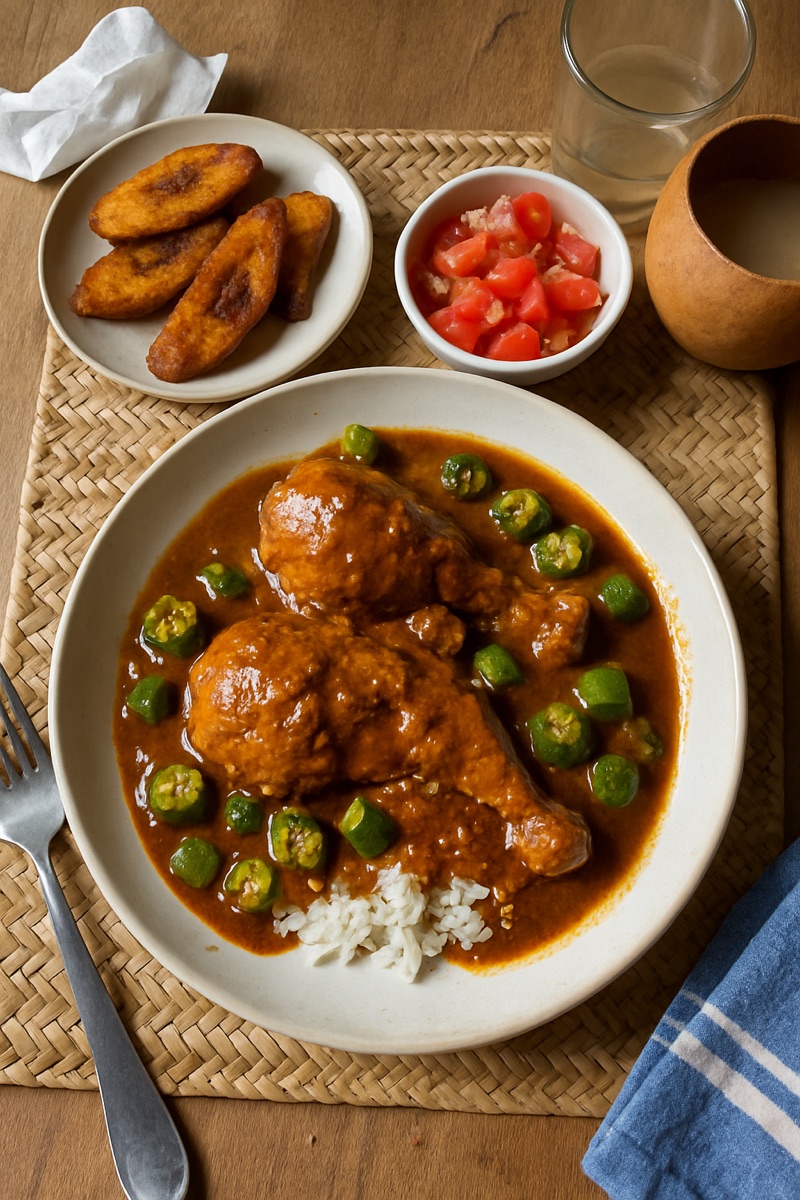
What Congolese food is built on
The DR Congo has more than 450 ethnic groups, each with its own way of cooking, so its cuisine varies widely from one province to the next. Belgian influence shows in bread and beer, and the eastern provinces carry an Arab and Swahili influence in dishes such as pilau. The farmland grows maize, rice, cassava, sweet potatoes, yam, taro, plantain, tomatoes, pumpkin, peas and nuts, and wild plants, mushrooms, honey, bushmeat and river fish are gathered, hunted and sold at markets and by the roadside.
A Congolese meal is a starch, a vegetable and, when there is money for it, meat or fish in a stew. Goat is the most widely eaten meat, but because meat is expensive most meals are eaten without it. Several starches and sauces are usually cooked at once and laid out buffet-style, so each person picks what they want. Pili pili, a very hot pepper sauce, is served with nearly everything.
Starches: fufu, kwanga, plantain and rice
- Fufu — Cassava flour, often mixed with maize flour in Kinshasa, beaten into boiling water until it becomes a smooth, elastic dough. It is rolled into balls by hand and dipped into the stew, often with a thumb-print to scoop the sauce. Depending on the province it is also called bidia, nshima or bugali.
- Kwanga (chikwangue) — Cassava soaked in water to ferment for up to 14 days, pounded into a paste, wrapped in ngungu (Megaphrynium) or banana leaves and steamed for up to two hours. It keeps for several days in its leaves without refrigeration and is produced commercially across the country.
- Makemba and lituma — Plantain (makemba in Lingala), eaten ripe or green, grilled, boiled or fried. Lituma is plantain mashed and shaped into balls, a staple of the Équateur and the north-western provinces, home of the Ngala people.
- Loso na madesu — Rice (loso) with beans (madesu), the everyday plate of Kinshasa. The beans are stewed on their own, sometimes with beef, tripe, pork or fish, or cooked together with cassava leaves as pondu na madesu.
Greens and sauces
- Pondu (saka saka) — Cassava leaves pounded in a mortar and simmered for hours, then cooked with red palm oil, onion, leek, garlic and smoked fish. It is eaten across the whole country, and each province has its own version, some adding sweet potato and maize, others meat or fish.
- Fumbwa — Leaves of Gnetum africanum, rich in iron, cooked in a peanut sauce, often with smoked fish. It is originally a dish of the Bakongo of Kongo Central, in the far south-west, and is a classic partner for kwanga.
- Moambe chicken — Chicken simmered in the sieved pulp of palm nuts until the red oil rises to the surface, the dish most often given as national. The name moambe (mwambe) also covers a peanut sauce in the west of the country, and French Wikipedia describes soso ya mwamba as chicken in roasted peanut and tomato sauce.
Fish, grills and insects
- Liboke — Fish or meat parcelled in banana leaves with tomato, onion, peppers, garlic and ginger, then cooked in the oven or on a grill over the fire. Fish, usually capitaine (Nile perch) or catfish, is the most popular filling. It comes from the Ngala of the Équateur and has spread across both Congos.
- Makayabu — Salted, dried cod, soaked and cooked in a tomato or palm oil sauce. Its name comes from the Portuguese *bacalhau*, a reminder of centuries of trade along the Atlantic coast.
- Ntaba and kamundele — Ntaba is grilled goat, the country's favourite meat; kamundele are beef skewers sold from street grills. Both belong to the Congolese barbecue, alongside braised fish and chicken grilled over charcoal in a spicy sauce.
- Mbinzo — Caterpillars, often cooked with ground African pistachio seeds (mbika). Edible insects such as caterpillars and grasshoppers (makelele) are eaten in many parts of the country and have a nutty flavour.
Snacks and drinks
- Mikate — Congolese doughnuts: balls of flour, water, yeast, sugar and a little salt, deep-fried until puffed. They come plain or flavoured with pineapple, vanilla, banana, ginger or coconut, and are eaten as a snack, at breakfast or for dessert.
- Palm wine and tangawisi — Palm wine (lungwila) is the sap of a palm tree fermented by natural yeasts to between 5 and 7 percent alcohol. Tangawisi is the non-alcoholic choice, a juice of ginger and pineapple.
Regional Congo
In Kinshasa, regional food is eaten at the nganda, a cross between a bar and a restaurant. Riverside nganda serve baked fish with plantains from up the Congo River; Kongo nganda serve fish in a vegetable sauce with kwanga, from downriver; Kasai nganda serve goat with rice and greens. The Équateur and the north-west are the land of lituma, liboke and mosaka, a palm pulp sauce. Kongo Central cooks fumbwa and nkovi. In the Kasai, chicken comes in a basil sauce and the Luba prize mushrooms as a stand-in for meat. In the east, around the Kivus, pilau rice spiced with cinnamon, ginger and cumin and kachumbari, a salad of onion, tomato and chili, show the pull of East Africa.
Cook Congolese food at home
Moambe chicken is the dish most often called the national dish of the DR Congo. Copper has full recipes for moambe chicken, fufu and pondu, with ingredients and step-by-step methods, on our page about the food of the DR Congo, next to other Central African recipes.
Kwanga, liboke and saka saka are shared across the river with Brazzaville, and pounded cassava leaves are eaten as far east as Uganda. Compare with the traditional food of the Republic of the Congo and the traditional food of Uganda.
The recipes
- Moambe🇨🇩 Congo DRC · 1 hour and 55 minutes
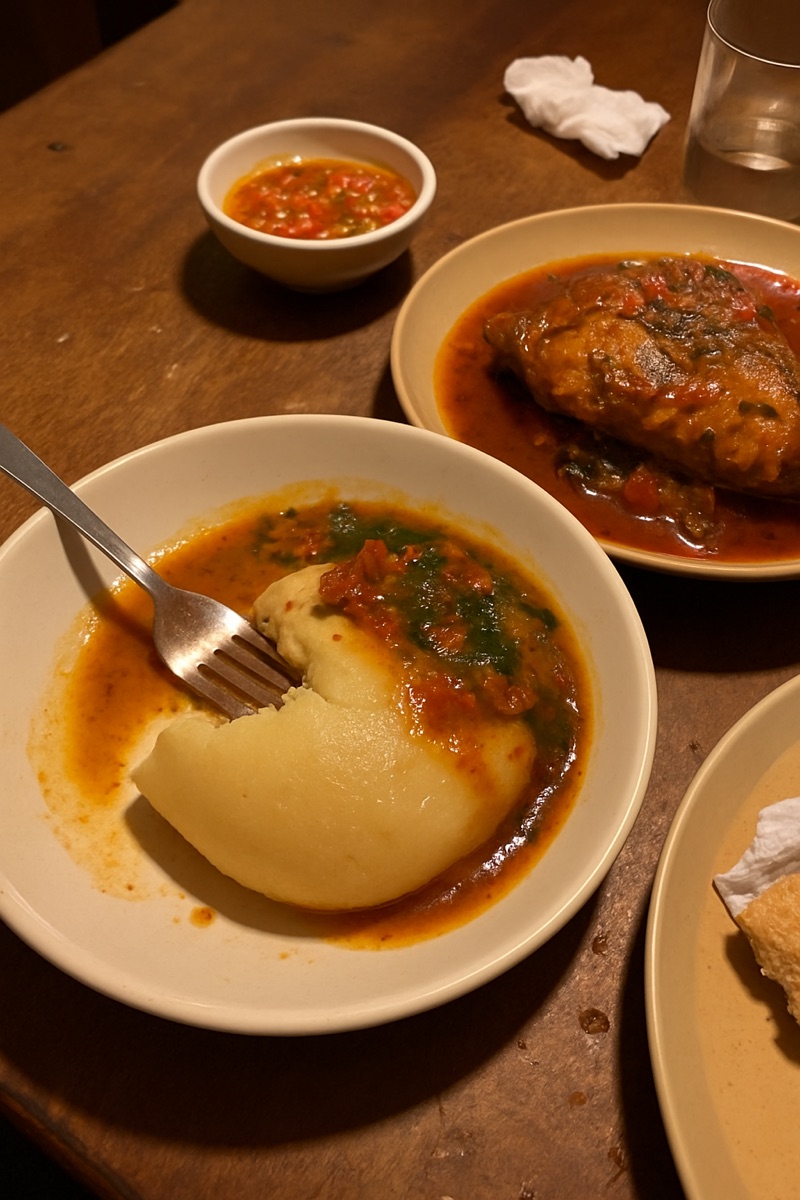 Fufu🇨🇩 Congo DRC · 30 minutes
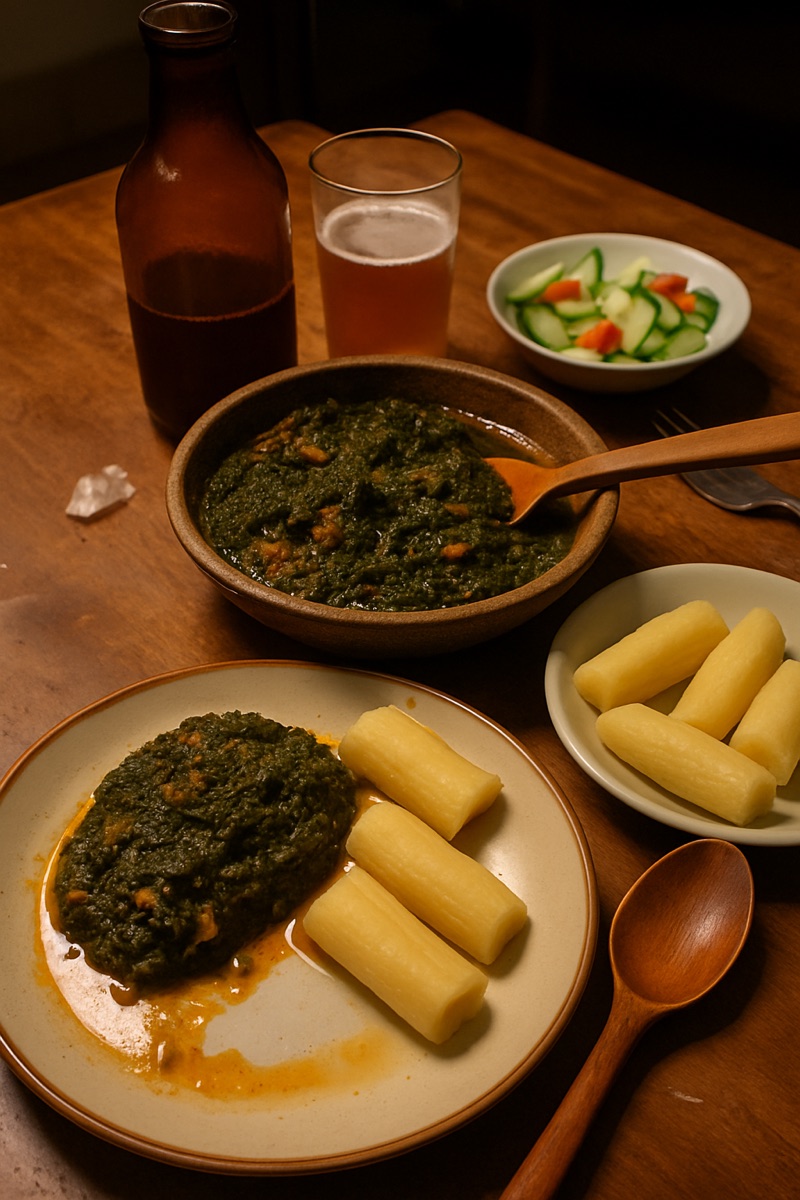 Saka saka🇨🇩 Congo DRC · 2 hours and 5 minutes
Questions people ask
What is the most popular food in the DR Congo?
Fufu with pondu is the everyday meal, and moambe chicken is the dish most often called national. Loso na madesu (rice and beans), kwanga and grilled goat are also eaten all over the country.
What do Congolese people eat for breakfast?
Mikate, deep-fried doughnut balls, are a common breakfast and snack, often with tea or coffee. Crêpes are also eaten in the morning, and leftovers from the previous evening's starch and stew are common too.
Is Congolese food spicy?
The dishes themselves are often mild, but pili pili, a very hot pepper sauce, is served with nearly every meal so each person adds their own heat. Spices are used less in the far south.
What is kwanga?
Kwanga, or chikwangue, is fermented cassava paste wrapped in leaves and steamed. It keeps for days in its wrapping and is eaten with sauces such as fumbwa, pondu or fish stews.
What do people drink in the DR Congo?
Palm wine, tangawisi (ginger and pineapple juice) and local beers such as Primus are the most common. Lotoko is a strong home-distilled spirit made from maize and cassava.
Keep reading
- What is the national dish of the DR Congo?
- Traditional food of Cameroon: 13 dishes to know
- Traditional food of the Central African Republic: 12 dishes to know
- Traditional food of Chad: 12 dishes to know
- Traditional food of Congo: 10 dishes to know
- Traditional food of Equatorial Guinea: 12 dishes to know