 COPPER
Traditional food of Chad: 12 dishes to know
Chadian food is built on millet and sorghum, cooked into boule, a stiff dough eaten every day with a shared sauce. The sauces carry the flavour: daraba of okra and peanut, tagalié of dried meat and dried okra, black sesame or leaf sauces. Grilled meat, river fish such as capitaine, kissar millet crêpes and hibiscus tea complete the table.
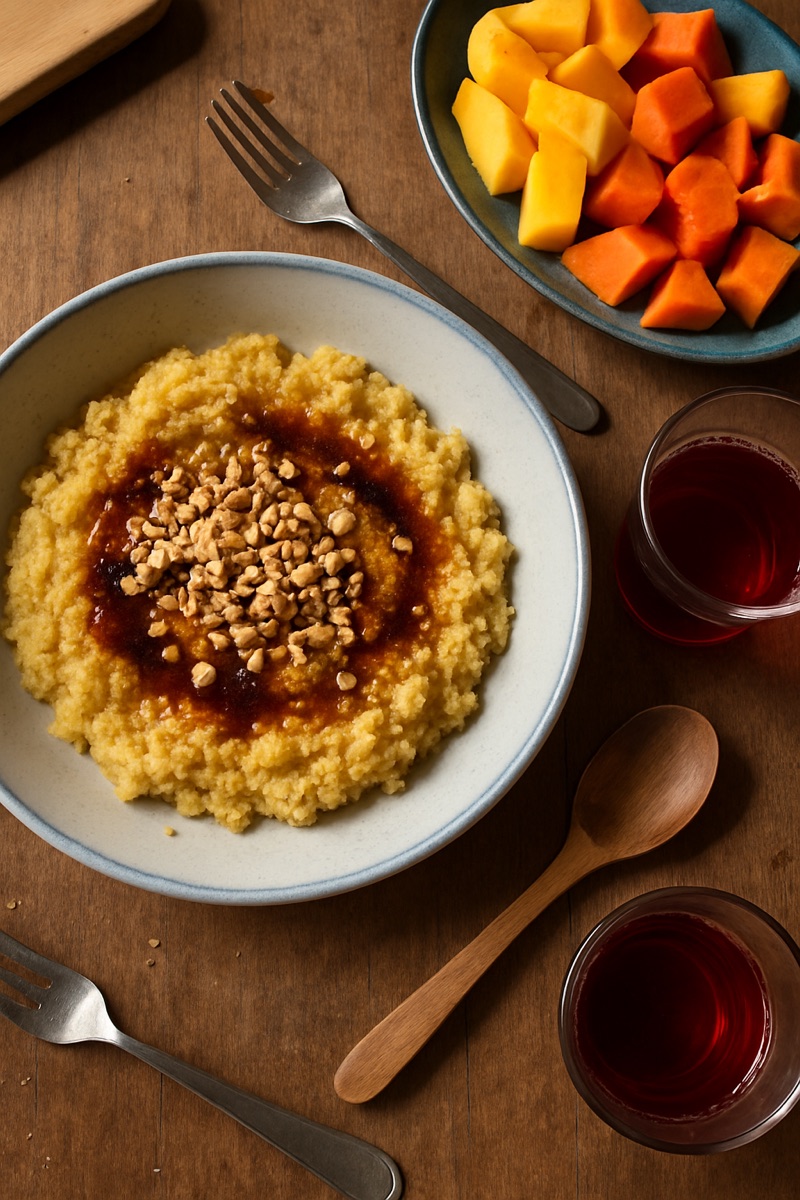
What Chadian food is built on
Chadian cooking has its roots in the ancient civilisations of the Lake Chad basin. As early as the 9th century, the Kanem empire was already eating *dihé*, the spirulina the Kanembu still harvest on the shores of the lake. The grains are millet and sorghum above all, with rice and fonio, plus maize, cassava, sesame and beans. The droughts of the 1970s and 1980s cut harvests and dried up some fishing grounds.
The encyclopedia *Countries and Their Cultures* goes as far as saying there is no shared national food culture, given how different Chad's peoples are, but one dish is common throughout the country: a set porridge of sorghum or millet flour served with sauces of meat, dried fish, tomato, onion and spices. That is the boule.
Fresh or dried okra, peanuts, dried tomato, néré seeds for aroma, chilli, garlic and onion season most dishes, and sesame and shea butter are used too. Chad is a livestock country: chicken, goat, beef, mutton and a little camel are grilled, and fish is eaten everywhere. The main meal is usually eaten in the evening, from a large shared plate on a mat on the ground, with men and women often in separate areas.
Boule, kissar and porridge
- Boule — A stiff dough of millet or sorghum flour beaten into boiling water and turned out as a dome, close to a very firm polenta. French Wikipedia calls it the most popular dish in Chad, eaten every day. It has a name in each language: *esh* or *asida* in Chadian Arabic, *biri* in Kanembu, *gou* in Zaghawa, *tibi* in Tedaga, *mour* in Sara, *mourou* in Ngambay and *binan* in Laka. It is served on a tray called a gouffa.
- Kissar — A thin sourdough crêpe of millet or rice, eaten with sauces such as tagalié. It is more common in towns than in the countryside. Millet and sorghum flour also make bread, pancakes and fried balls; *aiyash*, millet balls dipped in sauces, is eaten by Chadian Arabs.
- La bouillie (madidé) — The breakfast porridge, served hot. It is called *madidé* in Chadian Arabic and *byan* in Sara. Versions include hulled millet with white peanut paste, curdled milk and wheat flour; whole millet flour; and white millet with milk and sugar. It can be made tangy with lemon or buttermilk and topped with bananas, peanuts or ginger.
Sauces for the boule
Besides the five sauces below, Chadian cooks make *mouloukhiye*, a slippery green-leaf sauce; *moula loubiya*, called *tan bi moujoh* in Sara, made with bean leaves and peanut paste; and *koumranga* or *moula hidjilidj*, from the leaves of the soapberry tree.
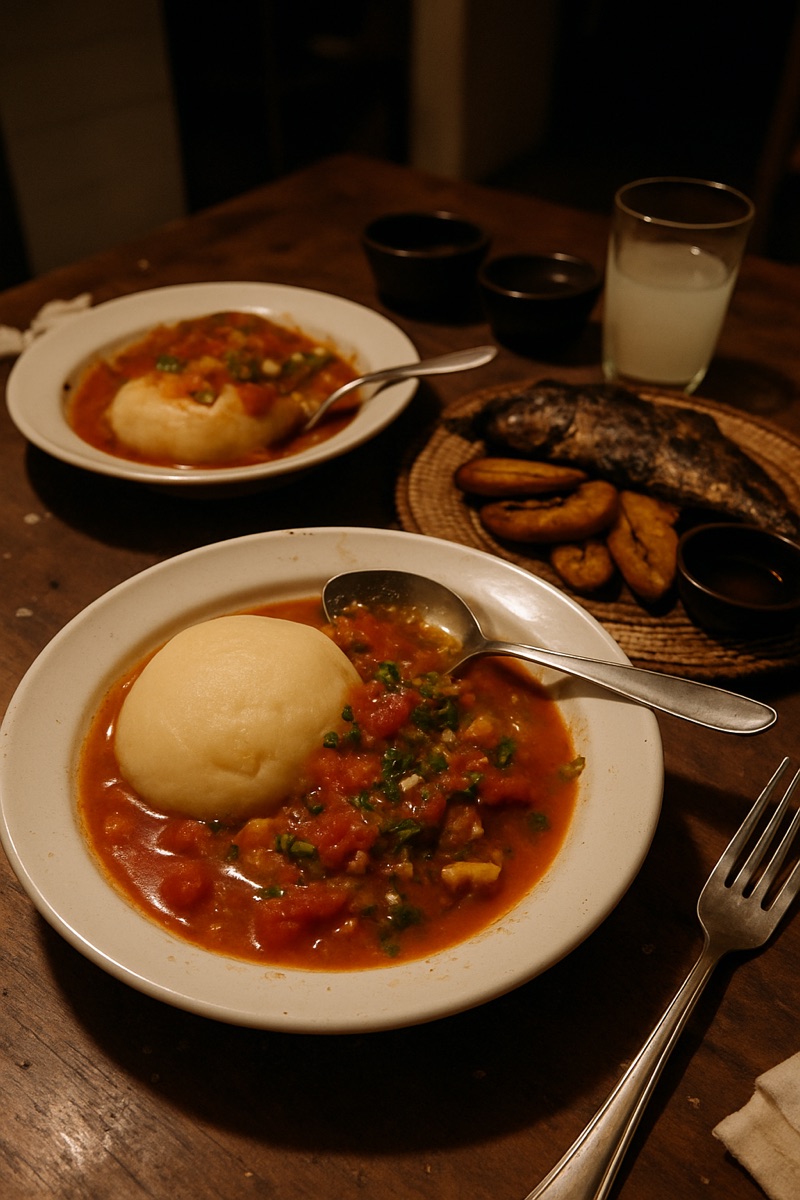
- Daraba — A stew of okra, tomato, sweet potato and greens, thickened with peanut paste. It is one of the Chadian dishes best known abroad, served with boule or rice.
- Tagalié — A sauce of *charmout*, dried meat, cooked with ground dried okra, onion, garlic and dried tomato. It is eaten in Chad and Sudan, with kissar, bread or boule.
- Black sesame sauce — Called *moulah soum-soum*: chicken, mutton or beef, fresh or smoked, browned with Chadian spices, then simmered with black sesame paste until the oil rises to the surface. It is served with boule of maize, millet or cassava.
- Karkandji (yire) — Sorrel leaves cooked with meat or fish, fresh, dried or smoked, and seasoned with peanut paste or sesame flour.
- Sauce boudou — Amaranth leaves usually cooked with smoked fish, sometimes with meat or fresh fish, plenty of onion and garlic, with or without peanut paste.
Meat, fish and soups
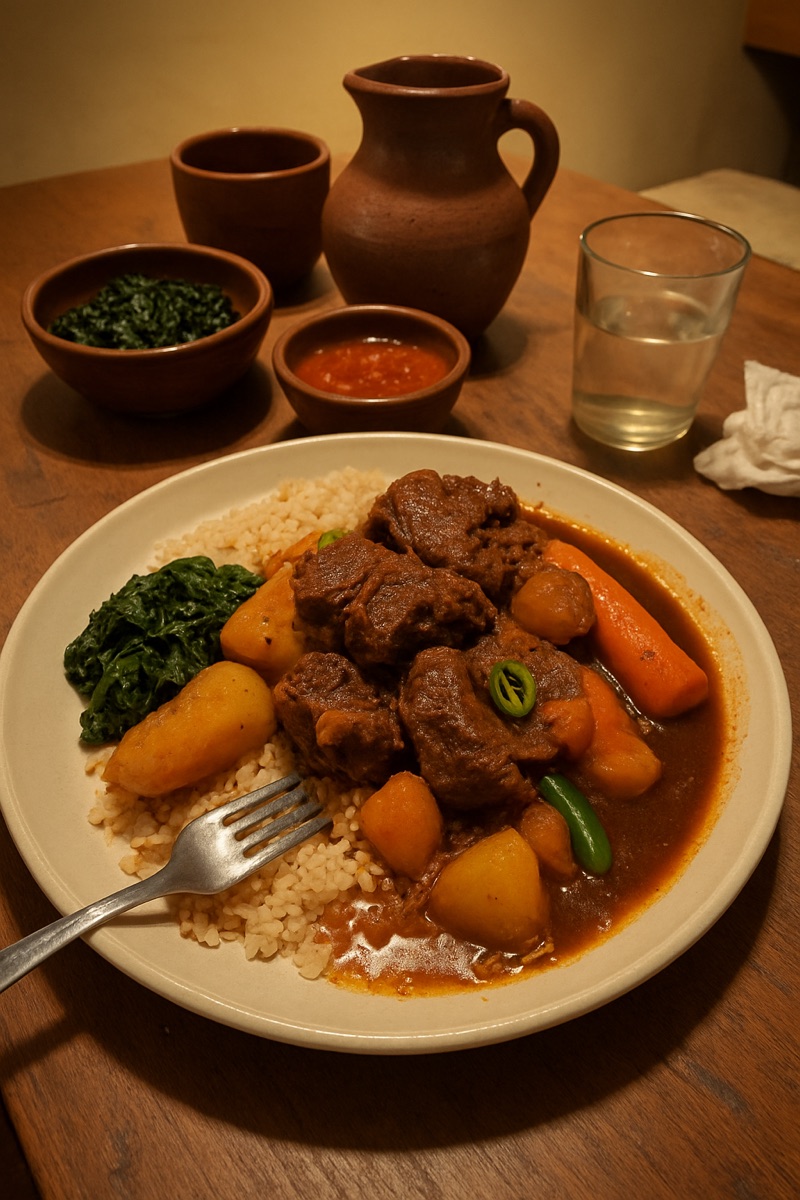
- Doulouf — Also called *kourakoura* or *jarret de boeuf*: beef shank (*dihine bagar*) stewed on the bone in a tomato, onion and spice sauce for at least two hours, until the meat comes away from the bone. It is served with boule or rice.
- Sauce longue — *Tan koul* or TK, the "long sauce" of southern Chad, made with grilled meat or with smoked or fresh fish.
- Chourba — A traditional soup of meat or fish with tomato, oil, onion, garlic and parsley.
- Grilled locusts — Locusts, called *djarat* in Chadian Arabic, are grilled directly over the fire and seasoned, or fried with onion, lemon and chilli. Termites and crickets are also toasted.
North and south
Chadian food changes from north to south. The north is home to nomadic Arab and Toubou herders who rely on dairy and meat, and dates, called *tamour*, are eaten every day there and baked into pastries such as *diblas*. The south has more fresh produce, fruit and spices, eats red beans and cooks sauce longue. Boule is common ground for both. Fish is eaten all over the country, and capitaine (Nile perch) is the favourite.
Tea is the most common drink, green or red, and comes with meals in the Sahel. *Karkanji* is a red tea of dried hibiscus flowers with ginger, cloves, cinnamon and sugar. In the south, non-Muslims drink *bili-bili*, a millet beer also brewed in northern Cameroon. *Jus de fruit* is a drink of mango, milk, sugar and cardamom, and millet is also brewed into *merisä*, a local beer.
Cook Chadian food at home
Our article on the national dish of Chad explains boule and its many names in detail. Copper has full recipes for boule, daraba and doulouf, with ingredients and step-by-step methods, on our page about the food of Chad, next to other Central African recipes.
Bili-bili and the cereal dough cross into Cameroon, and cassava takes the place of millet further south. Compare with the traditional food of Cameroon and the traditional food of the Central African Republic.
The recipes
 Daraba
 Doulouf
Questions people ask
What is the most popular food in Chad?
Boule, a stiff dough of millet or sorghum flour eaten every day with a sauce such as daraba or tagalié. French Wikipedia calls it the most popular dish in the country.
What do people eat for breakfast in Chad?
La bouillie, called madidé in Chadian Arabic, a hot millet porridge made with peanut paste and curdled milk, or with milk and sugar.
Is Chadian food spicy?
Chilli is one of the common seasonings, along with garlic, onion, dried tomato and néré. Sauces such as black sesame sauce are cooked with Chadian spices and fresh chilli, but the heat depends on the cook.
What is charmout?
Charmout is dried meat used in Chadian and Sudanese cooking. It is the base of tagalié, a sauce made with ground dried okra and eaten with kissar, bread or boule.
What do people drink in Chad?
Tea is the most common drink, especially karkanji, a red hibiscus tea with ginger, cloves and cinnamon. Non-Muslims in the south also drink bili-bili, a millet beer.
Keep reading
- What is the national dish of Chad?
- Traditional food of Cameroon: 13 dishes to know
- Traditional food of the Central African Republic: 12 dishes to know
- Traditional food of the DR Congo: 13 dishes to know
- Traditional food of Congo: 10 dishes to know
- Traditional food of Equatorial Guinea: 12 dishes to know