 COPPER
Traditional food of Equatorial Guinea: 12 dishes to know
Equatoguinean food is built on cassava, plantain, malanga and yam, with fish, peanuts, palm kernels and plenty of chilli. Soups and stews dominate, and many dishes are cooked wrapped in banana leaves. The best-known are pepesup, a spicy fish and plantain soup, chicken in peanut sauce, bambucha, a Fang cassava-leaf stew, and sauces made with modica, ground African mango seeds.
What Equatoguinean food is built on
The cuisine of Equatorial Guinea comes from its native peoples, the Fang, Bubi, Ndowé and Annobonese among them, with Cameroonian and Nigerian influences and a Spanish layer left by the colonial period, which ended in 1968. Recipes change from one community to the next, but every group uses largely the same ingredients. From Spain the country inherited a taste for sweet things, marinades (*adobo*) and tapas; Portuguese traders had earlier brought peanuts and cassava from Brazil, and tomato and maize also came from the Americas.
Cassava and yam are the base of the diet, eaten boiled or fried, along with plantain, sweet potato, breadfruit and malanga (cocoyam), whose leaves are eaten too. Fishing is a way of life for a large share of the population, so fish, fresh or smoked, dominates; chicken and goat are the usual meats. Sauces are hot: chillies, simply called *picante*, go into almost everything, together with ginger, *crafís* (dried river crayfish ground to a powder), palm kernels, which give a thick reddish juice, and Maggi stock cubes. Peanut sauces are the most typical of all.
Soups and stews
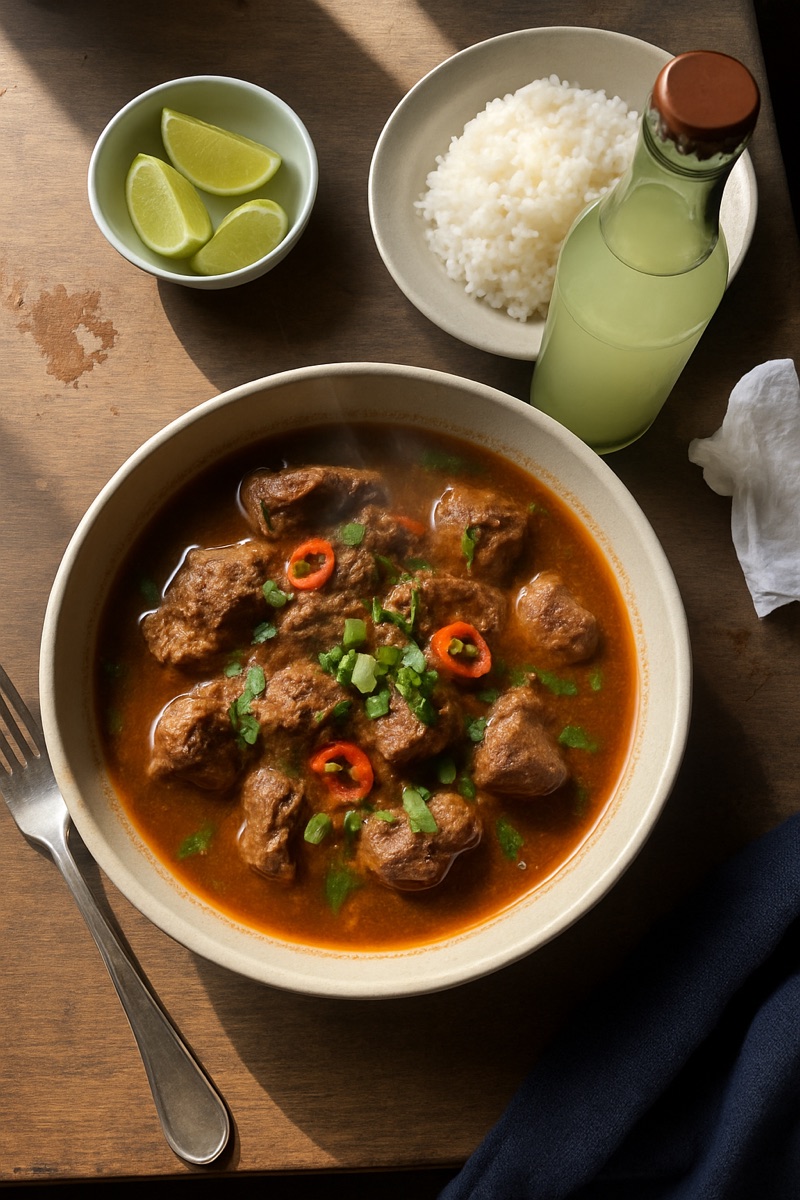
- Pepesup — The country's signature dish, named from the English "pepper soup": a thin, hot broth of fish and green plantain with onion, tomato, parsley, lime and African chillies such as piri-piri. Spanish Wikipedia calls it the most popular dish in the country, eaten by every ethnic group, mostly on weekend mornings in cantinas with a sign reading "Hay pepesup".
- Chicken in peanut sauce — Ground peanuts mixed with water and simmered with chicken, chilli, tomato and onion. The Fang call it *sup-oguon*, from *oguon*, peanut; the Bubi of Bioko adopted it from the Kombe. Fish and goat are cooked in the same sauce.
- Bambucha — Called *mendja* in Fang: tender cassava leaves pounded and boiled with chilli and the juice of palm kernels, which locals call dates. Malanga is sometimes added. It started with the Fang and has spread to many other groups, and is eaten with boiled or fried plantain or cassava.
- Modica sauce — Modica, locally called chocolate, is not cocoa but the seed of the African mango, roasted, crushed to a paste and dried into a hard block that is grated into the pot. Meat or fish is stewed in it with tomato, onion and garlic and served with boiled cassava. Pangolin with chocolate is another version.
- Bitalif — The Pidgin English name used in Malabo for a stew of meat or fish with bitter leaf, egusi melon seeds, palm oil and crayfish. It is the same dish Cameroon calls ndolé.
Wrapped in leaves
- Envueltos (dyom) — Banana leaves or other broad leaves filled with vegetables, meat or fish, passed over the fire to soften them, then cooked in a pot with sand or among the embers. Every place and group has its own: bird, meat, palm grub or pumpkin with dried fish, and *ebafono*, a Fang parcel of ground peanuts and maize. They are served with plantain, fufu or rice.
- Abalá — A paste of malanga with salt and palm oil, wrapped in banana leaves and cooked. It is typical of Malabo and Bata, the two main cities.
Starches and breads
- Fufu — Boiled plantain and cassava, mashed and kneaded into a smooth, stretchy dough that is pinched off by hand to scoop up soups and sauces. The Ndowé also serve *ngüese*, boiled cassava, as a side.
- Pïxòj — The cassava bread of Annobón, eaten with every meal on the island. The cassava is peeled, washed, ground and pressed, and the flour is cooked in a pot lined with banana leaf. Besides the plain white version there is a red one made with palm oil and a coconut one.
Bioko, Annobón and the mainland
Each island and region keeps its own dishes, but many have travelled. The writer Francisco Zamora Loboch noted that in Malabo you can find a Bubi chef making mendja, a Fang preparing pïxòj from Annobón and a Creole cooking bocaó from Bioko. Calelú came to Bioko from São Tomé, made with chicken, okra, palm oil and a sprig of pepper. Tortilla de patatas, often a café breakfast, and paella are found mostly in Malabo and Bata.
- Bocaó — A Bubi broth of sisa or tolepá leaves, close to spinach or chard, from the island of Bioko. It usually contains fish, palm oil and salt, and comes with malanga, plantain or another local tuber.
- Contrichop — Popular on Bioko: finely cut malanga leaves cooked with sardines or other fish, or with chicken, squirrel or porcupine, plus onion, chilli, salt and palm oil. It comes from the Fernandinos, the Creole community of Cuban, Liberian and other origins settled on the island.
Sweets and drinks
Desserts are not a habit after meals, but *macará*, fried balls of ripe banana dough, and *concodos*, caramelised peanuts, are common. The traditional drinks are *topé*, palm wine, and *malamba*, made from fermented sugar cane. Beer has become the most popular drink in the country, alongside tropical fruit juices and *ginger*.
- Akwadu — The best-known sweet, eaten as dessert or breakfast: bananas sliced or halved, brushed with butter, baked or grilled until golden, sometimes flavoured with orange and lemon juice, sugar or honey, and topped with grated coconut.
Cook Equatoguinean food at home
Our article on the national dish of Equatorial Guinea explains why pepesup, not succotash, is the answer. Copper has full recipes for pepesup, chicken in peanut sauce and fufu, with ingredients and step-by-step methods, on our page about the food of Equatorial Guinea, next to other Central African recipes.
Many dishes are shared across the border. Compare with the traditional food of Cameroon, home of ndolé, and the traditional food of Gabon, where modica is called odika.
The recipes
- Pepper soup🇬🇶 Equatorial Guinea · 35 minutes
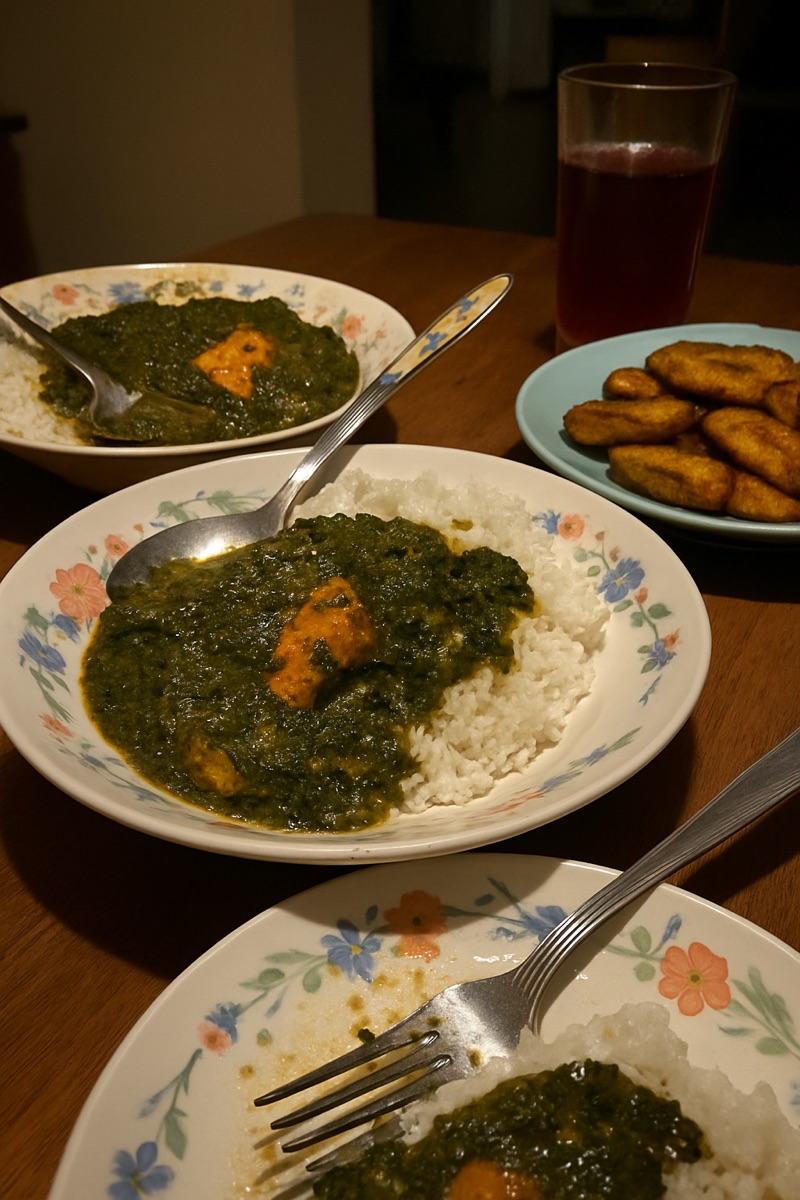 Okono🇬🇶 Equatorial Guinea · 1 hour and 20 minutes
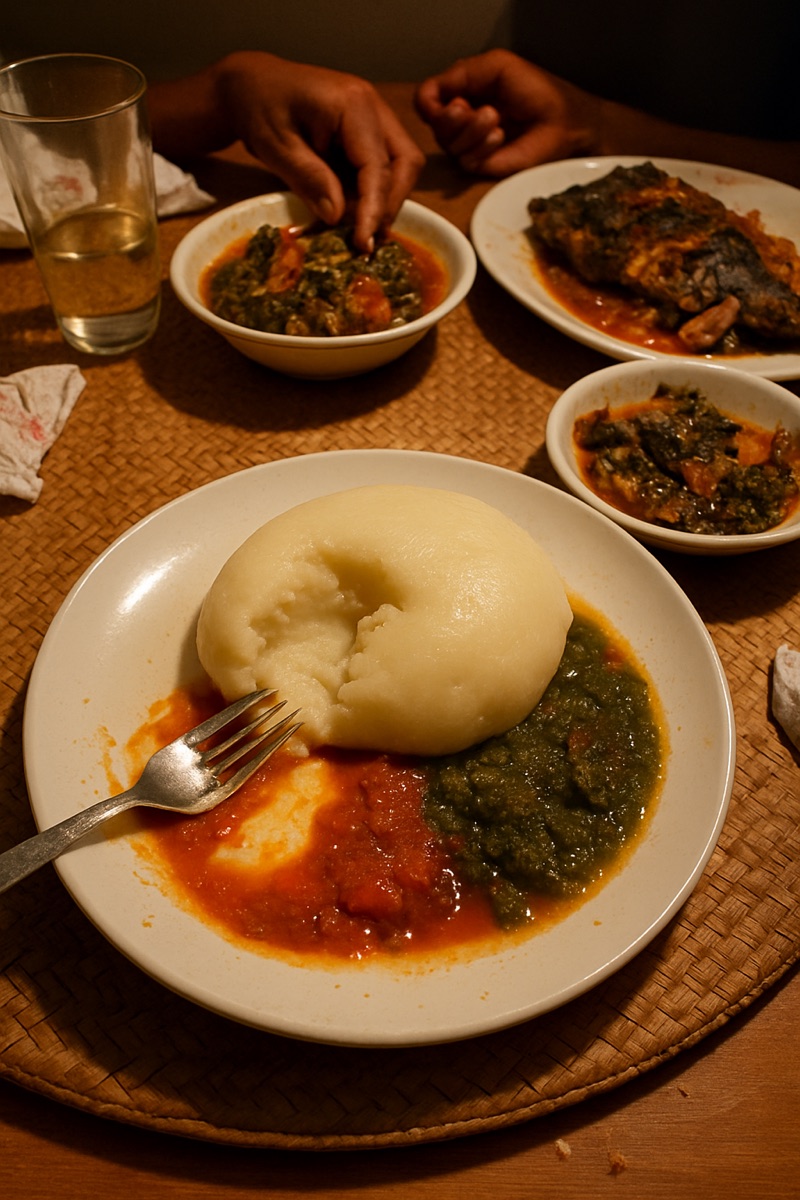 Fufu🇬🇶 Equatorial Guinea · 35 minutes
Questions people ask
What is the most popular food in Equatorial Guinea?
Pepesup, a spicy fish and plantain soup, is described as the most popular dish in the country, eaten by every ethnic group. Chicken in peanut sauce is the most common sauce dish.
Is Equatoguinean food spicy?
Yes. Spanish Wikipedia describes the cuisine as strongly flavoured and very spicy, and chillies, called picante, are used whole, chopped or ground in most sauces.
What is modica?
Modica, locally called chocolate, is the seed of the African mango, roasted, pounded and dried into a hard block that is grated into stews. It has nothing to do with cocoa.
What do people eat for breakfast in Equatorial Guinea?
Pepesup is a weekend morning dish in cantinas, akwadu, baked bananas with coconut, is eaten as breakfast or dessert, and Spanish tortilla de patatas is often served for breakfast in cafés.
What is bambucha?
Bambucha, or mendja in Fang, is a thick stew of pounded cassava leaves boiled with chilli and palm kernel juice, served with plantain or cassava. It is the Equatoguinean member of the saka saka family.
Keep reading
- What is the national dish of Equatorial Guinea?
- Traditional food of Cameroon: 13 dishes to know
- Traditional food of the Central African Republic: 12 dishes to know
- Traditional food of Chad: 12 dishes to know
- Traditional food of the DR Congo: 13 dishes to know
- Traditional food of Congo: 10 dishes to know