 COPPER
Traditional food of the Central African Republic: 12 dishes to know
Central African food is built on cassava: its fermented flour makes the daily starch, gozo, and its pounded leaves make the most common sauce, ngoundja, cooked with peanut paste and palm oil. Wild forest leaves called koko, river fish such as capitaine cooked in leaves (maboké), peanuts, okra and seasonal caterpillars complete a cuisine of slow sauces eaten with the hands.
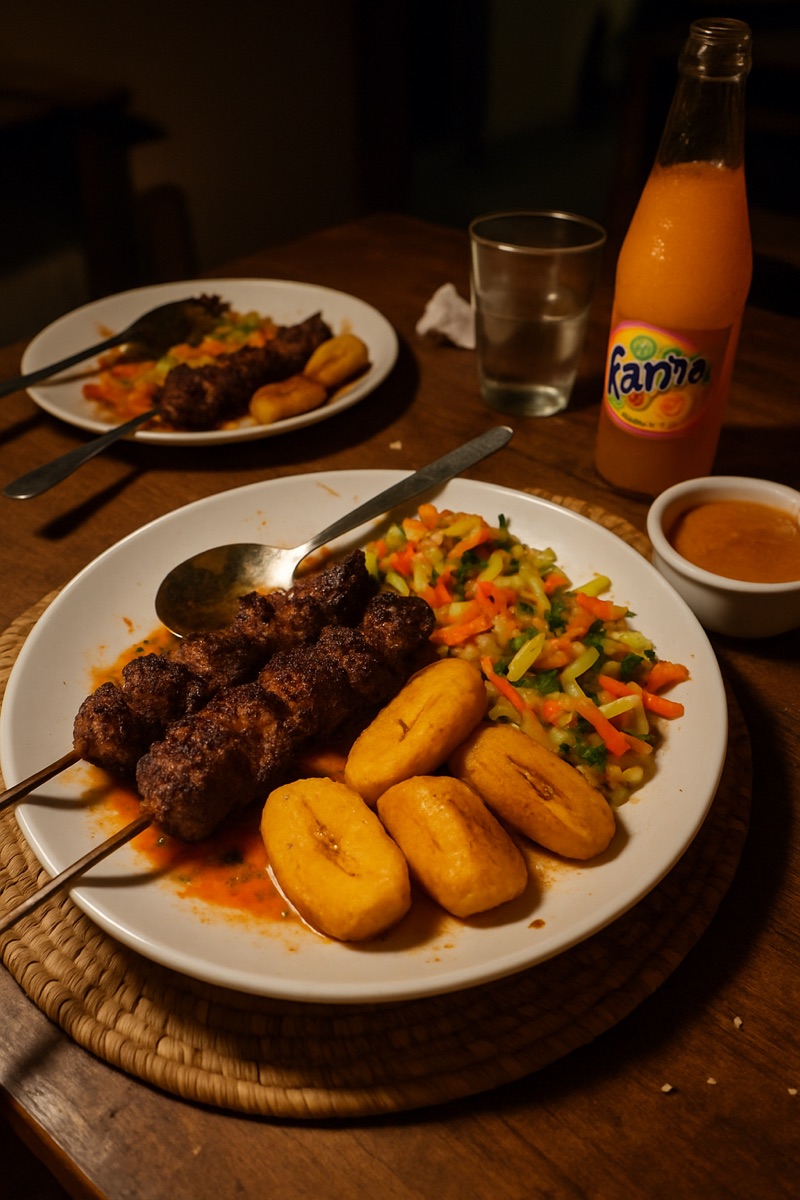
What Central African food is built on
Cassava is the staple of almost every household in the Central African Republic. French Wikipedia describes two main ways of eating it: kneaded into a ball, gozo, with a sauce, or cooked into a porridge with peanuts, called *sawalé* in Sango. Sweet potato, taro, yam, plantain, dried beans and peas add variety, and rice, squash and pumpkin are part of the daily diet in Bangui.
Sauces carry the meal. They are built on leaves, cassava leaves (ngoundja) and koko first of all, thickened with peanut paste, pumpkin or sesame seed paste, and cooked in palm oil, with okra (gombo), onion, garlic and chilli. Meat can be scarce, so protein often comes from smoked or fresh fish, peanuts and insects. Beef raised by Mbororo Fulani herders, goat, village chicken and bushmeat are eaten when available. Much of the food is gathered: at least 27 species of mushroom, called *kòmbò*, are eaten according to the season.
Cassava and leaf sauces
- Gozo — The everyday starch: cassava soaked for several days, sun-dried and milled, then worked into boiling water until it forms a smooth, elastic ball. Pieces are torn off with the fingers and dipped in the sauce. It plays the role fufu plays elsewhere in the region.
- Ngoundja (saka saka) — Cassava leaves pounded and cooked down with peanut paste and palm oil into a thick sauce eaten with gozo. French Wikipedia says about 95% of Central Africans eat it. Among the Yakoma, the leaves are only lightly pounded and cooked with half-crushed peanuts, a version called *kpoto ngoundja*.
- Kanda ngoundja — A cake of cassava leaves that French Wikipedia says is eaten by all Central Africans. It is a filling dish for people doing physical work, served with chikwangue, cassava balls, plantain or even bread.
- Yabanda (koko) — Koko is the leaf of Gnetum africanum, a wild vine gathered all year in the Lobaye forest. Cut very fine and cooked quickly in peanut sauce, it becomes yabanda, an everyday dish so fast to make that French Wikipedia compares it to fast food. It is cooked with smoked fish, fresh beef, smoked meat, caterpillars or mushrooms.
- Gbudu — A green amaranth widely grown in market gardens, sautéed with meat, fish or mushrooms. It is one of the leaf vegetables French Wikipedia lists in the typical Central African menu.
Meat, fish and forest food
- Kanda ti nyma — Spicy beef meatballs bound with ground pumpkin seeds rather than breadcrumbs, simmered in a tomato and groundnut sauce and thickened with okra. They are served with gozo or rice.
- Maboké — Fish, usually capitaine (Nile perch) from the Ubangi River at Bangui, seasoned and cooked in leaves. English Wikipedia names it among the fish dishes popular in the capital.
- Makongo — Caterpillars gathered from July to September in the Lobaye forest. They are cooked with koko, sweet amaranth, cassava leaves or spinach, or dried to keep, and French Wikipedia calls them a speciality enjoyed by almost every ethnic group. Grasshoppers, known as *kinda gozo*, are eaten the same way.
- Ngou ti kassa — A stew of taro and plantain cooked in palm oil or shea butter, thickened with pounded peanuts. It is eaten mostly by the Yakoma and Sango, the peoples who live along the Ubangi River.
Street food, bread and drinks
Roadside stands sell bakery bread, sandwiches, barbecued meat and snacks, and drinks mix village and town. Kangoya, palm wine tapped from a felled palm and sometimes flavoured with a bitter bark called dèkè, is drunk across the country; the dry season is the best time to tap it. Bili-bili is a sorghum beer, ngbako a spirit distilled from cassava and maize flour, and in the north people drink karkanji, made from hibiscus flowers. In towns, coffee and tea come with sugar and tinned evaporated milk.
- Chikwangue — Cassava paste fermented, wrapped in leaves and steamed into a firm loaf. It is the other main form of cassava in the country after gozo, and is eaten with kanda ngoundja and other sauces.
- Makara — Homemade fried bread sold by women at roadside stands, next to bakery bread, sandwiches and barbecued meat. English Wikipedia also lists chichinga, skewered barbecued goat, among the common foods of the country.
Regional dishes of the Central African Republic
The south-western forest, around the Lobaye, is koko and caterpillar country. The Aka people who live there eat wild yams, insects, wild fruit, mushrooms and game, along with koko and makongo in season. The Sangha river is known for its prawns. Along the Ubangi, the Yakoma and Sango cook ngou ti kassa and kpoto ngoundja, and Bangui eats capitaine and other river fish. The north, mostly Muslim and bordering Chad, Cameroon and Sudan, has its own leaves and spices:
- Dongo ti keke — The leaves of Piper umbellatum, known in French as *bois d'anisette*, a dish of the Sara, Kaba, Ngama and Ngambaye peoples of the north. They are cooked with bushmeat, beef or fish, and most often with bitter garden eggs (Solanum aethiopicum) and smoked fish or smoked meat.
Cook Central African food at home
The country has no official national dish; our article on the national dish of the Central African Republic explains why the answer is the gozo and ngoundja pair. Copper has full recipes for gozo, saka saka and kanda ti nyma, with ingredients and step-by-step methods, on our page about the food of the Central African Republic, next to other Central African recipes.
The same cassava ball with a leaf sauce runs through the whole region. Compare with the traditional food of Chad to the north and the traditional food of the DR Congo across the Ubangi.
The recipes
- Gozo🇨🇫 Central African Republic · 25 minutes
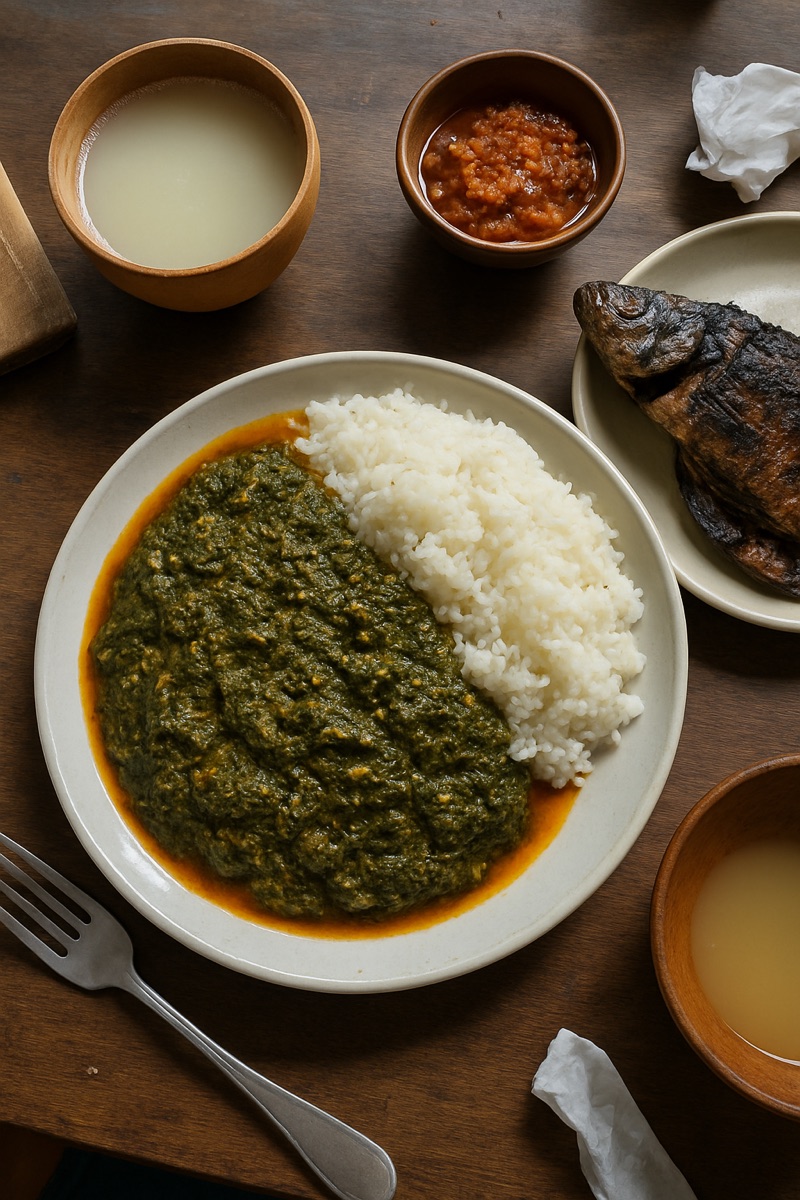 Saka saka🇨🇫 Central African Republic · 2 hours and 10 minutes
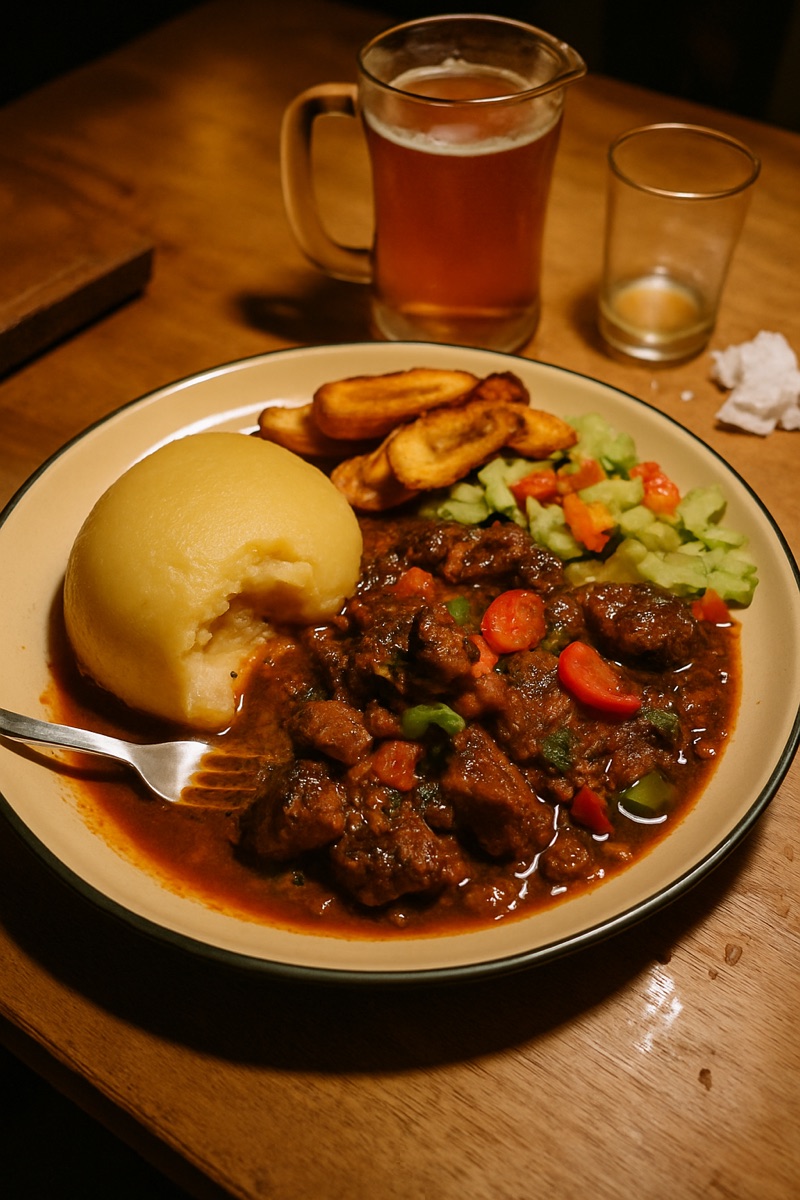 Kanda ti nyma🇨🇫 Central African Republic · 1 hour and 45 minutes
Questions people ask
What is the most popular food in the Central African Republic?
Gozo, a ball of fermented cassava flour, eaten with ngoundja, a sauce of pounded cassava leaves with peanut paste and palm oil. French Wikipedia says about 95% of Central Africans eat ngoundja.
What is gozo?
Gozo is the Central African cassava staple: cassava soaked for several days, sun-dried and milled, then worked into boiling water until smooth and elastic. It is eaten with the fingers and dipped in a sauce.
What is koko in Central African cooking?
Koko is the leaf of Gnetum africanum, a wild vine gathered in the Lobaye forest. Cut very fine and cooked in peanut sauce, it becomes yabanda, one of the most common everyday dishes.
Do people eat insects in the Central African Republic?
Yes. Caterpillars called makongo are gathered from July to September in the Lobaye forest, and grasshoppers, crickets and termites are also eaten. They are an important source of protein where meat is scarce.
What do Central Africans drink?
Palm wine (kangoya), sorghum beer (bili-bili), a cassava and maize spirit called ngbako, and karkanji, a hibiscus drink from the north. In towns, coffee and tea are served with sugar and evaporated milk.
Keep reading
- What is the national dish of the Central African Republic?
- Traditional food of Cameroon: 13 dishes to know
- Traditional food of Chad: 12 dishes to know
- Traditional food of the DR Congo: 13 dishes to know
- Traditional food of Congo: 10 dishes to know
- Traditional food of Equatorial Guinea: 12 dishes to know