 COPPER
Traditional food of Congo: 10 dishes to know
The food of the Republic of the Congo (Congo-Brazzaville) is built on cassava, plantain, peanuts, red palm oil and fish from the Congo River. Meals pair a starch, fufu or chikwangue, with a slow sauce. The best-known dishes are poulet moambé in palm nut sauce, saka saka of pounded cassava leaves, and liboké, fish steamed in banana leaves over embers.
What Congolese food is built on
Bananas, pineapples, taro, peanuts, cassava, rice and bread are the staples of Congo-Brazzaville. Cassava is used whole: the root becomes fufu and chikwangue, and the leaves become saka saka. Red palm oil, peanut paste, smoked or dried fish and chilli carry the sauces. Pepper matters: one of the most popular is the local *nungu* or *ndungu*, and another is pili-pili.
Meat is expensive, because it has to be hunted or imported, so everyday meals lean on fish, leaves and beans. Chicken is the meat of festivals. Food taboos depend on the people and the village: a family with a totem animal, seen as a spiritual protector, does not eat it. Fruit is everywhere: safou (*nsafu*), eaten raw, boiled, roasted or dried, mvuuta, lemons, plums, pineapple, kola nuts and bananas of many sizes and colours, some wild and some introduced. Termites, collected in flight or from the ground, are eaten with boiled cassava and beans, and palm fruit gives both palm oil and palm wine.
Most of these dishes are shared with Kinshasa, the capital of the DR Congo on the other bank of the river, and with Gabon, Cameroon and Angola. Names change from one side to the other: saka saka in Brazzaville, pondu in Kinshasa. Drinks include palm wine, called *nsamba*, traditional millet and sorghum beer, bissap and *tangawiss*, a ginger drink; beer and fruit juices, especially pineapple and mango, are the everyday choice.
Palm nut and peanut stews
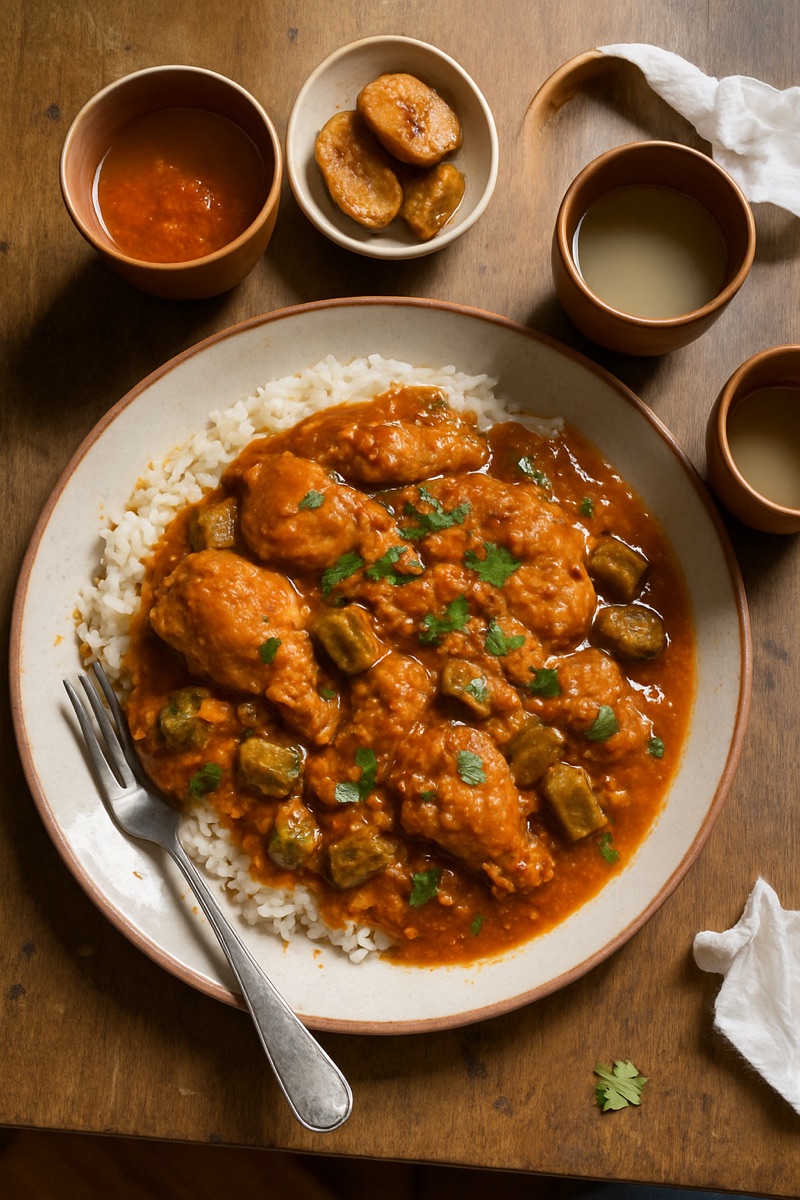
- Poulet moambé — Chicken simmered in moambe, the pulp of boiled and pounded palm nuts pressed through a sieve, until the sauce turns deep red and releases its oil. It is the dish most often cited as Congo's national dish, served with fufu, rice or plantain. Fish, beef or game are cooked in the same palm butter. Outside Central Africa, tinned palm nut pulp sold as *sauce graine* replaces the fresh nuts, and saka saka is often served on the side.
- Muamba nsusu — The peanut version of the chicken stew: peanut butter replaces the palm nut pulp. *Nsusu* means chicken in Kikongo, and the recipe is particularly associated with Congo-Brazzaville.
- Makayabu — Salted fish, soaked to remove the salt, then simmered in a sauce of tomato, onion and chilli. It is eaten with rice, fufu or chikwangue, and also with sweet potatoes. Like saka saka and moambe, it is cooked in red palm oil.
Leaves and beans
Leaves and pulses are the everyday side of Congolese cooking, often eaten without meat. Peanuts also give *yuuma*: roasted peanuts ground into a paste and served with boiled bananas, cassava and palm oil, seasoned with salt and pepper, with or without meat. In areas where cassava is scarce, beans replace it, with potato leaves in the stew.
- Saka saka — Cassava leaves pounded, boiled and simmered for a long time with palm oil, smoked or salted fish and peanut paste. It has no fixed recipe: depending on the family it is cooked with maize, papaya or coconut milk, and eaten with cassava, plantain, bread or rice. A 1967 Congolese postage stamp shows a woman pounding it.
- Fumbwa — Wild leaves chopped by hand, often dried in the sun to keep, and cooked into a sauce served with fufu or fish. It is called mfumbwa or koko in both Congos, and the same leaf is eru or okok in Cameroon.
- Madesu — Beans boiled in water, then fried in palm or peanut oil with tomato paste. Beef, ham hock, chicken or dried fish can be added, and the dish is eaten with rice or cassava.
From the river and the forest
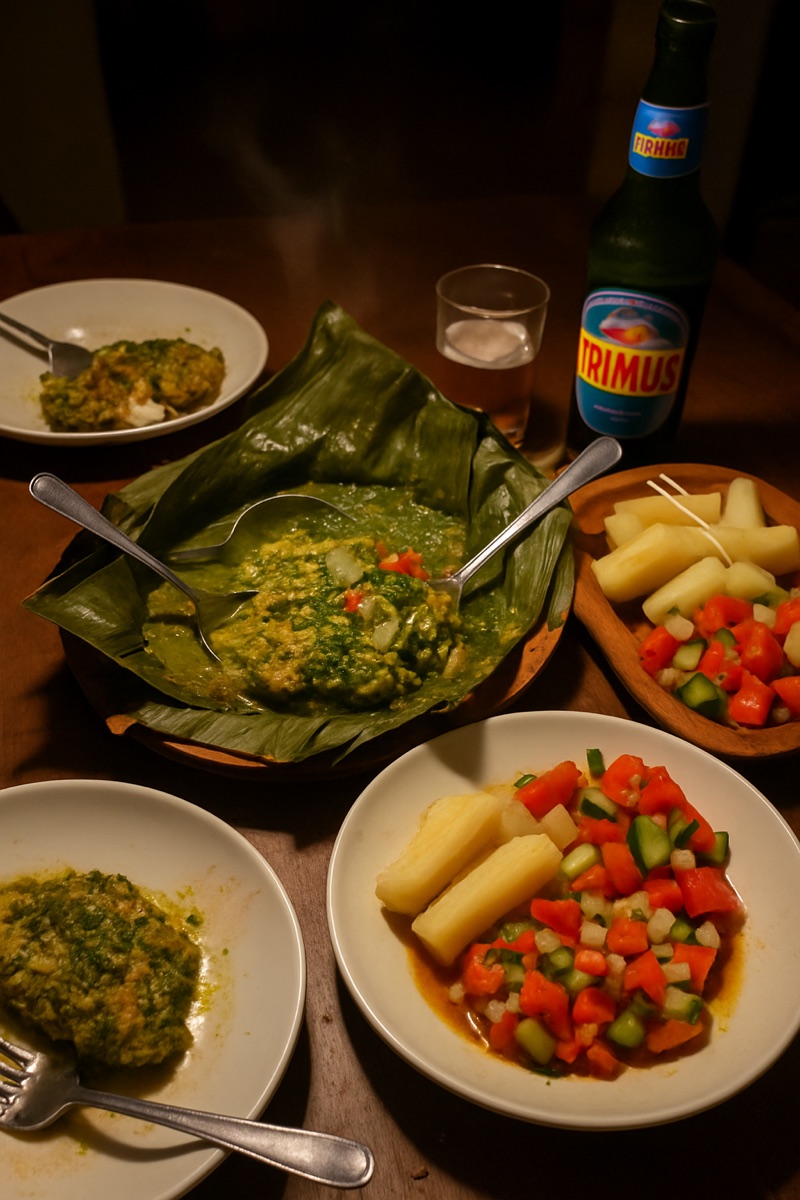
- Liboké — Fish or meat mixed with tomato, onion, peppers, garlic and ginger, sealed in banana leaves and cooked on a grill over a fire or in the oven. Capitaine, a river perch, is the most popular filling. The plural is maboké, and in 2025 the word entered the Petit Larousse dictionary. Parcels are sold by street vendors in Brazzaville, and the leaf is opened at the table so the steam escapes in front of the guests, the juices spooned back over the fish.
- Safou — The fruit of the safoutier (Dacryodes edulis), native to the Congo basin and in season from June to October. In Congo-Brazzaville it is eaten cooked, boiled or roasted on embers, and sometimes dried. It is treated more like a vegetable than a fruit, and is eaten the same way in Cameroon, Gabon, where it is called atanga, and Equatorial Guinea.
Cassava starches
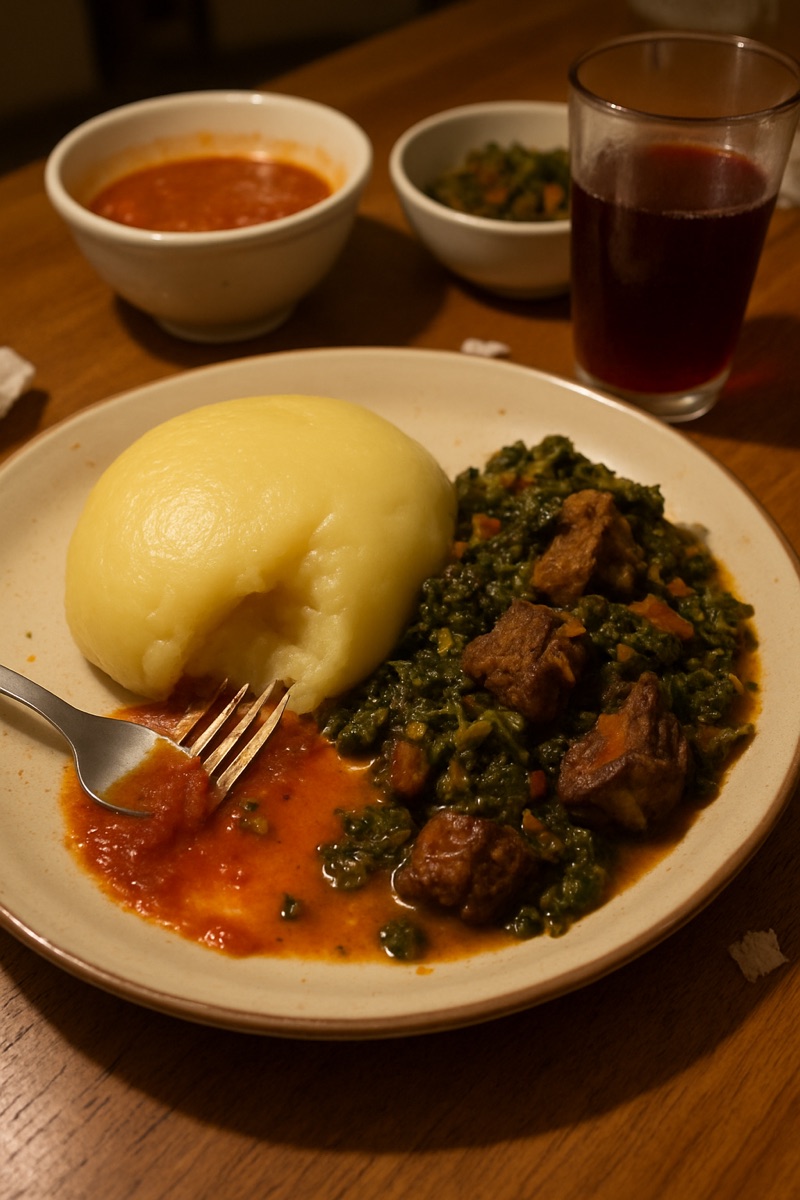
- Fufu — Cassava soaked, sun-dried and milled, often mixed with maize flour, then stirred into boiling water and worked into a smooth paste. Each diner pinches off a piece and uses it to scoop up the sauce. The trick is to slake a little of the flour in cold water and whisk it into the boiling water first, then rain in the rest while stirring hard, so no lumps form.
- Chikwangue — Fermented cassava paste wrapped in leaves and steamed into a loaf, called *kuanga* in Lingala and Kikongo and spelled *chicouangue* in the Republic of the Congo. The Batéké make their own version, *ongwélé*. It goes with everyday sauces the way bread or rice does elsewhere. French Wikipedia notes that cassava only became the region's staple at the start of the 20th century.
Cook Congolese food at home
No law names a national dish, but poulet moambé is the usual answer; see our article on the national dish of Congo. Copper has full recipes for moambe, liboké and fufu, with ingredients and step-by-step methods, on our page about the food of the Republic of the Congo, next to other Central African recipes.
For the other bank of the river, see the traditional food of the DR Congo; for the palm nut chicken cooked without tomato, see the traditional food of Gabon.
The recipes
 Liboké
 Fufu
FufuQuestions people ask
What is the national dish of Congo-Brazzaville?
Poulet moambé, chicken in palm nut sauce, is the dish most often cited, although no law makes it official. English Wikipedia's article on Congolese culture gives saka saka, the cassava-leaf stew, instead.
What is the difference between saka saka and pondu?
None: they are two names for the same dish of pounded cassava leaves cooked with palm oil. Saka saka is the usual name in Congo-Brazzaville, pondu the Lingala name used in both Congos.
What do Congolese people eat with their sauces?
A cassava starch, either fufu, a paste stirred from cassava flour, or chikwangue, a fermented cassava loaf steamed in leaves. Rice, boiled plantain and sweet potato are also common.
Is Congolese food spicy?
Often. Chilli, including the local nungu or ndungu and pili-pili, is a core seasoning of Congolese cooking, alongside ginger and garlic. The heat varies from cook to cook.
What is liboké?
Liboké is fish or meat seasoned with tomato, onion, pepper, garlic and ginger, wrapped in banana leaves and cooked over a fire or in the oven. Its plural is maboké.
Keep reading
- What is the national dish of the Republic of the Congo?
- Traditional food of Cameroon: 13 dishes to know
- Traditional food of the Central African Republic: 12 dishes to know
- Traditional food of Chad: 12 dishes to know
- Traditional food of the DR Congo: 13 dishes to know
- Traditional food of Equatorial Guinea: 12 dishes to know