 COPPER
Traditional food of Uganda: 12 dishes to know
Ugandan food pairs a starch with a sauce. The starch is matooke, green cooking bananas steamed and mashed, posho (maize meal) or millet bread; the sauce is groundnuts, beans, sesame or meat. The most emblematic dishes are matooke, luwombo steamed in banana leaves, groundnut sauce and the rolex, a street-food chapati roll.
What Ugandan food is built on
A Ugandan main meal is a starch served with a sauce or stew. The sauce is usually made from groundnuts (peanuts), beans, simsim (sesame) or meat; chicken, beef, goat, pork and fish, fresh or dried, are all eaten, though in poorer rural areas meat appears less often. The starch depends on the region: in the central region it is matooke, steamed green bananas, or posho, maize meal; in the north, east and west it is more often millet. Cassava, yams and sweet potatoes are everyday foods too, and leafy greens such as amaranth (dodo) and nakati go into stews or are served on the side.
Arab, British and above all Indian influences have also shaped the table. Chapati and samosas (samusa) are fully part of Ugandan food, and chapati is the base of the country's best-known street food. Tea (chai, sometimes spiced as chai masala) and coffee are popular drinks and important cash crops.
Staples
- Matooke — Green East African Highland bananas, not plantains, peeled, wrapped in banana leaves and steamed until soft and yellow, then mashed inside the leaves. It is the national staple, the dish Ugandans name for their country, and the word is used to mean food itself. It is served with groundnut sauce, beans, fish or meat stew.
- Posho — Maize flour stirred into boiling water until firm, turned out onto a plate and cut into slices; it is the same food Kenya and Tanzania call ugali, and in Luganda it is kawunga. Cooked thinner, as a porridge of maize or millet, it is also a common breakfast. Ugandans abroad make it from cornmeal or grits.
- Kalo (millet bread) — A stiff dough of millet flour, sometimes mixed with cassava flour, eaten as the main starch in the north, east and west. It is called kalo in western Uganda and kwon elsewhere, and in the east cassava flour often goes into the dough. It is served with sauces of groundnuts, sesame, beans or meat.
Sauces and stews
- Groundnut sauce — Ground peanuts cooked into a thick sauce, sometimes with smoked fish, smoked meat or mushrooms, or mixed with greens. Groundnuts are a vital staple in Uganda, and this sauce is the most common partner of matooke, posho and sweet potatoes. In the north, a paste of roasted sesame is used the same way.
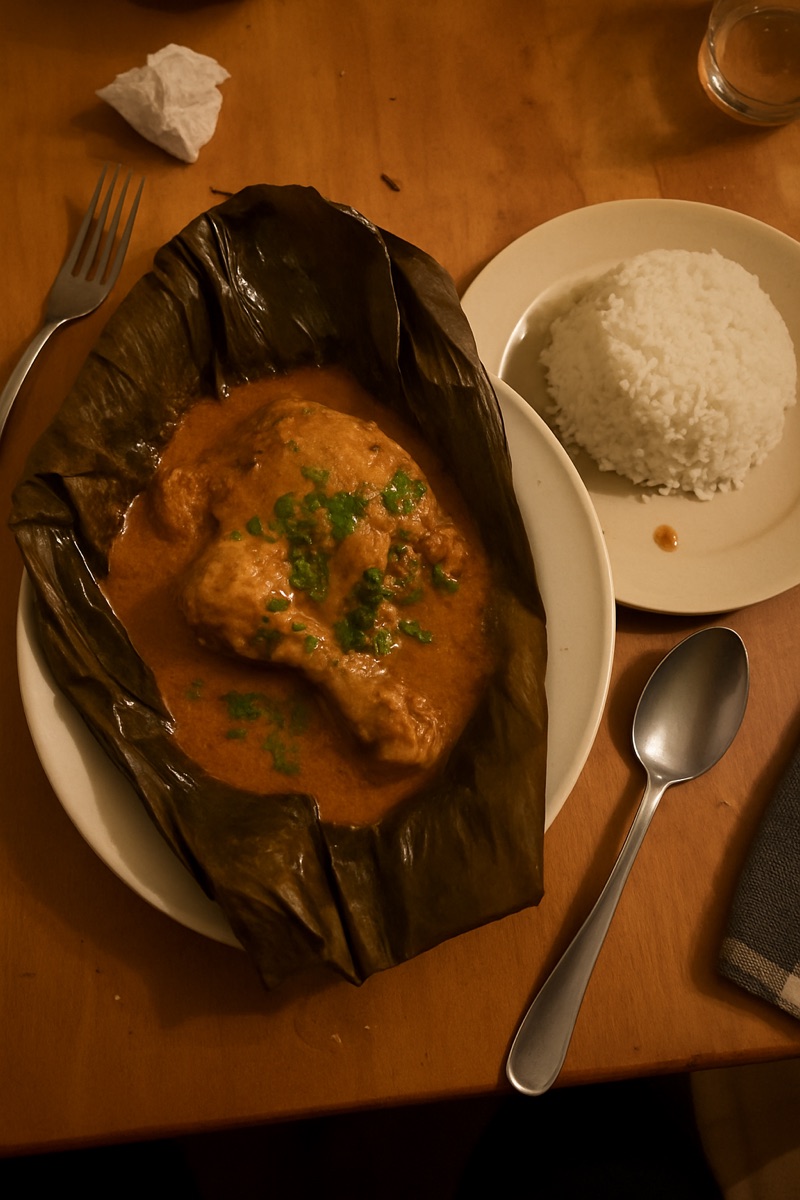
- Luwombo — A stew of chicken, beef, goat, fish or groundnuts with mushrooms, wrapped in banana leaves that have been smoked over a fire, then steamed in its parcel. It was first served to Kabaka Mwanga of Buganda in 1887 by his head chef and was long reserved for royalty, chiefs and ceremonies such as weddings. It is now eaten across Uganda, opened at the table and served with matooke, posho, rice or yams.
- Katogo — A one-pot dish of peeled matooke cooked in a sauce of offal, beef, groundnuts or beans. It started as a poor family's meal of cassava and beans in Buganda and western Uganda, and is now a standard breakfast in restaurants and hotels, usually with cooked greens.
- Malewa — Smoked and dried bamboo shoots from the slopes of Mount Elgon in eastern Uganda. The Bagisu boil them, cut them up and cook them into a sauce with peanut paste or ground sesame, served with matooke, cassava, sweet potatoes, rice or posho. Malewa is a fixture of Bugisu ceremonies such as traditional weddings and mbalu, the circumcision ceremony.
- Eshabwe — A white sauce from Ankole in western Uganda, made by washing ghee in cold water and stirring it with rock salt until it turns from yellow to white. Once kept for ceremonies, notably the traditional marriage, it is now served as a condiment with millet bread, matooke, sweet potatoes and beans.
Street food and snacks
- Rolex — An omelette with onion, tomato and cabbage cooked onto a chapati and rolled up; the name comes from "rolled eggs". It started with a chapati seller in Busoga and spread through Wandegeya, next to Makerere University, where students needed a quick, cheap meal. It is eaten at any time of day.
- Kikomando — Chapati cut into pieces and served with fried beans, a cheap meal popular with students. The name was coined by the singer Bobi Wine, after the film Commando, and the dish is now sold from street stalls to restaurants, sometimes with avocado, meat stew or liver.
- Nsenene — Bush crickets that swarm in the wet seasons, typically around May and November, and are cooked and eaten as a seasonal delicacy in central and south-western Uganda. They are especially associated with Buganda, where they are one of the clan totems and were traditionally gathered by women and children and given to men as a gift.
Traditional drinks
- Obushera — A family of fermented sorghum and millet drinks from western Uganda, drunk in the west, south-west and centre of the country. Obutoko is made from malted sorghum, ekitiribita is a thin porridge-like millet drink, and enturire is an alcoholic version fermented longer and mixed with honey. Tonto, a beer of fermented banana juice, is the other classic home brew of the banana-growing regions.
Regional Uganda and where to cook it
Buganda in the centre is the land of matooke, luwombo, katogo and nsenene. The west, including Ankole, eats millet bread with eshabwe and drinks obushera; the north cooks with millet and simsim; and in the east, the Bagisu of Mount Elgon eat malewa. Uganda shares posho, chapati, mandazi and tea with its neighbours: compare with the traditional food of Kenya and the traditional food of Tanzania.
Matooke is the dish most often called the national dish of Uganda, and our article on it explains why. Copper has full recipes for matooke, luwombo and the rolex, with ingredients and step-by-step methods, on our page about the food of Uganda, alongside other East African recipes.
The recipes
- Luwombo🇺🇬 Uganda · 2 hours and 45 minutes
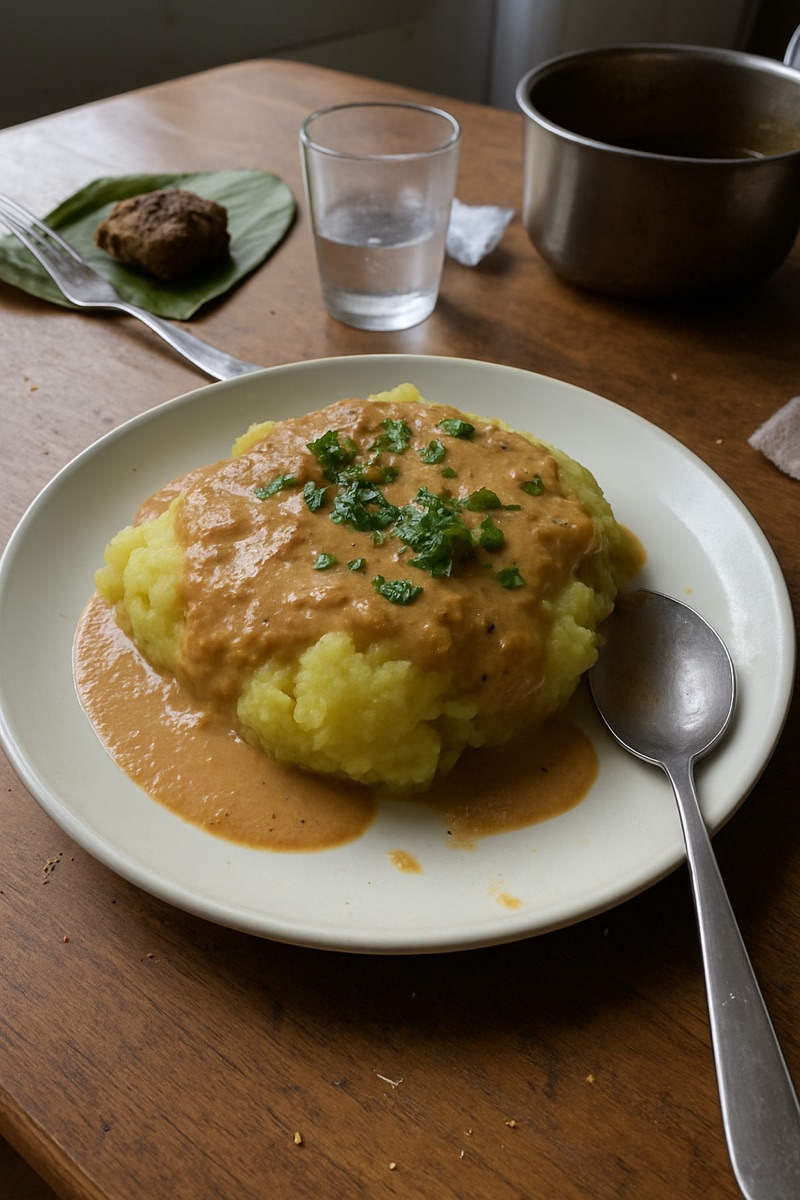 Matoke🇺🇬 Uganda · 2 hours and 30 minutes
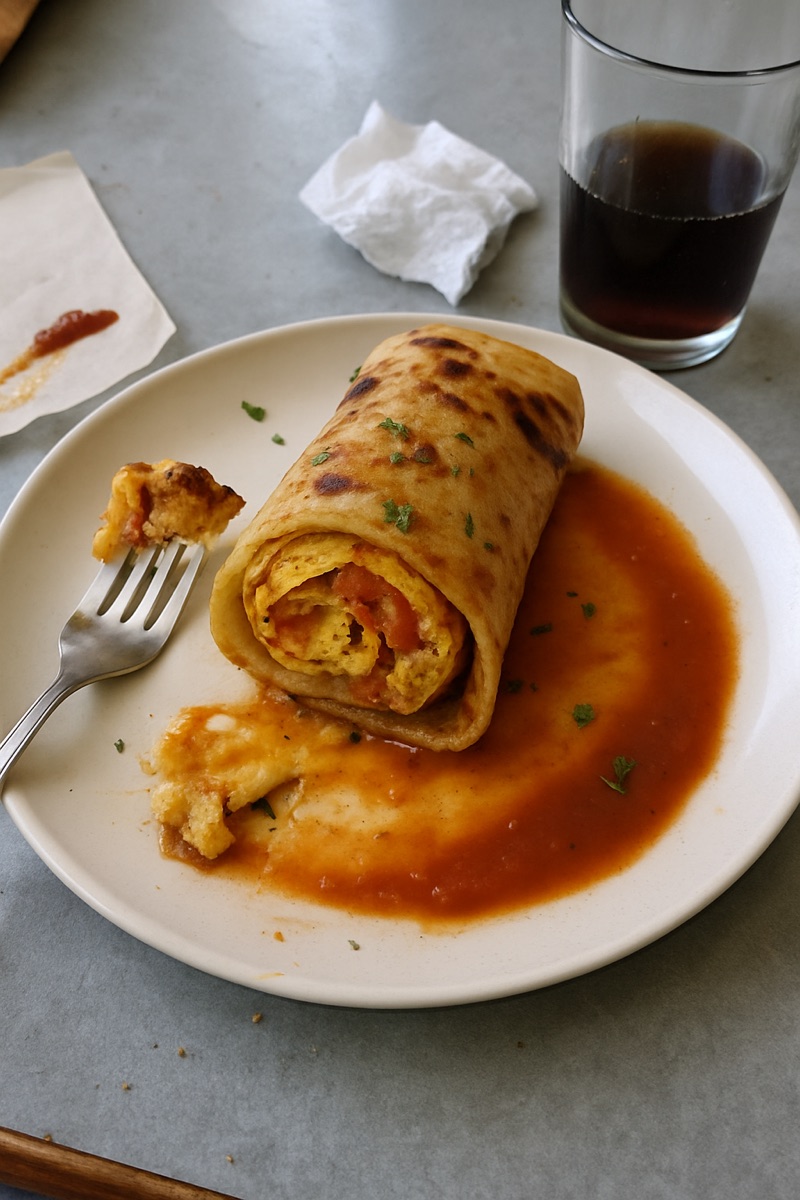 Rolex🇺🇬 Uganda · 15 minutes
Questions people ask
What is the most popular food in Uganda?
Matooke, steamed and mashed green bananas, is the most important food and the dish Ugandans name as their national dish. Posho and groundnut sauce are eaten daily, and the rolex is the best-known street food.
What do Ugandans eat for breakfast?
Common breakfasts are katogo (matooke cooked with offal, beef or beans), porridge of maize or millet, tea, and the rolex, an omelette rolled in a chapati.
Is Ugandan food spicy?
Most Ugandan staples are not built on chilli: the classic plate is matooke, posho or millet bread with a sauce of groundnuts, beans, sesame or meat. Spice comes mainly from the Indian side of the cuisine, such as curries and chai masala.
What is luwombo?
Luwombo is a stew of chicken, meat, fish or groundnuts steamed inside smoked banana leaves. It comes from the royal kitchen of Buganda, where it was first served in 1887.
Do Ugandans eat grasshoppers?
Yes. Nsenene, a type of bush cricket, are cooked and eaten as a seasonal delicacy when they swarm, around May and November, especially in central and south-western Uganda.
Keep reading
- What is the national dish of Uganda?
- Traditional food of Burundi: 11 dishes to know
- Traditional food of Comoros: 13 dishes to know
- Traditional food of Djibouti: 13 dishes to know
- Traditional food of Eritrea: 13 dishes to know
- Traditional food of Ethiopia: 13 dishes to know