 COPPER
Traditional food of Tanzania: 13 dishes to know
Tanzanian food is built on ugali, a stiff maize dough eaten by hand, and rice, served with fish, grilled meat, beans and greens. The Swahili coast and Zanzibar add coconut milk and spices from centuries of Arab and Indian trade. The most emblematic dishes are ugali, chipsi mayai, nyama choma and coastal pilau.
What Tanzanian food is built on
On the mainland, the everyday starches are ugali, a stiff dough of maize flour, and wali, plain rice. They come with fish, usually tilapia, grilled or stewed meat, beans (maharage) and vegetables such as mchicha (amaranth leaves), green peas, okra and kisamvu, cassava leaves. Bananas matter too: Tanzania grows at least 17 kinds, used for soups, stews and chips.
Food changes along the coast. In Dar es Salaam, Tanga, Bagamoyo and the islands of Zanzibar and Pemba, cooking is spicier and uses a lot of coconut milk. Zanzibari cuisine mixes Bantu, Arab, Persian, Indian and Portuguese influences: Omani, Yemeni and Persian settlers brought spices, coconut, citrus and rice, the Portuguese brought cassava, maize and pineapple, and trade with India brought masala, biryani, curry, chutney and samosas. A large Indian community in Tanzania has shaped the whole national cuisine.
Everyday mains
- Ugali — Maize flour, or sometimes millet, sorghum or cassava flour, stirred into boiling water until it holds together as a stiff dough. It is eaten with the hands: a piece is rolled into a ball and dipped into stew, greens, beans, fish or meat. Ugali with grilled tilapia or with a fish curry is a classic Tanzanian plate.
- Wali — Rice, cooked in water or in broth, and on the coast often in coconut milk as wali wa nazi. In East Africa, kuku kwa wali (chicken with rice) and samaki kwa wali (fish with rice) are favourite meals, and rice is often a dish for celebrations.
- Ndizi nyama — Plantains or cooking bananas stewed with meat, one of the typical dishes of mainland Tanzania. The same pairing of bananas and meat, mashed into a thick soup, is the base of mtori in the Kilimanjaro region.
- Mtori — A thick soup of green bananas and meat, sometimes with potatoes, milk or cream. It comes from the Kilimanjaro area, around Moshi and Arusha, where bananas are the main starch, and the cooked bananas are traditionally mashed with a special stick. It can be eaten at breakfast, lunch or dinner, and as a soft food it is given to the sick and to Maasai women during the months after childbirth.
Grilled meat and street food
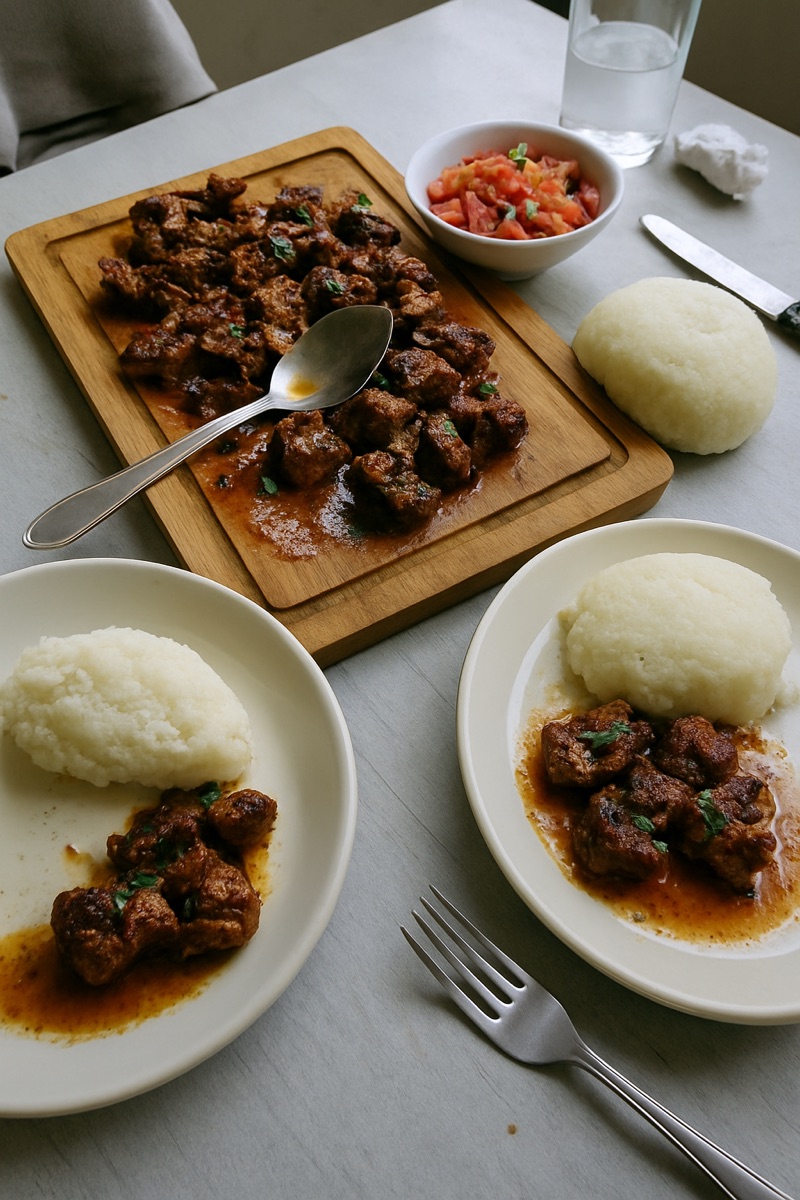
- Nyama choma — Swahili for roasted meat: goat or beef, salted and roasted over wood or charcoal, chopped and eaten by hand with kachumbari salad and ugali. It is popular across Tanzania and Kenya and is a social custom, cooked whenever people gather around a fire.
- Mishkaki — Skewers of marinated beef grilled over charcoal. Traders sell them in Oyster Bay in Dar es Salaam, alongside cassava and fresh coconut water, and at the food stalls of Forodhani Gardens in Zanzibar, next to grilled seafood. Similar marinated beef skewers are eaten in Kenya and the Comoros.
- Chipsi mayai — Chips and eggs: French fries fried in a pan with beaten eggs poured over them until they set into a thick omelette, also called zege. It was invented on the streets of Dar es Salaam, is sold in every region from villages to big towns, and is often called the unofficial national dish. It comes with kachumbari or pili-pili hot sauce.
Food of the Swahili coast and Zanzibar
- Pilau — Rice cooked in meat broth with a pilau masala of cumin, cardamom, cinnamon, cloves and black pepper, coloured brown by onions fried until deep brown. Pilau reflects the Arab influence on the Swahili coast and is the rice of celebrations; biryani, which came with trade from India, is the other great rice dish of the coast.
- Zanzibar mix — Also called urojo: a tangy turmeric potato soup thickened with flour, sharpened with lemon and tamarind, then topped by each eater with bhajias, crisp cassava and coconut chutney. It is the signature street food of Stone Town.
- Vitumbua — Small rice patties made of rice or rice flour and coconut. They are a Swahili dish of the East African coast, eaten mostly at breakfast, and are also listed among Tanzania's classic snacks.
Breakfast, bread and sides
- Maandazi — Fried dough, less sweet than a doughnut and often cut into triangles, one of the principal foods of the Swahili people of the Kenyan and Tanzanian coast. When coconut milk goes into the dough they are called mahamri. They are one of Tanzania's typical breakfast foods with chai, and since they keep and reheat well, they are eaten as a snack at any time.
- Chapati — A flatbread that came to East Africa from India through trade and immigration, including Indian railway workers. The East African version is fried rather than puffed over a flame, and torn pieces are used to pick up beans or stew. It is one of the usual Tanzanian breakfasts, and it shares the plate with pilau kuku (chicken pilau), mishkaki, beans and greens in a typical Tanzanian meal.
- Kachumbari — A raw relish of chopped tomato, onion and chilli with lemon juice or vinegar and salt, sometimes with coriander, cucumber or avocado. The name comes from the Indian cachumber. In Tanzania it is eaten with wali, pilau and biryani, and it is the standard partner of nyama choma and chipsi mayai.
Cook Tanzanian food at home
Tanzania has no official dish, but chipsi mayai is the one most often called the national dish of Tanzania, with ugali as the everyday staple. Tanzanians also snack on sambusa (samosas), kashata (coconut bars), kebabs and bagia, and in the north, around Kilimanjaro, bananas take the place of maize. Copper has full recipes for nyama choma, pilau and Zanzibar mix, with ingredients and step-by-step methods, on our page about the food of Tanzania, alongside other East African recipes.
Ugali, nyama choma, pilau and maandazi are shared with Tanzania's neighbours. Compare with the traditional food of Kenya and the traditional food of Uganda.
The recipes
- Nyama choma🇹🇿 Tanzania · 1 hour and 50 minutes
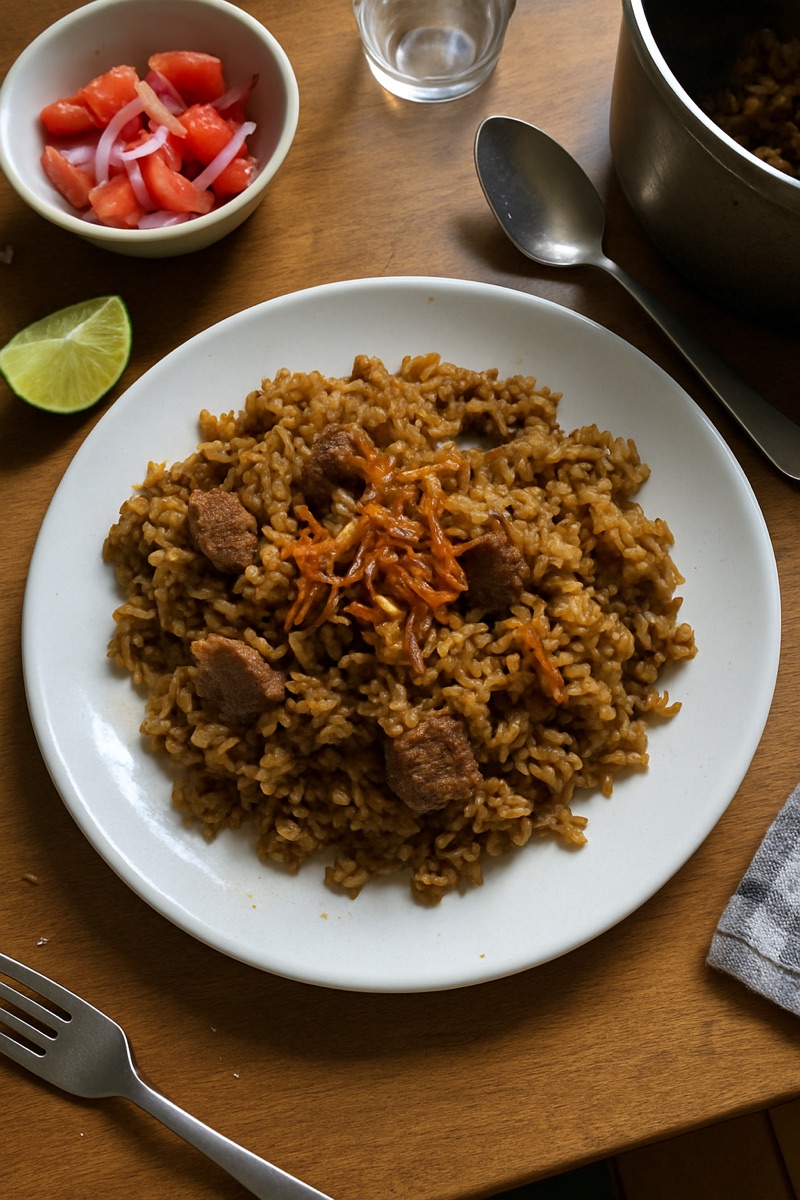 Pilau🇹🇿 Tanzania · 1 hour and 55 minutes
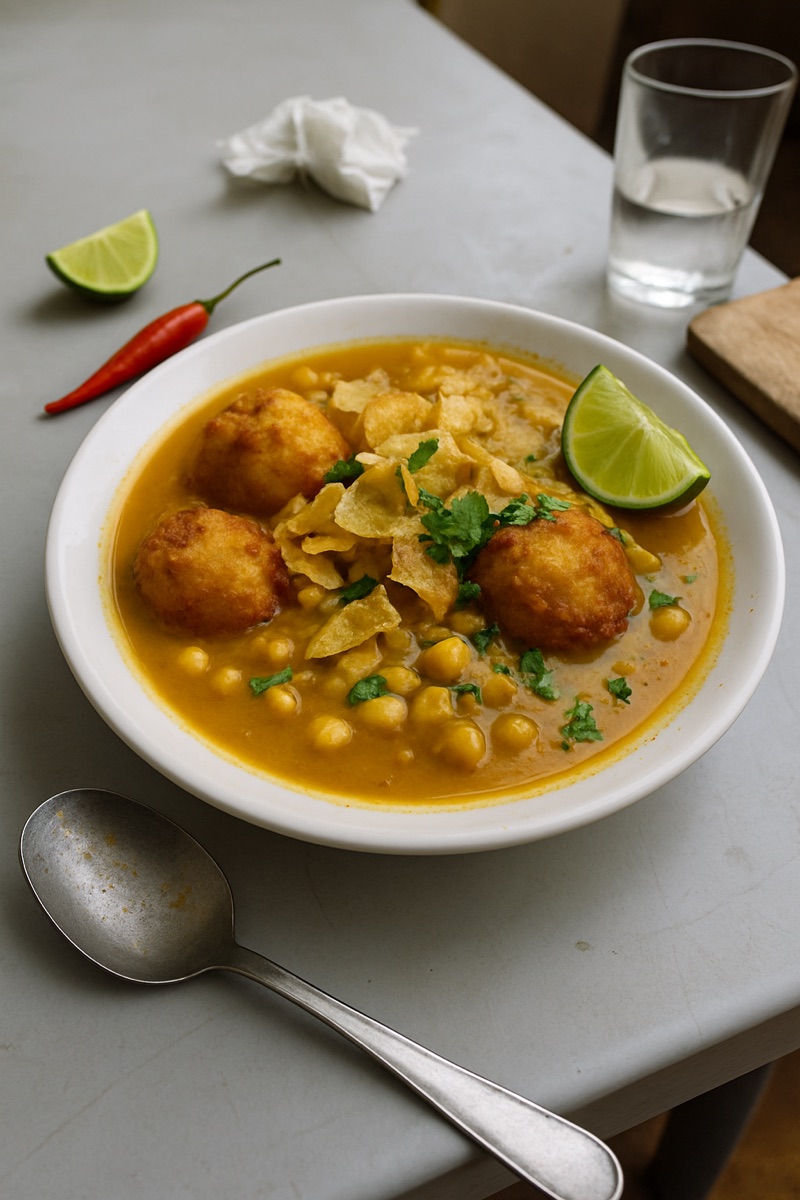 Zanzibar mix🇹🇿 Tanzania · 45 minutes
Questions people ask
What is the most popular food in Tanzania?
Ugali is the most widely eaten staple, usually with fish, beans, greens or meat. Chipsi mayai, chips cooked into an omelette, is the most popular street food and is often called the unofficial national dish.
What do Tanzanians eat for breakfast?
Typical breakfasts are maandazi (fried dough), chai, chapati and porridge, and especially in rural areas chipsi mayai. On the coast, vitumbua, rice and coconut patties, are a breakfast favourite.
Is Tanzanian food spicy?
Inland food is mostly mild. On the coast, in Dar es Salaam, Tanga, Bagamoyo and Zanzibar, spicy food and coconut milk are common, and pili-pili hot sauce is served with many dishes.
What food is Zanzibar known for?
Zanzibar is known for spiced rice such as pilau and biryani, seafood, coconut dishes and the street food of Stone Town, including Zanzibar mix (urojo) and grilled skewers at Forodhani Gardens.
What is the difference between ugali and wali?
Ugali is a stiff dough of maize or other flour cooked in water and eaten by hand. Wali is cooked rice, plain or with coconut milk.
Keep reading
- What is the national dish of Tanzania?
- Traditional food of Burundi: 11 dishes to know
- Traditional food of Comoros: 13 dishes to know
- Traditional food of Djibouti: 13 dishes to know
- Traditional food of Eritrea: 13 dishes to know
- Traditional food of Ethiopia: 13 dishes to know