 COPPER
What is the national dish of Gabon?
The national dish of Gabon is poulet nyembwe: smoked chicken simmered in nyembwe, a thick sauce pressed from boiled palm nuts, and served with cassava, boiled plantain or rice. The name comes from the Myene word for palm oil. No law makes it official, but Gabonese and international sources consistently call it the national dish.
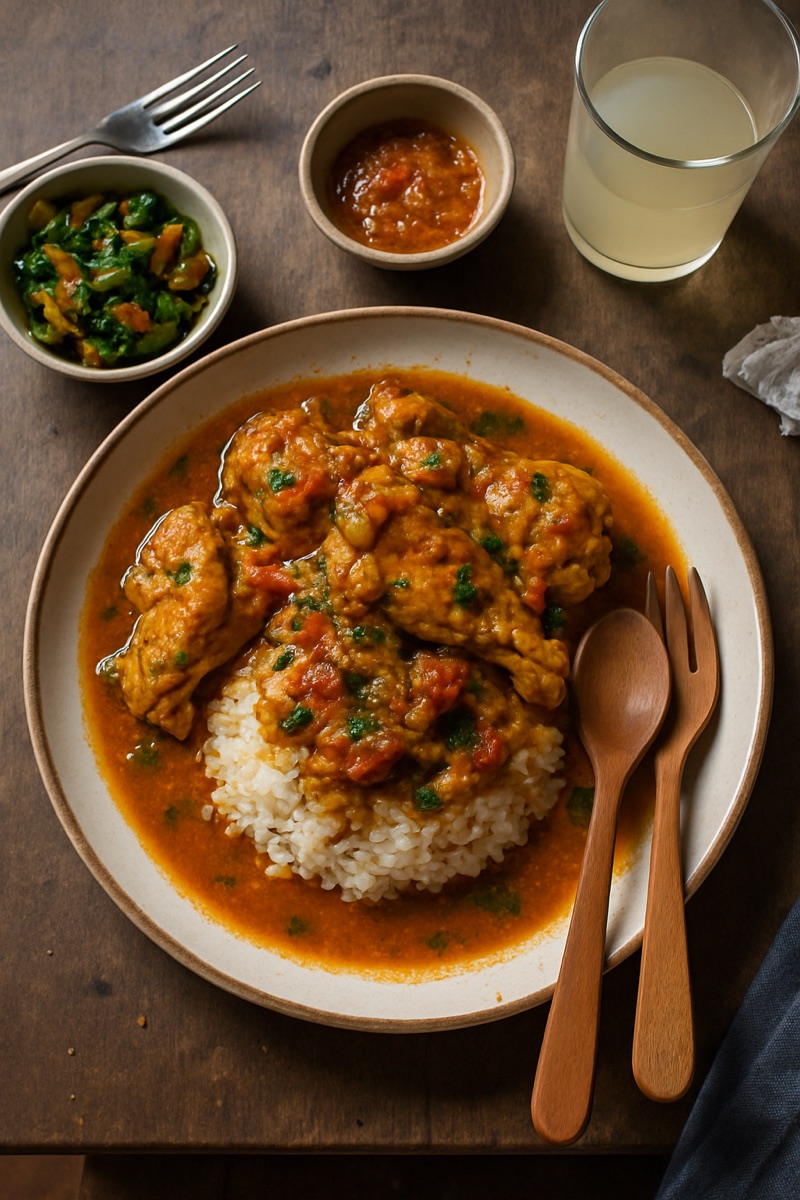
What is poulet nyembwe?
Nyembwe is the sauce, poulet the chicken. The sauce is made from the pulp of the oil palm fruit, not from bottled palm oil: the nuts are boiled, pounded and kneaded with warm water, and the thick orange liquid strained off is nyembwe. The word means palm oil in Myene, one of Gabon's languages.
The chicken is usually smoked before it goes into the pot, which is what sets the Gabonese version apart. French Wikipedia notes versions with smoked turkey, other meat or fish. The dish comes from the Myene people, and French Wikipedia ties it specifically to the Nkomi of Ogooué-Maritime province.
Is it officially the national dish?
There is no law or decree. But the title is consistent: *Gabon* magazine called poulet nyembwe "the national dish of Gabon" in 2007, Wikipedia lists it as Gabon's national dish in English and French, and the French article on Gabonese cuisine calls it the national dish *par excellence*. French Wikipedia lists several dishes eaten all over the country, cassava leaves, nkumu, odika, the plantain boulette and nyembwe, and singles out nyembwe as the national one.
How nyembwe is made
Our nyembwe recipe starts with 1 kg of fresh palm nuts boiled for 40 minutes, pounded in a mortar, kneaded with warm water and strained. Outside Central Africa, 400 g of tinned palm nut pulp, sold as sauce graine or noix de palme, replaces them.
The pulp is whisked into 500 ml of water and simmered for 20 minutes until the oil rises orange on the surface. In a second pan, a sliced onion and three garlic cloves soften in 2 tablespoons of red palm oil for 6 to 8 minutes, and the boned smoked chicken colours there for 5 minutes.
Everything then goes into the palm sauce with one whole chilli and a teaspoon of salt for 20 to 30 minutes, until the sauce coats a spoon. One rule matters: no tomato. It turns nyembwe into a different stew.
Nyembwe, moambe, moamba: one family
The same palm butter is called moambe in the two Congos and moamba in Angola, and the chicken dish made with it is cited as a national dish in each of them. For the Congolese version, see our article on the national dish of the DR Congo. What makes Gabon's version distinct is the smoked chicken and the absence of tomato.
What is served with poulet nyembwe?
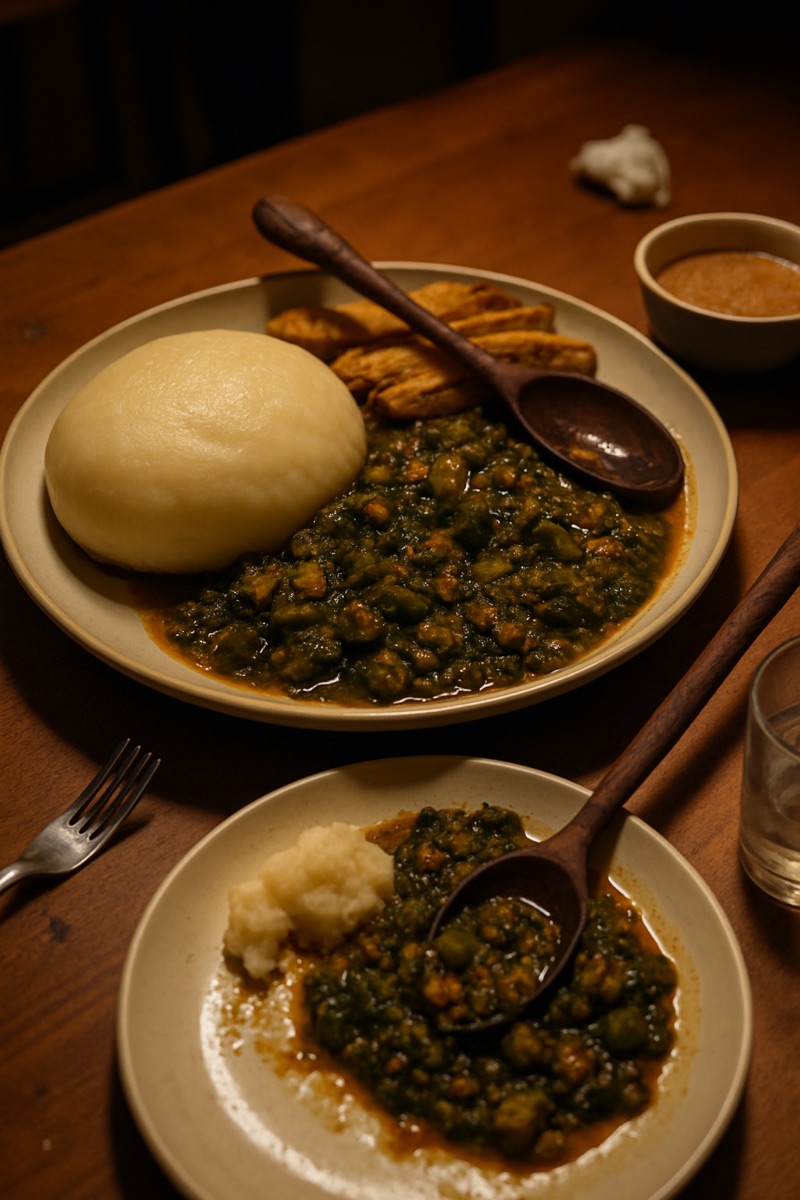
Nyembwe always comes with a starch, and foufou is never eaten on its own. Steaming rather than boiling matters: boiled pieces take on water and the paste will never hold together. A blender gives a purée, never the elastic texture of the mortar.
- Foufou: cassava and green plantain steamed together for about 30 minutes, then pounded in a wooden mortar for 10 to 15 minutes until glossy and elastic.
- Bâton de manioc: fermented cassava cooked in leaves, made in different styles by the Teke, Fang, Myene, Obamba and Nzebi.
- Boiled plantain or ditouka, a ball of pounded plantain.
- White rice.
Other dishes to know from Gabon
On the coast, fish comes first. Our soupe de poisson is a bouillon in which the fish makes its own broth: sea bream cut into sections, bitter white African eggplants, okra and whole chillies, with a single glass of water, cooked covered for 30 minutes and shaken by the handles rather than stirred. There is no olive oil and no fish stock: peanut oil, the fish and the vegetables make the broth.
Cassava leaves are the other dish found everywhere, cooked differently by each people: French Wikipedia notes that the Fang add sugar with palm oil, the Bakota steam them in banana leaves, and the Bapunu cook them with palm or peanut oil and smoked fish or meat. In the Haut-Ogooué, the Teke, Obamba and Ndumu cook nkumu, the finely cut leaves of a wild forest vine, usually eaten with bâton de manioc.
Gabon also cooks with odika, sometimes called indigenous chocolate: seeds roasted and pounded while warm into a block that is grated into sauces, for example over smoked chicken. It is used by most peoples, but especially by the Myene, the same people who gave the country nyembwe.
Each province adds its own specialities. In the Estuaire, around Libreville, the Mpongwe cook stuffed crabs called mambo; in the Ogooué-Maritime, the Nkomi and Orungu cook porcupine in odika sauce and fresh or smoked sardines. You will find all three recipes on our page about the food of Gabon, and the neighbouring kitchens in our guide to Central African food.
The recipes
 Fufu
Fufu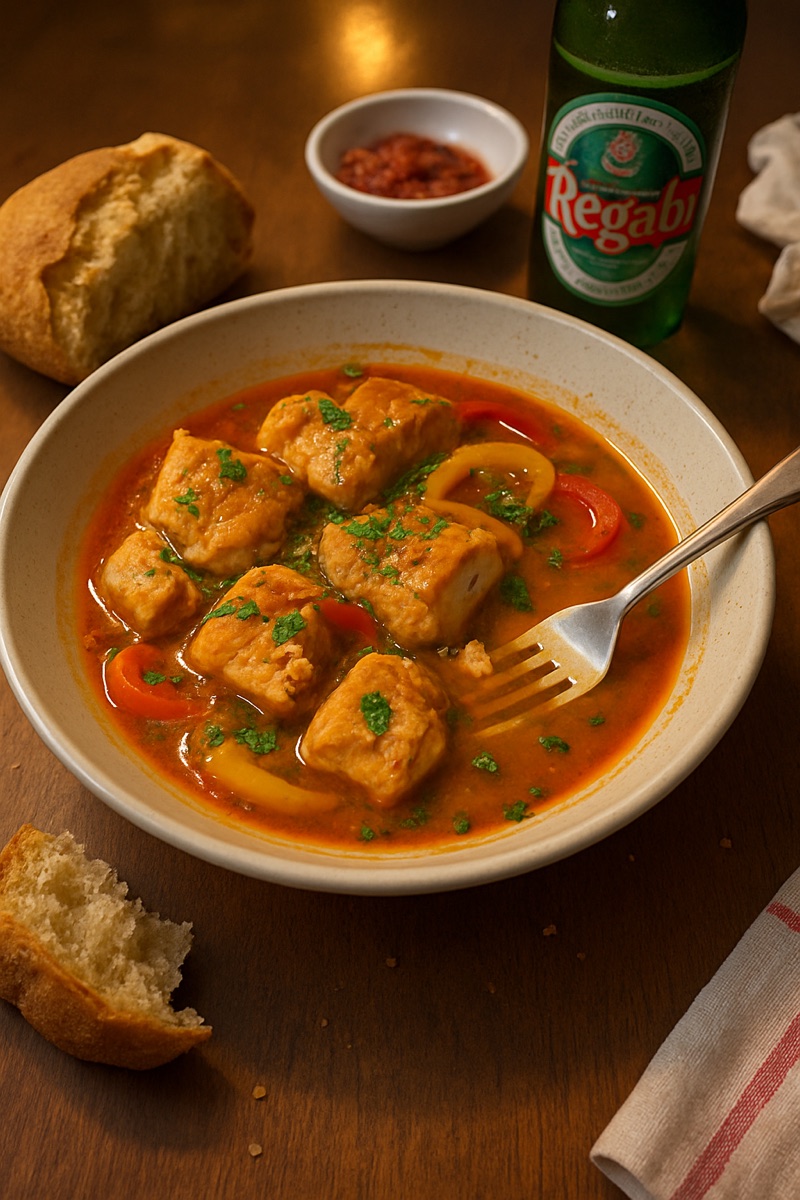 Soupe de poisson
Questions people ask
What does nyembwe mean?
Nyembwe means palm oil in Myene, a language of Gabon. In cooking it names the thick sauce made from the pulp of boiled palm nuts.
Is poulet nyembwe the same as moambe chicken?
They belong to the same family of chicken cooked in palm nut pulp. The Gabonese version usually uses smoked chicken and no tomato.
Is nyembwe made with palm oil?
Mainly with palm nut pulp, fresh or tinned; a little red palm oil is used to soften the onions. Palm oil alone does not give the dish its texture.
What is served with poulet nyembwe?
Cassava (foufou or bâton de manioc), boiled plantain, ditouka or white rice.
Where does poulet nyembwe come from?
It comes from the Myene people, and French Wikipedia ties it to the Nkomi of Ogooué-Maritime province. It is now eaten across the country.
Keep reading
- Traditional food of Gabon: 12 dishes to know
- What is the national dish of Cameroon?
- What is the national dish of the Central African Republic?
- What is the national dish of Chad?
- What is the national dish of the DR Congo?
- What is the national dish of the Republic of the Congo?