 COPPER
What is the national dish of Cameroon?
The national dish of Cameroon is ndolé: bitterleaf greens boiled several times in salted water to tame their bitterness, then stewed in a thick sauce of fresh ground peanuts with beef, smoked fish or shrimp. It comes from Douala and is served with fried or boiled plantains, miondo or bobolo. It has no official status, but it is widely regarded as the national dish.
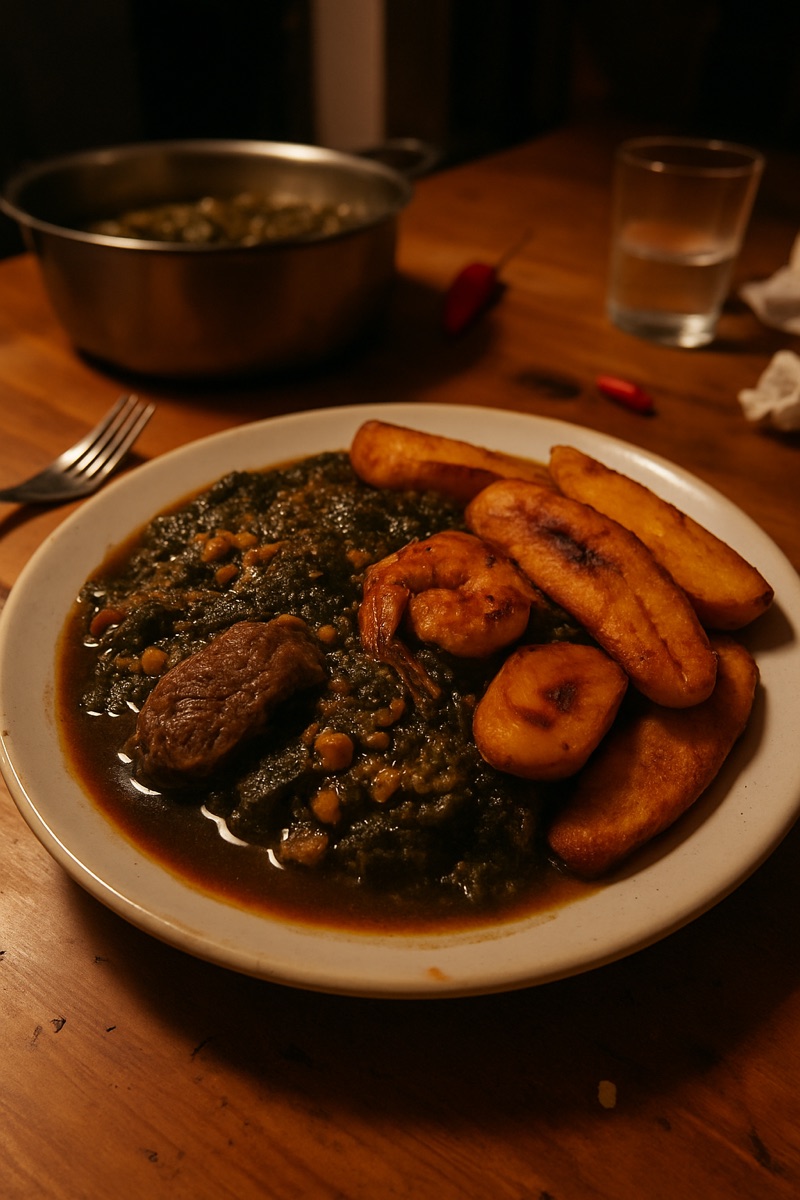
What is ndolé?
Ndolé (also written ndole or ndolè) is both a leaf and a dish. The leaf, ndoleh, comes from shrubs of the Vernonia genus, mainly Vernonia amygdalina, V. hymenolepis and V. calvoana. In English-speaking Nigeria the same plant is called bitterleaf, and the name is earned: the raw leaves are sharply bitter.
The dish is those leaves, cleaned of most of their bitterness, cooked into a sauce of fresh peanut paste and crushed spices, with cooked meat, smoked fish such as cod, or fresh or smoked shrimp. When shrimp go in, Cameroonians describe the dish as "regal". The finished stew is thick, dark green and glossy.
The plant is a perennial shrub of the equatorial forest that can grow several metres tall, but growers cut the stem back after each harvest so it regrows. Leaves are ready four to eight weeks after planting and are picked young, before they toughen.
Is ndolé officially the national dish?
There is no law or decree. Ndolé is widely regarded as the national dish of Cameroon, and it is the dish given for Cameroon on Wikipedia's list of national dishes, which cites the New York Times for it.
French Wikipedia adds a useful nuance: ndolé is the national dish "at least in the Littoral region", around Douala, where it was born. Cameroon has so many regional traditions that it is hard to speak of a single Cameroonian cuisine. A few regional dishes have become known across the country and abroad, and ndolé and poulet DG are the two named first.
How ndolé is made
Ndolé is cheap to make but slow, and the work is in the leaves. Our ndolé recipe follows the traditional order:
- Wash the bitterness out: 500 g of bitterleaf is boiled in salted water, drained, and boiled again in fresh water, two or three times or more, until only a background bitterness remains. Skip this and the dish is inedible.
- Make the peanut base: 250 g of raw peanuts is boiled for 15 minutes, then ground smooth with a little water.
- Cook the meat: 500 g of cubed beef simmers with onion and a stock cube for 40 minutes, and the broth is kept.
- Build the sauce: the peanut paste is stirred into the broth and cooked 20 to 25 minutes, until it thickens and loses its raw taste. Dried shrimp and garlic go in for 10 more minutes.
- Finish: the squeezed, chopped leaves and a chili are simmered in for 15 minutes, then 100 ml of peanut oil is poured over off the boil.
What is served with ndolé?
Ndolé is traditionally served with ripe plantains, fried or boiled, or with cassava. The classic partners are miondo and bobolo: fermented ground cassava wrapped in leaves and steamed, shaped into sticks or spirals. In the Littoral the dish is sometimes simply called ndolé-miondo.
Rice is not the standard pairing. Some Cameroonian families abroad serve ndolé with rice, but rice has never been a basic staple in Cameroon.
The leaves themselves are a seasonal crop. Production peaks in the rainy season, between May and August, and most ndolé is grown close to Douala because the bulky leaves spoil quickly. A small amount is exported dried or frozen to African communities in Europe. The leaves and roots are also used in traditional medicine, against intestinal worms, malaria and persistent headaches.
Other dishes to know from Cameroon
Poulet DG is the other dish every Cameroonian knows. The name is a pun from the 1980s: DG stands for directeur général, because the dish was first reserved for people of some standing. Chicken is browned and simmered in tomato sauce with carrots, green beans and peppers, and ripe plantains, deep-fried on their own, are folded in at the very end so they stay whole. Its ingredients are now within everyone's reach, but the preparation time still makes it a dish for celebrations rather than weeknights.
Eru comes from the Manyu division in the South-West region. Finely shredded eru leaves (Gnetum africanum) are softened against wilted waterleaf, then cooked with red palm oil, ground crayfish, smoked fish, beef and cow skin. It is eaten with water fufu or garri.
Vernonia grows wild in south-western Cameroon and in neighbouring Nigeria, and part of Cameroon's ndolé harvest is sold across that border. See what Nigerians name first in our article on the national dish of Nigeria.
All three Copper recipes are on our page about the food of Cameroon, and the neighbouring kitchens are in our guide to Central African food.
The recipes
- Ndole🇨🇲 Cameroon · 2 hours and 10 minutes
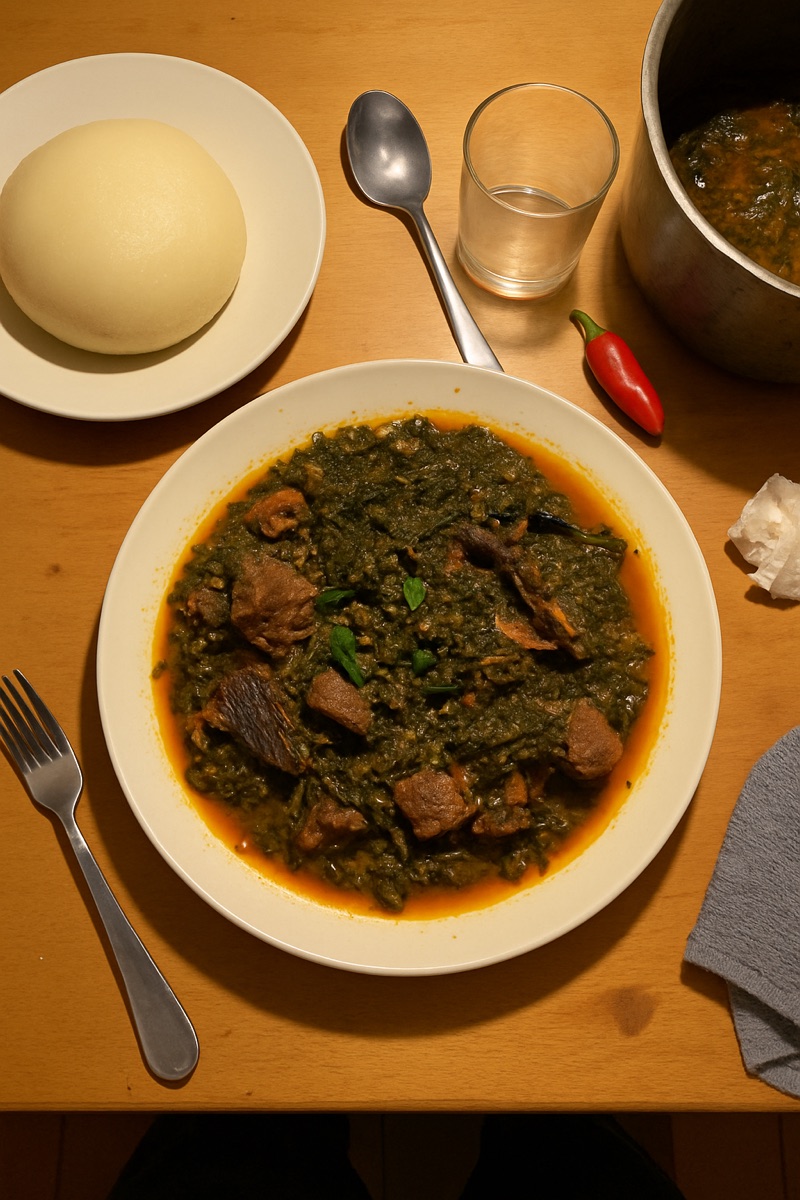 Eru🇨🇲 Cameroon · 2 hours and 30 minutes
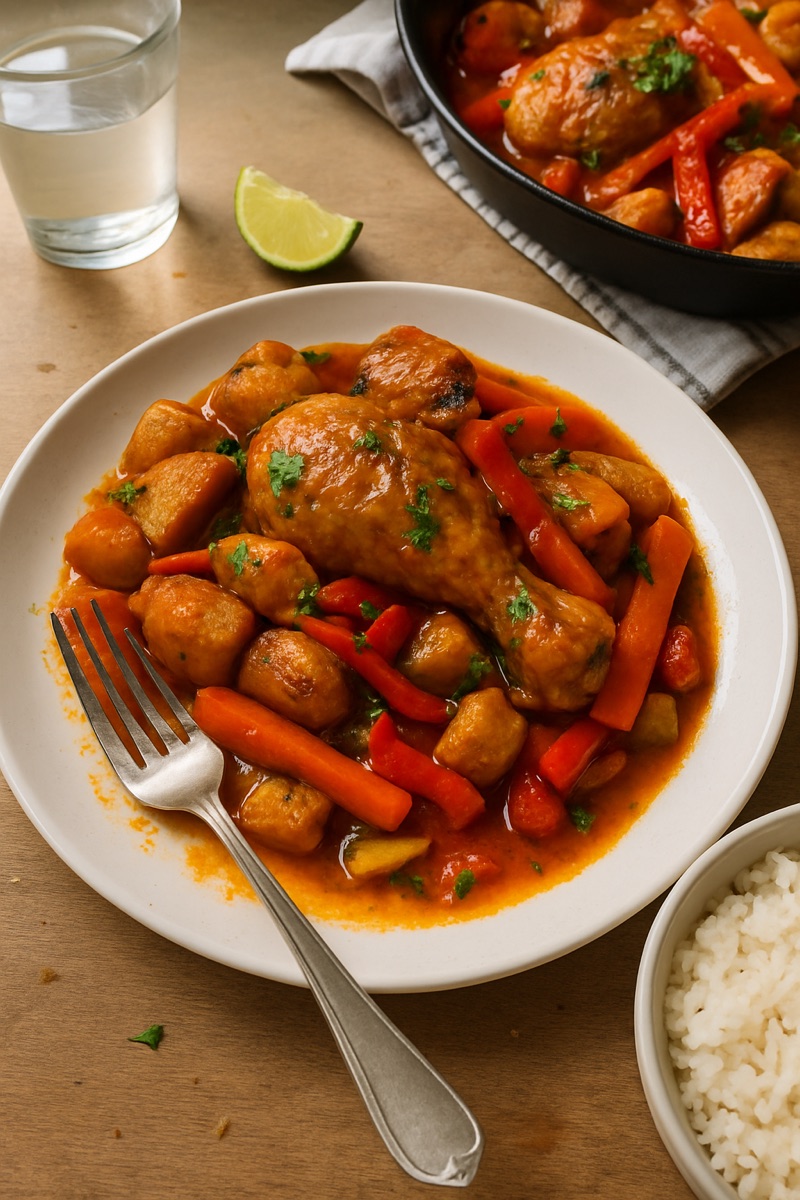 Poulet dg🇨🇲 Cameroon · 1 hour and 50 minutes
Questions people ask
Is ndolé the same as spinach?
No. Ndolé is often compared to spinach for its colour and texture, but it is made from bitterleaf (Vernonia), whose leaves must be boiled several times to remove their bitterness. Spinach is not a substitute.
Where does ndolé come from?
Ndolé originated in Douala, in Cameroon's Littoral region.
What is served with ndolé?
Fried or boiled ripe plantains, cassava, or miondo and bobolo, sticks of fermented cassava steamed in leaves.
What does DG mean in poulet DG?
DG stands for directeur général, a 1980s pun: the dish was originally reserved for people of high social standing.
Is ndolé bitter?
Only slightly. The leaves are boiled in salted water two to three times or more, so only a background bitterness remains, which is part of the dish.
Keep reading
- Traditional food of Cameroon: 13 dishes to know
- What is the national dish of the Central African Republic?
- What is the national dish of Chad?
- What is the national dish of the DR Congo?
- What is the national dish of the Republic of the Congo?
- What is the national dish of Equatorial Guinea?