 COPPER
Traditional food of Ghana: 13 dishes to know
Ghanaian food pairs a starchy staple, pounded, fermented or stirred into a dough, with a soup or stew built on tomatoes, hot peppers and onions, plus fish or meat. Cassava and plantain dominate the south, millet and sorghum the north. The most emblematic dishes are fufu with light soup, banku and tilapia, jollof rice and waakye.
What Ghanaian food is built on
A Ghanaian meal is built from three parts: a starchy staple, a soup or sauce, and a source of protein, usually fish, goat, beef or chicken. Most soups and stews start from the same base of tomatoes, hot peppers and onions, which is why so much Ghanaian food is red or orange. Soups are a main course, not a starter, and the staple is eaten with the fingers of the right hand: a piece is pinched off, rolled and dipped.
What the staple is made of depends on the region. In the south, cassava and plantain dominate; in the north, millet and sorghum. Yam, maize and beans are eaten across the country, and rice has become a staple in its own right. Palm oil and peanuts give many dishes their colour and body, and shito, a hot black pepper sauce of oil, dried fish, shrimp, ginger and chilli, is the condiment on almost every table.
Doughs and soups
- Fufu — Boiled cassava pounded with plantain or cocoyam in a wooden mortar until it becomes a soft, smooth, sticky dough. The word is Twi, from the Akan peoples of southern Ghana. Fufu is never eaten alone: it always comes in a bowl of soup, most often light soup, groundnut soup or palm nut soup.
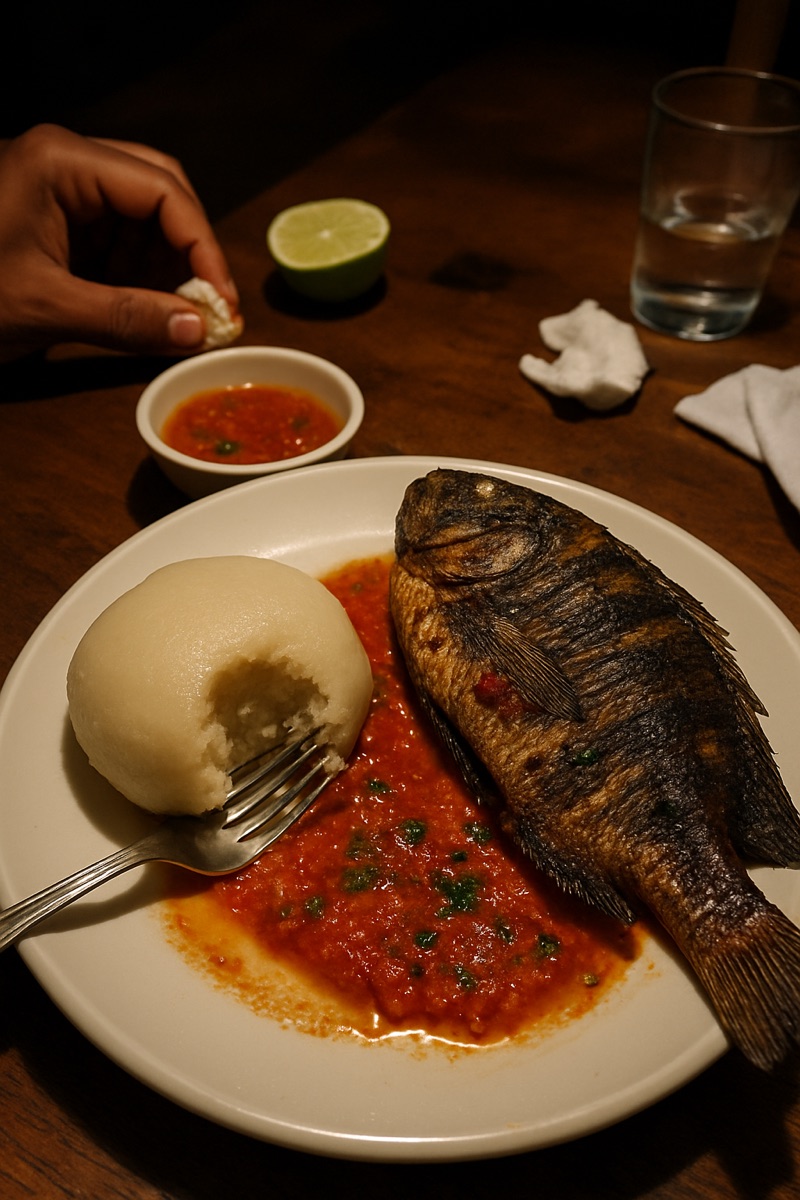
- Banku and tilapia — Banku is maize and cassava dough fermented for a few days, then cooked and beaten in a pot into a smooth, slightly sour paste. It is the traditional food of the Ga-Dangme of the Greater Accra Region, and in Accra it is classically served with charcoal-grilled tilapia and a raw pepper sauce ground in an earthenware bowl.
- Kenkey — Fermented maize dough wrapped in leaves and boiled for a long time until it sets into firm balls. Ga kenkey, or komi, is wrapped in corn husks; the Fante version is wrapped in plantain leaves, which changes its texture, flavour and colour. It is usually eaten with fried fish, a fresh pepper sauce and shito.
- Tuo zaafi — The everyday staple of northern Ghana: a stiff dough of maize, traditionally millet, with a little cassava, cooked in water without salt. Its Hausa name is usually shortened to TZ. It is eaten with green soups of jute leaves (ayoyo) and okra, with a stew on the side.
- Light soup — A thin, tomato-based soup of the Akan, first made with fish for the fishermen of the Accra coast and now cooked with goat, lamb, beef or fish. Tomatoes, chilli and garden eggs (small aubergines) are boiled, blended and simmered with the meat. It is the classic partner of fufu, and is also served with banku or rice.
- Groundnut soup (nkatenkwan) — A soup of ground peanut paste, often very spicy, cooked with meat or fish. It is eaten with fufu, banku or omo tuo, rice cooked soft and beaten into balls, which is its usual partner.
- Palm nut soup — A soup made from the pulp of oil-palm fruit, with meat and smoked fish. Like groundnut soup, it is served with fufu, omo tuo or banku.
Rice and beans
- Jollof rice — Rice cooked in a stew of stock, tomatoes, spices and meat, served with stewed, roasted or grilled goat, lamb, chicken or beef. It came to Ghana with Jolof traders from what is now Senegal who settled in the Zongo communities before the colonial period, and it is now at the centre of Ghana's friendly "jollof wars" with Nigeria.
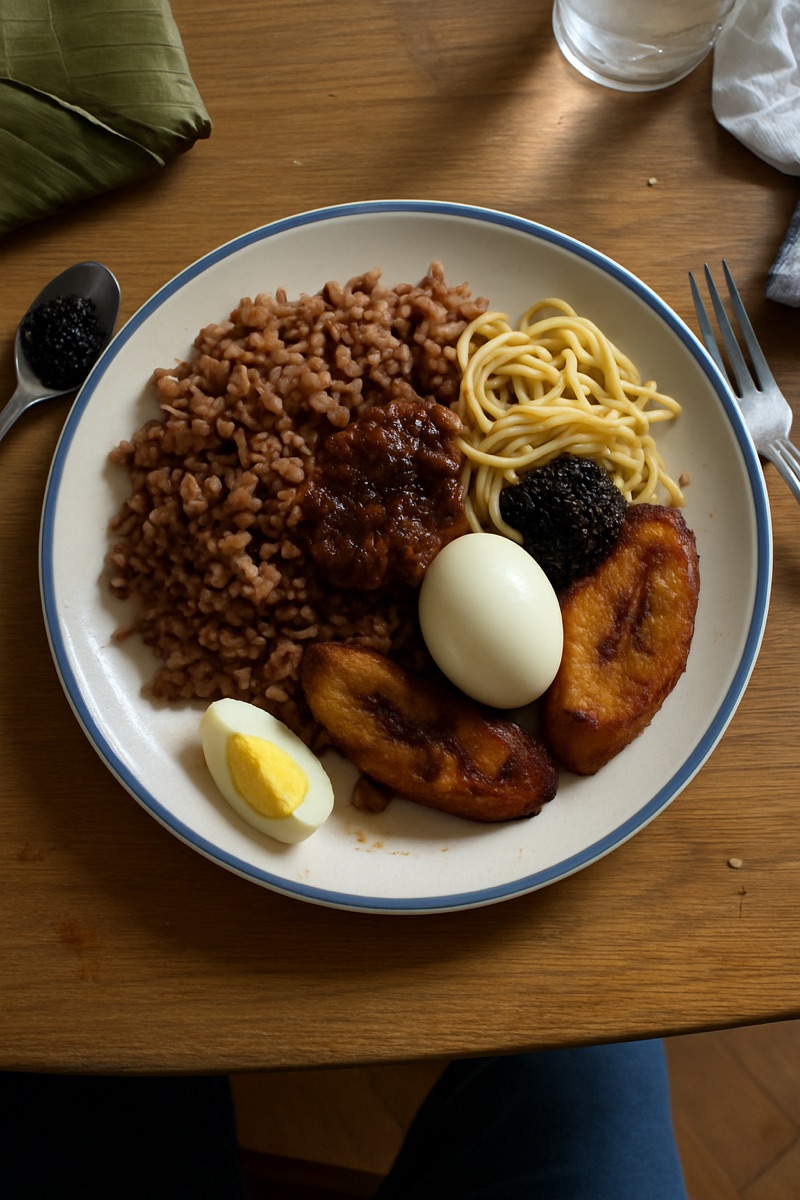
- Waakye — Rice and black-eyed peas or kidney beans cooked together with dried sorghum leaves, which give the dish its reddish-brown colour; the name comes from Dagbani, a language of northern Ghana. It is commonly eaten for breakfast or lunch, and roadside sellers wrap it in leaves and serve it with shito, gari, boiled eggs, spaghetti and fried plantain.
- Red red — Black-eyed peas cooked in red palm oil with tomato, onion and chilli, often with fish such as mackerel, served with fried ripe plantain. The name comes from the red of the palm oil and the orange of the plantain. It is often eaten with gari, and street vendors sell it alongside kenkey and waakye.
Street food and snacks
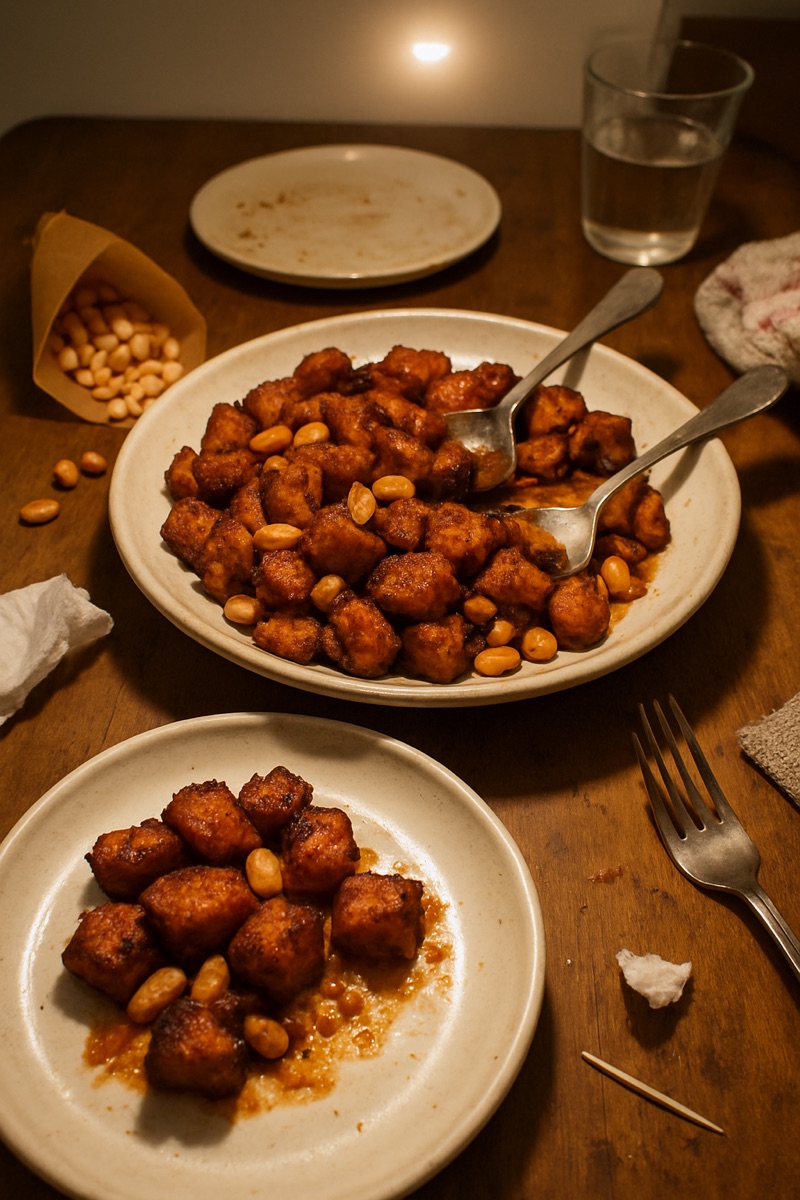
- Kelewele — Cubes of ripe plantain seasoned with ginger, chilli and spices, then deep-fried. In Accra it is mostly sold at night by street vendors, and it is often eaten with roasted peanuts or served as a side to red red and bean stews.
- Kyinkyinga — Grilled skewers of meat, pronounced chin-chin-GA, coated in a spice mix of dried hot peppers, ginger, onion and toasted peanut flour, often threaded with onions and peppers. It is a Hausa dish made popular by traders in the Zongo areas of Ghanaian towns, related to Nigerian suya, and is now a staple street food.
- Hausa koko — A spicy porridge of millet seasoned with ginger, cloves and pepper, sold on street corners in the morning. It is usually eaten with koose, fried bean fritters, or with bread and groundnuts.
Regional Ghana
In the south, the Akan eat fufu and kokonte (dried cassava dough), the Ga of Greater Accra eat banku and kenkey, and the Fante along the coast make their own leaf-wrapped kenkey. The Ewe of the Volta Region eat akple, a maize dough usually served with okra soup, and steamed cassava dough called yakayake. In the north, where millet and sorghum grow, tuo zaafi, millet porridges and pito, a beer of fermented millet, are typical. Fish is eaten most on the coast and around Lake Volta, while the north eats more meat.
Cook Ghanaian food at home
Fufu and jollof rice are the two dishes most often named as the national dish of Ghana, and our article on the subject explains why. Copper has full recipes for banku and tilapia, waakye and kelewele, with ingredients and step-by-step methods, on our page about the food of Ghana, alongside other West African recipes.
Ghana shares its doughs, soups and rice dishes with its neighbours. Compare with the traditional food of Côte d'Ivoire and the traditional food of Nigeria.
The recipes
- Banku and tilapia🇬🇭 Ghana · 3 days and 1 hour
 Kelewele🇬🇭 Ghana · 1 hour
 Waakye🇬🇭 Ghana · 13 hours and 30 minutes
Questions people ask
What is the most popular food in Ghana?
Fufu with soup, jollof rice and banku are the most widely eaten dishes, with waakye and kenkey close behind. Fufu and jollof are the two most often called the national dish.
What do Ghanaians eat for breakfast?
Common breakfasts are porridges such as Hausa koko (spicy millet porridge), kooko (fermented maize porridge) or rice porridge, with koose bean fritters or bread. Waakye from a roadside seller is also a popular morning meal.
Is Ghanaian food spicy?
Often, yes. Most soups and stews are built on hot peppers, and dishes are served with shito or a fresh pepper sauce. Groundnut soup and kelewele can be very hot.
What is the difference between fufu, banku and kenkey?
Fufu is boiled cassava pounded with plantain or cocoyam. Banku is fermented maize and cassava dough cooked and beaten in a pot. Kenkey is fermented maize dough wrapped in leaves and boiled until firm.
What do Ghanaians eat with their hands?
Doughs such as fufu, banku, kenkey and tuo zaafi are eaten with the right hand: a piece is pinched off, rolled into a ball and dipped in the soup or sauce.
Keep reading
- What is the national dish of Ghana?
- Traditional food of Benin: 13 dishes to know
- Traditional food of Burkina Faso: 11 dishes to know
- Traditional food of Cabo Verde: 13 dishes to know
- Traditional food of Côte d'Ivoire: 12 dishes to know
- Traditional food of The Gambia: 13 dishes to know