 COPPER
Traditional food of Mali: 13 dishes to know
Malian food is built on rice and millet, eaten with sauces of peanut, okra, baobab or sweet-potato leaves and seasoned with soumbala and dried fish. Lunch is the main meal, and food is eaten with the right hand. The most emblematic dishes are tigadèguèna, riz gras (jollof rice), tô and fakoye.
What Malian food is built on
Mali's food culture rests on cereals. Rice and millet are the staples, with corn and fonio, and they are eaten with sauces made from edible leaves, such as spinach, sweet potato or baobab, or from peanuts and tomato. Pieces of chicken, mutton, beef or goat, often grilled, go on top, and fresh or smoked fish is common. The usual vegetables are onions, tomatoes, eggplant, okra, plantains and yams, and fruit ends the meal according to the season: mangoes from March to July, zaban from May to August, watermelon from October to January.
The seasonings are local. Instead of saffron or cardamom, Malian cooks use soumbala, a condiment of fermented néré seeds, and saalén, a powder of smoked, dried and salted capitaine fish. Garlic, onion, parsley and chives go in daily, with chilli, ginger and tamarind.
Lunch is the most substantial meal. Food is eaten with the right hand, since eating with the left is considered improper, and meals often end with strong, sweet tea served in three rounds: the first for life, the second for love, the third for death.
Rice and sauces
Malian sauces are named after their main ingredient: naboulou (meat and baobab leaves in peanut sauce), saga saga (sweet-potato leaves), n'gougouna (bean leaves), diabadji (onion), sauce noire (okra) and lafiri, a soumbala sauce served with white rice. Soupe kandia, also called gambura, is an okra and palm-oil stew served with rice, and borokhé combines cassava leaves with peanut paste. Poulet yassa from Senegal and kedjenou from Côte d'Ivoire are also commonly eaten.
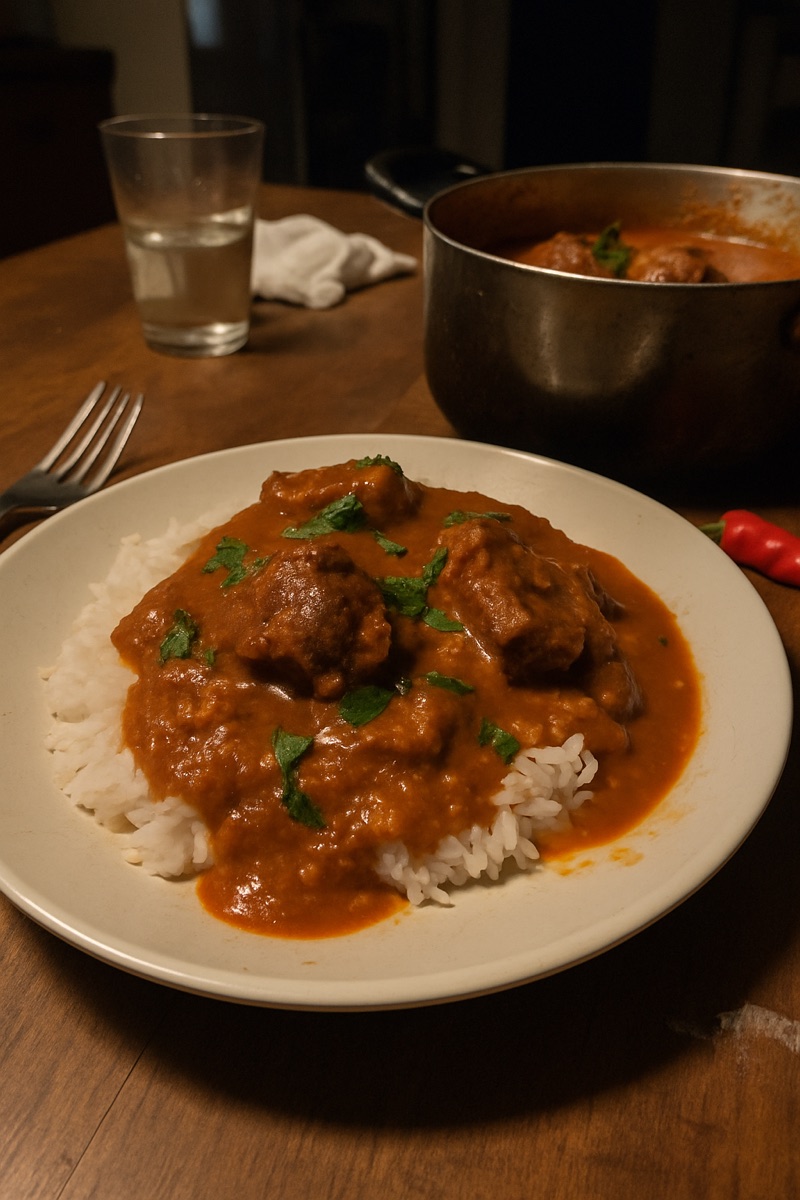
- Tigadèguèna — Beef, lamb or chicken simmered in a sauce of peanut paste and tomato until red oil rises to the top, served over rice, fonio or tô. Its Bambara name means peanut paste sauce. English Wikipedia names it Mali's national dish, and it is a close cousin of Senegalese mafé, traditionally more watery.
- Riz gras (jollof rice) — The festive rice: meat and vegetables simmered in a tomato sauce, then the rice cooked in that broth until it takes on the colour and fat. The meat and vegetables are served on top. French sources also call it riz wolof, and English sources list jollof rice among Mali's popular dishes.
- Fakoye — A dark sauce from the north of Mali, made from jute leaves dried and pounded semi-fine, the plant Arab countries call mloukhiya. It is cooked with mutton or beef, soumbala, small dried fish and spices, and northerners often mix the leaf powder with shea butter first. It is ready when oil shows on the surface and is eaten with rice.
Millet, fonio and bread
- Tô — A firm paste of millet or corn flour, the staple of peoples such as the Bambara and the Dogon. In better-off families it comes with two sauces: a red one of onion, tomato and meat or fish, and a slimy one of okra or baobab leaves.
- Djouka — Fonio and ground peanuts, each precooked and then steamed together, with onion, okra, eggplant and chilli. It is made from cheap ingredients that are plentiful in villages, and at popular celebrations it is served with grilled meat.
- Widjila — Balls of wheat dough steamed in a couscous pot and eaten with a sauce of mutton, tomato, onion, bay leaf and cinnamon. It comes from the Songhai of Timbuktu and is popular across Mali; some cooks add dates.
- Bassi — Millet couscous, a staple of the Soninké. A related dish, gnugubala yèlèn, is millet couscous with fresh herbs, oil and spices in the style of tabbouleh, but eaten hot.
Breakfast and desserts
Other sweet dishes include sanglé, a thick millet porridge with sweetened curdled milk, recorded in Mali since the 17th century; seri, made from rice; and furu furu, a millet purée eaten mostly at breakfast. Meals in Mali are traditionally cooked by women.
- Fonde (monoo) — A millet porridge, also eaten in Senegal. Millet porridges are the usual Malian breakfast, with bread and sweet tea.
- Maasa — Deep-fried cakes or flatbreads made from rice or millet batter, a traditional morning food. Baguette with butter or cheese is the other usual breakfast.
- Dégué — Millet semolina mixed with curdled milk or yogurt and served cool. French Wikipedia traces it to the Bambara, and it is found in other West African countries under other names, such as thiakry in Senegal.
- Moni — Small balls of millet flour, or sometimes corn or sorghum, boiled and then sweetened with sugar and milk. Some families eat it in the morning with millet fritters such as gnomi.
Drinks
Malians also drink zira dji, made from the fruit of the baobab, tomi dji from tamarind, moukou dji from millet and baobab fruit, and kinkeliba, an infusion of leaves. Cooking varies by region: fakoye comes from the north and widjila from the Songhai of Timbuktu, while tô is the base food of the Bambara and the Dogon.
- Dableni — A cold drink made from hibiscus flowers, the same flower used for bissap across West Africa. The leaves of the plant are also used in traditional medicine.
- Gnamankoudji — Juice made from fresh ginger root, sometimes with lemon and chilli. Its name is Bambara or Dioula in origin, and the drink is made in several West African countries, from Senegal to Benin.
Cook Malian food at home
Tigadèguèna is the dish most often cited as the national dish of Mali. Copper has full recipes for tigadèguèna, riz gras and fakoye, with ingredients and step-by-step methods, on our page about the food of Mali, alongside other West African recipes.
Tô, dégué and riz gras are shared with Mali's neighbours. Compare with the traditional food of Burkina Faso and the traditional food of Guinea.
The recipes
- Tigadege na🇲🇱 Mali · 1 hour and 50 minutes
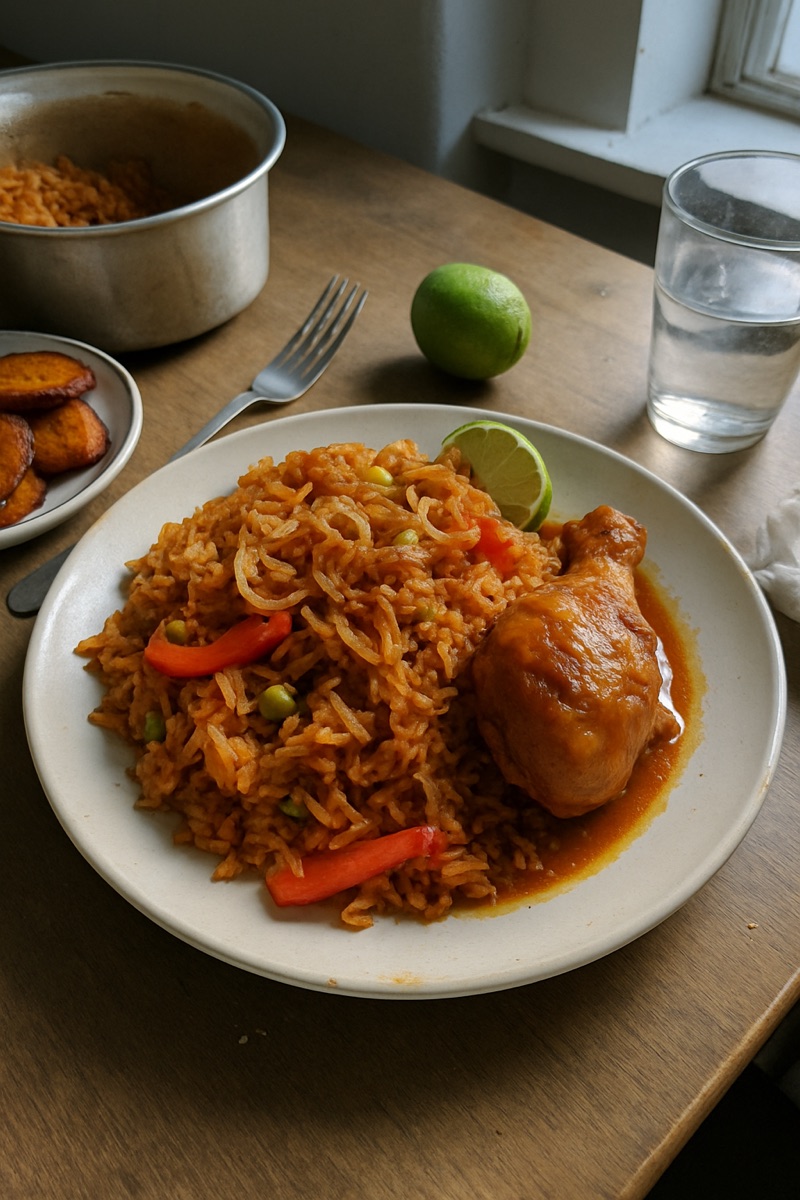 Jollof rice🇲🇱 Mali · 1 hour and 55 minutes
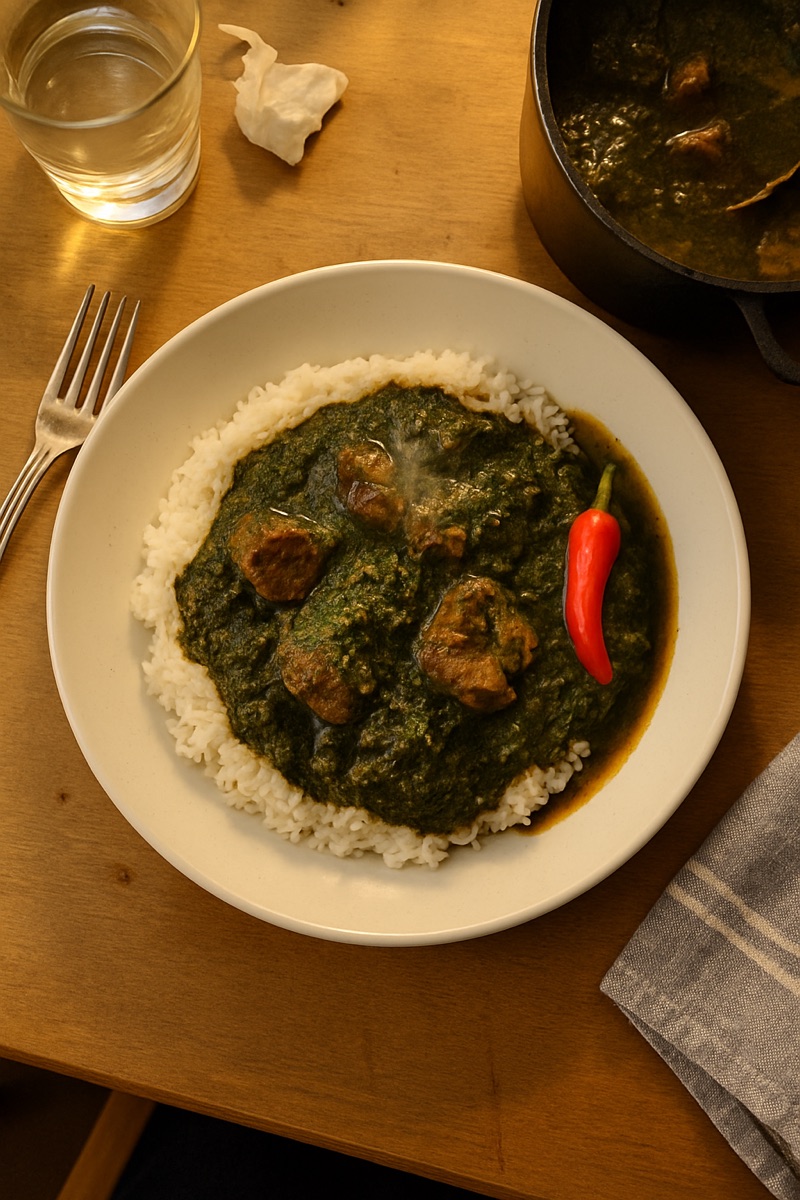 Fakoye🇲🇱 Mali · 1 hour and 40 minutes
Questions people ask
What is the most popular food in Mali?
Rice or millet with a sauce. Tigadèguèna, a peanut and tomato stew, is the dish most often called Mali's national dish, and riz gras is the dish of celebrations.
What do people in Mali eat for breakfast?
Usually fonde, a millet porridge, or maasa, fried rice or millet cakes, with bread and sweet tea. Baguette with butter or cheese is also common.
Is Malian food spicy?
It can be. Chilli is a common seasoning, but much of the flavour comes from soumbala, dried fish, peanut and leaf sauces rather than heat.
How do people eat in Mali?
With the right hand; eating with the left hand is considered improper. Meals often end with three rounds of strong, sweet tea.
What do people drink in Mali?
Dableni (hibiscus), gnamankoudji (ginger), zira dji (baobab fruit), tomi dji (tamarind), kinkeliba infusion and strong, sweet tea.
Keep reading
- What is the national dish of Mali?
- Traditional food of Benin: 13 dishes to know
- Traditional food of Burkina Faso: 11 dishes to know
- Traditional food of Cabo Verde: 13 dishes to know
- Traditional food of Côte d'Ivoire: 12 dishes to know
- Traditional food of The Gambia: 13 dishes to know