 COPPER
Traditional food of Senegal: 12 dishes to know
Senegalese food is West African cooking shaped by the Wolof, Fula and Serer peoples and by the Atlantic coast. It is built on fish, broken rice, millet, peanuts and onions, stewed or marinated with lime, chilli and tomato, and eaten from one large shared bowl. The most emblematic dishes are thieboudienne, yassa, mafe and thiakry, with bissap and attaya tea to drink.
What Senegalese food is built on
Senegal's cooking comes from its many ethnic groups, the largest being the Wolof, Fula and Serer, and much of it is shared with neighbouring West African countries under different names. The Atlantic makes fish the main protein: the most prized is thiof, white grouper, alongside mullet, tuna, barracuda and many others, eaten fresh, grilled, smoked, dried or fermented into a condiment called guedj. The mangroves add oysters, cooked over embers, as well as crabs, prawns and spiny lobsters. Chicken often replaces more expensive meats, mutton is the most common red meat, and pork is rare in this mostly Muslim country.
Cereals are the base of every meal. Millet is eaten as porridge, small balls or couscous; fonio is grown in the east; rice is farmed in Casamance and along the Senegal River but is often imported, with short or broken grains preferred. Peanuts are the main cash crop. Tomato paste, stock cubes, nététou (fermented locust beans) and yet, a dried, fermented sea snail, give the sauces their depth. Meals follow the principle of teranga, hospitality: family and guests gather around one bowl and eat by hand or with a spoon.
Rice dishes and stews
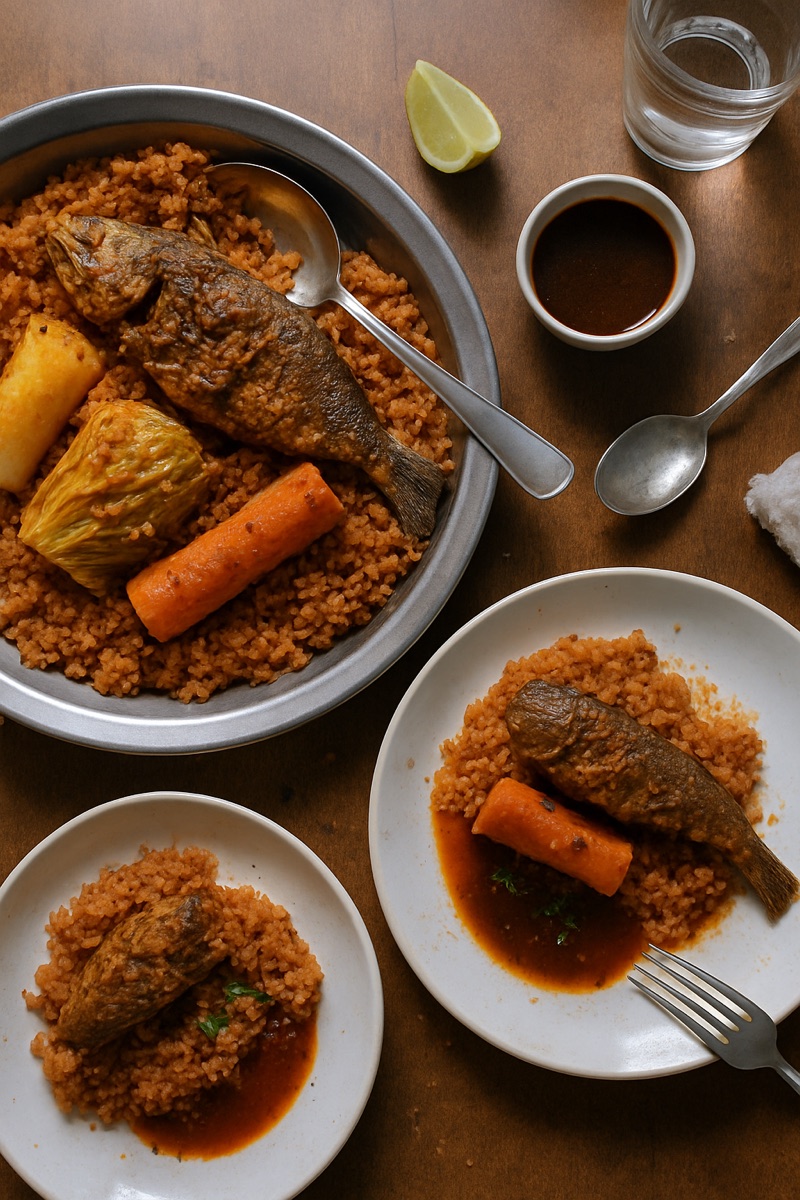
- Thieboudienne — Ceebu jën, "rice and fish" in Wolof: fish stuffed with a parsley, garlic and chilli paste, vegetables such as cassava, cabbage, carrot and aubergine, and broken rice cooked in the same tomato broth. There is a red version and a white one with almost no tomato. The rice left to toast at the bottom of the pot, the xoonq, is served alongside. The dish is credited to Penda Mbaye, a cook from Saint-Louis, and UNESCO recognised it as a culinary art of Senegal in 2021.
- Thiebou yapp — The meat version: beef or lamb fried with onions, garlic, black and red pepper, then simmered with mustard and water before the rice goes in. It is garnished with green olives or black-eyed peas.
- Yassa poulet — Chicken marinated overnight with a large quantity of onions, lime juice and mustard, grilled over a wood fire, then simmered slowly in its marinade. It is served with plain white rice and is also made with fish or mutton. It comes from Casamance and the Jola people.
- Mafe — Meat, often beef, simmered in a creamy sauce of peanut paste and tomato with vegetables, and served over rice. With okra added it becomes mafe kandia, and in the south and east the rice is sometimes replaced by black-eyed peas. It is eaten across West Africa.
- Soupou kandia — A sauce of okra and palm oil cooked with dried fish, yet, seafood, smoked fish and sometimes meat, served with rice.
- Caldou — A Casamance recipe of fish cooked with palm oil and vegetables, served with rice and usually a lime sauce.
- Thiéré bassi salté — A festive millet couscous from the Sine-Saloum, cooked above all for Tamkharit, the Senegalese celebration of Ashura. It comes with small mutton meatballs, potatoes, sweet potatoes, white beans, cabbage, carrots, raisins and a tomato sauce with meat or chicken, and like most Senegalese couscous it is finished with milk.
Street food and breakfast
In town, quick meals also come from open-air stalls and from Lebanese restaurants selling chawarma sandwiches. Peanuts are sold everywhere on the street, raw, boiled, roasted, salted or sugared, alongside cashew nuts.
- Dibi — Lamb grilled over a fire, cut into pieces and served with grilled or raw onions, mustard and bread. It is sold in dibiteries, and the word is Soninke for barbecue. Some dibiteries will also roast a whole lamb, méchoui, a Maghrebi style of cooking that reached Senegal from Mauritania.
- Ndambé — Beans cooked in a spiced tomato paste, typically eaten in bread as a breakfast sandwich.
- Pastels — Small flat fried pastries stuffed with spiced fish and served with a tomato sauce, as a snack or an appetiser.
Desserts and drinks
The most popular drink is bissap, a purple juice of hibiscus flowers, water and sugar, sometimes with mint or orange blossom. Bouye (baobab fruit), dakhar (tamarind) and ginger juice are common too. Café Touba is coffee spiced with grains of Selim, named after the holy city of Touba. Tea, attaya, is a ritual served in three rounds from the same leaves: the first glass bitter, the last the sweetest.
- Thiakry — Fine granules of millet or wheat, steamed, then mixed with curdled milk or yogurt and flavoured with nutmeg, raisins or grated coconut. Its first recipe is traced to the Fula herders of northern Senegal.
- Ngalakh — The same millet granules covered with a creamy sauce of peanut and baobab fruit, with raisins and other fruit, sometimes with milk.
Regional Senegal
Most dishes are eaten across the country, but each region has its specialties. Saint-Louis, in the north, is where thieboudienne was born, along with stuffed mullet à la saint-louisienne, boned, filled with its own flesh chopped with bread, onion, garlic and chilli, and kept for big occasions; a richer version uses thiof stuffed with prawns and seafood. Casamance, in the south, grows rice and tropical fruit and gave the country yassa and caldou. The Sine-Saloum makes thiéré bassi salté, and eastern Senegal grows fonio and cooks domoda, rice with a tomato sauce thickened with flour.
Cook Senegalese food at home
Thieboudienne is the national dish of Senegal. Copper has full recipes for thieboudienne, yassa poulet and mafe, with ingredients and step-by-step methods, on our page about the food of Senegal, and the dishes of the neighbouring countries are in our guide to West African food.
Many of these dishes cross the border under other names: compare with the traditional food of the Gambia and the traditional food of Mali.
The recipes
- Thieboudienne🇸🇳 Senegal · 2 hours and 35 minutes
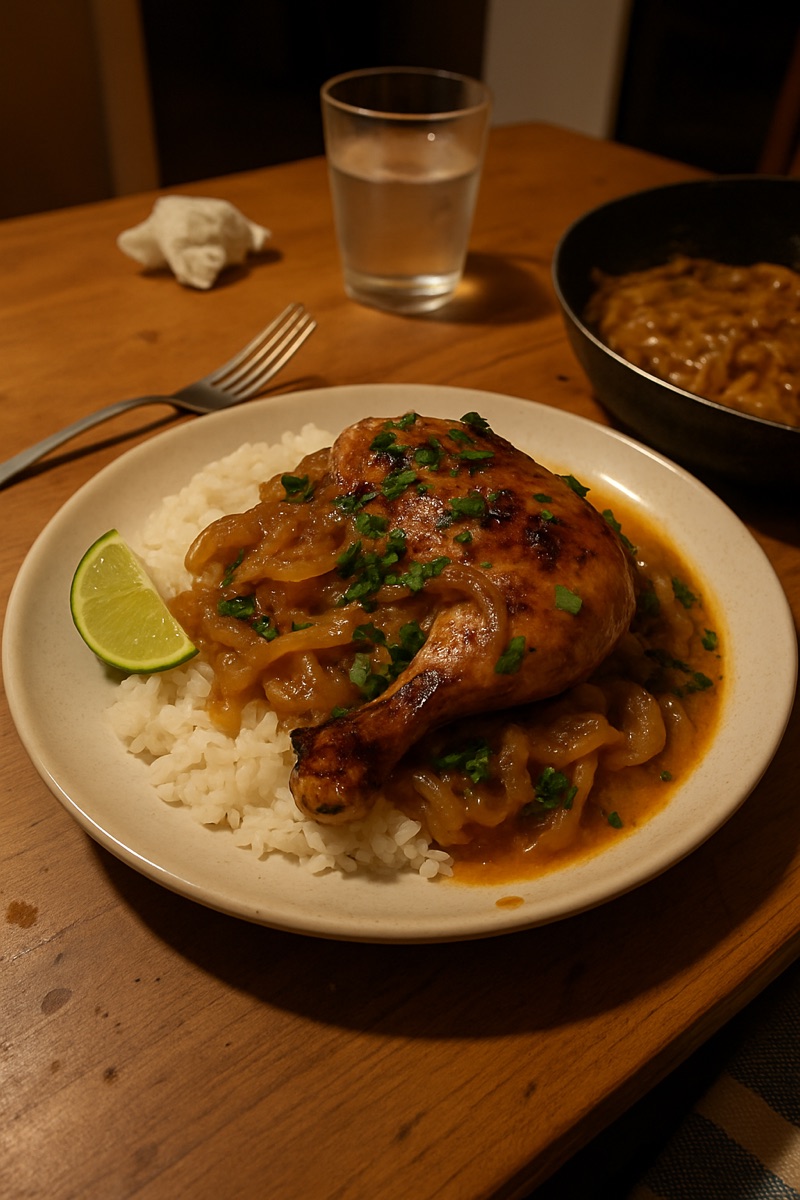 Yassa poulet🇸🇳 Senegal · 13 hours and 10 minutes
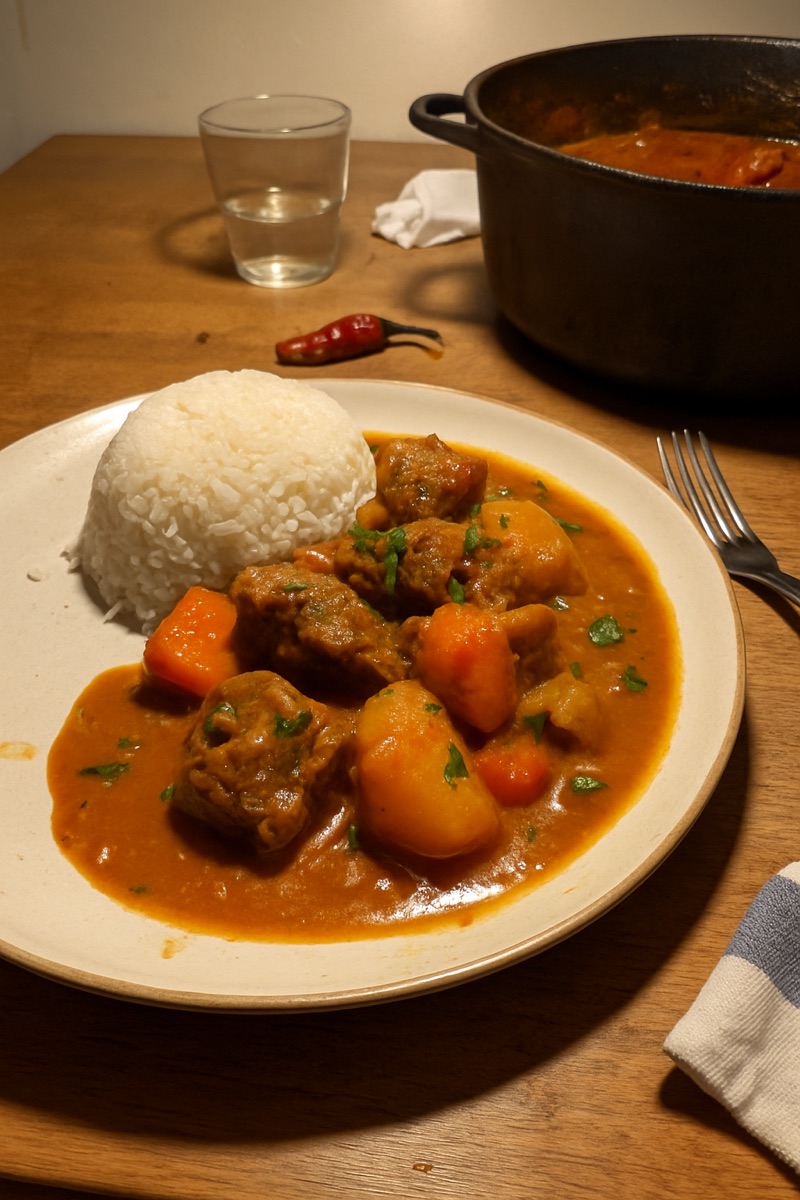 Mafe🇸🇳 Senegal · 1 hour and 40 minutes
Questions people ask
What is the most popular food in Senegal?
Thieboudienne, rice cooked in a tomato and fish broth with stuffed fish and vegetables, is the national dish. Yassa, mafe and the meat version of thieboudienne, thiebou yapp, are the other everyday favourites.
What do people in Senegal eat for breakfast?
The classic breakfast is bread, often filled with ndambé, beans cooked in a spiced tomato paste, eaten with café Touba, coffee spiced with grains of Selim.
Is Senegalese food spicy?
Chilli is used, notably in the parsley and garlic stuffing of thieboudienne and in yassa, and Scotch bonnet goes into mafe and yassa. The sauces are also built on sour and rich flavours: lime, onions, mustard and peanut.
How do Senegalese people eat?
Family and guests share one large bowl, eating by hand or with a spoon from their own side of it. This sharing is part of teranga, the Senegalese idea of hospitality.
What do people drink in Senegal?
Bissap, a hibiscus juice, is the most popular drink, followed by baobab, tamarind and ginger juices. Attaya, sweet green tea with mint, is served in three rounds after meals and to visitors.
Keep reading
- What is the national dish of Senegal?
- Traditional food of Benin: 13 dishes to know
- Traditional food of Burkina Faso: 11 dishes to know
- Traditional food of Cabo Verde: 13 dishes to know
- Traditional food of Côte d'Ivoire: 12 dishes to know
- Traditional food of The Gambia: 13 dishes to know