 COPPER
Traditional food of Togo: 14 dishes to know
Togolese food is built on maize, the most eaten food in the country, along with yam, cassava, rice and beans. Doughs such as akoumé and fufu are eaten by hand with sauces of okra, leafy greens, palm nuts or peanuts, often with smoked fish. The most emblematic dishes are fufu, akoumé, djenkoumé and ayimolou.
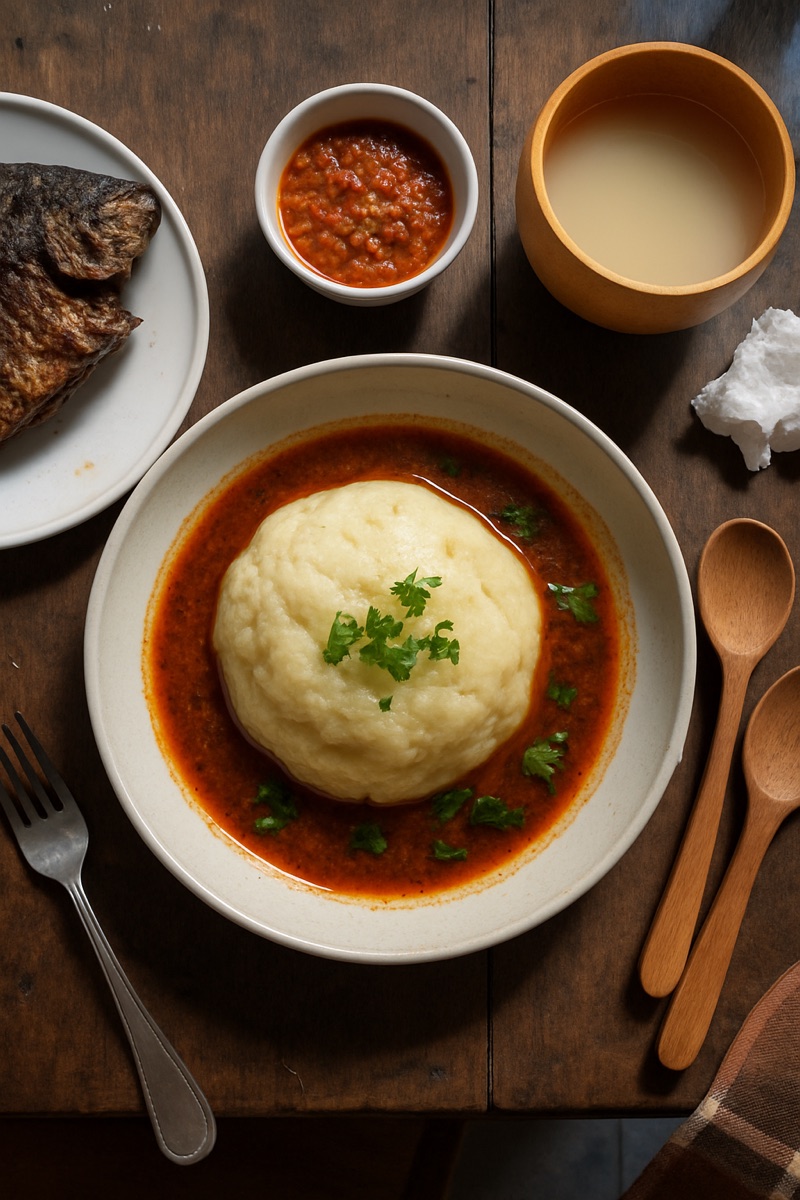
What Togolese food is built on
Togo's staples are maize, rice, millet, cassava, yam, plantain and beans, and maize is the food eaten most. Fish is a major source of protein, alongside goat, beef, chicken and agouti, the grasscutter. Chilli peppers are the usual spice. People mostly eat at home, but there are also restaurants and street food stalls.
A meal is a dough or starch with a sauce. In the south, sauce is déssi, and a sauce is named after its main ingredient: fétri déssi is okra sauce, dékou déssi palm-nut sauce, azin'g déssi peanut sauce. Togolese cooking also carries French and German influences, from baguette to sausages, and French Wikipedia notes that southern Togolese cooking is known across West and Central Africa.
Doughs and starches
- Fufu — Boiled white yam, or cassava, plantain or taro, pounded in a wooden mortar into a light, elastic dough. It is eaten by hand with a clear broth of fish, beef or chicken, or with dékou déssi, palm-nut sauce with offal, beef and fish. It is the dish most often cited as Togo's national dish.
- Akoumé — The everyday maize dough, akplè in Ewe, close to Ghana's banku and Burkina Faso's tô. Éwɔ-koumé is dry flour stirred into boiling water until firm; éma-koumé uses fermented wet dough, sieved and settled, for a whiter, lighter paste. It is usually served with okra sauce or adémè, a jute-leaf sauce.
- Djenkoumé — Akoumé made to be eaten without sauce: maize flour cooked in a seasoned tomato and meat broth, which turns it red, and served with fried or roast chicken. The Routard guide calls it the dish of the Vodun convents of southern Togo, and in Benin the same dish is amiwo.
- Kom — Balls of precooked, fermented whole-maize dough, wrapped in corn husks and steamed again. They are eaten with fried fish and yébéssé fionfion, a roasted chilli. The Ewe of Ghana eat the same food, which the Ga call kenkey.
- Ablo — Small, slightly sweet steamed cakes of maize and rice flour, from the Ewe and Adja-Ewe of Togo and Benin. They are eaten with fried fish, tomatoes, green chilli and crushed onion, and are a speciality of the Aného area, on the Benin border.
Sauces and main dishes
- Fétri déssi — Okra sauce, usually cooked in palm oil, which turns it orange-red, with beef, shrimp, crab or smoked fish, and sometimes all of them at once. It is the classic partner of akoumé.
- Gboma déssi — A sauce of gboma, a local spinach, with meat, smoked fish or seafood. One common version mixes the leaves with mutton, dried fish, crab and shrimp.
- Koklo mêmê — Chicken (koklo) marinated in tomato and braised or grilled, served with a chilli sauce. Grilled fish, akpavi mêmê, is made the same way and served with tomato sauce and sautéed vegetables.
- Ayimolou — Rice and beans cooked together; the name comes from the words for bean (ayi) and rice (molou). Sold by street vendors and in markets, especially in Lomé, it is eaten at breakfast, lunch or dinner with spicy sauce, fish, eggs or meat. Central and northern Togo call it watché, Benin atassi and Ghana waakye.
- Yaka-yèkè — A very fine maize couscous, the main dish shared at Epé-Ékpé, one of the most important festivals of the coast. It is served with goat, mutton or beef sauce.
Street food and sweets
Roadside stalls sell groundnuts, omelettes, brochettes, corn on the cob and cooked prawns. In the south, sakomi is a baguette stuffed with cabbage, carrot, beetroot, spaghetti, boiled egg, sausage, beans, mayonnaise and a spicy red pepper sauce. Koliko, fried yam with chilli sauce, and kanklo, fritters of very ripe bananas, are other common snacks.
- Gaou — Fritters of crushed beans with chilli and onion, Togo's version of akara, also called aklan. They are sold near ablo sellers or by Kotokoli women from the Sokodé region, and eaten with koko, a well-sweetened millet porridge.
- Akpan — Fermented maize, eaten in Togo and Benin. As a dessert it is a tangy, yogurt-like cream served very cold with sugar and condensed milk; it also exists as a soft, slightly sour ball of fermented maize steamed in banana leaves.
North and south Togo
Northern sauces draw on wild plants, such as kodoro, made from baobab leaves, and gnato, from hibiscus leaves. Wagasi, the Fulani cheese with a red rind, is eaten in sauce or sold fried in cubes by the roadside around Sokodé, Kara and Kétao, and kluiklui, fried balls or sticks of pressed peanut paste, come from the Kétao area. The south, home of the déssi sauces, drinks palm wine (dé-ha), sodabi distilled from it, and li-ha, a sweet malt drink of maize, millet or sorghum.
- Wassa-wassa — Couscous made from yam, a speciality of northern Togo also eaten in Benin. It is part of a northern kitchen that includes sokoro (pounded yam), touwo (pasty rice) and fonio couscous.
- Tchoukoutou — A thick millet or sorghum beer from the Kara region, now drunk across the country from a calabash. A stake topped with a piece of calabash marks a place that serves it, and tchakpalo is a lighter beer popular around Dapaong.
Cook Togolese food at home
Fufu is the dish most often cited as the national dish of Togo, though maize doughs are eaten more often. Copper has full recipes for fufu, djenkoumé and akpan, with ingredients and step-by-step methods, on our page about the food of Togo, alongside other West African recipes.
Togo shares its corn doughs, bean fritters and rice-and-beans with its neighbours. Compare with the traditional food of Benin and the traditional food of Ghana.
The recipes
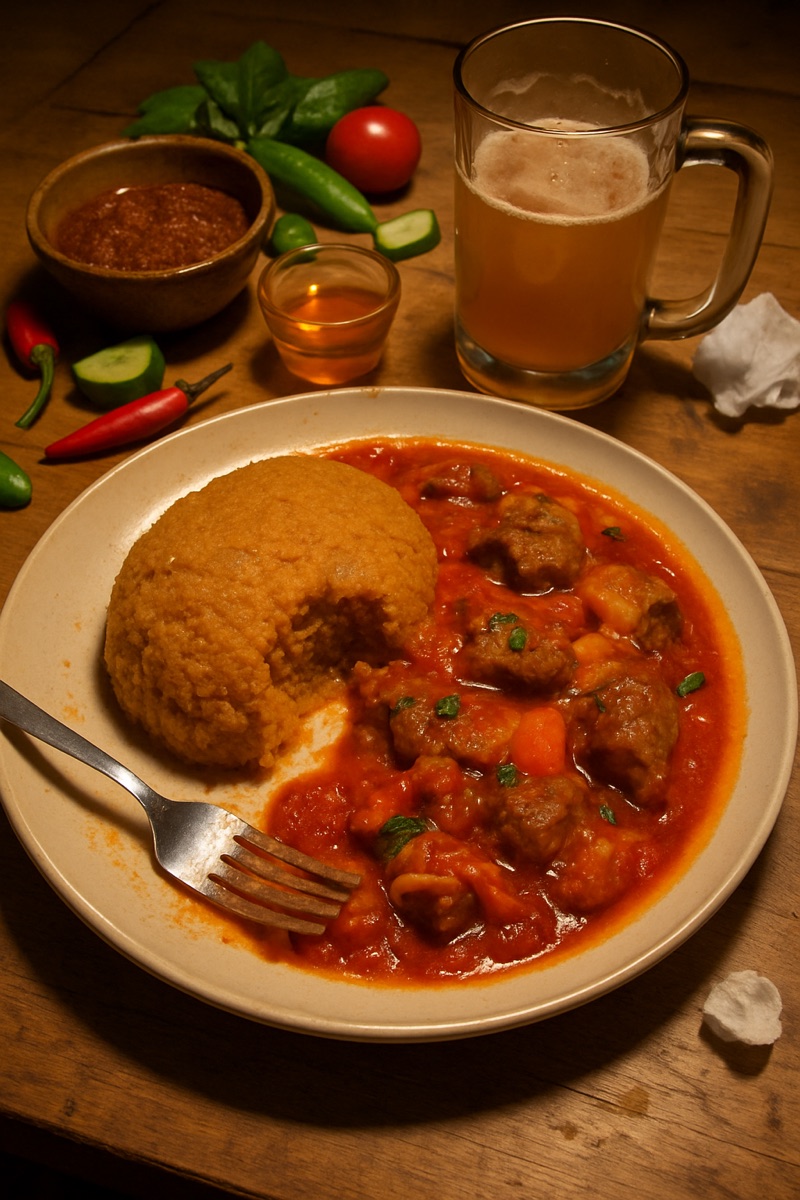 Djenkoume
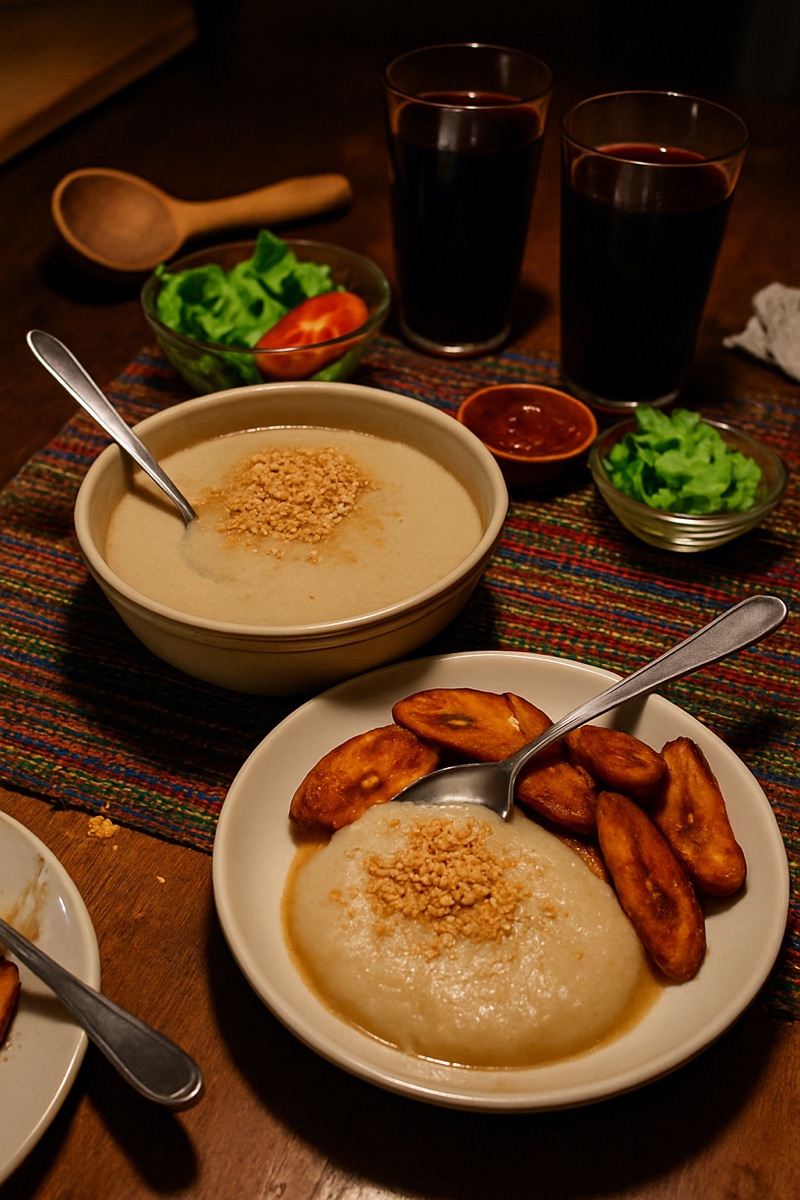 Akpan
AkpanQuestions people ask
What is the most popular food in Togo?
Maize is the most eaten food, mostly as akoumé, a corn dough served with sauce. Fufu, pounded yam, is the dish most often named as Togo's national dish.
What do people in Togo eat for breakfast?
Ayimolou, rice and beans, is eaten from breakfast onwards. Sweet porridges are common too: koko made from millet, akassan from fermented maize, and molou zogbon, rice porridge often scented with lemongrass.
Is Togolese food spicy?
Yes, often. Chilli is the usual spice, yébéssé-si is a raw tomato and chilli paste, and doughs are commonly served with a little red or green chilli purée.
What is the difference between fufu and akoumé?
Fufu is boiled yam, cassava, plantain or taro pounded in a mortar. Akoumé is a dough of maize flour cooked in water, the more everyday of the two.
What do people drink in Togo?
Palm wine, sodabi distilled from it, li-ha malt drink, and in the north tchoukoutou and tchakpalo, beers of millet or sorghum.
Keep reading
- What is the national dish of Togo?
- Traditional food of Benin: 13 dishes to know
- Traditional food of Burkina Faso: 11 dishes to know
- Traditional food of Cabo Verde: 13 dishes to know
- Traditional food of Côte d'Ivoire: 12 dishes to know
- Traditional food of The Gambia: 13 dishes to know