 COPPER
What is the national dish of Ethiopia?
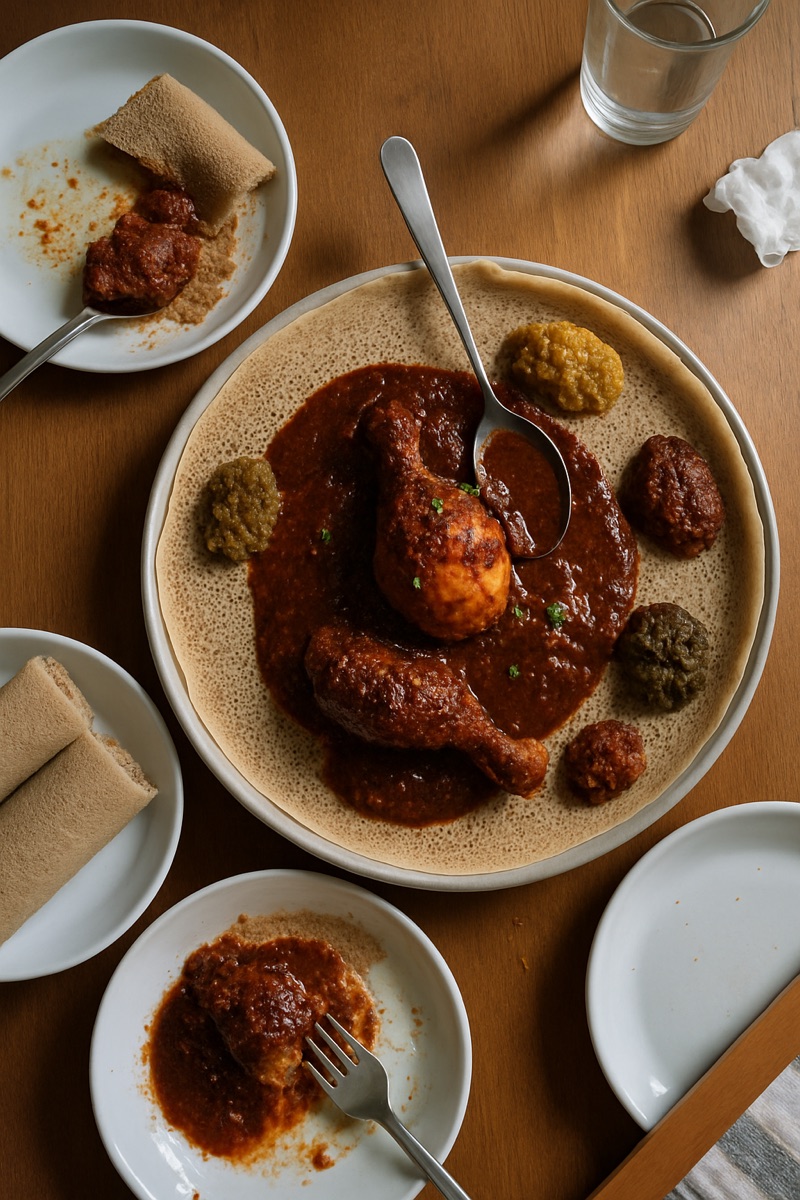
The national dish of Ethiopia is doro wat: a chicken stew whose sauce is red onions cooked down without fat, then enriched with niter kibbeh (spiced clarified butter) and berbere chilli spice, with whole hard-boiled eggs added at the end. It is eaten on injera, a sour teff flatbread. No law makes it official, but it is the dish consistently cited as Ethiopia's national dish.
What is doro wat?
Doro means chicken in Amharic, and wat is the word for a thick Ethiopian stew. Doro wat is the most popular traditional food in Ethiopia and Eritrea and is widely described as the national dish, although no law or decree gives it that status.
It is not an everyday meal. A properly made doro wat can take around ten hours, so it is kept for special occasions and gatherings, where everyone eats together from a shared platter lined with injera. The pieces of chicken sit in a thick, glossy, dark red sauce, usually with whole peeled hard-boiled eggs.
How doro wat is made
What sets a wat apart from other stews is its first step. Chopped red onions go into a dry pot with no fat at all and cook slowly until they give up their water and collapse. In our doro wat recipe, 6 large red onions cook for 40 minutes this way until they turn into a dark jam. That jam is what thickens the sauce.
Only then does the fat go in, followed by the spice:
- Niter kibbeh: butter simmered with spices such as besobela (Ethiopian sacred basil), koseret, fenugreek and cardamom, then strained. About 150 g melts into the onions.
- Berbere: a blend of powdered chilli with spices such as cardamom, fenugreek, coriander, cloves, ginger and cumin. Five tablespoons cook for 10 minutes until the paste darkens.
- Chicken: rubbed with lemon and salt for 30 minutes, then simmered in the sauce for 45 to 60 minutes until it falls apart.
- Eggs: hard-boiled, scored all over so the sauce gets in, and added for the last 15 minutes.
Injera, the other half of the dish
Doro wat is always served on injera, a large, sour, spongy flatbread about 50 cm across. It is traditionally made from teff, a tiny grain native to Ethiopia, mixed with water and fermented with ersho, a yellow liquid saved from a previous batch.
Injera is both the plate and the cutlery: the stew is spooned on top and you tear off pieces with your right hand to pick it up. Injera is stored in a woven basket called a mesob, and it is so central that it is itself sometimes called a national dish. A mesob even appears on the 10 birr banknote.
Teff is graded by colour, white, red or mixed, and pure white teff injera is a mark of wealth. Families on tighter budgets blend in cheaper flours: barley in the highlands, sorghum in the lowlands, maize or rice elsewhere.
Fasting days and the vegan side of the table
The Ethiopian Orthodox Church prescribes many fasting days, including every Wednesday and Friday and the whole of Lent, during which the faithful eat no animal products at all, not even butter or eggs. Doro wat, with its butter, chicken and eggs, is off the table on those days, and Ethiopian cooking has developed a wide range of vegan stews as a result.
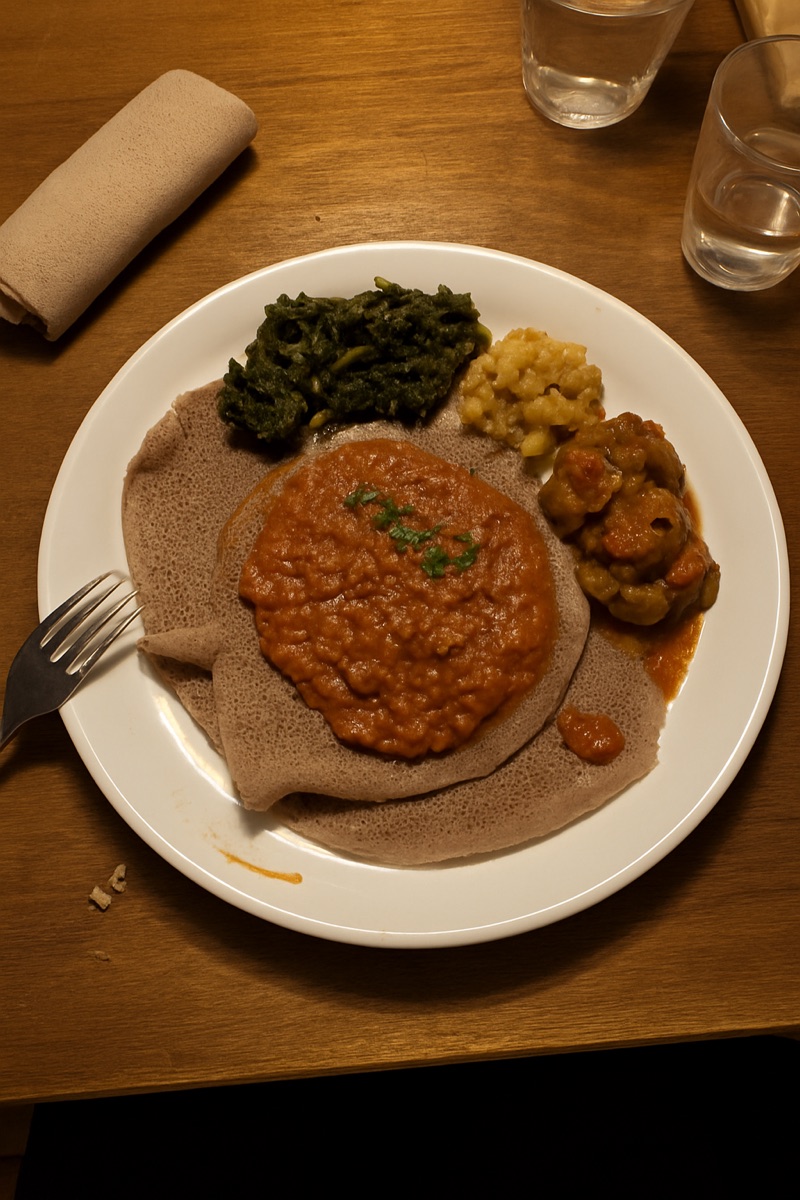
Misir wat is the best known of them: red lentils simmered 30 to 40 minutes into a thick purée with berbere, over onions first sweated dry for 25 minutes. It is in high demand during fasts, when the niter kibbeh is replaced with vegetable oil or yeqimem zeyet, a spiced oil made like niter kibbeh.
Other dishes to know from Ethiopia
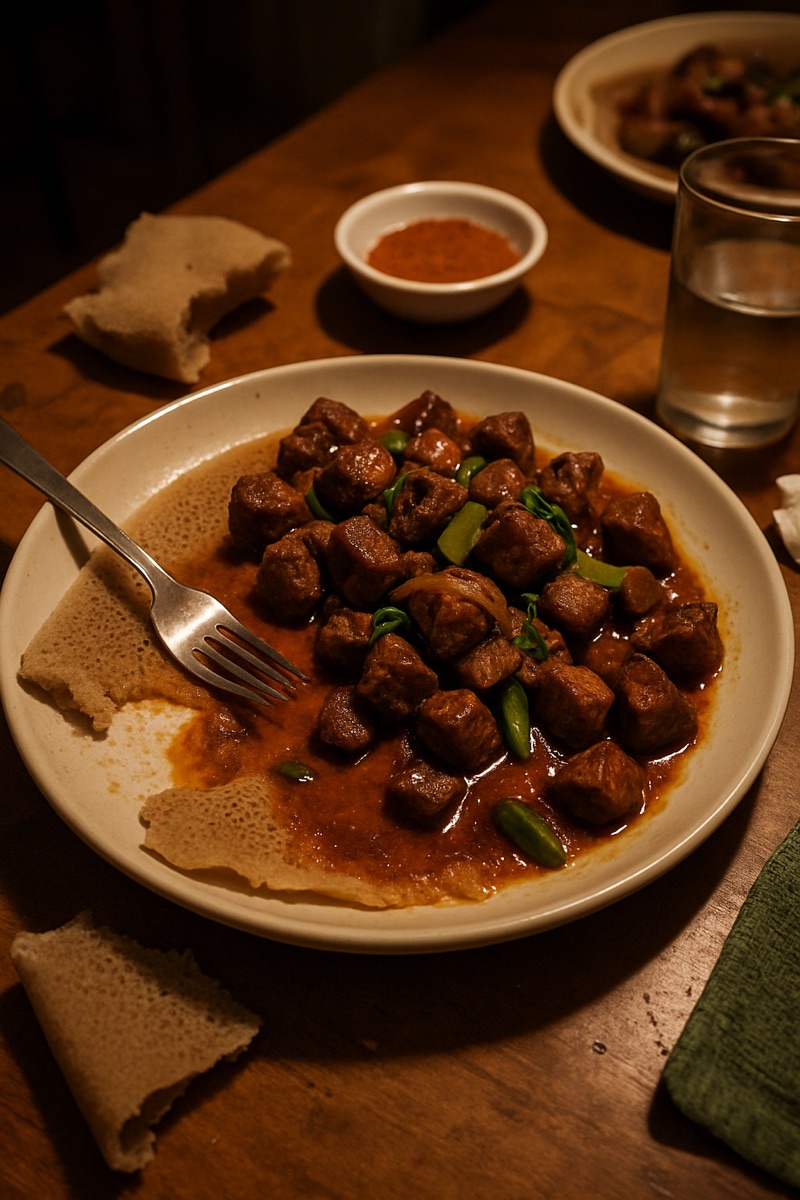
Tibs is the fast counterpart to wat: cubes of beef seared in two batches in a smoking-hot pan with niter kibbeh, then tossed with onion, green chilli, berbere and rosemary for a few minutes and served still sizzling. It must never simmer down into a stew.
Two other dishes are worth knowing. Kitfo is raw or rare minced beef dressed with mitmita, a very hot chilli powder, and niter kibbeh. Fir-fir, shredded injera stir-fried with spices or leftover wat, is a common breakfast. Most meals end with a coffee ceremony, where the beans are roasted in front of guests and brewed in a clay pot called a jebena.
Ethiopia shares doro wat, injera and berbere with Eritrea, where the stew is called tsebhi derho in Tigrinya, so the national dish of Eritrea will look familiar. For more of the region, see our guide to East African food, and find all three dishes with step-by-step methods on our page about the food of Ethiopia.
The recipes
- Doro wat🇪🇹 Ethiopia · 2 hours and 30 minutes
 Misir wat🇪🇹 Ethiopia · 1 hour and 30 minutes
 Tibs🇪🇹 Ethiopia · 25 minutes
Questions people ask
Is doro wat Ethiopian or Eritrean?
Both. Doro wat is the most popular traditional food in Ethiopia and Eritrea; in Tigrinya it is called tsebhi derho. It is most widely known as Ethiopia's national dish.
Why are there eggs in doro wat?
Whole peeled hard-boiled eggs are a usual, though not compulsory, part of doro wat. They are scored and simmered in the sauce for the last 15 minutes so they absorb its colour and spice.
Is doro wat spicy?
Yes. Its heat comes from berbere, a chilli-based spice blend. It is often served with fresh ayib, a mild Ethiopian cheese, to cut the heat.
What is injera made of?
Injera is traditionally made from teff flour and water, fermented with a starter saved from a previous batch. Barley, sorghum, maize or rice flour are sometimes mixed in, depending on region and price.
Why does doro wat take so long to make?
The onions must cook dry for a long time before any fat goes in, then the spiced butter and berbere are cooked down before the chicken simmers. Done properly, the whole process can take around ten hours.
Keep reading
- Traditional food of Ethiopia: 13 dishes to know
- What is the national dish of Burundi?
- What is the national dish of Comoros?
- What is the national dish of Djibouti?
- What is the national dish of Eritrea?
- What is the national dish of Kenya?