 COPPER
What is the national dish of Somalia?
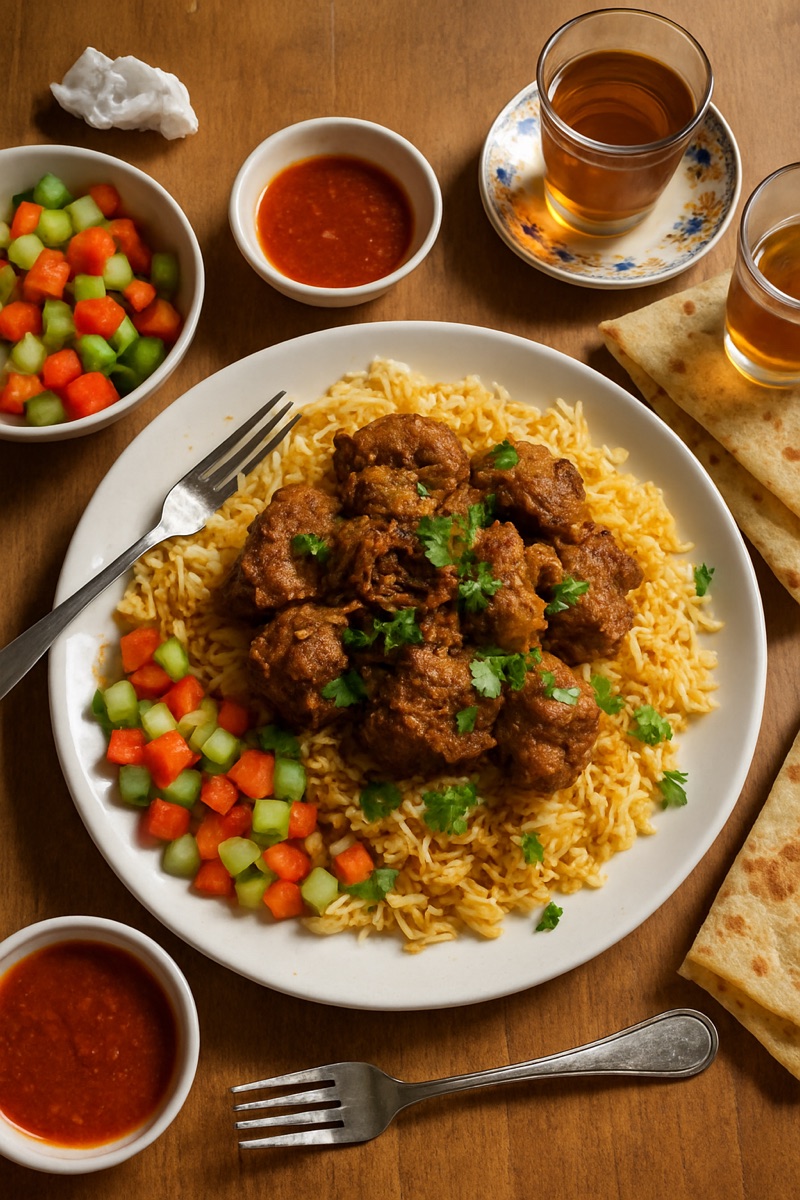
Somalia has no officially declared national dish, but bariis iskukaris is the one most often cited. It is basmati rice cooked in the same pot as goat, lamb, camel or chicken, spiced with the Somali blend xawaash, so the grains drink up the meat broth. It is eaten almost daily, is a fixture at weddings and is traditionally served with a banana on the side.
Is bariis iskukaris officially Somalia's national dish?
There is no law or government decree naming a Somali national dish. Bariis iskukaris is the dish that reference works agree on: Wikipedia calls it "a national dish of Somalia", lists it as the country's national dish, and its article on Somali cuisine describes iskukaris as "a national staple".
The dish is also part of Djiboutian cuisine, and it is especially popular at weddings.
What does bariis iskukaris mean?
Bariis is the Somali word for rice. Iskukaris, short for isku-dheh karis, means "cooked mixed together": the rice and the meat stew finish cooking in a single pot. The term is sometimes used more broadly for other grains cooked the same way. That is what separates it from plain rice served next to a stew, and what makes it one of the harder Somali rice dishes to get right, because meat, vegetables and rice all need different cooking times. Meat goes in first, slow vegetables such as potatoes next, and the rice last; the hard part is timing it so the rice on the surface cooks as evenly as the rice buried in the middle.
What is in bariis iskukaris?
The base is always basmati rice and meat, with these elements around it:
- Meat: goat, lamb, beef, camel or chicken; fish also appears.
- Xawaash: the Somali spice blend, usually cumin, coriander, cardamom, cloves, cinnamon, black pepper and turmeric.
- Whole spices: cinnamon sticks, cardamom pods and cloves fried with the onion.
- Tomato and onion: the base of the broth the rice absorbs.
- Toppings: raisins, peas, fried potatoes, onions and peppers.
- A banana: served on the side of the plate.
How bariis iskukaris is made
The order of the pot is the whole technique. Sella basmati is washed 3 or 4 times until the water runs clear, then soaked for 2 hours. Meanwhile, onion is fried in oil with garlic, cinnamon, cardamom and cloves; the goat goes in with xawaash and is browned on all sides, then puréed tomatoes are added and cooked 15 minutes.
Boiling water and stock go in and the meat simmers about 1½ hours until fork-tender. Only then is the drained rice added. It cooks on low heat, covered, for two rounds of 10 minutes with a stir in between, until every grain has absorbed the broth. Some cooks add saffron or an orange colouring at the end for the dish's typical colour.
Served on a large platter, it is usually accompanied by roasted meat, most often lamb or goat. The full method is in our bariis iskukaris recipe.
Where it comes from
Iskukaris belongs to qado, the Somali lunch, which is often an elaborate main dish of rice, pasta or canjeero. Xawaash, whose name simply means "spices" in Somali, comes from the Arabic hawa'ij, and the blend is said to have originated in nearby Yemen.
Diets differ between town and country: urban meals use more fruit and vegetables than the simpler rural diet, and in the riverine regions corn and sorghum are the staples.
Pasta, called baasto, came from the Italians and now shares the lunch table with rice. A combination called federation puts equal portions of rice and spaghetti side by side on one oval plate, layered with stewed meat and vegetables and served with salad and an optional banana.
Other dishes to know from Somalia
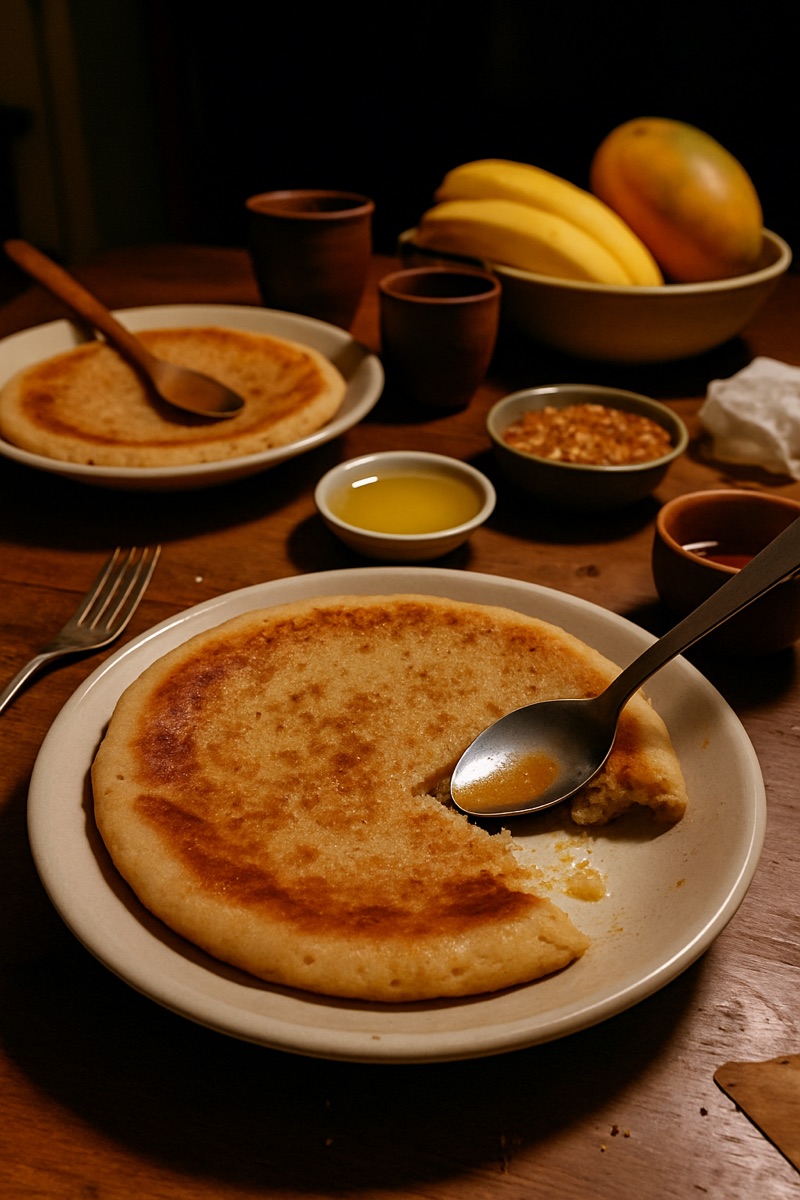
Breakfast is built on canjeero, the name used in southern Somalia for what is elsewhere called laxoox: a thin, slightly sour pancake of fermented sorghum, corn and wheat batter, cooked on one side only so the top stays full of holes. It is eaten with honey, ghee or sesame oil, or broken up with ghee and sugar, and washed down with tea.
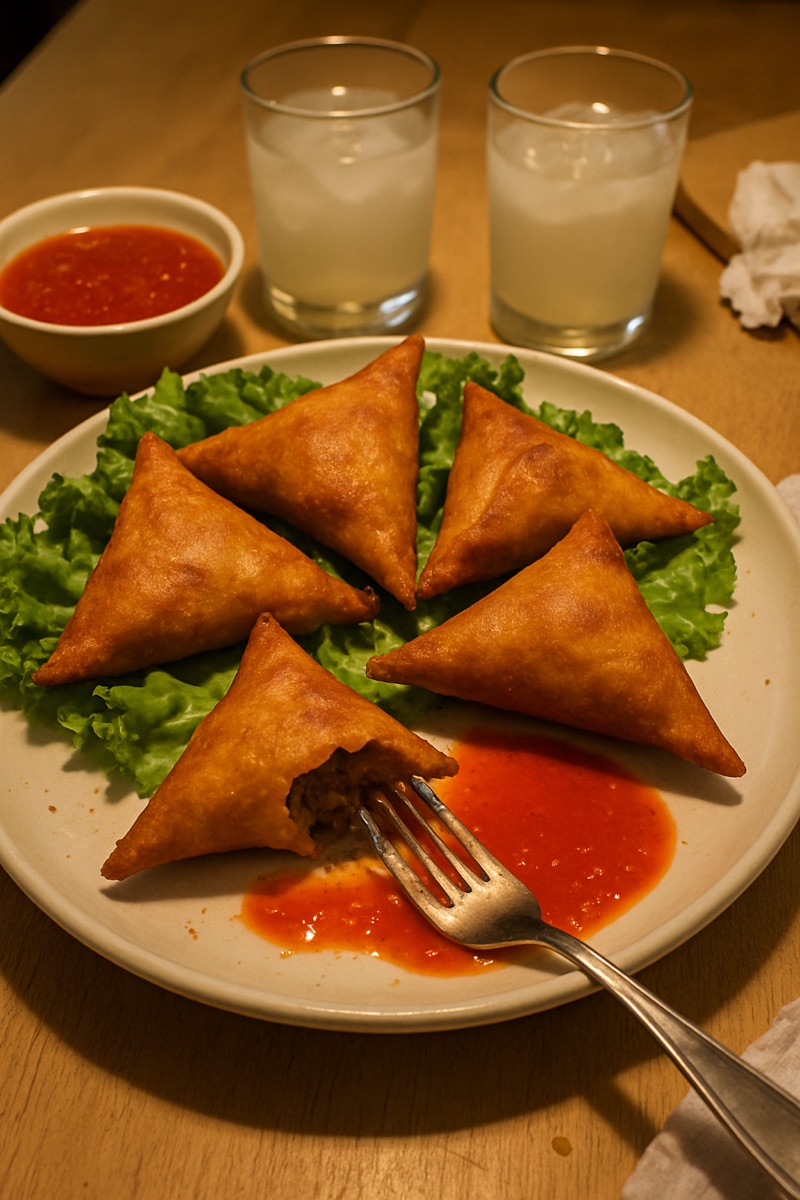
Sambuus are the Somali take on the samosa: triangles of paper-thin pastry filled with dry beef spiced with xawaash, raw onion, green chili and cilantro, then deep-fried. They are a classic of afur, the meal that breaks the fast during Ramadan, and are often served alongside bur, Somali fried dough.
For the neighbouring kitchens, see the national dish of Djibouti and the national dish of Yemen. All three Somali dishes are on our page about the food of Somalia, and the region is covered in our guide to East African food.
The recipes
- Bariis iskukaris🇸🇴 Somalia · 2 hours and 30 minutes
 Canjeero🇸🇴 Somalia · 3 hours and 30 minutes
 Sambusa🇸🇴 Somalia · 1 hour and 45 minutes
Questions people ask
Why is Somali rice served with a banana?
It is the Somali tradition: bariis iskukaris and most other rice dishes are served with a fresh banana on the side of the plate.
What does iskukaris mean?
Iskukaris, short for isku-dheh karis, means "cooked mixed together" in Somali: the rice finishes cooking in the same pot as the meat stew.
What is xawaash?
Xawaash is the Somali spice blend used in iskukaris and sambuus. Its name means "spices", and it usually includes cumin, coriander, cardamom, cloves, cinnamon, black pepper and turmeric.
What meat is used in bariis iskukaris?
Goat and lamb are the most common, but beef, camel, chicken and fish are also used.
Does Somalia have an official national dish?
No law or decree names one. Bariis iskukaris is the dish most often cited as Somalia's national dish.
Keep reading
- Traditional food of Somalia: 12 dishes to know
- What is the national dish of Burundi?
- What is the national dish of Comoros?
- What is the national dish of Djibouti?
- What is the national dish of Eritrea?
- What is the national dish of Ethiopia?