 COPPER
What is the national dish of Yemen?
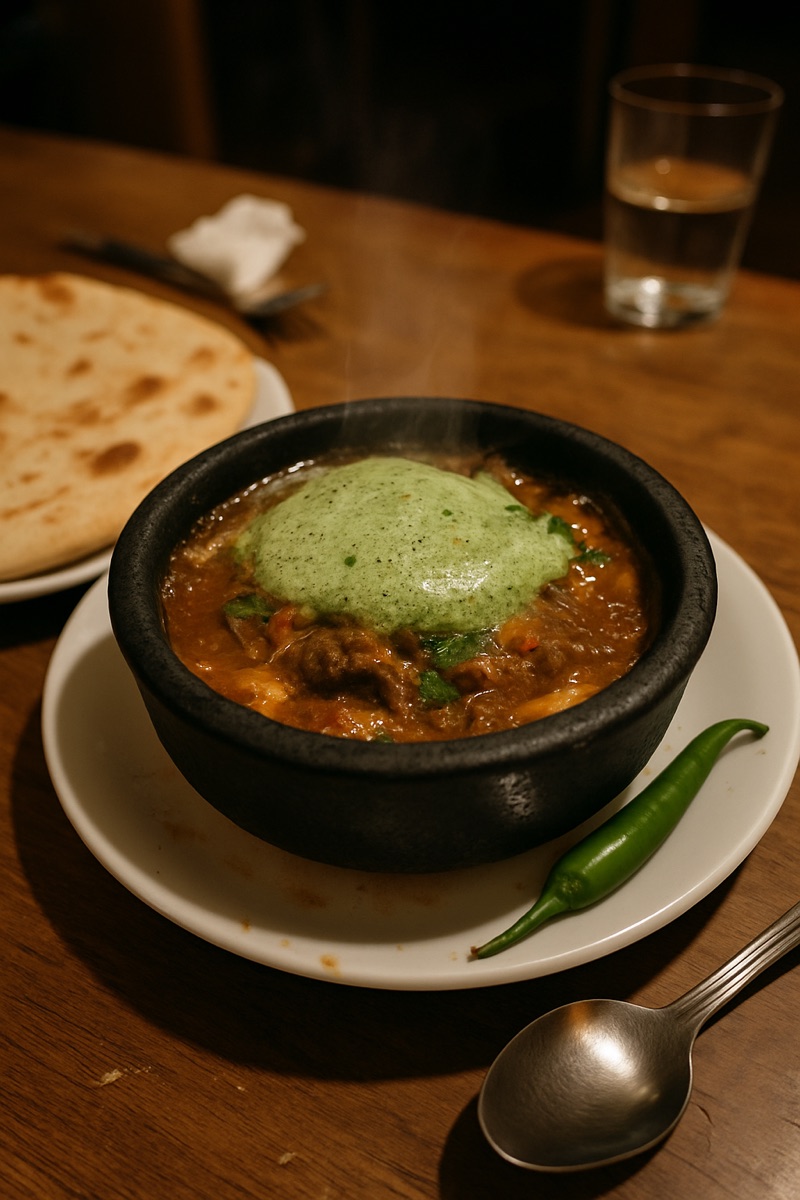
The national dish of Yemen is saltah: a brown meat broth called maraq, brought to a hard boil in a stone pot, then topped with whipped fenugreek froth (hulba) and sahawiq, a fresh chilli and herb sauce. It is eaten at lunch, scooped up with flatbread. It has no legal status, but it is the dish generally considered Yemen's national dish.
Is saltah officially Yemen's national dish?
There is no law naming it, but saltah is the dish Yemen is identified with. Wikipedia's articles on saltah and on Yemeni cuisine both describe it as the national dish, and note that after North and South Yemen united in 1990, saltah kept that place despite regional variations.
It is above all a dish of the north, eaten mainly at lunch, which is the main meal of the day in Yemen. Specialised saltah restaurants are among the busiest places to eat in the country. Meals are traditionally eaten sitting on the floor, and turning down food offered by a host is taken as an insult.
What is in saltah?
Saltah is built in three layers that are made separately and come together at the last minute:
- Maraq: a meat broth. Our saltah recipe simmers 500 g of lamb with onion, garlic, green chilli, tomato and cumin for 1 hour 30 to 2 hours.
- Hulba: ground fenugreek soaked in water for 2 hours, drained of its bitter water, then whisked hard until white and frothy, with lemon juice.
- Sahawiq: tomato, fresh coriander, green chilli and garlic blended into a sauce and whisked into the froth.
- Common additions: beaten egg, rice, potatoes or vegetables, depending on the cook.
How saltah is made and served
Once the meat breaks apart easily, it is broken up with a fork and the thick broth is poured into a stone pot (madara) or a cast-iron pan, then heated until it bubbles hard. Two beaten eggs are stirred in, the fenugreek froth goes on top, and the pot goes to the table still boiling.
The fenugreek froth is the heart of the dish. Soaking draws out the bitterness, and the water is poured off; the paste left at the bottom is chilled for 5 minutes, then whisked hard until it turns white and frothy. Lemon juice and sahawiq give it its sharpness and heat.
The stone pot keeps the saltah hot until the last mouthful. There is no cutlery: saltah is eaten with flatbread such as khubz mulawah, torn and used to scoop up the froth and broth together.
Where saltah comes from
Wikipedia records that in Ottoman times saltah was a charity food, made from leftovers donated by the wealthy or by mosques. Arabic Wikipedia links its name to the verb salata, to cut and beat ingredients together until they blend.
Fenugreek is the thread that runs through Yemeni cooking: some bakers even brush their bread with it before baking. Yemen's eastern neighbour, Oman, built its national dish around slow pit-roasting instead: see the national dish of Oman.
Saltah and the other lamb dishes of Yemen
Most meals across Yemen are built on rice and lamb, usually in large bone-in pieces. The same lamb can end up three ways:
- Maraq: boiled in its own broth, the base of saltah.
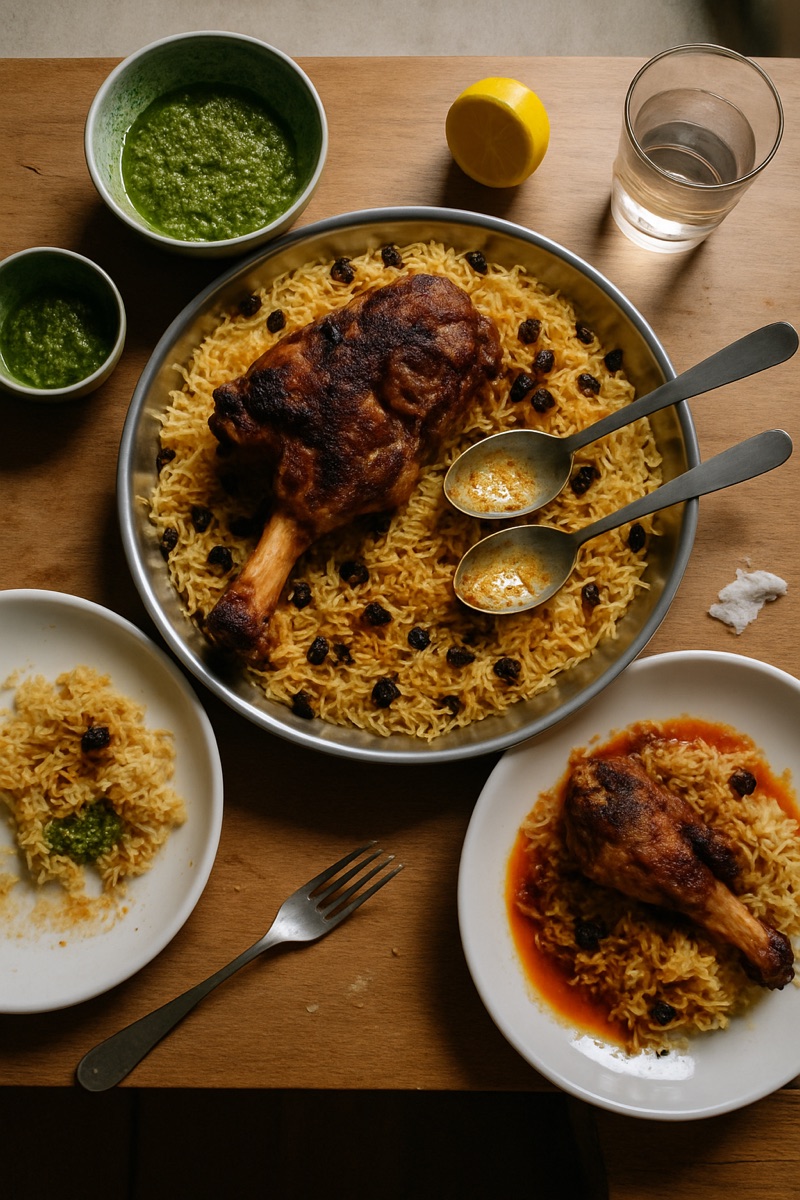
- Haneeth: slow-roasted with a spice rub in a tannour, the round clay oven found in many Yemeni kitchens, and served on rice.
- Mandi: cooked in a sealed pit above the rice that catches its juices.
Other dishes to know from Yemen
If saltah is the everyday lunch, mandi is the dish Yemen exported. Meat rubbed with hawaij spices is traditionally hung in a clay pit oven above rice cooking in its stock, and the pit is sealed. At home, the closest version finishes with a red-hot piece of charcoal and a spoon of ghee sealed under the lid for 8 minutes: that smoke is the dish. The name is usually traced to the Arabic nada, dew, for the moist texture of the meat. Yemeni migrants carried mandi to Hyderabad in India, and Kerala knows a version as kuzhi mandi. It is now eaten across the Arabian Peninsula, and its rice cousin kabsa is Saudi Arabia's signature: see the national dish of Saudi Arabia.
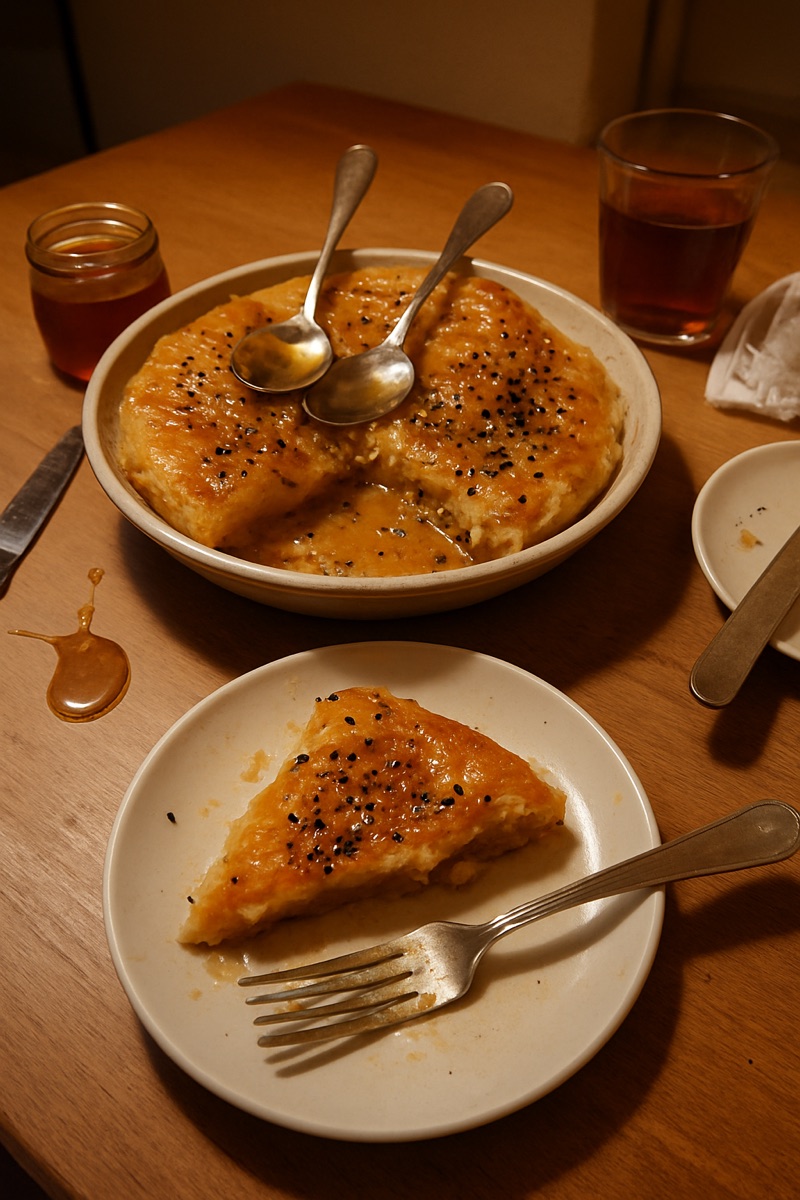
For something sweet, bint al-sahn, also called sabayah, is a honey cake of 10 to 12 paper-thin sheets of egg dough, each brushed with ghee and stacked, topped with nigella seeds, baked for 25 minutes and soaked in warm honey. Honey is produced in Yemen and prized as a delicacy and even a status symbol.
All three recipes are on our page about the food of Yemen, and the wider region is covered in our guide to Middle Eastern food.
The recipes
- Saltah🇾🇪 Yemen · 2 hours and 30 minutes
 Mandi🇾🇪 Yemen · 2 hours and 50 minutes
 Bint al-sahn🇾🇪 Yemen · 2 hours and 20 minutes
Questions people ask
What is saltah made of?
A meat broth (maraq) topped with fenugreek froth (hulba) and sahawiq, a fresh sauce of chilli, tomato, garlic and herbs. Egg, rice or potatoes are often added.
How do you pronounce saltah?
Roughly SAL-tah, from the Arabic سلتة.
What is the difference between saltah and fahsa?
Both are Yemeni lunch stews. Fahsa is made from lamb cutlets in lamb broth, while saltah is defined by its whipped fenugreek froth and sahawiq.
What is served with saltah?
Flatbread, used instead of a spoon to scoop up the stew. Khubz mulawah is the bread most often named.
Is mandi the national dish of Yemen?
No. Mandi is Yemen's best-known dish abroad, but saltah is the one considered the national dish.
Keep reading
- Traditional food of Yemen: 14 dishes to know
- What is the national dish of Bahrain?
- What is the national dish of Iran?
- What is the national dish of Iraq?
- What is the national dish of Israel?
- What is the national dish of Jordan?