 COPPER
Traditional food of Yemen: 14 dishes to know
Yemeni food is built on lamb, chicken, rice and home-baked flatbread, seasoned with cumin, coriander, turmeric, fenugreek and the hawaij spice mix, and often hot with chilli. Lunch is the main meal, eaten sitting on the floor and scooped up with bread. The most emblematic dishes are saltah, mandi, fahsa and bint al-sahn.
What Yemeni food is built on
Yemeni cooking stands apart from the wider Middle East: its maritime history brought Indian and Indonesian influences. Chicken, goat and lamb are eaten more often than beef, which is expensive, and fish is common on the coast. Tomatoes, onions and potatoes are the staple vegetables, and lentils and broad beans go into stews and salads. Dairy is less common, but buttermilk (haqin) is drunk almost daily in some villages.
Many kitchens have a tannour, a round clay oven, and a madara, a clay or soapstone pot that also serves as a bowl and keeps food hot. Hawaij blends aniseed, fennel, ginger and cardamom, and fenugreek is whipped into a froth called hulba. Lunch, not dinner, is the main meal; it is eaten sitting on the floor, and refusing food offered by a host is taken as an insult.
Lunch: stews, roasts and rice
- Saltah — The national dish: a brown meat broth (maraq) brought to a hard boil in a stone pot, topped with whipped fenugreek froth and sahawiq. Rice, potatoes, egg or vegetables are often added, and it is eaten with flatbread, mainly at lunch and above all in the north.
- Fahsa — A lunch stew of lamb cutlets in lamb broth, cooked over high heat with some chopped vegetables and potatoes, with hulba added after cooking. Its exact ingredients change from one region to the next, but the meat and the cooking method stay the same.
- Mandi — Meat and rice with a special spice blend, cooked in a pit oven so the rice catches the juices of the meat. Arabic Wikipedia calls it a Hadhrami dish, and it has spread across Arabia and as far as Hyderabad.
- Haneeth — Lamb rubbed with spices and slow-roasted in a tannour, usually served on a plate of rice.
- Zurbian — A rice dish made with lamb and saffron, one of the Hadhrami dishes, with mandi and haneeth, that made the first Yemeni restaurants in Egypt popular.
Bread and bread dishes
Bread is made at home from local grains. The most common is salouf, a wheat flatbread fermented with yeast; some bakers brush it with fenugreek before baking it in the tannour, at about 2 cm thick and 20 to 30 cm across. Khamir, kudam, malooga and mulawah are other everyday breads, and khaliat nahl, honeycomb bread, is now sold in Yemeni cafes abroad. Harish, cracked wheat cooked thick with ghee, honey or sugar, is eaten on cold winter mornings and given to women after childbirth.
- Lahoh — A spongy flatbread like a pancake, made from a loose batter of white or corn flour with a little onion, fennel and yeast, left to rise for one to two hours.
- Khubz mulawah — A layered flatbread brushed with fat and cooked in a pan, the bread used to scoop up saltah. Yemeni Jews took it to Israel, where it is known as malawach.
- Shafut — Ten to twelve sheets of lahoh layered in a dish with spiced yogurt or buttermilk, garlic, coriander, cucumber and leek, then chilled so the bread soaks it all up. It is served with lunch or dinner.
- Fatoot — Bread cut into small pieces and mixed with chicken or meat broth and ghee or butter, eaten hot; some eat it with hot milk instead.
- Aseed — A lump of cooked wheat-flour dough served with a topping that varies by region: spiced yogurt, small dried fish called wazif, honey or butter.
- Sahawiq — The everyday table sauce: tomatoes crushed with green and red chilli, garlic, herbs and salt, eaten with bread or spooned over rice.
Sweets, coffee and tea
Fresh fruit such as mangoes, bananas and grapes often ends a meal, along with baklawa, basbousa, kunafah, zalabiya, halwa and rawani. Milk tea, black tea with cardamom, cloves or mint, karkade made from hibiscus flowers and a cold raisin drink are the usual drinks. Tea is drunk with breakfast, after lunch and with dinner.
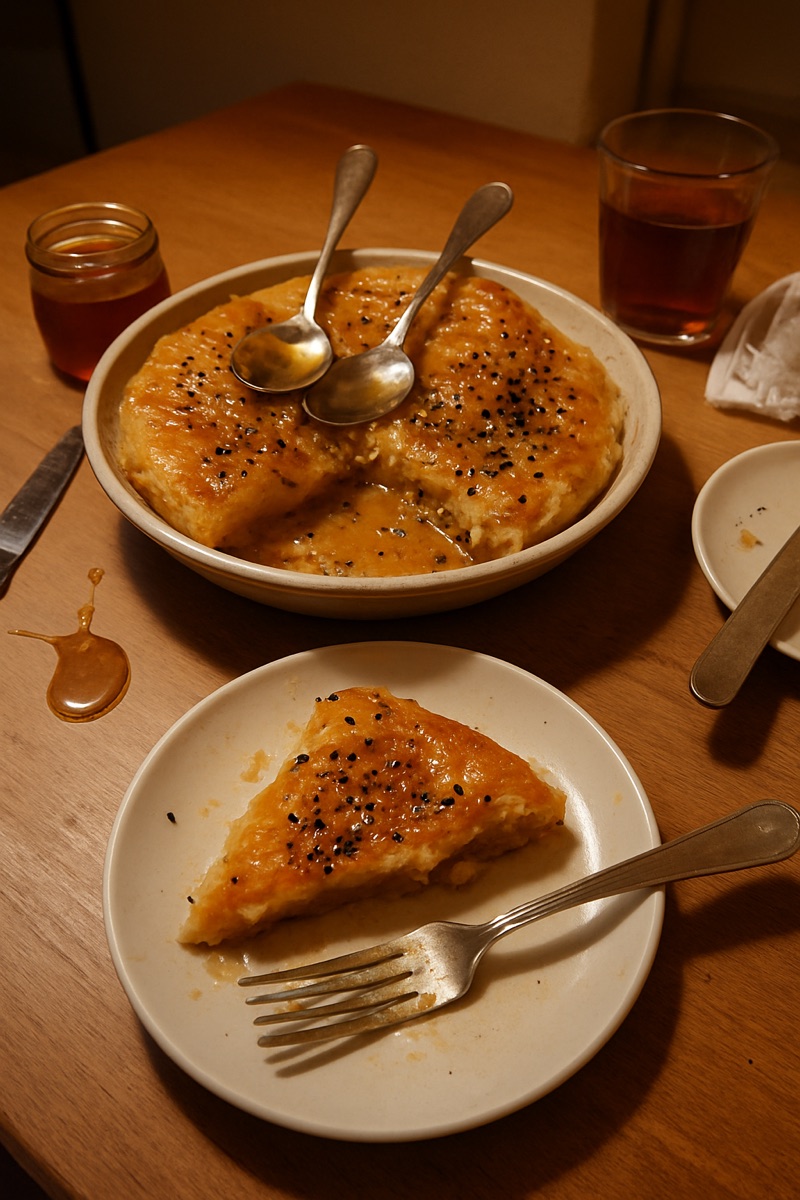
- Bint al-sahn — A pastry of paper-thin layers of egg and yeast dough brushed with ghee, sprinkled with nigella seeds and served with honey. It is technically hard to make, so it is mostly made at home. Yemeni honey is a delicacy and even a status symbol.
- Masoub — Overripe bananas mashed with flatbread, cream, dates and honey, eaten fresh before the banana darkens.
- Qishr — A drink brewed from coffee husks. Arabic coffee itself spread from the Yemeni port of Mokha, and Yemen celebrates Yemeni Coffee Day on 3 March.
Regional Yemen
Saltah is above all a dish of the north, as are haneeth, shafut and fahsa, while mandi comes from Hadhramaut and the east. Coffee is the preferred drink in Sanaa, whereas black tea is the drink of choice in Aden and Hadhramaut. Taiz is famous for its smoked cheese and for tulumba, fried sweets eaten during Ramadan. Breakfast is warm everywhere: pastries with tea, or ful, eggs and shakshouka.
Cook Yemeni food at home
Saltah is the national dish of Yemen. Copper has full recipes for saltah, mandi and bint al-sahn, with ingredients and step-by-step methods, on our page about the food of Yemen, alongside other Middle Eastern recipes.
Mandi and harees are cooked all across the Arabian Peninsula. Compare with the traditional food of Oman and the traditional food of Saudi Arabia.
The recipes
- Bint al-sahn🇾🇪 Yemen · 2 hours and 20 minutes
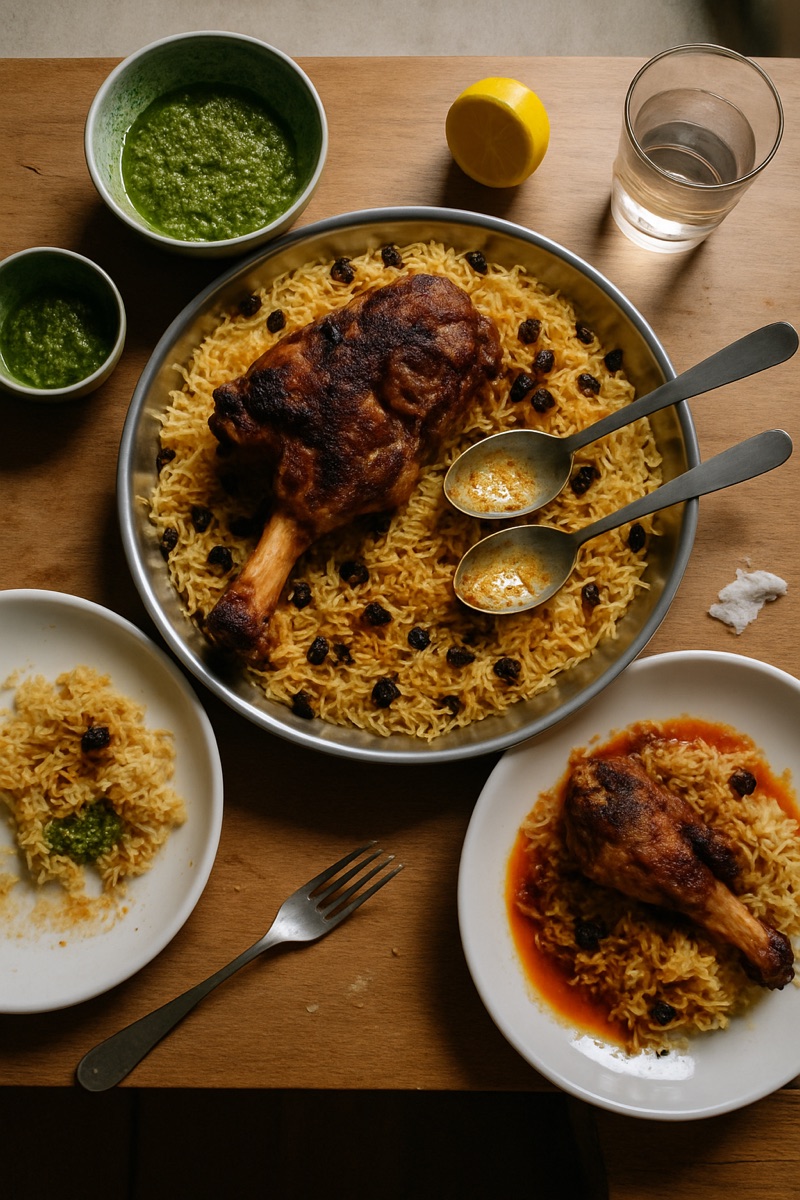 Mandi🇾🇪 Yemen · 2 hours and 50 minutes
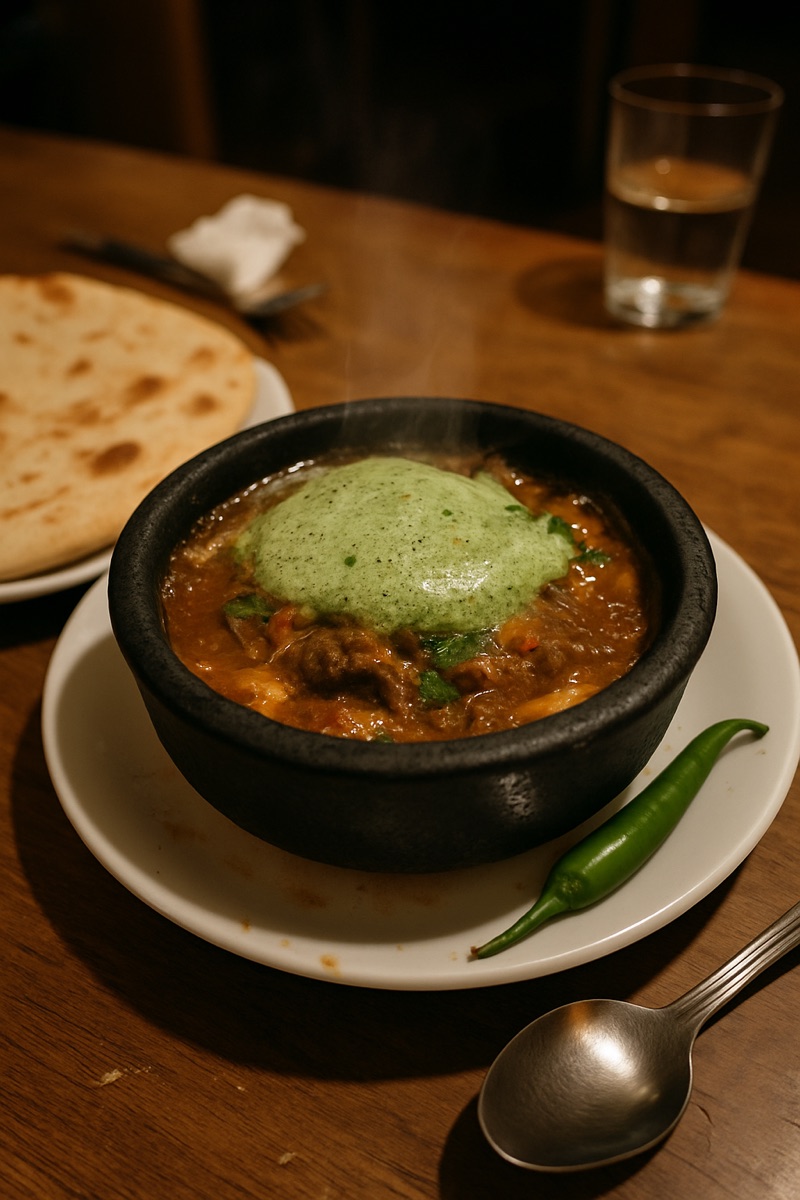 Saltah🇾🇪 Yemen · 2 hours and 30 minutes
Questions people ask
What is the most popular food in Yemen?
Saltah, the national dish, is the everyday lunch in the north, and mandi is the best-known Yemeni dish across Arabia and abroad.
What do Yemenis eat for breakfast?
Warm dishes: pastries with tea or coffee, ful, eggs, shakshouka, fatoot and masoub. Some eat lamb or beef liver.
Is Yemeni food spicy?
Often, yes. Yemeni food is frequently hot, with chilli, cumin, coriander and turmeric, and sahawiq, a fresh chilli sauce, is on most tables.
What is the difference between saltah and fahsa?
Both are lunch stews of the north. Fahsa is lamb cutlets in lamb broth with hulba added after cooking; saltah is a meat broth topped with whipped fenugreek and sahawiq.
What do Yemenis drink?
Milk tea, black tea with cardamom, cloves or mint, Arabic coffee, and qishr, made from coffee husks. Coffee is preferred in Sanaa and tea in Aden.
Keep reading
- What is the national dish of Yemen?
- Traditional food of Bahrain: 13 dishes to know
- Traditional food of Iran: 14 dishes to know
- Traditional food of Iraq: 13 dishes to know
- Traditional food of Israel: 14 dishes to know
- Traditional food of Jordan: 13 dishes to know