 COPPER
What is the national dish of Oman?
Oman has no officially declared national dish, but shuwa is the one most often cited: lamb, goat or camel meat rubbed with a paste of cardamom, cumin, coriander, cloves and dried lime, wrapped in leaves and a sack, then cooked for a day or more in a sealed underground pit. It is a festive dish, cooked above all for Eid.
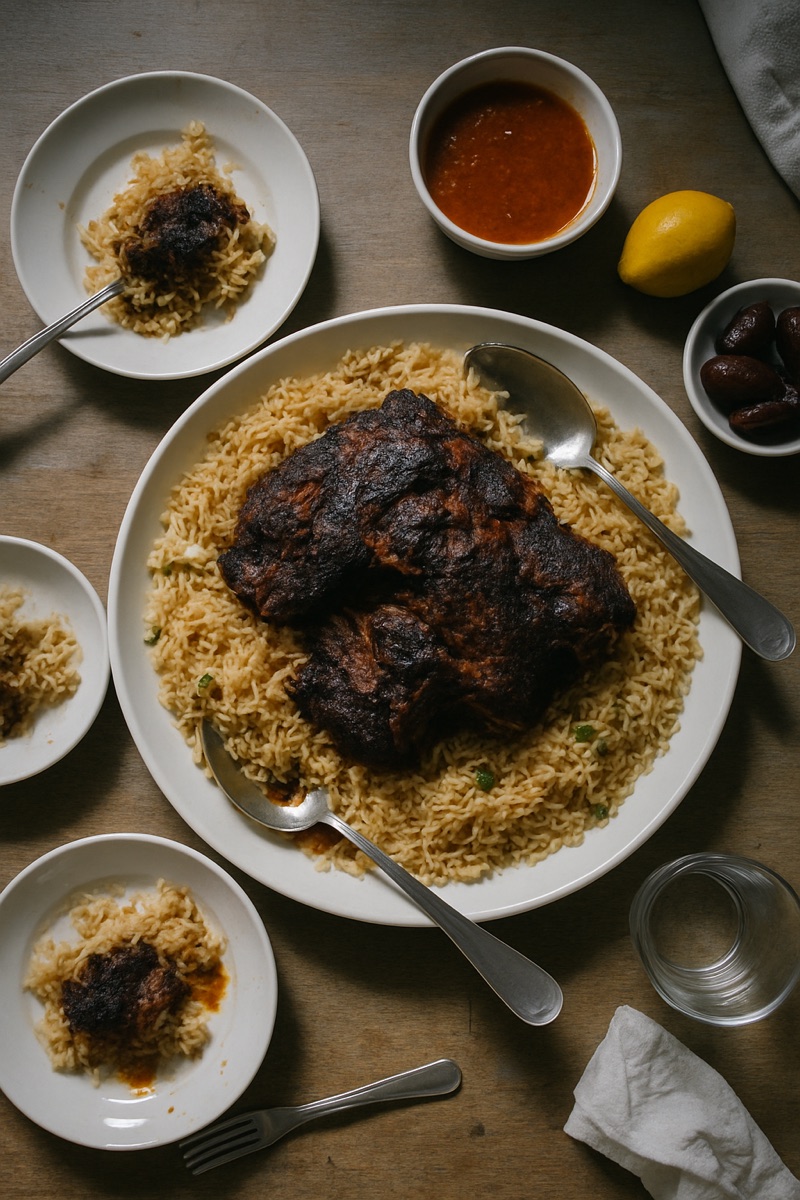
Is shuwa officially Oman's national dish?
No law names a national dish of Oman. Shuwa is simply the answer you will find most often: Wikipedia's list of national dishes gives shuwa for Oman, and food writers who have cooked it in the country call it the national dish too.
Two other foods have a strong claim on Omani identity. Harees, the wheat and meat porridge, was inscribed by UNESCO in 2023 as intangible cultural heritage in a joint file from Oman, the UAE and Saudi Arabia. And Omani halwa is often described as the national dessert.
All three sit inside a cuisine shaped by Oman's past as a trading power on the spice routes, with Arab, Indian, Iranian and African influences, and built on rice, chicken, fish and lamb.
What is in shuwa?
Shuwa is about the marinade more than the meat. Our shuwa recipe grinds a paste from:
- Whole spices: 8 cardamom pods, 2 tbsp each of cumin and coriander, 1 tsp of cloves, 1 cinnamon stick and half a nutmeg
- 2 dried Omani limes, crushed
- 10 garlic cloves, 2 tbsp of vinegar, 3 tbsp of oil and 2 tbsp of salt
- The meat: 2.5 kg of lamb shoulder, though goat, beef and camel are also used in Oman
How shuwa is cooked
The meat is scored to the bone, the paste is rubbed deep into every cut and it marinates for 24 hours. It is then wrapped in banana leaves or palm fronds and a sack soaked in water, and lowered into a pit (tannour) dug in the ground over embers, often of juniper wood. The pit is sealed with earth and the meat cooks for anything from 12 to 72 hours, depending on the family.
Shuwa roasts in its own juices; it is never boiled or submerged. At home, the closest version is a wrapped shoulder set on a rack in a sealed tray at 120 °C for 10 to 12 hours. The smoke of the pit is the one thing an oven cannot give you.
When the bundle is opened, the meat is pulled apart and served on rice, with Omani rukhal bread. Because shuwa is cooked dry, without a sauce, it usually comes with cool sides: yoghurt with cucumber and dried mint, a fresh tomato salsa and roasted vegetables. On festive days the rice itself is dressed up with cinnamon, cardamom, garlic, almonds and pine nuts.
When Omanis eat shuwa
Shuwa is a feast dish, not an everyday one. Arabic Wikipedia ties it to Eid al-Adha and Eid al-Fitr, and the preparation is traditionally a communal job involving a whole village, sometimes accompanied by traditional Omani chants.
The spices are what make it Omani. Food writer Elkje Van Beversluys, who brought her recipe back from Oman, roasts them in a set order before grinding, starting with cardamom and black pepper and finishing with cumin and coriander, then adds Omani dried lime and turmeric. The paste works on the outside of the meat for a full day.
Harees, the other dish Oman puts forward, is eaten with the fingers or a spoon and served with ghee. It is the dish of Ramadan and weddings, while shuwa belongs to Eid.
The Emirates share both shuwa and harees with Oman: see the national dish of the United Arab Emirates.
Other dishes to know from Oman
For everyday meals, Omanis cook majboos, spiced rice cooked in the broth of its chicken. Three dried black limes, pierced and soaked, simmer with the chicken and the bezar spice mix for 40 minutes; the rice then cooks in 900 ml of that broth and is finished with saffron steeped in rosewater. It is served with daqqus, a tomato sauce.
Omani halwa is the sweet that greets every guest. Corn starch, caramelised sugar and ghee are stirred without stopping for 45 minutes to an hour, until the paste turns translucent and pulls away from the pan, then flavoured with saffron, rosewater and cardamom. Middle East Eye calls it Oman's national dessert, offered to every guest and at Eid, Ramadan, graduations, births and weddings. It is served with qahwa, Omani coffee with cardamom. Making it is physically demanding, and in Oman it remains largely a family trade passed from one generation to the next.
All three recipes are on our page about the food of Oman, and the region is covered in our guide to Middle Eastern food.
The recipes
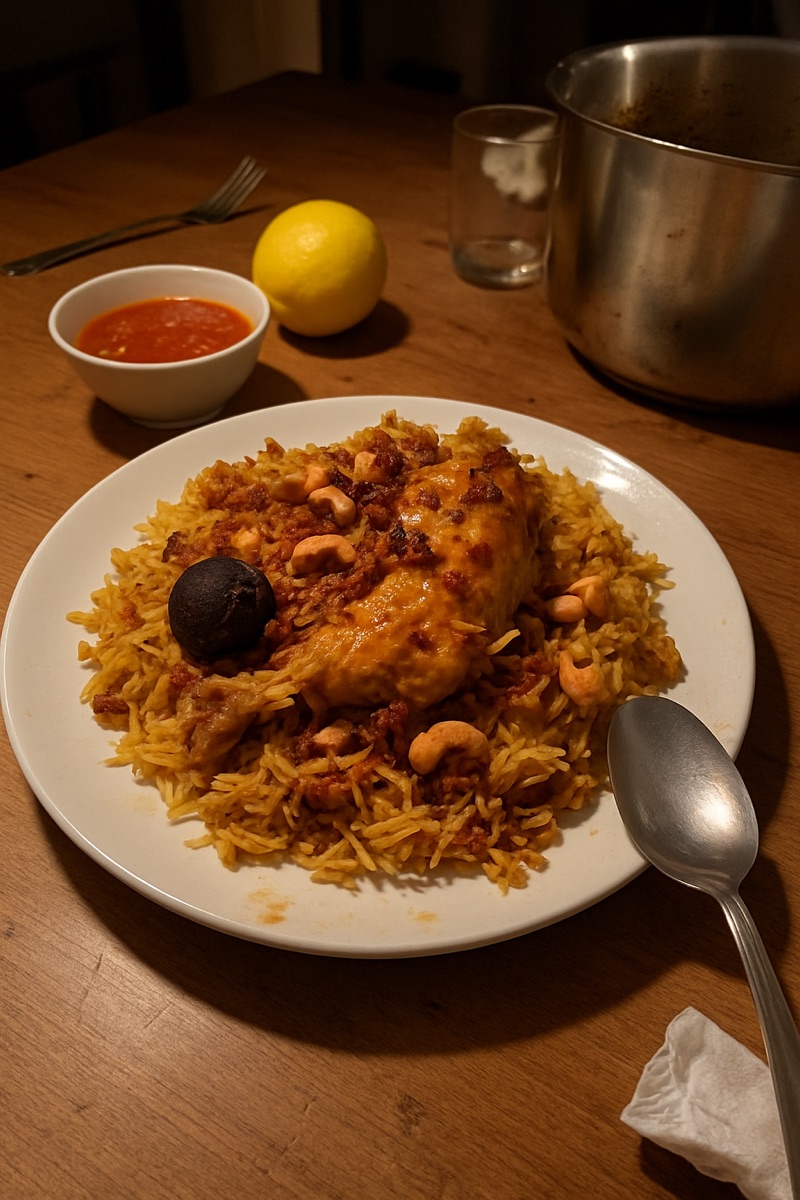 Majboos
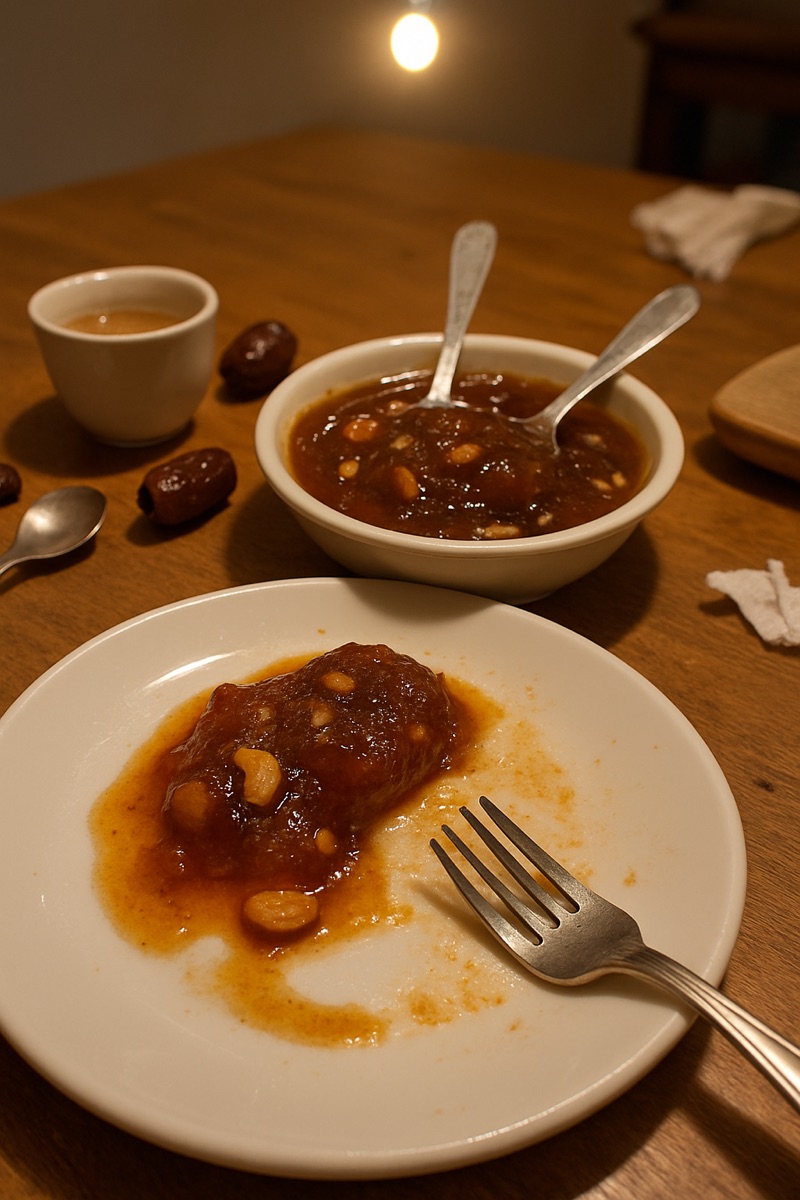 Halwa
HalwaQuestions people ask
What does shuwa mean?
The name comes from the Arabic word for roasting (shiwa). In Oman it refers to spiced meat slow-cooked in a sealed pit.
How long does shuwa cook?
At least a day in the traditional pit, and up to 72 hours depending on the family. An oven version takes 10 to 12 hours at a low temperature.
What is served with shuwa?
Rice, often cooked with the meat juices or with saffron, and Omani flatbread. Yoghurt and a tomato salsa are common sides.
Is shuwa eaten every day in Oman?
No. Shuwa is a festive dish, cooked mainly for Eid al-Adha and Eid al-Fitr, often by a whole family or village together.
What is Oman's national dessert?
Omani halwa, a translucent jelly of corn starch, sugar and ghee flavoured with saffron, rosewater and cardamom, served with Omani coffee.
Keep reading
- Traditional food of Oman: 11 dishes to know
- What is the national dish of Bahrain?
- What is the national dish of Iran?
- What is the national dish of Iraq?
- What is the national dish of Israel?
- What is the national dish of Jordan?