 COPPER
What is the national dish of the United Arab Emirates?
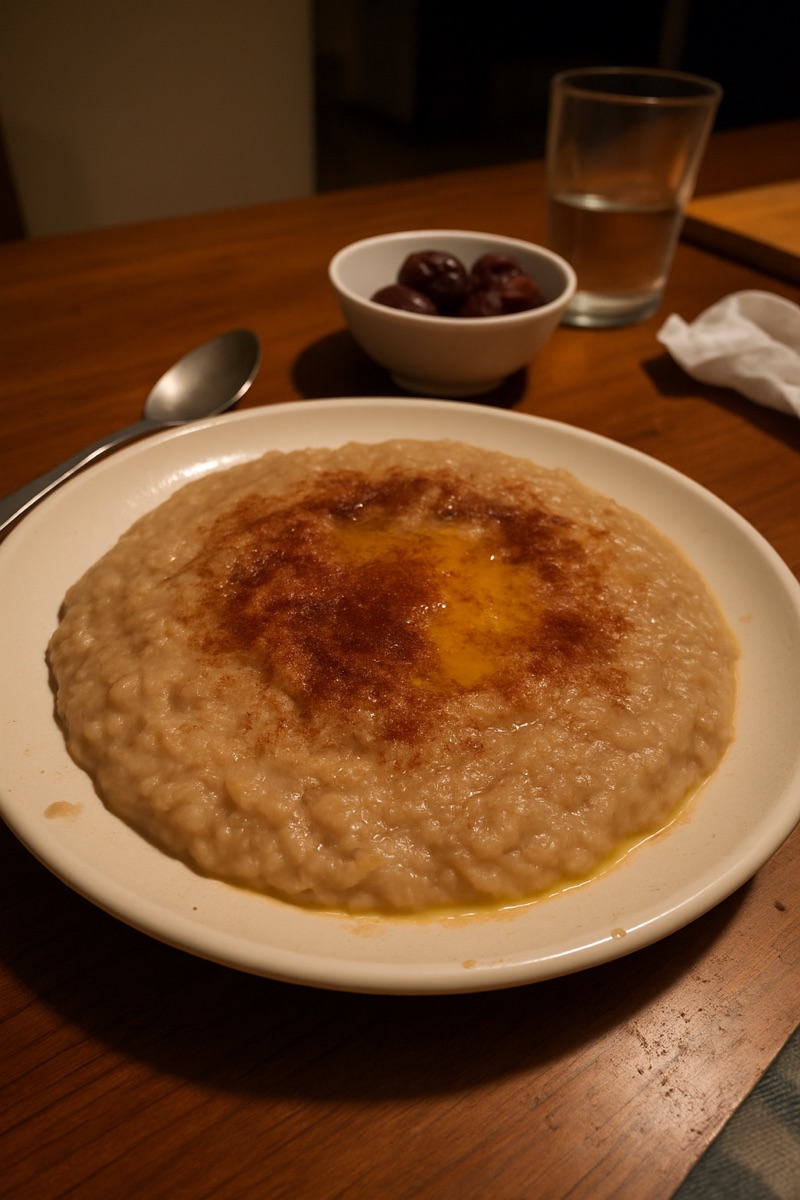
The United Arab Emirates has no officially declared national dish, but harees is the one with the strongest claim: whole wheat and meat simmered for hours, then beaten into a smooth, thick porridge and finished with ghee. In 2023 UNESCO inscribed the harees tradition of the UAE, Oman and Saudi Arabia as intangible cultural heritage. Machboos and shuwa are also often named.
Is there an official national dish of the UAE?
No law or decree names a national dish of the United Arab Emirates. Three dishes come up again and again when people ask the question: harees, machboos and shuwa. Wikipedia's list of national dishes gives harees and shuwa for the UAE, while machboos, the Gulf name for kabsa, is described as a national dish across all the Gulf Cooperation Council countries.
Harees has the most solid backing. In 2023 UNESCO added "Harees dish: know-how, skills and practices" to its Representative List of the Intangible Cultural Heritage of Humanity, in a joint file submitted by the UAE, Oman and Saudi Arabia. No other Emirati dish has that kind of recognition.
What is in harees?
Very little, which is the point. Harees is made from three main things: wheat grain, meat and ghee. Our Emirati harees recipe uses:
- 500 g of whole wheat berries, soaked overnight
- 1 kg of bone-in chicken (lamb is also common)
- 2.5 litres of water and salt
- 100 g of melted ghee poured over at the end
- ground cinnamon, stirred in just before serving
How harees is made
The wheat soaks overnight, then goes into a heavy pot with the chicken and water. It simmers on the lowest heat for 3 to 4 hours, topped up with hot water, until the grains burst and the meat falls off the bone. The bones and skin come out; everything else stays in.
Then comes the step that gives the dish its name. The mixture is beaten hard against the side of the pot with a wooden pestle for 15 to 20 minutes, until no grain and no fibre can be made out and the whole thing is a single pale, glossy cream. The Arabic word harees is linked to the verb harasa, to mash. A blender is faster, but it gives a flatter texture.
The harees is spread in a shallow dish and covered with melted ghee. UNESCO's description notes that it is served in large shared dishes and traditionally eaten with the thumb and forefinger.
When Emiratis eat harees
Harees takes a lot of work, mostly in cleaning and grinding the grain, so it is cooked in large quantities and tied to occasions. UNESCO notes that it is usually eaten at breakfast and dinner. According to UNESCO, it is especially popular during Ramadan, when honouring guests, and at social events such as weddings. Preparing and serving it is seen as a sign of hospitality and generosity, and the know-how is passed from mothers to daughters. It is also popular in the pilgrimage season, because its few ingredients make it easy to cook for large numbers.
The dish itself is old: harees appears in Ibn Sayyar al-Warraq's 10th-century cookbook Kitab al-Tabikh, and versions of it are cooked from the Levant to the Gulf. Oman makes its own, and its national dish shuwa is the other Emirati candidate: see our article on the national dish of Oman.
Other dishes to know from the UAE
If harees is the dish of feasts and Ramadan, machboos is the everyday rice dish. Chicken is simmered with onion, tomato, the bezar spice blend and three pierced dried limes (loomi); the rice then cooks in that broth and steams under a cloth for 20 to 25 minutes. The softened limes are crushed into the rice at the end, and their sour bitterness is what makes it machboos rather than plain chicken rice. Saudi Arabia knows the same dish as kabsa: see the national dish of Saudi Arabia.
Emirati cooking leans on a short list of aromas: saffron, cardamom, turmeric and dried lime. Meals traditionally start with dates and gahwa, Arabic coffee, offered on arrival and kept available throughout a guest's visit. At the end of the meal, red tea with mint is usually served.
For something sweet, luqaimat are small balls of saffron and cardamom yeast batter, fried at 180 °C for 3 to 4 minutes until crisp and hollow, then soaked in date syrup. They lose their crunch within the hour, so they are eaten straight away. Some cooks roll them in sesame seeds or use honey instead of date syrup.
You will find all three recipes on our page about the food of the United Arab Emirates, and the neighbouring kitchens in our guide to Middle Eastern food.
The recipes
- Harees🇦🇪 United Arab Emirates · 16 hours and 30 minutes
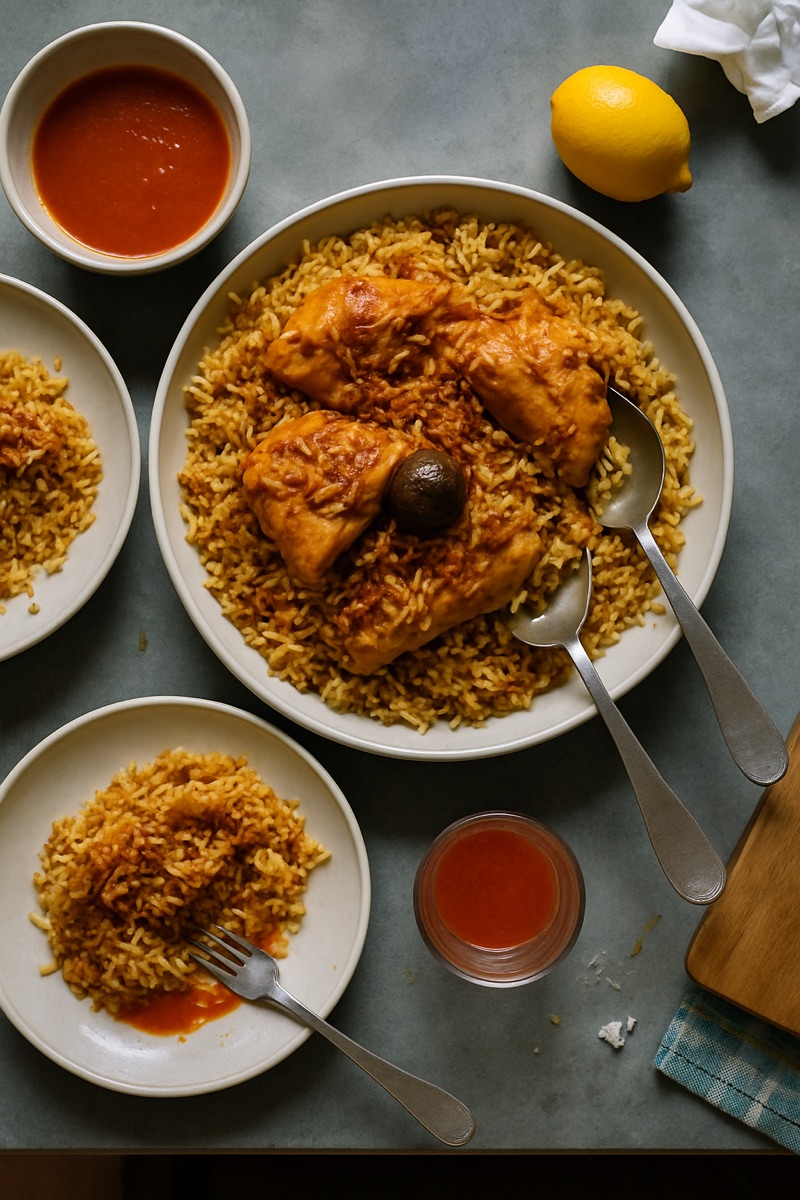 Machboos🇦🇪 United Arab Emirates · 1 hour and 50 minutes
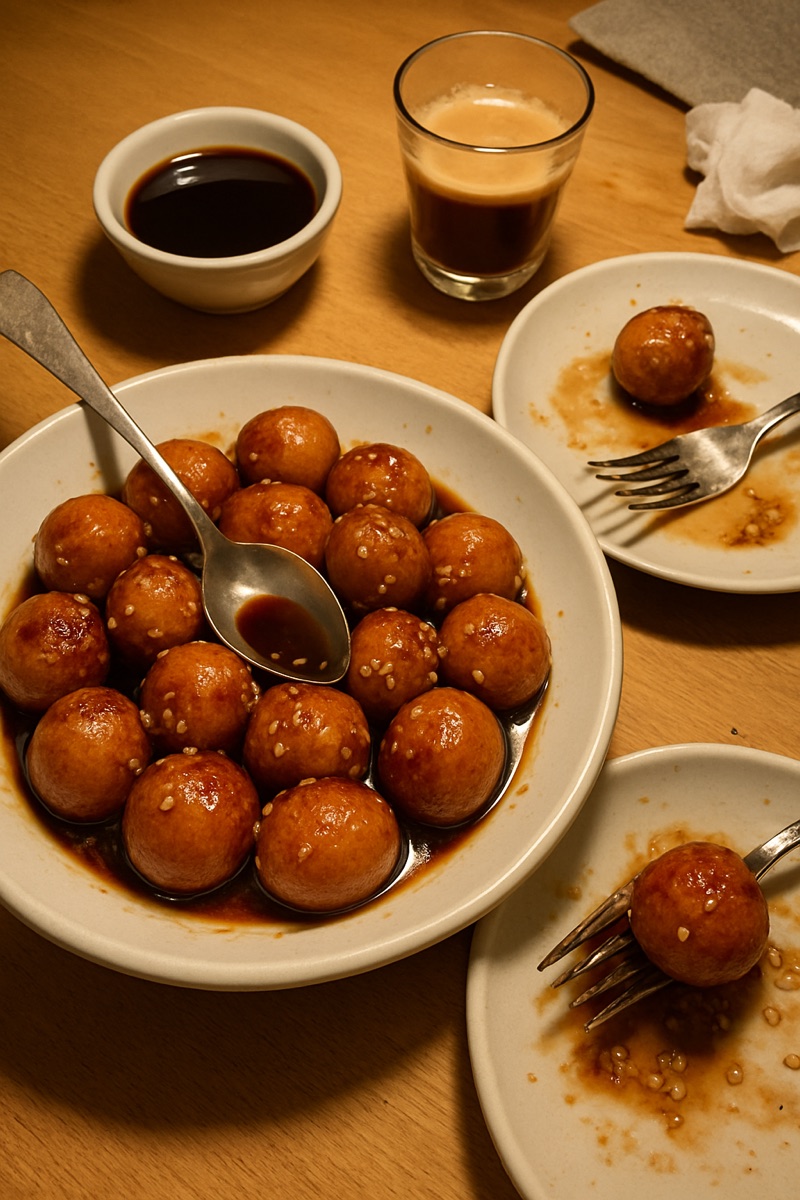 Luqaimat🇦🇪 United Arab Emirates · 1 hour and 40 minutes
Questions people ask
What is the national dish of Dubai?
Dubai is one of the seven emirates, so it shares the UAE's dishes. Harees is the dish most often cited, with machboos and shuwa also named; none has official status.
Is harees Emirati or Saudi?
Both, and Omani too. The 2023 UNESCO inscription of harees was a joint file from the UAE, Oman and Saudi Arabia, and the dish is cooked across the Arab world.
What is the difference between harees and machboos?
Harees is a wheat and meat porridge beaten smooth with a pestle. Machboos is a rice dish cooked in a spiced chicken or lamb broth with dried limes.
When is harees eaten?
Mostly during Ramadan, at Eid and at weddings, and whenever guests are being honoured. It is cooked in large quantities and shared from one dish.
Is shuwa from the UAE?
Shuwa, lamb or goat marinated in spices and slow-cooked in a sealed pit, is most closely associated with Oman, but it is also eaten in the UAE and listed among its national dishes.
Keep reading
- Traditional food of the United Arab Emirates: 12 dishes to know
- What is the national dish of Bahrain?
- What is the national dish of Iran?
- What is the national dish of Iraq?
- What is the national dish of Israel?
- What is the national dish of Jordan?