 COPPER
What is the national dish of Iran?
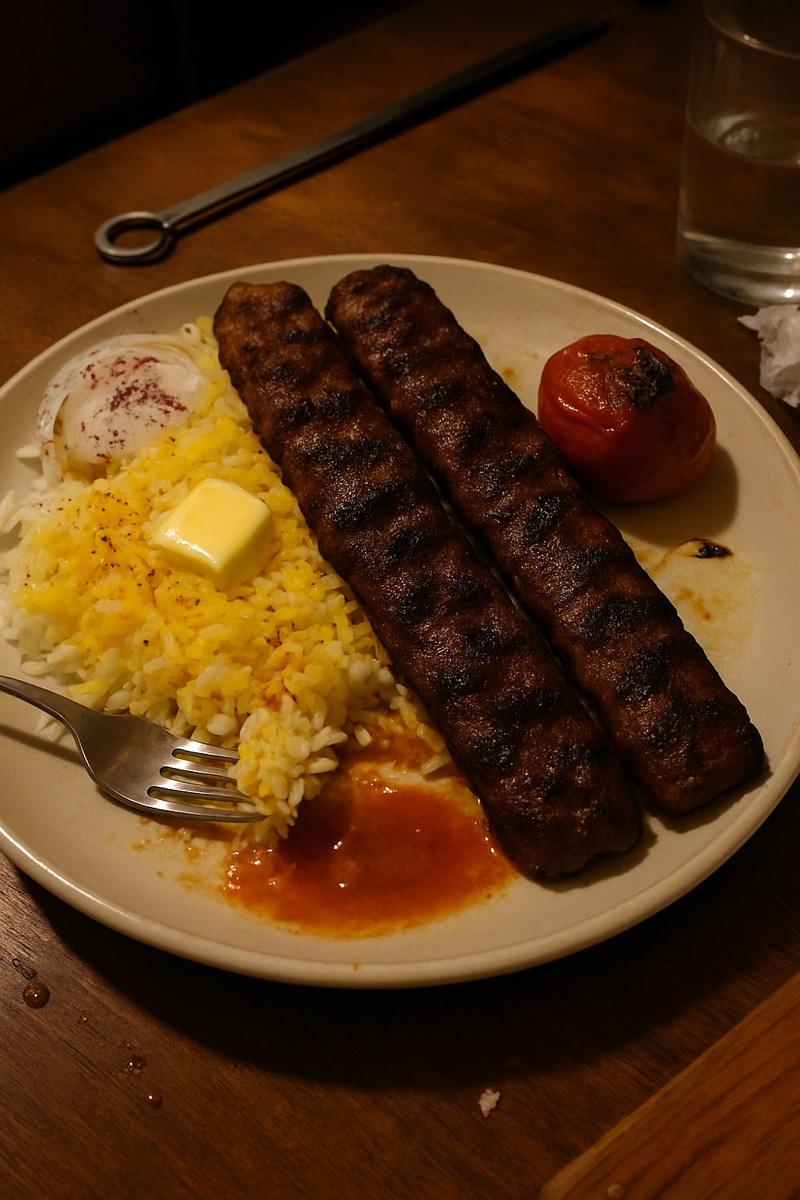
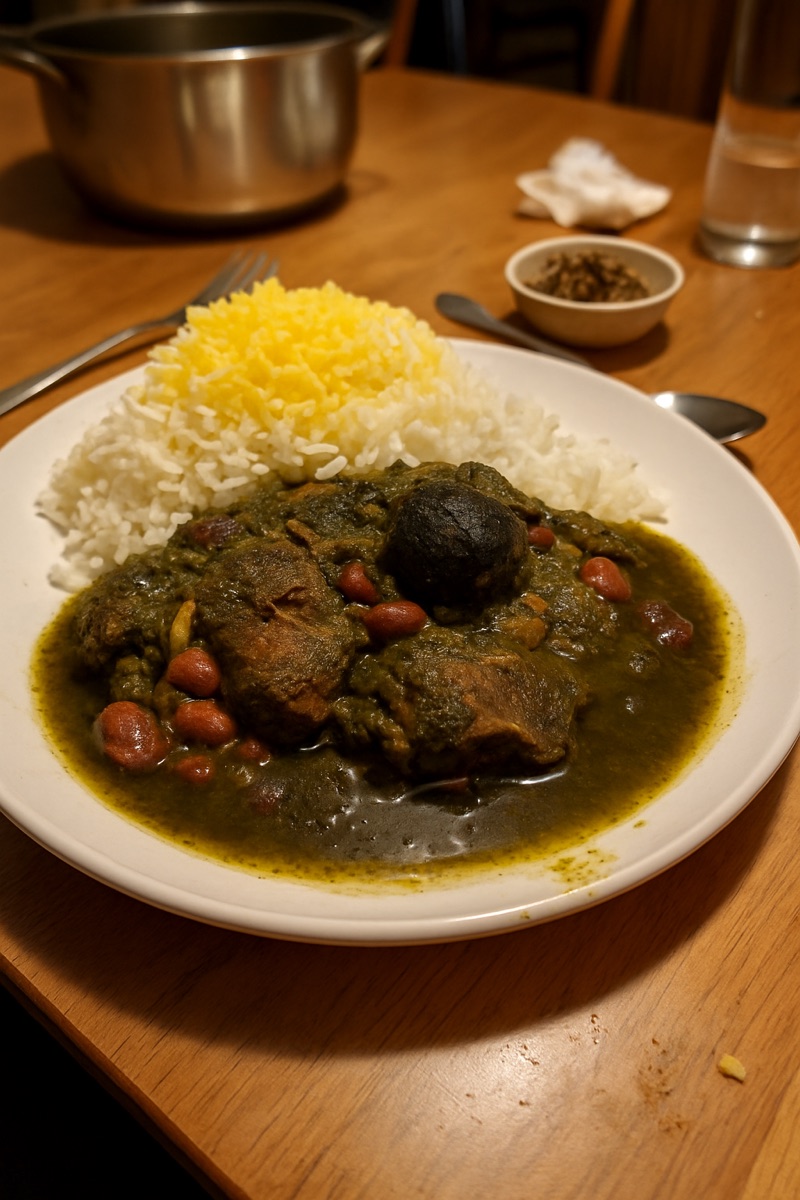
Iran has no official national dish, but two dishes share the title. Chelow kabab is steamed Persian rice served with grilled kebab, butter, sumac and grilled tomatoes, and is the one most often named. Ghormeh sabzi is a stew of fried herbs, kidney beans, dried limes and lamb, simmered for hours and eaten with rice. Both are standard dishes across Iran.
Does Iran have an official national dish?
No. No law or decree names a national dish in Iran, and the reference sources do not agree on a single one. The Wikipedia articles on Iranian cuisine and on chelow kabab both call chelow kabab the national dish. The article on ghormeh sabzi says exactly the same thing about the herb stew.
Lists of national dishes go further and also name abgoosht, a lamb and chickpea stew, and fesenjan. In practice, the two names you will hear most are chelow kabab, the dish of restaurants and celebrations, and ghormeh sabzi, the dish of the home pot. This article covers both.
What is chelow kabab?
*Chelow* means steamed rice, and chelow kabab is that rice served with one of Iran's kebabs. It is thought to date from the Qajar dynasty. The common kebabs are:
- Koobideh: minced lamb or beef pressed onto wide flat skewers.
- Barg: thin strips of marinated lamb, chicken or beef, most often beef fillet.
- Jujeh: chunks of chicken, with or without the bone.
- Soltani: a plate with one barg and one koobideh skewer.
- Shah abbasi: barg, koobideh and jujeh on one plate.
How chelow kabab is served
The rice comes first, with a knob of butter, sumac to sprinkle, grilled tomatoes, raw onion and herbs. In the old bazaar tradition, the skewer is laid straight on the rice, the kebab is held down with a piece of flatbread and the skewer is pulled out. The drink is doogh, a salted yogurt drink, sometimes carbonated. The herbs usually arrive as *sabzi khordan*, a platter of fresh mint, basil and tarragon with radishes that balances the fat of the meat. Chelow kabab is the meal of celebrations, family gatherings and guests.
The kebab most people order is koobideh. Our kabab koobideh recipe uses lamb with 20% fat and grated onion wrung dry in a cloth, kneaded for 10 to 15 minutes and chilled for at least 2 hours so the meat grips the skewer. It grills 3 to 4 minutes per side over glowing charcoal and is finished with saffron butter and sumac.
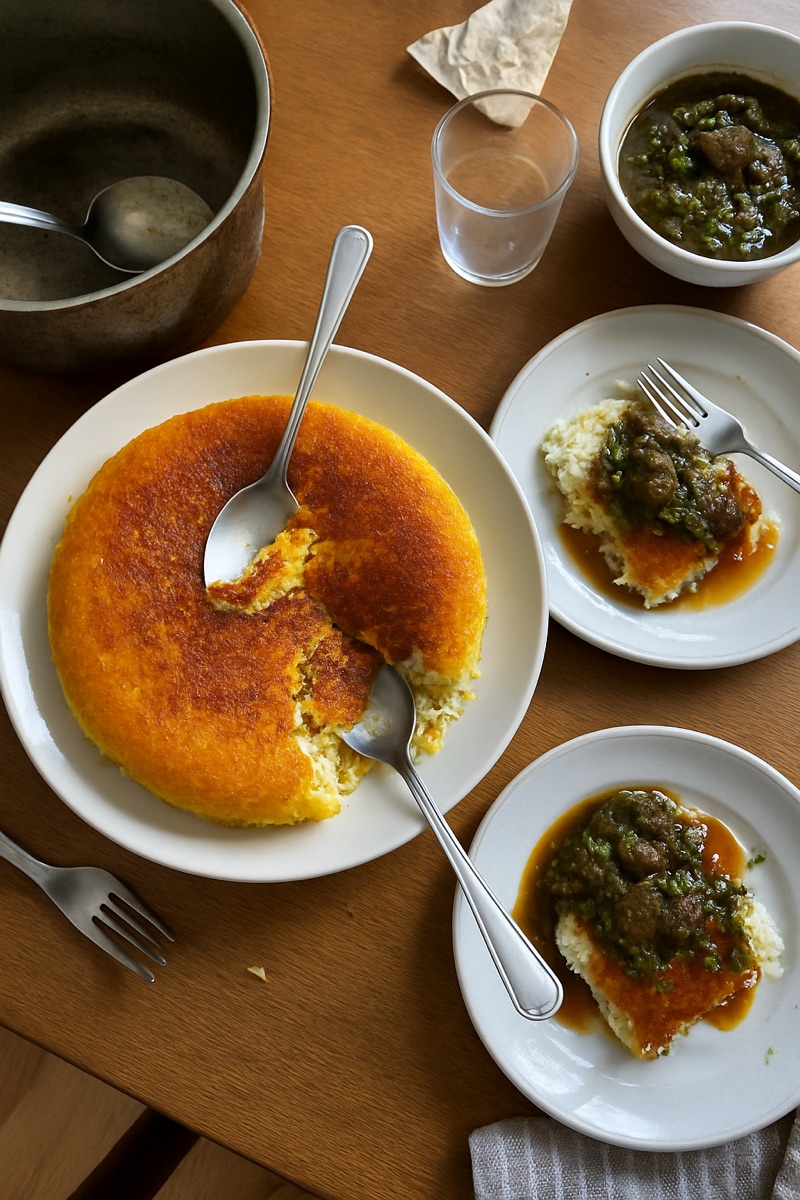
Many families also serve tahdig, the crust from the bottom of the rice pot: a layer of rice mixed with yogurt and saffron, cooked 45 to 60 minutes on the lowest heat under a lid wrapped in a towel, then turned out whole.
What is in ghormeh sabzi?
Ghormeh sabzi belongs to the *khoresh* family of Persian stews. It is one of the oldest khoresh stews, and *Encyclopaedia Iranica* lists it among the chief Persian ones. It is built on a large amount of chopped green herbs:
- Parsley, coriander and leeks, sometimes with green onions, chopped very finely.
- Dried fenugreek leaves, the spice that gives the stew its smell.
- Red kidney beans; a southern Iranian version uses black-eyed beans.
- Dried limes, pierced so the sour juice reaches the sauce.
- Lamb browned with onion and turmeric.
How ghormeh sabzi is made
The step that defines the dish is frying the herbs. In our ghormeh sabzi recipe, 600 g of chopped herbs cook in oil over medium-low heat for 25 to 30 minutes, until they turn a near-black green and smell nutty. The fenugreek goes in for the last 2 minutes only, because it scorches fast.
The herbs then join the browned lamb, soaked beans and dried limes in 1.2 litres of water, and the stew simmers for 2.5 to 3 hours, until dark green oil rises to the surface. It is served with saffron rice and tahdig, often with shirazi salad and mast-o-khiar, a yogurt and cucumber dip.
It is also the first Iranian dish served in space, by the Iranian-American astronaut Jasmin Moghbeli.
Other dishes to know from Iran
Abgoosht, also called dizi after the stoneware pot it is served in, is lamb, chickpeas, white beans, potato, tomato, turmeric and dried lime. The broth is strained and eaten first with bread; the solids are then mashed and eaten as a second course.
Next door, Iraq also eats kebab with rice, but the dish most often named there is a grilled river carp: see our article on the national dish of Iraq.
You will find all three recipes, with ingredients and step-by-step methods, on our page about the food of Iran, and the neighbouring kitchens in our guide to Middle Eastern food.
The recipes
- Kabab koobideh🇮🇷 Iran · 3 hours and 15 minutes
 Ghormeh sabzi🇮🇷 Iran · 15 hours and 55 minutes
 Tahdig🇮🇷 Iran · 3 hours and 35 minutes
Questions people ask
Is chelow kabab or ghormeh sabzi the national dish of Iran?
Both are called the national dish and neither has official status. Chelow kabab, rice with grilled kebab, is named most often; ghormeh sabzi, a herb stew, is the most common home-cooked contender.
What does chelow mean?
Chelow is Persian steamed rice. Chelow kabab simply means steamed rice with kebab.
What is served with chelow kabab?
Butter, sumac, grilled tomatoes, raw onion and fresh herbs, with flatbread and doogh, a salted yogurt drink.
Why is ghormeh sabzi so dark?
The chopped herbs are fried in oil for 25 to 30 minutes until they turn a near-black green before the long simmer. Skipping this gives a pale herb soup.
Is tahdig a national dish of Iran?
Tahdig is not usually named as the national dish. It is the crisp rice crust from the bottom of the pot, served alongside stews like ghormeh sabzi and with kebab.
Keep reading
- Traditional food of Iran: 14 dishes to know
- What is the national dish of Bahrain?
- What is the national dish of Iraq?
- What is the national dish of Israel?
- What is the national dish of Jordan?
- What is the national dish of Kuwait?