 COPPER
Traditional food of Lebanon: 13 dishes to know
Lebanese food is built on olive oil, garlic, lemon juice, chickpeas, bulgur and fresh herbs, with more poultry and vegetables than red meat. Dishes are grilled, baked or lightly cooked in olive oil and shared as mezze with flatbread. The most emblematic dishes are hummus, tabbouleh, kibbeh and manakish.
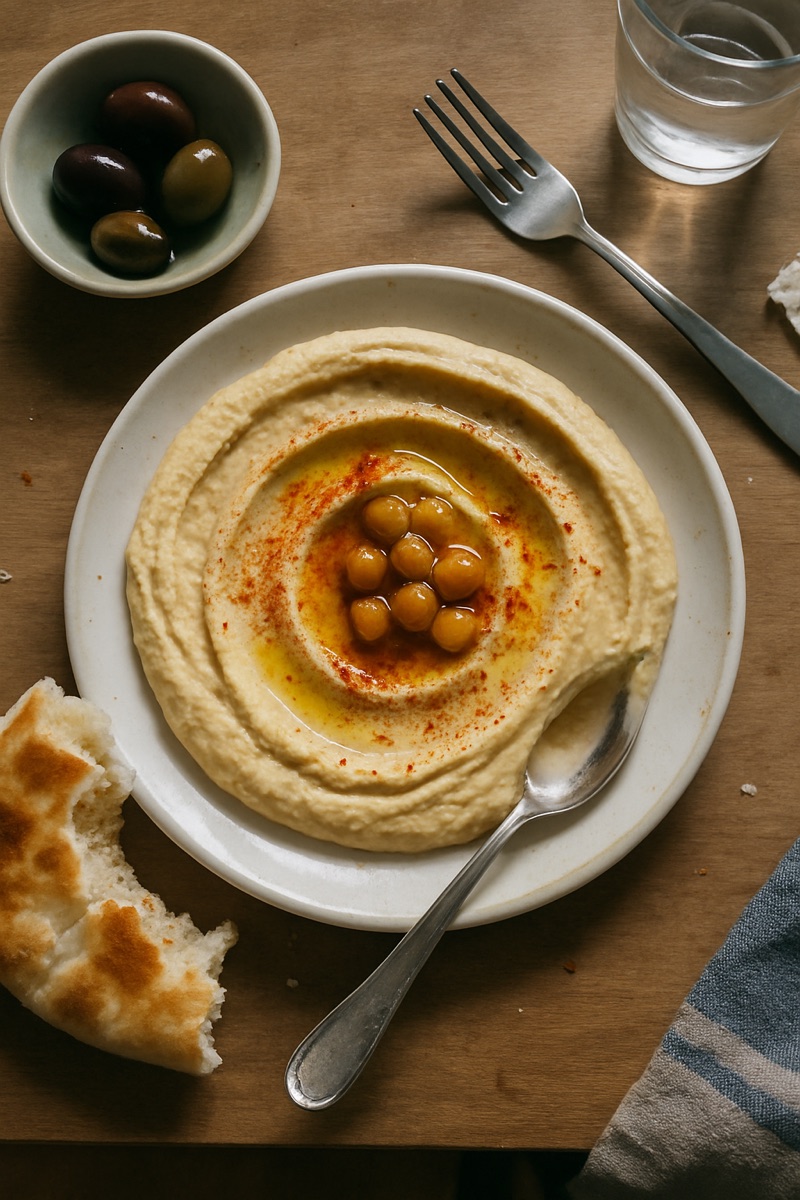
What Lebanese food is built on
Lebanese cooking is part of the Eastern Mediterranean tradition. It uses plenty of whole grains, fruit, vegetables, fish and seafood; poultry is eaten more often than red meat, and when red meat is eaten it is usually lamb or beef. Garlic and olive oil go into almost everything, seasoned with salt and lemon juice, and chickpeas and parsley are staples. Butter and cream are rarely used outside a few desserts. Lamb cooking came with four centuries of Ottoman rule, and the French mandate left pastries such as croissants and éclairs.
Meals are served as mezze: small hot and cold dishes eaten in bites with flatbread. A family mezze may be three or four dishes; a restaurant spread can run from 20 to 60. A plate of raw vegetables, olives and pickles is always on the table, and the meal ends with fruit and Lebanese coffee. Households also keep mouneh, the late-summer store of bulgur, olive oil, labneh, pickles, jams and awarma, lamb preserved in its fat.
Mezze, dips and salads
- Hummus — Cooked chickpeas blended with tahini, lemon juice and garlic, eaten with pita. It is on almost every mezze table, and hummus bi lahmeh adds small cubes of meat and toasted pine nuts on top.
- Baba ghanouj — Aubergine roasted over a flame until the flesh is soft and smoky, then mashed with tahini, olive oil, lemon juice and garlic. Mutabbel is a close cousin. Both are served as a dip for pita.
- Tabbouleh — A salad of finely chopped parsley with a little fine bulgur, tomato, mint and lemon, served with lettuce leaves. In Lebanon it is a herb salad, not a grain salad, and it has its own National Tabbouleh Day on the first Saturday of July.
- Fattoush — A salad of toasted or fried pieces of pita with mixed greens, cucumber, tomatoes, radishes and mint. Its name comes from the Arabic fatt, "crush", like fatteh and other dishes built on broken bread.
Meat and main dishes
Family meals at home often centre on yakhneh, stews of meat or chicken with vegetables served with rice, such as bizella with peas or bamieh bi-zeit, okra in tomato sauce, one of the most popular. During Lent many Christian families give up meat, which keeps vegetable, chickpea and lentil dishes at the heart of the cuisine.
- Kibbeh — Lean lamb or beef pounded with fine bulgur into a paste, then shaped and fried, baked in a tray (kibbeh bil-saneeya) or served raw (kibbeh nayyeh). It is the dish most often named as Lebanon's national dish, and South Lebanon is known for it.
- Kafta — Minced lamb and beef worked with onion, parsley and Lebanese seven spice, pressed onto skewers and grilled over charcoal, then served in warm flatbread.
- Shish taouk — Cubes of white chicken meat marinated in olive oil, lemon, parsley and sumac, or in garlic, lemon, cinnamon and cumin, then grilled on skewers over charcoal. It is served on rice topped with almonds and pine nuts, and is a fixture of kebab houses.
- Shawarma — Meat cooked slowly on a vertical spit, sliced thin and wrapped in bread with onions, pickles and tomatoes. Shawarma lahmeh, of beef or lamb, comes with parsley, onion and tarator; shawarma djeij, of chicken, with toum and lettuce. Lebanese immigrants took it to Mexico, where it became tacos al pastor.
- Mujaddara — Lentils cooked with rice and garnished with sautéed onions, served with a salad or Lebanese bread. Its name means "pockmarked", for the lentils dotted through the rice, and the first recorded recipe is in a Baghdad cookbook of 1226.
Breads, pastries and sweets
Arak, a spirit distilled from grapes and aniseed, is Lebanon's national drink and usually comes with a traditional meal. Lebanese wine is the other historic drink, and coffee closes the meal.
- Manakish — Flatbread topped with za'atar and olive oil, cheese, or minced meat, baked in local bakeries called furns and eaten for breakfast or lunch. In 2023 UNESCO inscribed manakish on its intangible heritage list as an emblematic culinary practice of Lebanon.
- Sfiha — Small open pies of dough topped with minced meat, onions, tomatoes and pine nuts, flavoured with cinnamon, sumac or pomegranate molasses. The version from Baalbek, with folded sides, is the best known and is served at weddings.
- Knafeh — Fine kadayif pastry layered with white cheese such as akkawi, baked and soaked in syrup. In Lebanon it is also sold as street food, packed into a sesame bread called ka'ak.
- Ma'amoul — Crumbly cookies filled with pistachios, walnuts or dates. Lebanese Christians serve them with atar syrup at Easter, alongside a cake flavoured with anise and mahlab.
Regional Lebanon
Lebanese food varies by region. South Lebanon is known for kibbeh, the Beqaa Valley for meat pastries such as Baalbek's sfiha, and North Lebanon and Sidon for their sweets. Sidon also gave the country sayadieh, fish cooked with saffron and served on rice with onions and a tahini sauce, and fish kibbeh is common along the coast. Mountain towns have their own dishes: pumpkin kibbeh in Beit Mery, oven kibbeh in Ehden, makhlouta bean stew in Baskinta and stuffed lamb ribs in Broummana.
Cook Lebanese food at home
Kibbeh is the dish most often called the national dish of Lebanon, with tabbouleh close behind. Copper has full recipes for hummus, tabbouleh and kafta, with ingredients and step-by-step methods, on our page about the food of Lebanon, alongside other Middle Eastern recipes.
Kibbeh, hummus, manakish and knafeh are shared across the Levant. Compare with the traditional food of Syria and the traditional food of Jordan.
The recipes
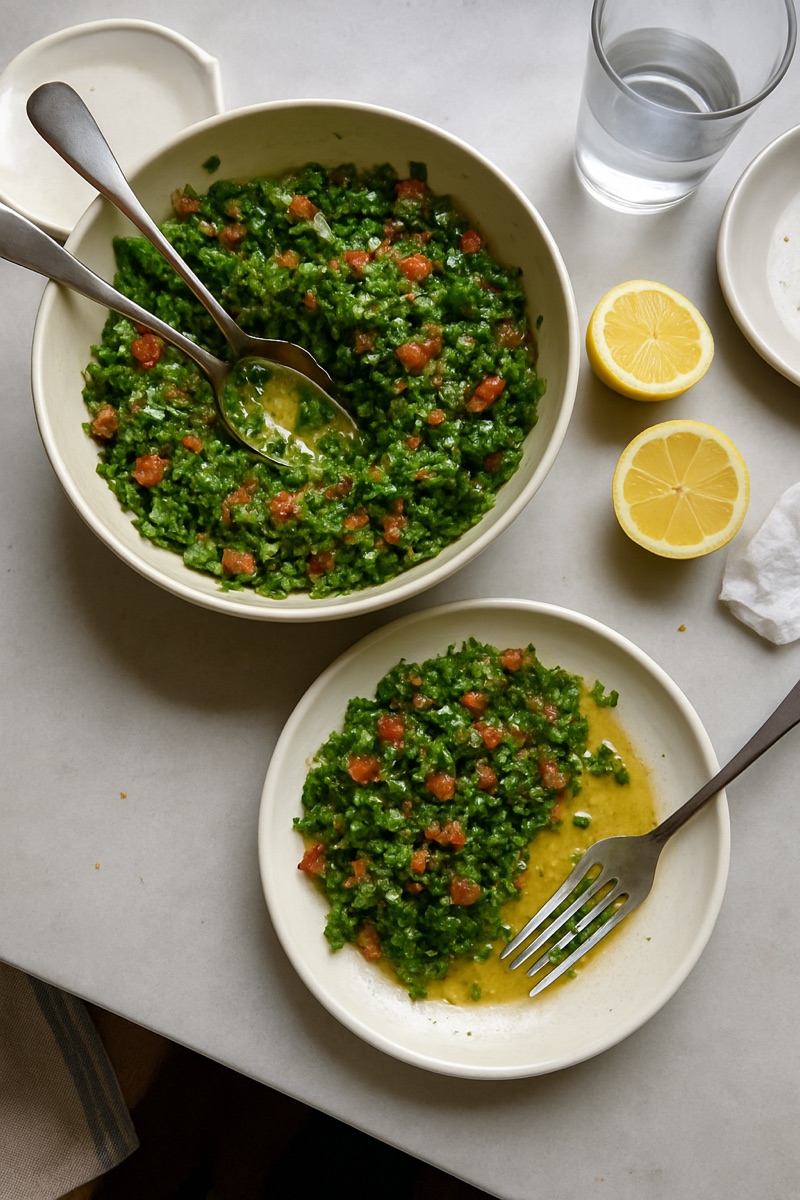 Tabbouleh
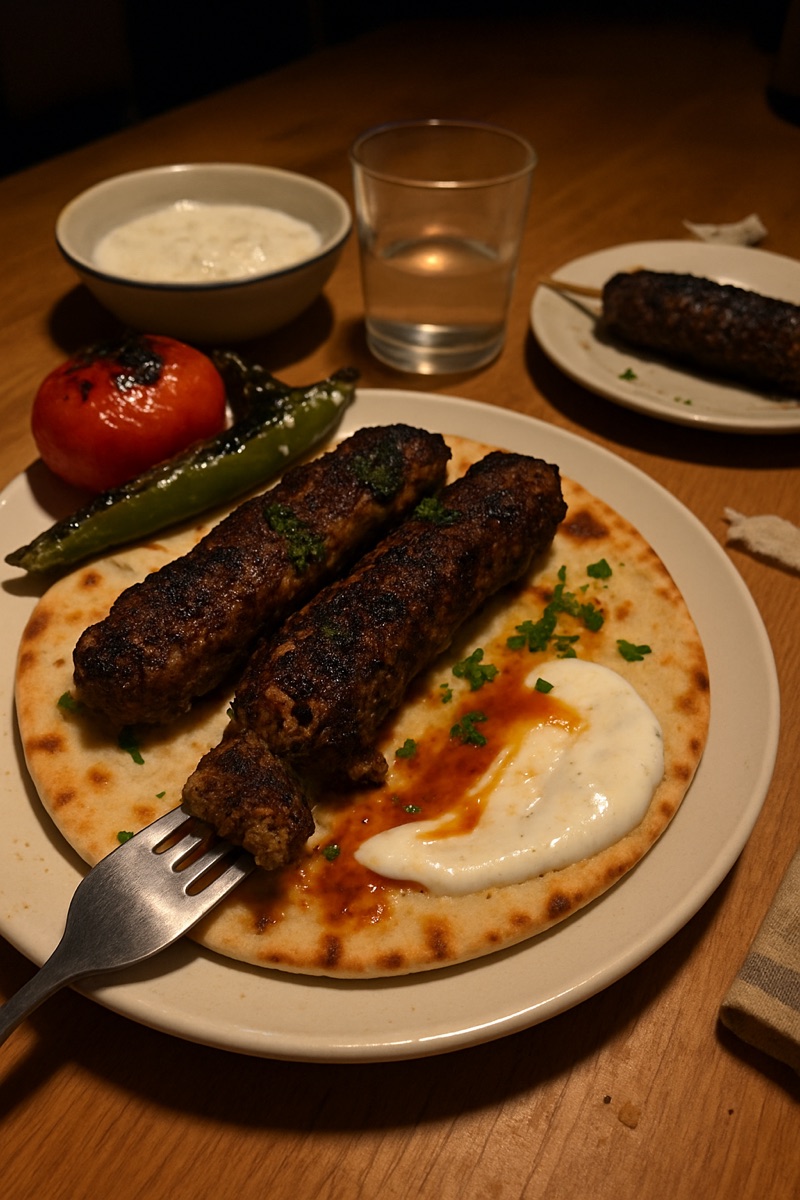 Kafta
KaftaQuestions people ask
What is the most popular food in Lebanon?
Hummus and tabbouleh are on almost every table, and kibbeh is the dish most often called the national dish. Shawarma is the most common street food.
What do Lebanese people eat for breakfast?
Manakish, flatbread with za'atar or cheese from the local bakery, is a common breakfast. Labneh, thick strained yogurt with olive oil, is also served on breakfast mezze platters.
Is Lebanese food spicy?
Not usually. Lebanese food is seasoned with garlic, lemon juice, olive oil and herbs, and seven spice adds warmth rather than heat. Chili comes on the side as shatta, a hot sauce.
What is a Lebanese mezze?
A spread of small hot and cold dishes, such as hummus, baba ghanouj, tabbouleh, fattoush, kibbeh and stuffed vine leaves, eaten with flatbread. A family mezze has three or four dishes; a restaurant mezze can have 20 to 60.
What is the national drink of Lebanon?
Arak, an aniseed spirit distilled from grapes, which is drunk with a traditional meal.
Keep reading
- What is the national dish of Lebanon?
- Traditional food of Bahrain: 13 dishes to know
- Traditional food of Iran: 14 dishes to know
- Traditional food of Iraq: 13 dishes to know
- Traditional food of Israel: 14 dishes to know
- Traditional food of Jordan: 13 dishes to know