 COPPER
Traditional food of Syria: 14 dishes to know
Syrian food is built on lamb, bulgur, chickpeas, eggplant, olive oil, lemon, garlic and mint, served as mezze with Arabic bread before the main course. Meat is pounded with bulgur, vegetables are stuffed with rice, and Aleppo pepper adds gentle heat. The most emblematic dishes are kibbeh, hummus, muhammara and fattoush.
What Syrian food is built on
Syrian cooking is Arab and Mediterranean. It relies on eggplant, zucchini, garlic, lamb, sesame, rice, chickpeas, fava beans and lentils, with cabbage, cauliflower, vine leaves, pickled turnips, tomatoes, olive oil, lemon juice, mint, pistachios and fruit. Many recipes date from at least the 13th century: a Syrian cookbook of that period, the Kitab al-Wuslah ila l-habib, already describes stuffed vegetables and pickled stuffed eggplants.
A Syrian meal opens with mezze, a spread of small dishes eaten with Arabic bread, before the main course. Coffee follows, with sweets or fruit. Street food fills the gaps: shawarma in Arabic bread, falafel with pickles and tahini, and manakish topped with za'atar, cheese or meat for breakfast or lunch.
Mezze, dips and salads
Cheese often joins the mezze: halloumi, sliced and grilled or fried; shanklish, a cow's or sheep's milk cheese served with dried thyme and olive oil; and jibneh mshallaleh, a braided string cheese that originated in Syria. Labneh, strained yogurt, is spread on bread with olive oil.
- Hummus — Cooked chickpeas mashed with tahini, olive oil, lemon juice, salt and garlic, a fixture of any mezze table. The earliest known recipe for a similar dish is in a 13th-century Syrian cookbook, and hummus billahm comes topped with meat.
- Mtabbal and baba ghanoush — Two eggplant dishes: mtabbal is mashed eggplant blended with tahini, olive oil, salt and garlic, while baba ghanoush is mashed eggplant with seasonings. Both are eaten cold with bread.
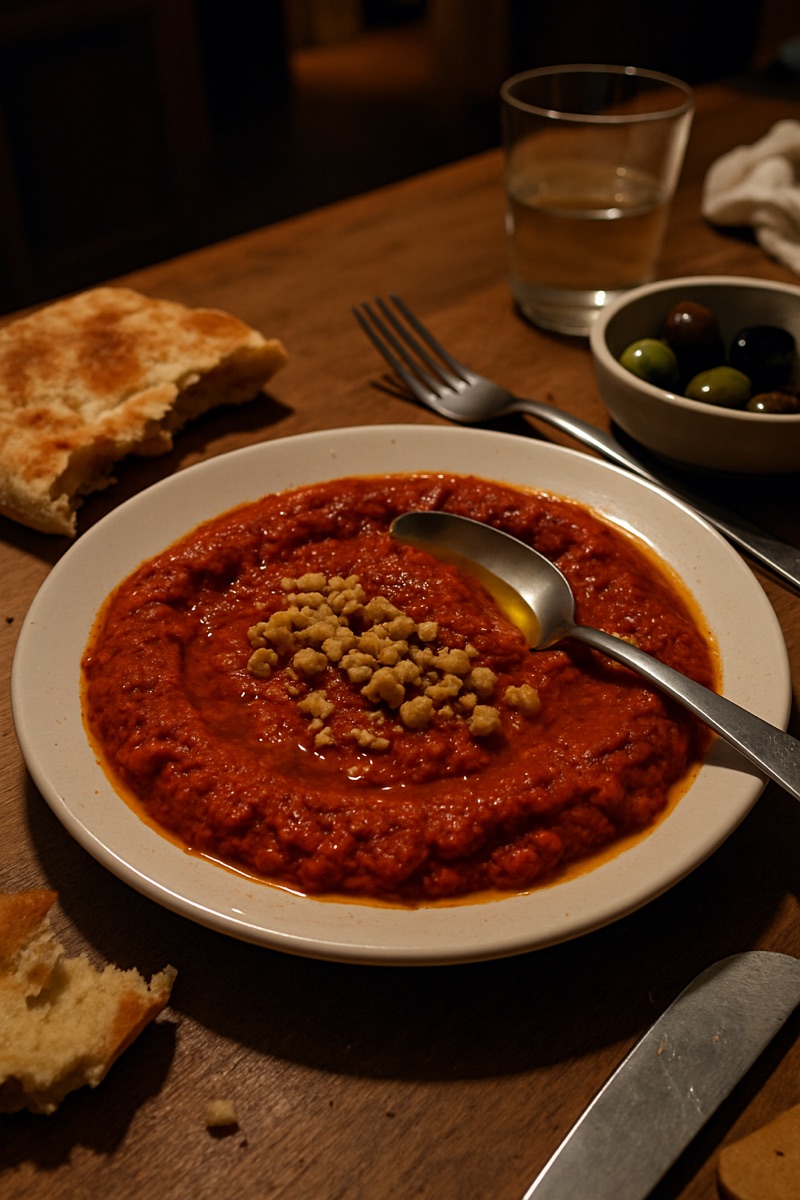
- Muhammara — A dip from Aleppo of charred red peppers, Aleppo red pepper paste, toasted walnuts and breadcrumbs, sharpened with pomegranate molasses. It should taste sweet, sour and gently hot, and stay slightly coarse.
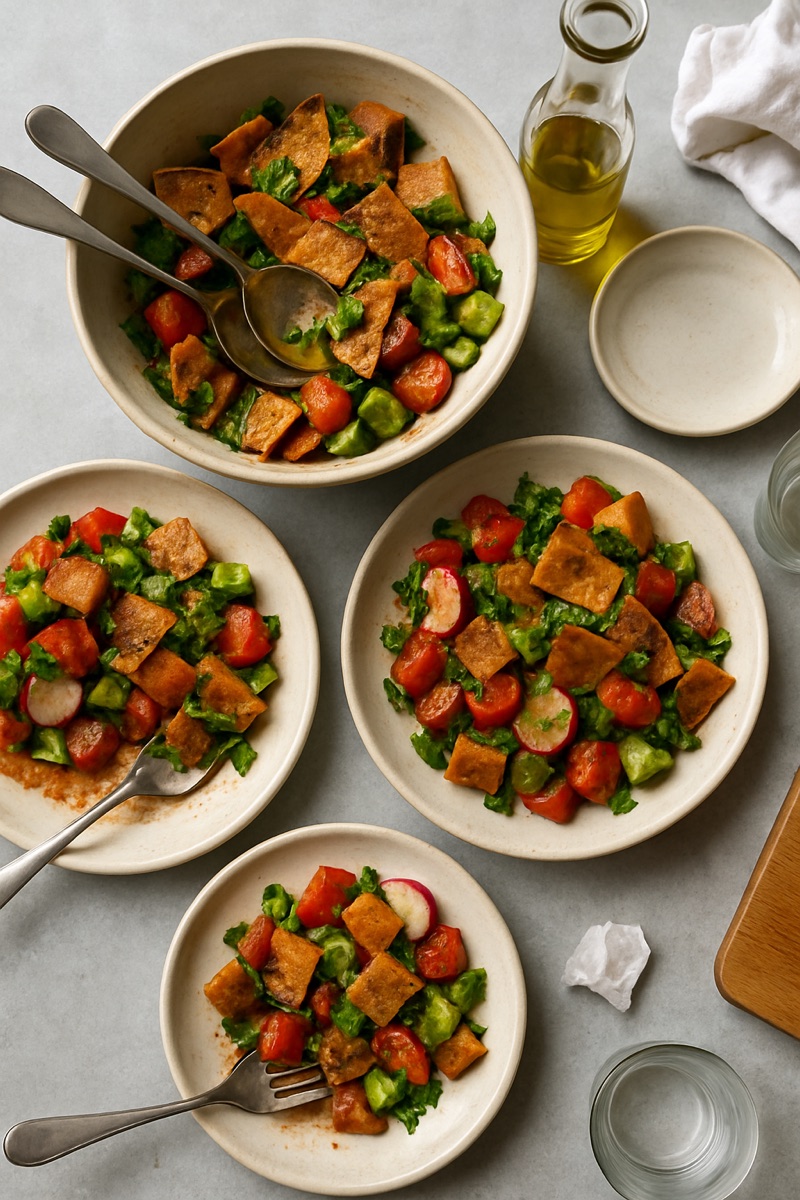
- Fattoush — A salad of purslane, tomato, cucumber, radish and herbs dressed with sumac and lemon, with pieces of fried flatbread added at the last moment so they stay partly crisp.
- Makdous — Small eggplants boiled until soft, stuffed with walnuts, red pepper or chilli paste, garlic and salt, then cured in olive oil. Syrian families make them by the kilo in autumn to last the winter, and eat them at breakfast, supper or as a snack.
Kibbeh, stuffed vegetables and main dishes
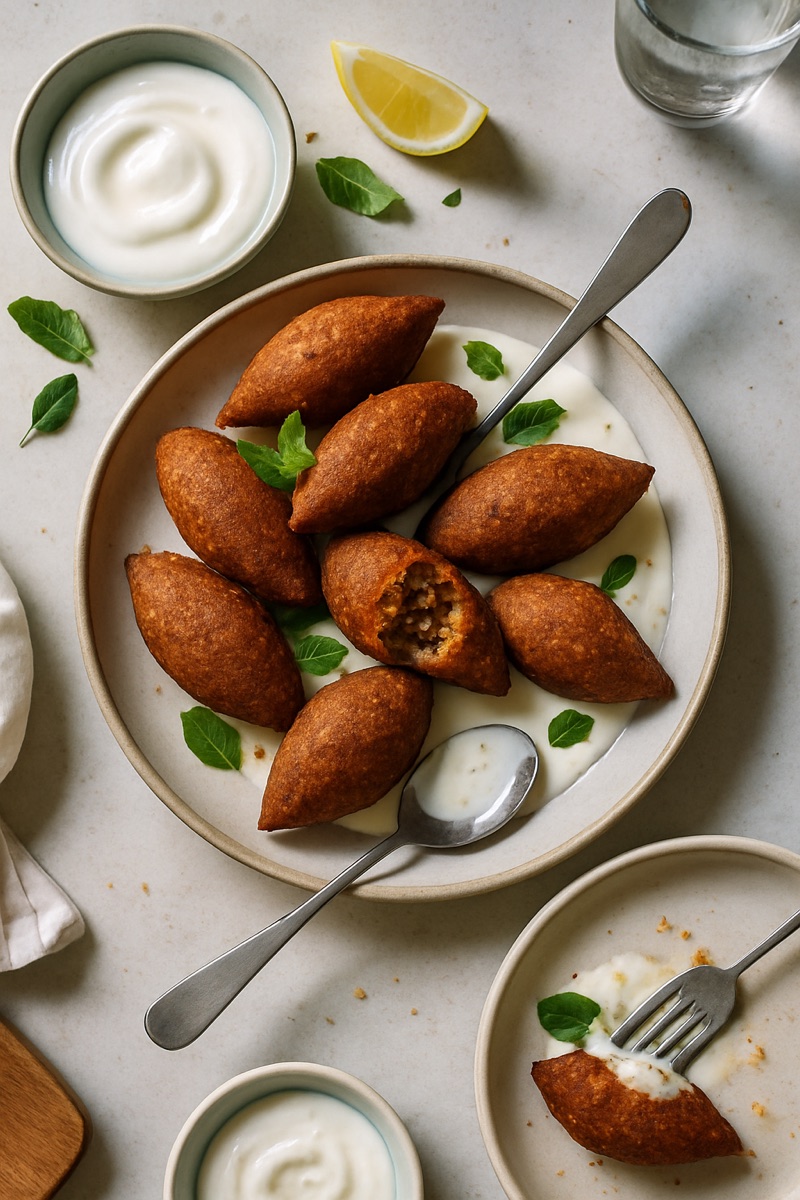
Kibbeh alone fills a menu in Syria. Kibbeh labaniyyeh is cooked in yogurt, kibbeh safarjaliyyeh with quince, kibbeh haamdah with lemon juice and kibbeh simmaa'iyyeh with sumac; kibbeh bisseniyyeh is baked on a tray and kibbeh nayyeh is eaten raw.
- Kibbeh — Lean lamb pounded with fine bulgur into a dough, then fried as hollow torpedoes filled with minced meat, onion and pine nuts, baked in a tray, grilled, cooked in yogurt or served raw. It is the dish most often called Syria's national dish.
- Yabrak — Grape leaves rolled around rice and minced meat, cooked and served hot. The meatless version, yalanji, is filled with rice and vegetables and served hot or cold.
- Kousa mahshi — Zucchini, or sometimes eggplant, hollowed out and stuffed with minced lamb or beef, nuts and rice. It is one of the famous dishes of Syrian home cooking.
- Kebab halabi — Aleppo's kebab, grilled meat served with a spicy tomato sauce and Aleppo pepper, in about 26 variants. The most famous, kebab karaz, cooks lamb meatballs with small sour cherries, pine nuts and pomegranate molasses. Other versions include kebab khashkhash, with chilli paste, parsley, garlic and pine nuts.
- Shakriyeh — Lamb cooked in a yogurt sauce, usually served with rice. Muslim families cook it for both Eids and the first day of Ramadan, Christians for Christmas, and it is most common in spring.
- Fatteh — Pieces of toasted or fried bread covered with chickpeas and tahini or yogurt, sometimes with meat or chicken and pine nuts in sizzling butter. It is also called shamiyat, "Damascene", and fattet makdous, with pickled eggplant, is popular in Aleppo and Damascus.
Sweets and drinks
Pastry shops also sell ba'lawah, layered pastry filled with nuts and steeped in atr syrup; barazek, cookies of sesame seeds, butter and honey; and qada'ef, pancakes stuffed with walnuts or cream. In Ramadan, bakers make maarouk, a sweet bread filled with date paste and topped with sesame.
Syrian coffee is made from lightly roasted beans with cardamom and served in small cups. Ayran, a salted yogurt drink, jallab, a fruit syrup, and qamar al-din, a thick apricot juice drunk at iftar in Ramadan, are the other classics, and mate, made from yerba mate leaves, is also drunk in Syria.
- Halawet el-jibn — Rolls of semolina and cheese dough filled with qishta, a thick cream, and served with a sugar syrup called atr. It comes from central Syria, where Homs and Hama have long argued over which city invented it.
- Booza — Ice cream made with mastic and salep, which give it an elastic, stretchy texture. The Bakdash shop in the Hamidiyah souq in Damascus has made it since at least 1895, and serves it topped with pistachios.
- Ma'amoul — Semolina cookies filled with dates, pistachios or walnuts, pressed in a carved wooden mould called a tabi. They are baked for Easter, Eid al-Fitr and Purim, and Aleppo's karabij halab are a pistachio version served with a white cream called natef.
Regional Syria
Aleppo is Syria's great food city: it claims at least 17 kinds of kibbeh, and a 1981 encyclopedia of the city described 58, and gave the country muhammara, kebab halabi with its cherry version, and karabij halab. Damascus is known for fatteh, nicknamed Damascene, and for the stretchy booza of the old souq. In central Syria, Homs and Hama both claim halawet el-jibn, and in Latakia on the coast, ma'amoul is traditionally filled with cheese.
Cook Syrian food at home
Kibbeh is the dish most often called the national dish of Syria. Copper has full recipes for kibbeh, muhammara and fattoush, with ingredients and step-by-step methods, on our page about the food of Syria, alongside other Middle Eastern recipes.
Mezze, kibbeh and stuffed vegetables are shared with Syria's neighbours. Compare with the traditional food of Lebanon and the traditional food of Turkey.
The recipes
 Muhammara
 Fattoush
Questions people ask
What is the most popular food in Syria?
Kibbeh, the dish most often called the national dish, and hummus, one of the best-known Syrian dishes and a fixture of every mezze. Shawarma and falafel are the most common street foods.
What do Syrians eat for breakfast?
Manakish, flatbread topped with za'atar, cheese or minced meat, is a common breakfast. Makdous, eggplants cured in olive oil, is also eaten in the morning.
Is Syrian food spicy?
Some of it is. Aleppo cooking uses Aleppo pepper and red pepper paste, in muhammara and kebab halabi for example, and falafel is often served with shatteh, a hot sauce.
What is a Syrian mezze?
A spread of small dishes served with Arabic bread before the main course: hummus, mtabbal, muhammara, fattoush, makdous, kibbeh and olives, among others.
What is Syrian booza?
An ice cream made with mastic and salep, which make it stretchy and chewy. The most famous comes from the Bakdash shop in the Hamidiyah souq in Damascus.
Keep reading
- What is the national dish of Syria?
- Traditional food of Bahrain: 13 dishes to know
- Traditional food of Iran: 14 dishes to know
- Traditional food of Iraq: 13 dishes to know
- Traditional food of Israel: 14 dishes to know
- Traditional food of Jordan: 13 dishes to know