 COPPER
What is the national dish of Lebanon?
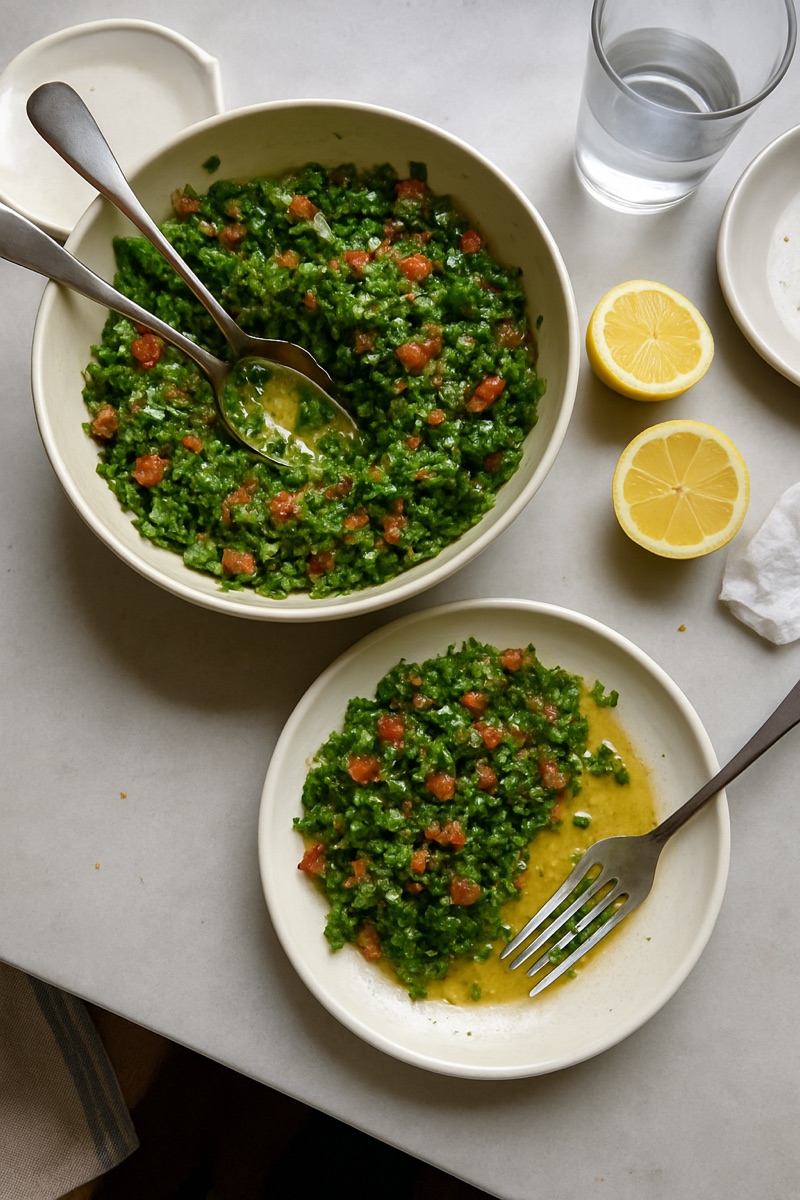
Lebanon has no officially declared national dish, but kibbeh is the one most often named: lean lamb or beef pounded with fine bulgur wheat into a smooth paste, then shaped and fried, baked in a tray or served raw. Tabbouleh, the parsley and bulgur salad, is also cited, and Lebanon celebrates a National Tabbouleh Day every July.
What is kibbeh?
Kibbeh is a paste of spiced lean meat, usually lamb, and bulgur wheat. Traditionally the meat was pounded in a stone mortar (jorn) with a pestle (modaqqa), then kneaded with spices and soaked bulgur. Today most cooks use a grinder, passing the meat several times until it turns smooth.
The paste is then shaped. The classic form is an oval shell stuffed with cooked minced meat and pine nuts and fried. Making kibbeh by hand is still slow work, so in Lebanon it is often kept for holidays, festivals and Sunday lunch.
Kibbeh is considered a national dish of both Lebanon and Syria, and versions exist in Turkey, Armenia, Cyprus and Egypt. The Syrian city of Aleppo alone claims at least 17 types. Lebanese towns have their own too: kebbe lakteen, flavoured with pumpkin, is popular in Beit Mery, and kebbe zghartweih, cooked in the oven, comes from Ehden.
The main forms of kibbeh in Lebanon
- Kibbeh nayyeh: raw, very finely minced lamb and bulgur served on a platter with mint leaves, olive oil, green onions, hot green peppers and pita or markouk bread, as part of a meze.
- Kibbeh bil siniyeh: baked in a tray, the meat and pine nut stuffing sandwiched between two layers of kibbeh paste.
- Kibbeh qrass: the fried stuffed ovals, often served with yogurt.
- Kibbeh labaniyeh: kibbeh cooked in a yogurt sauce and served over rice.
- Kibbeh mishwiyyeh: grilled rather than fried.
- Kibbet samak: made with white fish instead of meat, popular in North Lebanon and during Lent.
- Meatless kibbeh: potato or pumpkin replaces the meat, sometimes called "poor man's kibbe".
Where kibbeh comes from
The name comes from the Arabic root k-b-b. According to food historian Nawal Nasrallah, the earliest mention of kibbeh as a filled shell of ground meat and grain is in the 18th-century dictionary Taj al-'Arus, which attributes it to the people of the Levant.
By the 19th century it was already very popular in Lebanon. The American missionary William McClure Thomson, visiting in 1847, called it "the national dish of the Arabs", and the 1885 Beirut cookbook Ustadh al-Tabbakhin by Khalil Khattar Sarkis already gave 15 kibbeh recipes. A little earlier, in 1844, the Swedish orientalist Jacob Berggren listed eight kinds of kibbeh and recorded a proverb about its place at the table: "without our koubbé, we would all have died".
Tabbouleh, the other candidate
Tabbouleh is the dish most often named after kibbeh, and the only one with its own national day: Lebanese National Tabbouleh Day has been celebrated on the first Saturday of July since 2001. It comes from the mountains of Lebanon and Syria.
Lebanese tabbouleh is a herb salad, not a grain salad. In our tabbouleh recipe, 300 g of flat-leaf parsley chopped by knife carries only 40 g of fine bulgur, softened for 15 minutes in the juice of diced tomatoes rather than soaked in water. The plate should look green, not beige. Turkey's kısır and Armenia's eetch go the other way and use far more bulgur than parsley. The parsley is chopped with a sharp knife, never in a food processor, which bruises the leaves and turns the salad bitter, and the dressing of lemon juice, olive oil and a pinch of allspice goes on only at the moment of serving. Leaves of romaine or young cabbage are served alongside to scoop it up.
Hummus, kafta and other dishes to know
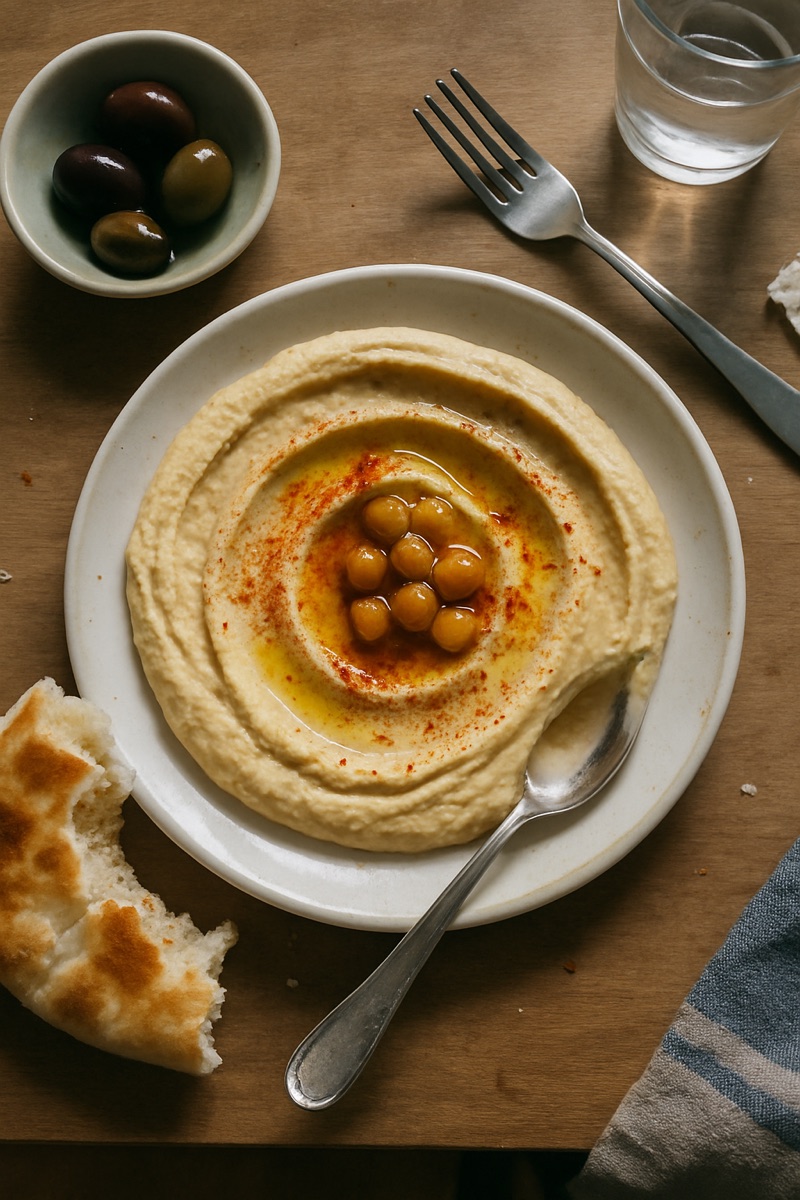
Hummus is on almost every Lebanese meze table. The Lebanese version is made with chickpeas peeled while still hot and blended with tahini, lemon and ice water, with no cumin. Lebanon and Israel have competed over it through Guinness World Records for the largest plate; in May 2010, 300 cooks in al-Fanar, near Beirut, made one of about 10,450 kg. Two years earlier, in 2008, the Association of Lebanese Industrialists had asked the Ministry of Economy and Trade to seek protected status for hummus as a Lebanese food from the European Commission.
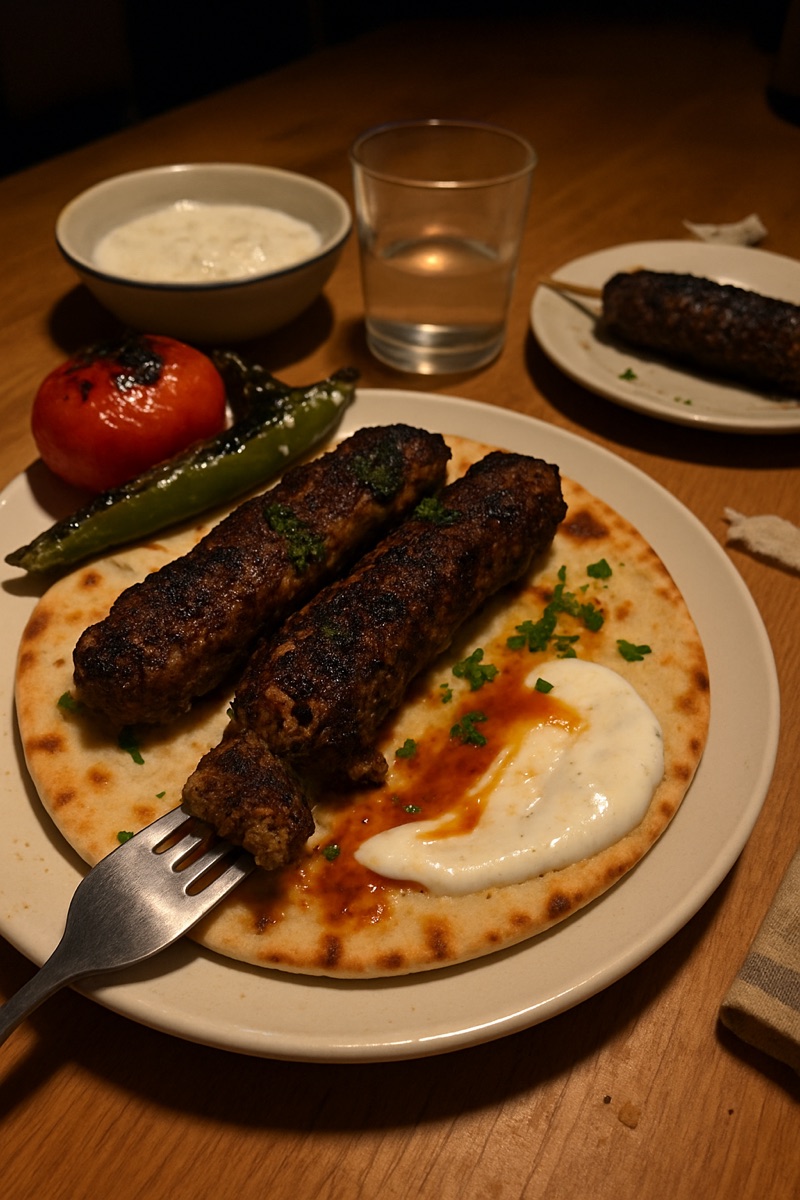
Kafta is minced lamb and beef worked with wrung-out onion, parsley and seven spice, pressed onto flat skewers and grilled over charcoal 4 to 5 minutes a side, then slid straight into warm pita with sumac onions.
Arak, an anise-flavoured spirit and Lebanon's national drink, usually accompanies a traditional meal. Lebanese food belongs to the wider Middle Eastern table. You will find all three dishes, with ingredients and step-by-step methods, on our page about the food of Lebanon.
The recipes
 Hummus
 Kafta
KaftaQuestions people ask
Is kibbeh Lebanese or Syrian?
Both. Kibbeh is considered a national dish of Lebanon and Syria and comes from the wider Levant; Aleppo in Syria and South Lebanon are both known for it.
Is hummus the national dish of Lebanon?
Not usually. Hummus is central to Lebanese meze, but the dishes most often named as Lebanon's national dish are kibbeh and tabbouleh.
Is kibbeh eaten raw?
One version is. Kibbeh nayyeh is raw minced lamb and bulgur, which requires very fresh, high-quality meat; the other forms are fried, baked or grilled.
When is National Tabbouleh Day in Lebanon?
On the first Saturday of July. It has been celebrated every year since 2001.
What is kibbeh served with?
Fried and baked kibbeh are often served with yogurt or a cucumber and yogurt salad, and kibbeh nayyeh with mint, green onions, olive oil and bread.
Keep reading
- Traditional food of Lebanon: 13 dishes to know
- What is the national dish of Bahrain?
- What is the national dish of Iran?
- What is the national dish of Iraq?
- What is the national dish of Israel?
- What is the national dish of Jordan?