 COPPER
What is the national dish of Montenegro?
Montenegro has no official national dish. The one most often cited is Njeguški pršut, a pork leg cured with sea salt, smoked over beech wood and dried for about a year in the village of Njeguši. The cooked dish Montenegrins hold up as their own is kačamak, potatoes and cornmeal beaten into a thick mass and finished with kajmak and cheese.
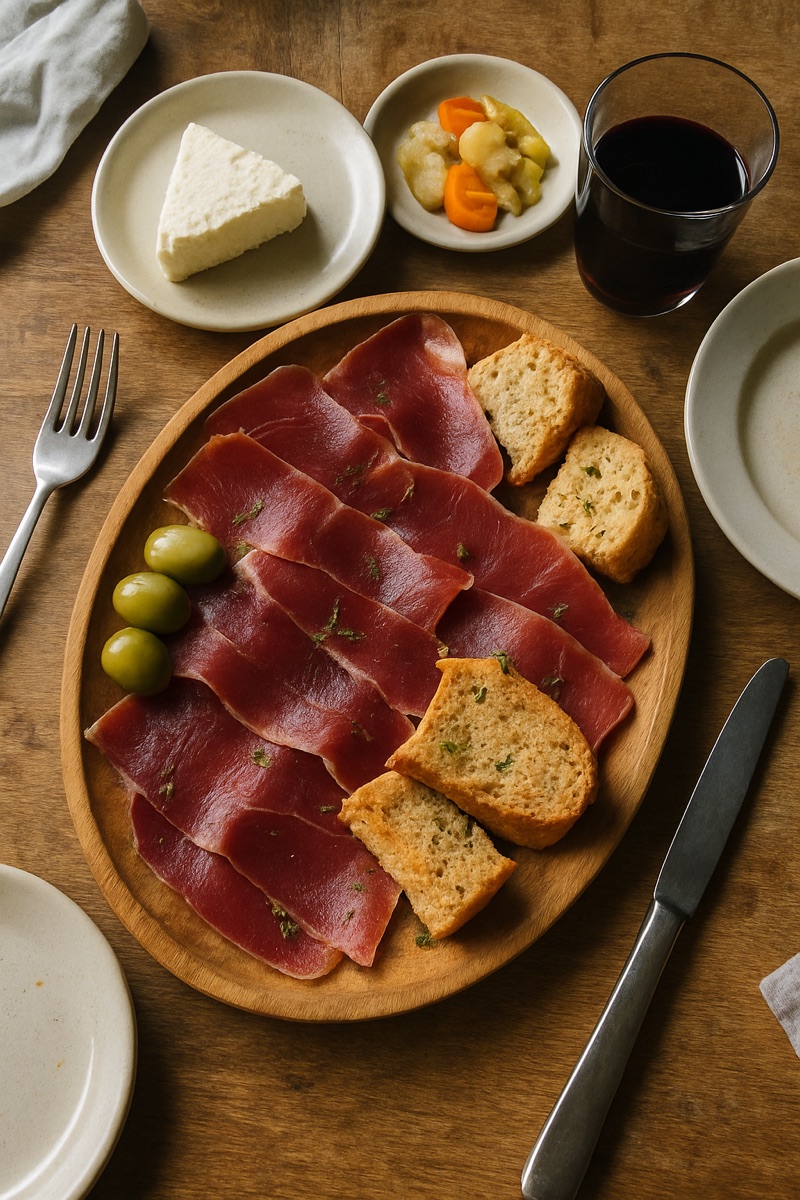
Two answers, no official title
Montenegro has never named a national dish by law. Wikipedia's list of national dishes gives one entry for the country: Njeguški pršut, the dry-cured ham of Njeguši, a village on the plateau below Mount Lovćen.
Pršut is a cured meat, served sliced and uncooked, not a dish you cook. That is why the answer is often paired with kačamak. The Montenegrin magazine MNE Magazin calls Montenegrin kačamak "one of the best-known traditional specialities", a former poor man's dish that is now "a brand older than two centuries". We cover both.
What is Njeguški pršut?
Njeguški pršut is a dry-cured pork leg, close to Italian prosciutto crudo. Its producers credit its flavour to the mix of sea air and mountain air at Njeguši and to the beech wood burned while it dries. It is described as the first product from Montenegro protected by a national quality label. The curing follows a fixed order:
Accounts of the timing vary a little. The My Guide Montenegro tourism site gives a drying period of at least nine months after the smoking, while Wikipedia gives about a year for the whole cycle. Either way, it is not a quick product. It is sold in supermarkets across Montenegro and served in restaurants, usually as a starter, sliced paper-thin.
- Salting: the leg is buried in coarse sea salt for about three weeks.
- Pressing: about three more weeks under weight to force out the liquid.
- Smoking: cold smoke from beech wood.
- Drying and maturing: in the cool mountain air, for a full cycle of about a year.
Kačamak, the dish Montenegrins cook
Kačamak is a maize porridge found across the Balkans, but the Montenegrin version adds potatoes, cheese and kajmak. According to MNE Magazin, the recipe grew out of poverty after Petar I brought potatoes back from Trieste in 1786.
The name comes from the Turkish kaçamak. Like Italian polenta or Romanian mămăligă, it is made by boiling cornmeal and mashing it while the pot is still on the heat. Wikipedia notes it was long regarded as a poor man's food and is now widely eaten, including in restaurants. Montenegrin cuisine lists it as cornmeal with buttered potato and kajmak, served with cold milk, buttermilk or yogurt.
In our kačamak recipe, 1.5 kg of potatoes boil for 30 minutes without being drained, 250 g of cornmeal steams on top for 20 minutes, and then the whole mass is beaten against the side of the pot for 15 to 20 minutes until not one lump is left. Montenegrins count 365 strokes. Melted kajmak and fresh cheese go over the top, and it is eaten with cold sour milk.
The same dish, with potatoes and cheese, is also made in Albania and in Bosnia and Herzegovina, where it is one of several shared dishes: see the national dish of Bosnia and Herzegovina.
A cuisine shared with its neighbours
Wikipedia's article on Montenegrin cuisine traces its first big influences to the Levant and Turkey, largely by way of Serbia: sarma, pita, burek, ćevapi and baklava all came that way. The coast cooks in a Mediterranean style, with seafood and a distinct Italian influence, and differs from the cooking of the northern highlands. Burek is the most popular fast food in the country. Many of these dishes are also claimed next door: see the national dish of Serbia.
Central Europe left its mark too, in crêpes, doughnuts, jams and many kinds of biscuits and cakes, while Hungarian cooking shaped stews such as sataraš. Montenegrin also separates its soups by name: a clear soup is supa, a thick soup or stew is čorba, and a porridge-style dish is kaša, the family kačamak belongs to.
Other dishes to know from Montenegro
For Njeguški pršut, our page sets out the real twelve-month process. It cannot be finished in a home kitchen, so it is a guide to what you are buying, served paper-thin with Njeguški cheese, olives and rye bread.
Sarma starts from a whole head of cabbage soured in salt brine. The leaves are rolled around pork, beef and rice, packed with smoked pork ribs and simmered for 2.5 to 3 hours, with no tomato paste because the sourness comes from the brine.
You will find all three dishes on our page about the food of Montenegro. For the neighbouring kitchens, see our guide to Balkan food.
The recipes
- Njeguški pršut🇲🇪 Montenegro · 365 days
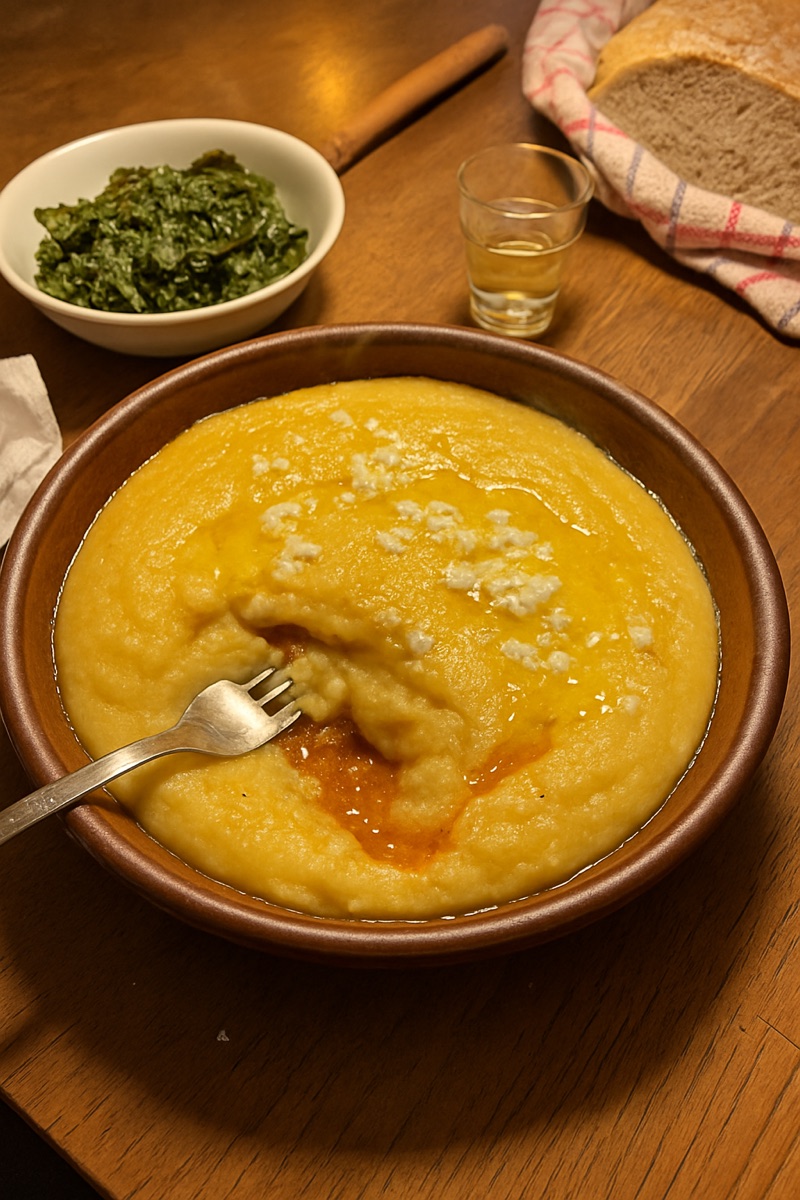 Kačamak🇲🇪 Montenegro · 1 hour and 20 minutes
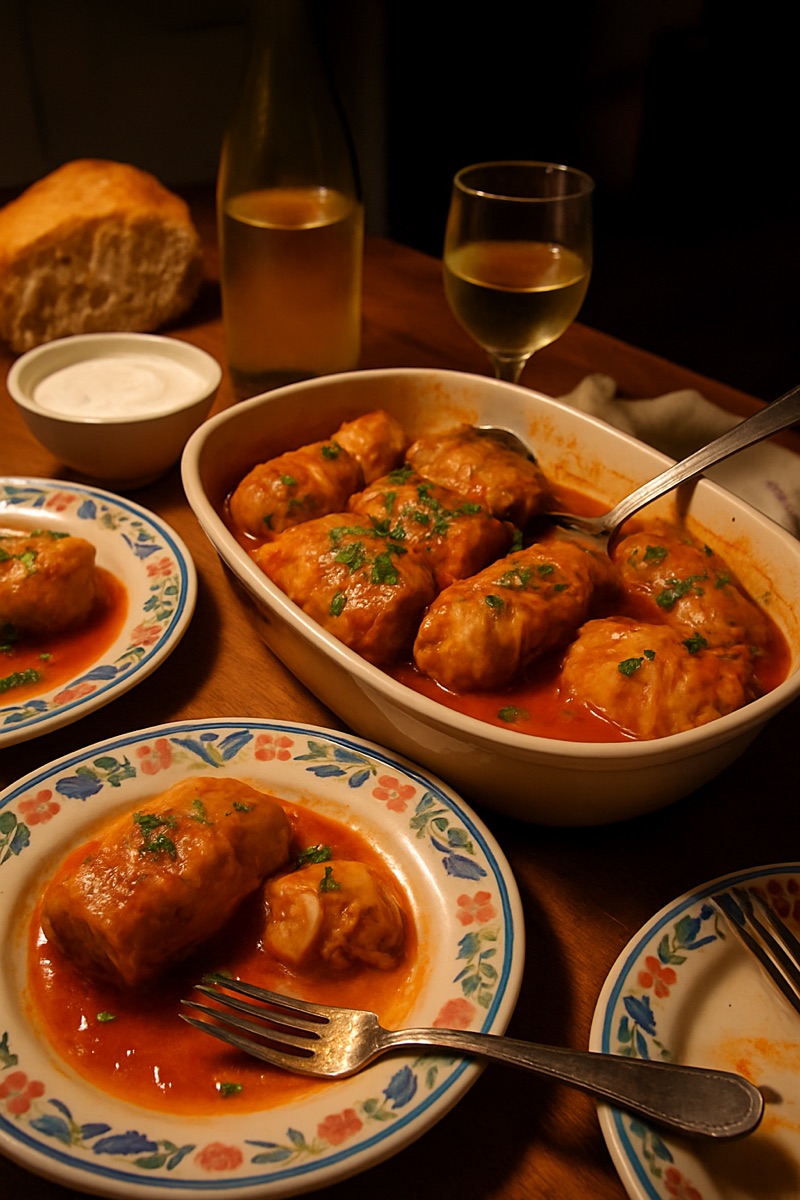 Sarma🇲🇪 Montenegro · 16 hours
Questions people ask
Does Montenegro have an official national dish?
No. Njeguški pršut is the dish most often cited, and kačamak is the best-known cooked dish, but neither has official status.
How long does Njeguški pršut take to make?
About a year: roughly three weeks in sea salt, three weeks under pressure, then smoking over beech wood and drying in mountain air until it matures.
What is the difference between pršut and prosciutto?
Both are dry-cured pork legs served raw. Njeguški pršut is also cold-smoked over beech wood, and it is cured with sea salt only.
What is kačamak served with?
Montenegrin kačamak is finished with melted kajmak and cheese and served with cold sour milk.
Is kačamak the same as polenta?
They are related: both are boiled cornmeal. Montenegrin kačamak also contains potatoes and is beaten with kajmak and cheese.
Keep reading
- Traditional food of Montenegro: 12 dishes to know
- What is the national dish of Albania?
- What is the national dish of Bosnia and Herzegovina?
- What is the national dish of Bulgaria?
- What is the national dish of Croatia?
- What is the national dish of Greece?