 COPPER
What is the national dish of Croatia?
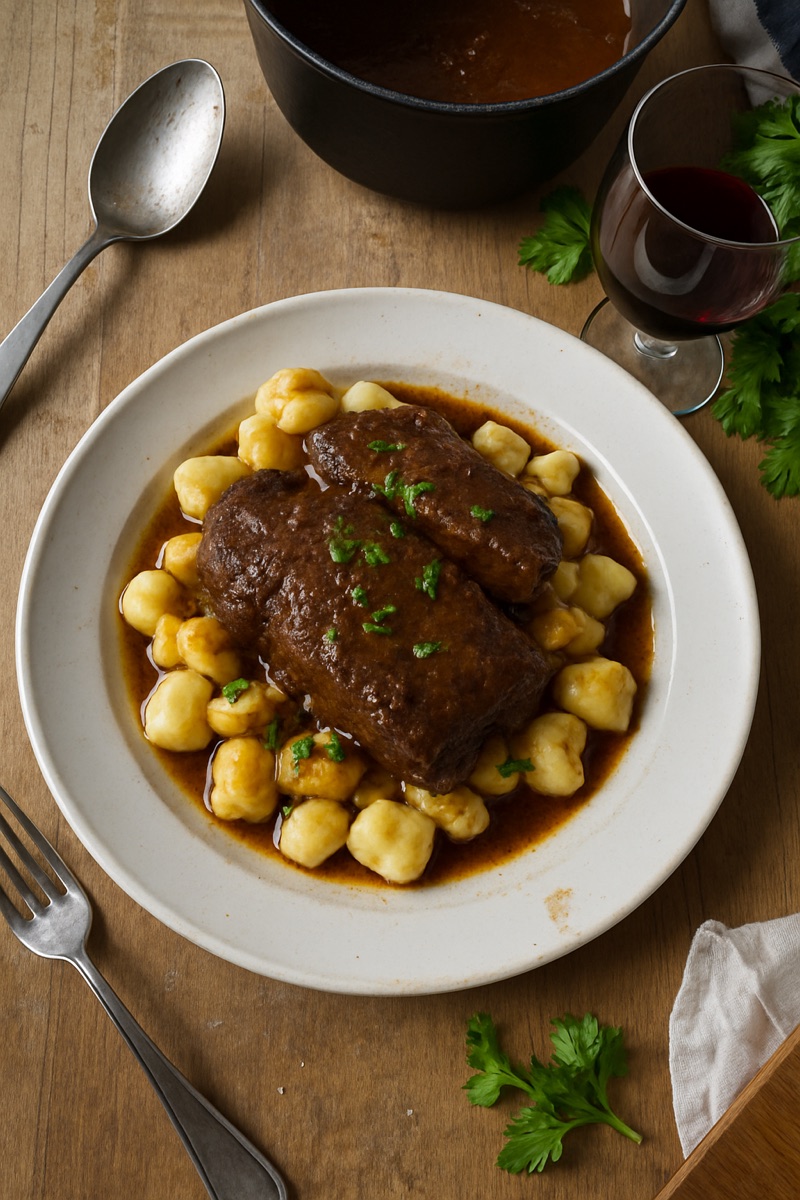
Croatia has no single national dish. The two most often named are pašticada, a whole piece of beef from Dalmatia marinated in vinegar and wine and braised for hours with prunes and sweet prošek wine, and zagorski štrukli, thin dough rolled around fresh cheese from the north, which the Ministry of Culture added to Croatia's intangible cultural heritage list in 2007.
Why Croatia has no single national dish
Croatian cooking is a cuisine of regions. The mainland kitchen cooks with lard, black pepper, paprika and garlic, under Hungarian, Austrian and Turkish influence. The coast cooks with olive oil, rosemary, sage, bay leaf and citrus peel, under Italian and especially Venetian influence. No one dish covers both.
When Croatian references list the country's best-known dishes, the same names come back:
- Pašticada, braised beef from Dalmatia.
- Zagorski štrukli, cheese-filled dough from Hrvatsko Zagorje and Zagreb.
- Brudet, a fish stew from Dalmatia, Kvarner and Istria.
- Orehnjača, a yeast-dough walnut roll.
- Kulen, a flavoured minced-pork sausage from Slavonia.
What is pašticada?
Pašticada, often called *dalmatinska pašticada*, is beef cooked in a sweet and sour sauce. A whole eye of round is pierced and stuffed with garlic, cloves, carrot and bacon, marinated in wine vinegar, then seared and simmered for hours with onions, prunes, wine and sweet prošek. In Croatia it is the dish of important holidays, weddings and christenings.
Our pašticada recipe follows the long Dalmatian method: the larded beef rests 24 to 48 hours in red wine vinegar and red wine, turned twice, then simmers about 3 hours on the lowest heat. Prunes, dried figs and prošek go in after 2 hours. The meat is sliced 1 cm thick, the sauce is blended smooth with the fruit in it, and the slices go back in for 20 more minutes. It is served with gnocchi or wide homemade noodles.
Its origins are debated. One theory links it to French rule in Dalmatia under Napoleon; another to Venice, which once ruled the coast. The oldest known recipe for Dalmatian pašticada dates to the 15th century and was recorded in Dubrovnik.
Similar dishes exist elsewhere. Corfu, also once ruled by Venice and later by France, has *pastitsada*. In international cooking the closest relative is German Sauerbraten; Piedmont's brasato al Barolo is braised in wine with cloves but without vinegar or prunes. Unlike both, pašticada is sliced and cooked a second time in its sauce.
What are zagorski štrukli?
Zagorski štrukli come from the north. Pastry is stretched out flat and very thin to cover the table, spread with a mix of fresh cottage cheese, eggs, sour cream and salt, rolled up and cut into pieces. They are then either boiled for about 20 minutes or baked under cream for about 45 minutes, until browned on top.
The dough is a craft of its own. A Croatian recipe mixes half smooth and half coarse flour with lukewarm water and a little vinegar, salt, an egg and 2 spoons of oil, kneads it until it comes away from the board, rests it about an hour, then stretches it by hand over a tablecloth across the whole table. The thick edges are torn off before filling.
Every part of Zagorje has its own version. Besides the cheese štrukli there are versions with grated summer squash (*tikvači*), with poppy seed (*makači*) and with turnip. They are served as a soup, starter, main course or dessert.
In 2007 the dish was added to the list of Croatia's intangible cultural heritage kept by the Ministry of Culture. It is closely related to Slovenian štruklji; see the national dish of Slovenia for the comparison.
Other dishes to know from Croatia
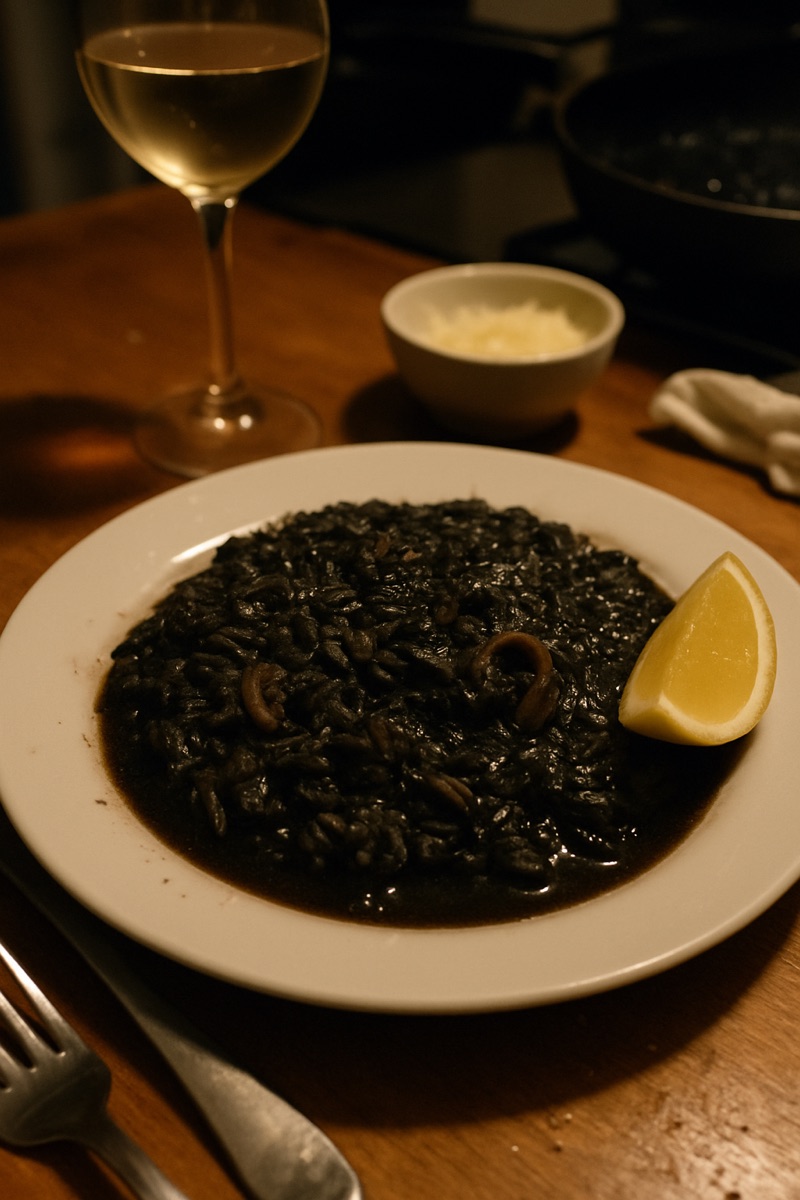
On the Dalmatian coast, crni rižot is risotto blackened with the ink of the same cuttlefish that goes into the pan. The hard part is cleaning the cuttlefish without bursting the ink sacs; the rice is then cooked about 18 minutes in hot fish stock until done but still firm.
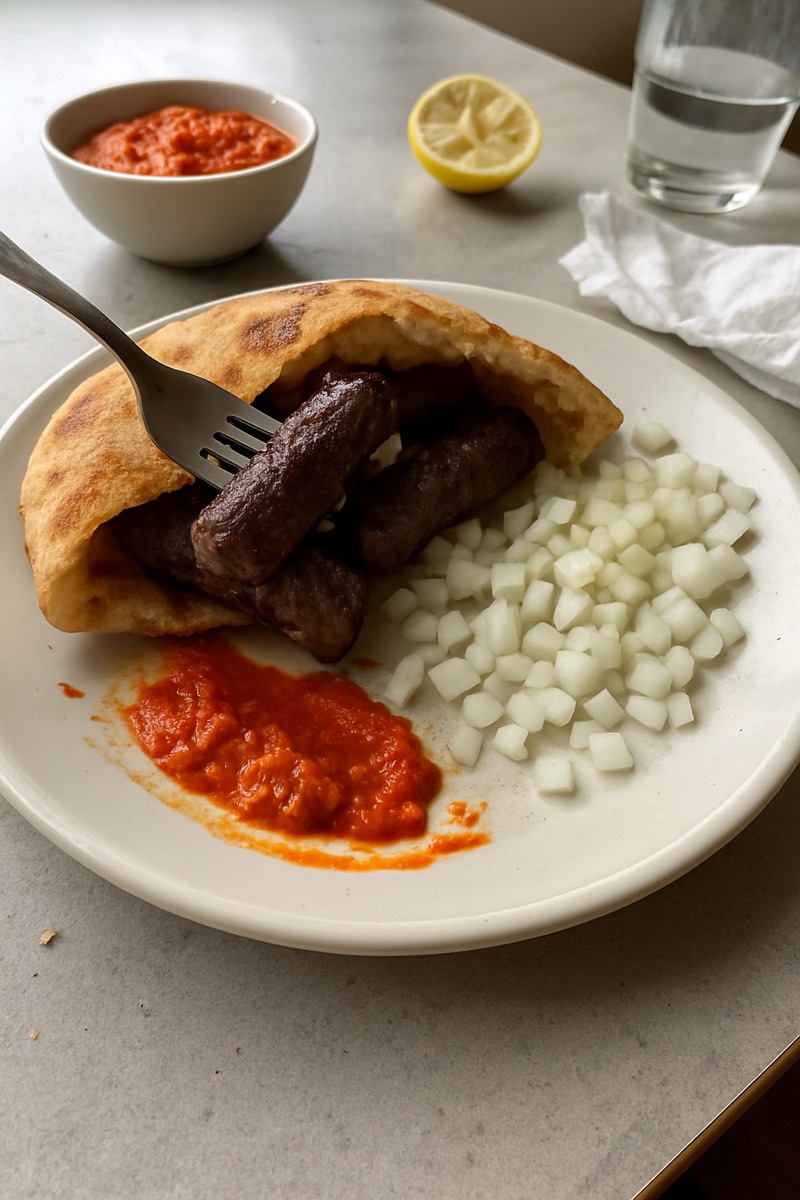
Inland and on the coast alike, ćevapi are grilled minced-meat fingers eaten in flatbread with raw onion, kajmak and ajvar. In our recipe, beef and lamb are mixed with baking soda and garlic-infused sparkling water, kneaded 10 minutes, pressed into a container and rested 24 hours, then rolled into fingers about 8 cm long and grilled over high heat for 8 to 10 minutes. They are shared across the former Yugoslavia and considered a national dish of Bosnia and Herzegovina and Serbia; read more in the national dish of Bosnia and Herzegovina. From the 1970s they became a fixture of the tourist trade on the Croatian Adriatic coast.
You will find all three dishes, with ingredients and step-by-step methods, on our page about the food of Croatia, and the wider region in our guide to Balkan food.
The recipes
- Pasticada🇭🇷 Croatia · 1 day and 4 hours
 Crni rizot🇭🇷 Croatia · 1 hour and 5 minutes
 Cevapi🇭🇷 Croatia · 1 day and 1 hour
Questions people ask
What is Croatia's most famous dish?
There is no official answer. Pašticada and zagorski štrukli are the two most often named, followed by brudet, orehnjača and kulen.
Is pašticada Croatian or Italian?
Pašticada is Croatian, from Dalmatia. Historians link it either to French rule under Napoleon or to Venetian influence, and a related dish called pastitsada exists on Corfu.
What is served with pašticada?
Pašticada is usually served with gnocchi or wide homemade noodles, with plenty of sauce.
Are štrukli Croatian or Slovenian?
Both. Zagorski štrukli are a Croatian dish from Hrvatsko Zagorje and Zagreb, closely related to Slovenian štruklji.
Are ćevapi from Croatia?
Ćevapi are eaten all over Croatia, but they are shared across the former Yugoslavia and are most often called a national dish of Bosnia and Herzegovina and of Serbia.
Keep reading
- Traditional food of Croatia: 13 dishes to know
- What is the national dish of Albania?
- What is the national dish of Bosnia and Herzegovina?
- What is the national dish of Bulgaria?
- What is the national dish of Greece?
- What is the national dish of Montenegro?