 COPPER
What is the national dish of Slovenia?
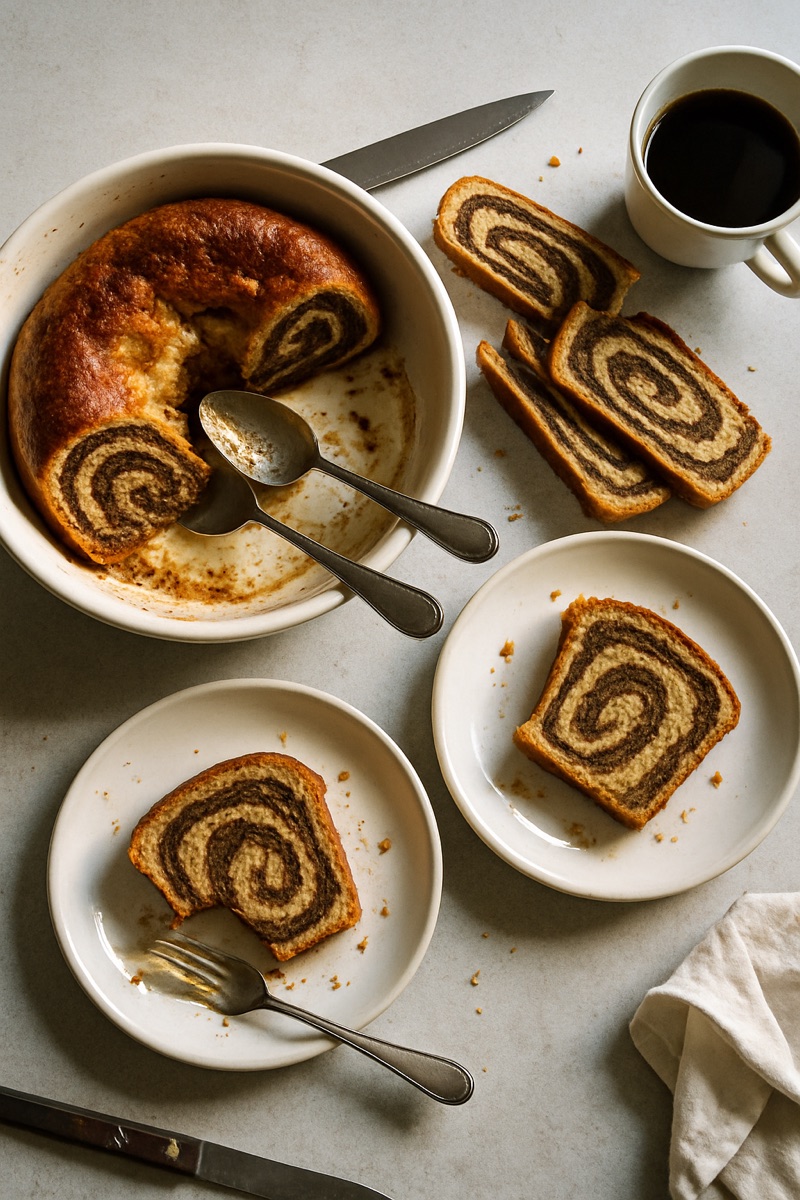
Slovenia has no official national dish, but three foods are usually put forward. Potica is a festive rolled yeast cake with a spiral of walnut or other filling, baked in a ring mould and registered by the EU as a traditional speciality in 2021. Štruklji are rolled, filled dough dumplings, and kranjska klobasa (Carniolan sausage) is a protected smoked pork sausage.
Why Slovenia has several candidates
Slovenia is small but varied: in 2016 its leading ethnologists divided the country into 24 gastronomic regions. No law or decree names a national dish.
Lists of Slovenian national dishes usually include:
- Potica, the rolled festive cake, nicknamed by some the "ambassador of Slovenia".
- Štruklji, rolled dumplings, including buckwheat versions.
- Kranjska klobasa, the Carniolan sausage, protected in the EU since 2015.
- Idrijski žlikrofi, potato-filled dumplings from Idrija, in 2010 the first Slovenian dish registered as an EU traditional speciality.
- Kremna rezina, the custard and cream slice associated with the town of Bled.
What is potica?
Potica is an enriched yeast dough rolled thin, spread with filling, rolled into a log and baked in a *potičnik*, a round mould with a cone in the centre, so every slice shows a tight spiral. Walnut is the best-known filling; tarragon, raisin, honey and cottage cheese versions also exist. It is a festive bake for Easter, Christmas, weddings and christenings rather than an everyday food.
The earliest written mention, under the older name *povitica*, is in the works of the Protestant reformer Primož Trubar in 1575 and 1577. Slovenska potica has been an EU traditional speciality guaranteed since April 2021, and in December 2021 its making entered Slovenia's national register of intangible cultural heritage.
In our potica recipe, the dough uses 600 g of flour, and 500 g of ground walnuts are scalded with 250 ml of boiling cream, 200 g of sugar and 2 tablespoons of honey. The dough is rolled to about 90 x 35 cm, spread, rolled tightly, baked about an hour at 180 °C, and sliced only once cold so the spiral holds.
The protected specification is precise: the loaf must be baked in a potičnik, with a base at least 14 cm across and at least three to four turns of dough and filling, and only five fillings qualify: walnut, walnut with raisins, raisin, tarragon, and tarragon with cottage cheese. Slovene emigrants carried potica to the United States between the 1880s and the 1930s, and it is still baked in Cleveland, Pittsburgh and on Minnesota's Iron Range.
What are štruklji?
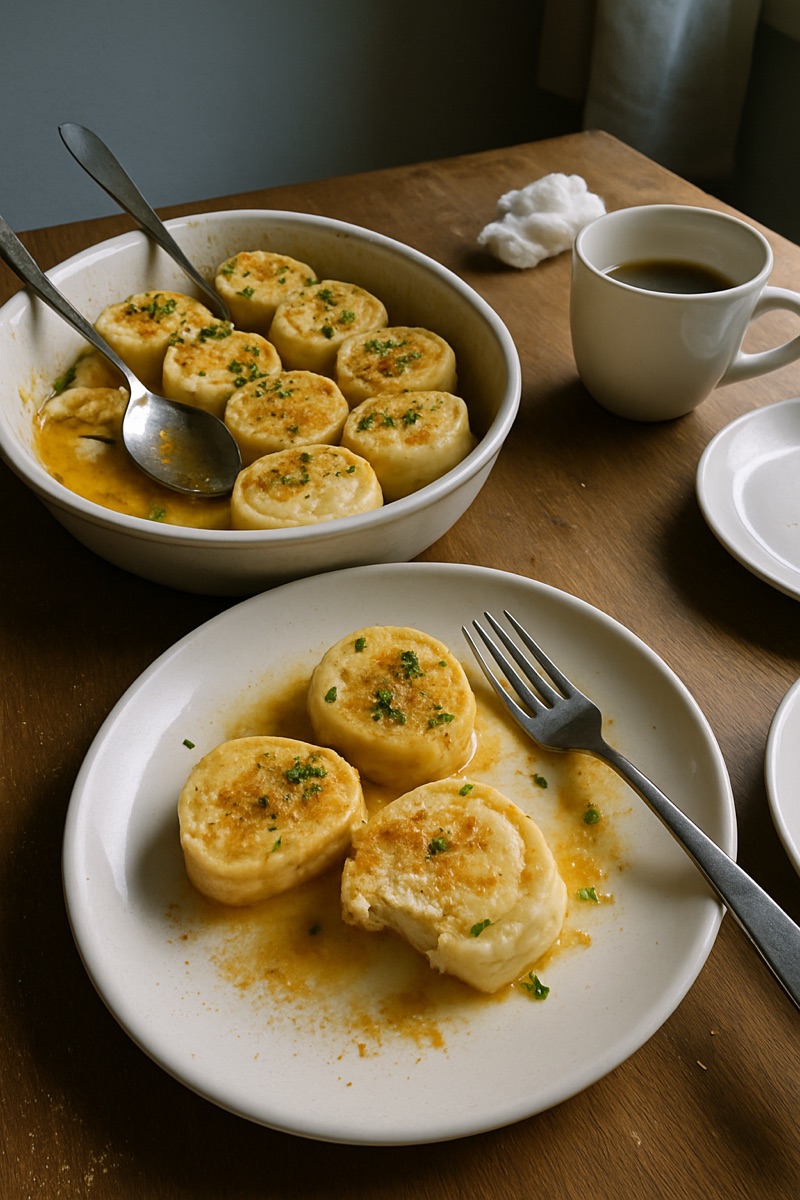
Štruklji are rolled dumplings of thin dough and filling, steamed, boiled or baked. The first recorded recipe is said to date from 1589, when a chef at a manor in Graz wrote down boiled štruklji with a tarragon filling; tarragon štruklji remain the most characteristic Slovenian kind.
In our štruklji recipe, the dough is stretched by hand on a floured cloth until almost transparent, spread with curd cheese, sour cream and fresh tarragon, rolled into a log, tied inside the cloth and simmered whole for 30 minutes. It is sliced only after cooking and topped with butter browned with breadcrumbs.
Štruklji became a festive dish of the urban middle class in the 17th century and reached rural households later, before becoming everyday food at the start of the 20th century. Fillings can be sweet or savoury: apple, walnut, poppy seed, cottage cheese or tarragon. They are served on their own or as a side to meat and gravy.
Croatia has its own version, zagorski štrukli, on its intangible heritage list; compare them in the national dish of Croatia.
Kranjska klobasa, the Carniolan sausage
Kranjska klobasa is named after Carniola, a former duchy of the Austrian Empire. Its rules are strict: at least 75 to 80% pork, at most 20% bacon, up to 5% water, sea salt from the Sečovlje saltworks, a little garlic, saltpetre and black pepper, nothing else. The sausages are linked in pairs with a wooden skewer and hot smoked.
Slovenia registered it as an EU protected geographical indication in January 2015, despite objections from Austria, Croatia and Germany. Post-war immigrants from Yugoslavia took it to Australia in the late 1940s and 1950s, where it became the "kransky", often sold with cheese as a takeaway staple. Austria's cheese-filled Käsekrainer is a variation; see the national dish of Austria.
Other dishes to know from Slovenia
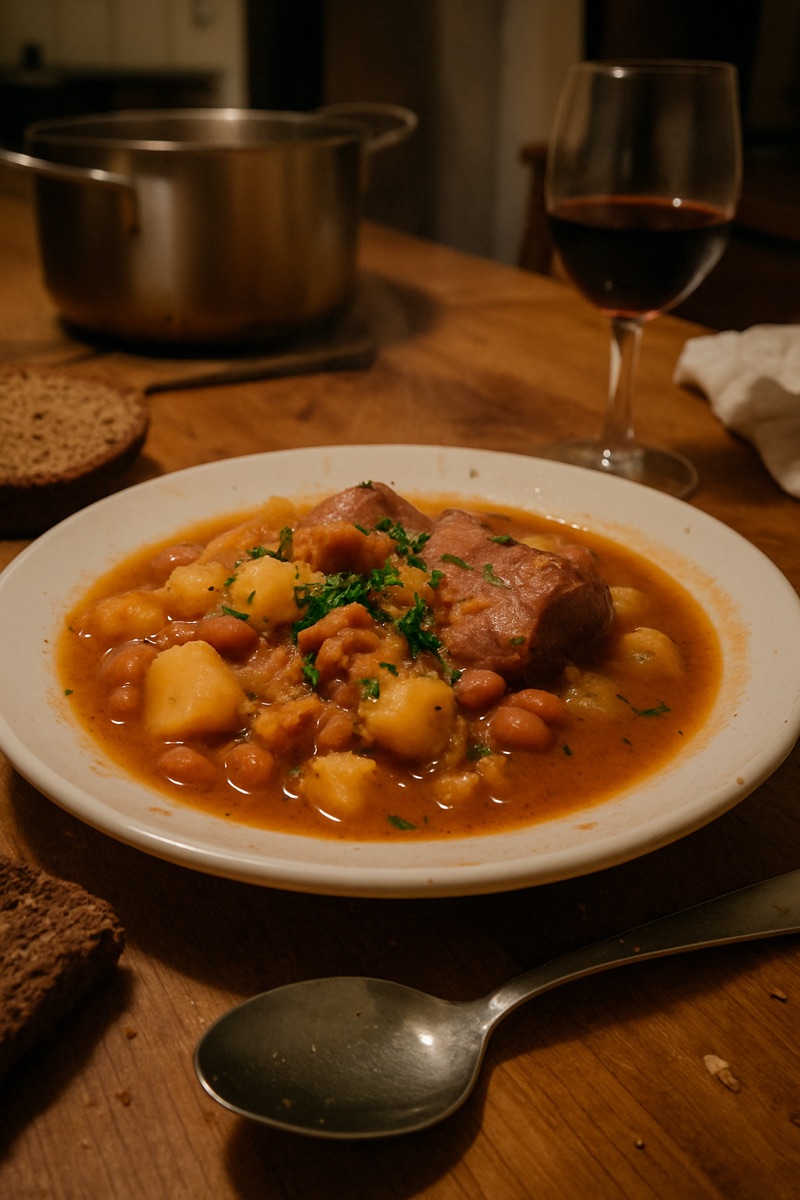
From the Karst and the coast, jota is a thick stew of sauerkraut, borlotti beans, potatoes and smoked pork ribs, bound with *prežganje*, a garlic roux. The beans and potatoes cook until they break down, because jota must be thick; it is served hot in winter and cold in summer. Under the name jota the same stew is also typical of Trieste, Istria and Friuli, where it most likely originated; the Friulian version uses sour turnip instead of sauerkraut.
You will find all three dishes, with ingredients and step-by-step methods, on our page about the food of Slovenia, and the neighbouring kitchens in our guide to Balkan food.
The recipes
- Potica🇸🇮 Slovenia · 4 hours and 50 minutes
 Struklji🇸🇮 Slovenia · 1 hour and 50 minutes
 Jota🇸🇮 Slovenia · 14 hours and 10 minutes
Questions people ask
Is potica Slovenian or Croatian?
Potica is Slovenian and protected in the EU as Slovenska potica. Similar rolled pastries exist nearby, and Croatian-American communities know the same pastry by the older name povitica.
When is potica eaten?
Potica is a festive bake for Easter and Christmas tables, weddings and christenings.
How do you pronounce potica?
po-TEE-tsa, with the stress on the second syllable and the c pronounced ts.
What is the difference between štruklji and štrukli?
Štruklji is the Slovenian dish and name; zagorski štrukli is the closely related Croatian dish from Hrvatsko Zagorje and Zagreb.
What is kranjska klobasa?
A Slovenian smoked pork and bacon sausage, sold in pairs linked with a wooden skewer, protected in the EU since 2015. In Australia it is known as kransky.
Keep reading
- Traditional food of Slovenia: 12 dishes to know
- What is the national dish of Albania?
- What is the national dish of Bosnia and Herzegovina?
- What is the national dish of Bulgaria?
- What is the national dish of Croatia?
- What is the national dish of Greece?