 COPPER
Traditional food of Slovenia: 12 dishes to know
Slovenian food is a cuisine of regions: in 2016 ethnologists divided this small country into 24 gastronomic regions. Pork, buckwheat, dairy, sauerkraut, walnuts and honey recur, alongside Karst cured ham and Istrian olive oil. The most emblematic dishes are potica, štruklji, kranjska klobasa and idrijski žlikrofi, with jota in the west and prekmurska gibanica in the east.
What Slovenian food is built on
Slovenian cooking reflects the variety of the country's landscape, climate, history and neighbours, and in 2016 its leading ethnologists divided it into 24 gastronomic regions. The first cookbook in Slovene, by Valentin Vodnik, was published in 1798. Before soups became common, people ate porridges, stews and one-pot meals; today there are more than a hundred soups, and the classic Sunday lunch is beef soup with noodles, fried potatoes, fried steak and lettuce.
Pork is eaten everywhere, mutton and goat in White Carniola and the Littoral. Porridges of buckwheat, cornmeal and other grains, such as žganci and močnik, are old staples; walnuts and hazelnuts go into cakes, honey into medenjaki honey biscuits, and mushrooms, chestnuts and dandelion leaves are gathered in season: dandelion and potato salad is a spring favourite, and families still go out picking enough leaves for a week. Fasting brought dishes such as aleluja, a soup of turnip peels. Twenty-four Slovenian foods are protected at EU level, from Piran salt and Karst prosciutto to Tolminc and Bovec cheeses. No law names a national dish; see the candidates in our article on the national dish of Slovenia.
Dumplings, porridge and soup
- Štruklji — Rolled dumplings of thin dough and filling, boiled, steamed or baked, sweet or savoury. The tarragon and curd cheese version is the most characteristic; the first recorded recipe, with a tarragon filling, is said to date from 1589. Croatia's zagorski štrukli are a close relative.
- Idrijski žlikrofi — Small dumplings of dough filled with potato, from the mining town of Idrija, served as a side to meat or on their own topped with breadcrumbs. The recipe dates from the mid-19th century, and in 2010 they became the first Slovenian dish registered as an EU traditional speciality guaranteed.
- Ajdovi žganci — Buckwheat flour cooked with oil and salt for about fifteen minutes, often called a national dish of Slovenia. It was the everyday food of the central and Alpine regions, eaten with milk, runny yogurt, honey, or lard and cracklings, or as a side to meat; in Upper Carniola it was served with sauerkraut. The name comes from *žgati*, to toast.
- Prežganka — Often called the Slovenian national soup: flour browned in oil or butter, made into a soup with caraway seeds and finished with beaten eggs. It comes from Upper Carniola.
Meat and stews
- Kranjska klobasa — The Carniolan sausage: pork cut into small pieces with at most 20% bacon, seasoned only with sea salt, a little garlic and black pepper, linked in pairs with a wooden skewer and hot smoked. It appears in Katharina Prato's German cookbook in the 19th century and under its Slovene name in Felicita Kalinšek's Slovene Cookbook of 1912. It has been an EU protected geographical indication since 2015, and Australians know it as kransky.
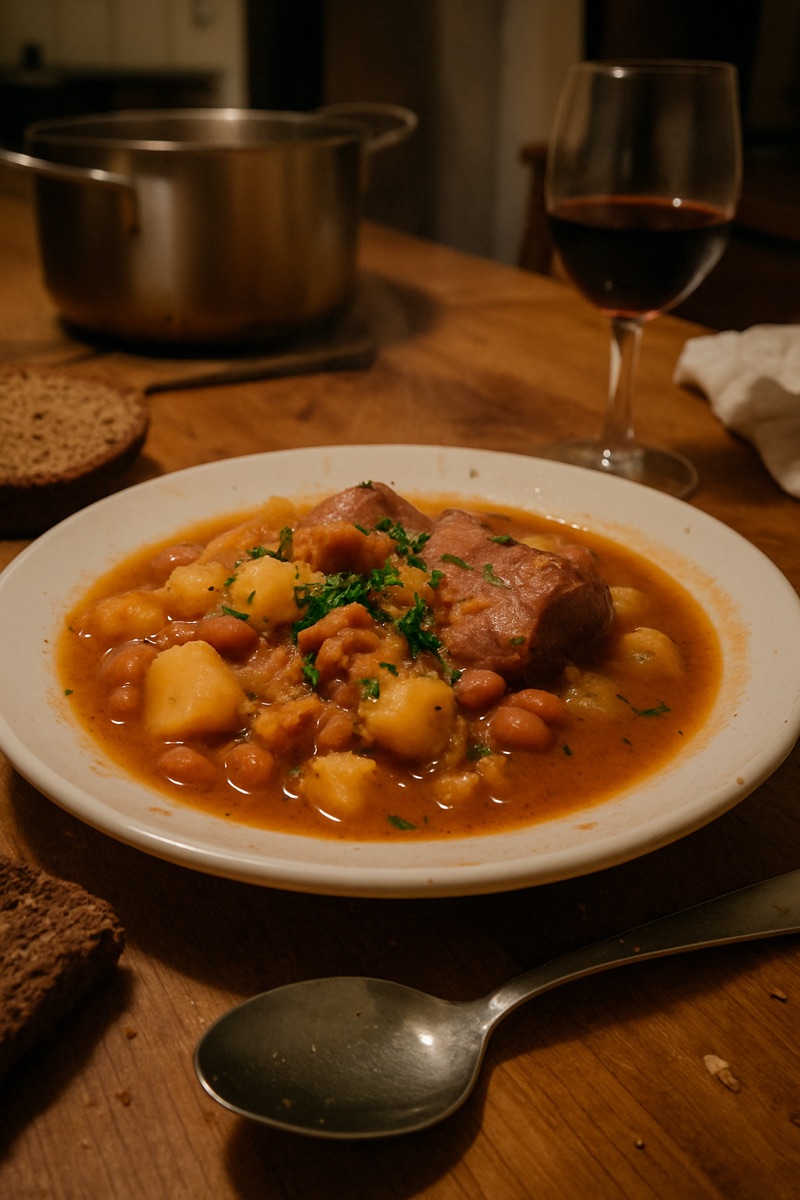
- Jota — A thick stew of sauerkraut, borlotti beans and potatoes with smoked pork, bound with a garlic roux and cooked until the beans and potatoes break down. It is the stew of the Karst and the coast, shared with Trieste, Istria and Friuli, and is eaten hot in winter and cold in summer.
- Bujta repa — A winter dish from Prekmurje, in the north-east: fatty pork from the head, neck and skin cooked with grated sour turnip. It was made at the *koline*, the pig slaughter, and the old rule was that it should be so rich in fat that no steam rose from the plate.
- Pečena gos z mlinci — Roast goose (or duck, turkey or chicken) with red cabbage and mlinci, the feast of St. Martin's Day in November. Mlinci are thin sheets of dried flatbread, broken into pieces and soaked in hot water and the roasting juices.
- Kraški pršut — Karst prosciutto, dry-cured in the traditional way on the Karst plateau in south-western Slovenia and protected at EU level.
Cakes and pastries
- Potica — A festive yeast cake rolled around a walnut filling, or tarragon, raisin or cottage cheese, and baked in a ring mould so every slice shows a spiral. It is baked for Easter, Christmas, weddings and christenings, and has been an EU traditional speciality guaranteed since 2021.
- Prekmurska gibanica — A layered cake from Prekmurje whose fillings of poppy seed, curd cheese, walnut and apple with raisins are stacked between sheets of pastry. The name comes from the dialect word *güba*, a fold. A wedding without gibanica was unthinkable there as early as 1828; it represented Slovenia on Europe Day 2006 and has been protected as an EU traditional speciality since 2010.
- Kremna rezina — The cream slice of Bled: a custard and whipped cream cake on puff pastry, the Slovenian version of the Central European cremeschnitte. The recipe was brought to the Hotel Park in Bled in 1953 by its pastry chef Ištvan Lukačević, who came from Vojvodina in Serbia, and by 2009 the hotel had baked 10 million slices.
Regional cooking in Slovenia
Each corner of the country has its signature. Prekmurje, near Hungary, gives gibanica, bujta repa and pumpkin seed oil. Idrija has its žlikrofi, Upper Carniola its prežganka and buckwheat žganci, Bled its cream slice. The Karst and the coast, near Italy, eat jota, pršut, Istrian olive oil and Piran salt. Typical drinks are cviček wine from Dolenjska, teran from the Littoral, brinjevec juniper brandy and slivovka plum brandy.
Many dishes cross the borders: compare with the traditional food of Croatia and the traditional food of Austria, or explore the wider Balkan kitchen.
Cook Slovenian food at home
Potica, štruklji and jota each have a full recipe with quantities and step-by-step methods in the Copper app. You will find all three on our page dedicated to Slovenian recipes.
The recipes
- Jota🇸🇮 Slovenia · 14 hours and 10 minutes
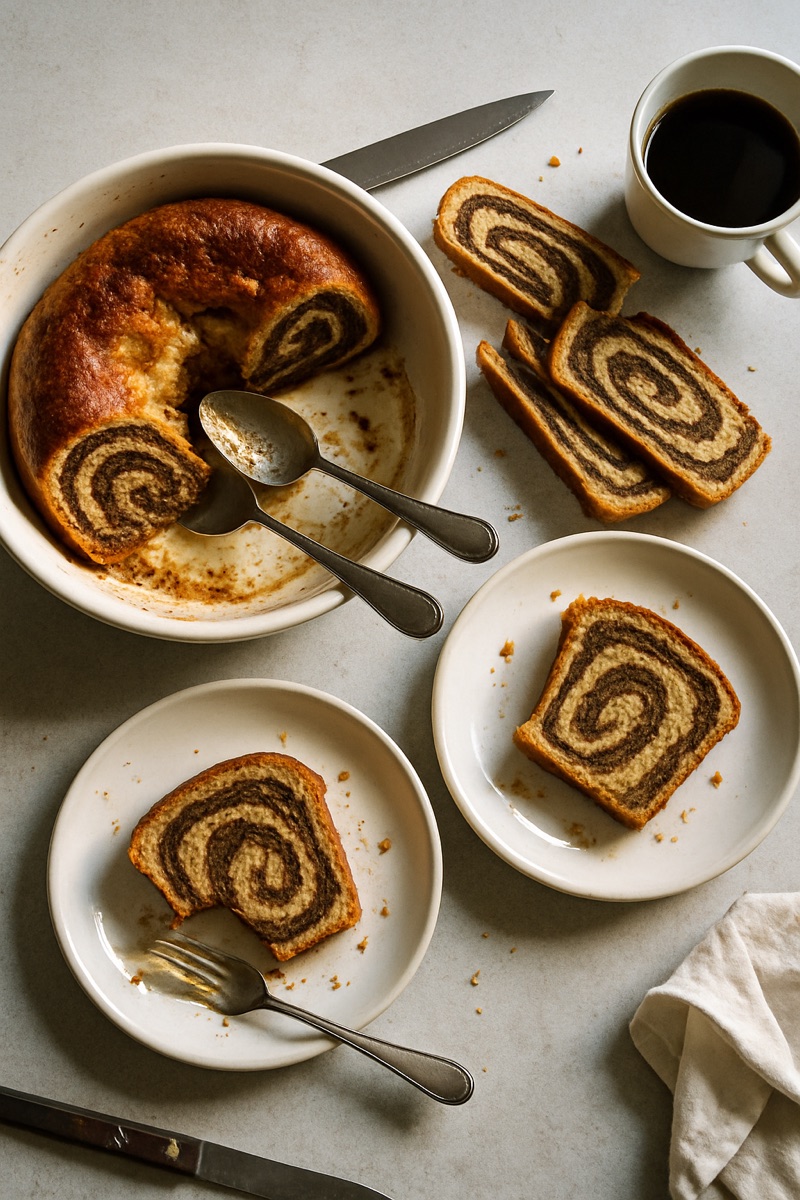 Potica🇸🇮 Slovenia · 4 hours and 50 minutes
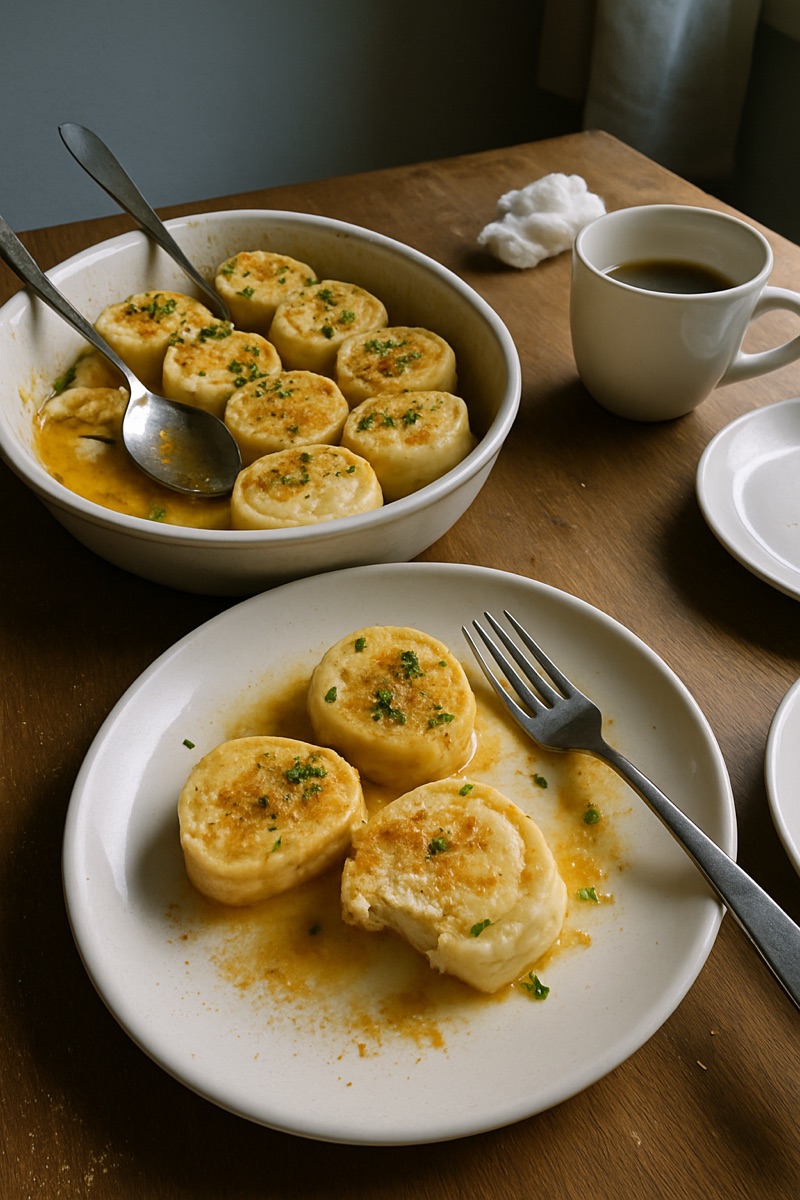 Struklji🇸🇮 Slovenia · 1 hour and 50 minutes
Questions people ask
What is the most famous food in Slovenia?
Potica, the rolled walnut cake, is the best known, followed by štruklji, kranjska klobasa and idrijski žlikrofi. Kremna rezina, the cream slice of Bled, is the most famous dessert for visitors.
What is the national soup of Slovenia?
Prežganka, a browned flour soup with caraway and beaten eggs from Upper Carniola, is often called the Slovenian national soup.
What is a typical Slovenian Sunday lunch?
Beef soup with noodles, then fried potatoes, a fried steak and lettuce. On feast days, a creamy mushroom soup may replace the beef soup.
What do Slovenians eat on St. Martin's Day?
Roast goose, duck, turkey or chicken with red cabbage and mlinci, pieces of thin flatbread soaked in the roasting juices.
What is kranjska klobasa?
A Slovenian smoked pork and bacon sausage sold in pairs linked by a wooden skewer, protected in the EU since 2015. In Australia it is called kransky.
Keep reading
- What is the national dish of Slovenia?
- Traditional food of Albania: 13 dishes to know
- Traditional food of Bosnia and Herzegovina: 13 dishes to know
- Traditional food of Bulgaria: 13 dishes to know
- Traditional food of Croatia: 13 dishes to know
- Traditional food of Greece: 13 dishes to know