 COPPER
Traditional food of Croatia: 13 dishes to know
Croatian food is a cuisine of regions. The coast cooks with olive oil, herbs, fish and seafood under Italian and especially Venetian influence; the interior cooks with lard, paprika, black pepper and garlic under Hungarian, Austrian and Turkish influence. The most emblematic dishes are pašticada, zagorski štrukli, crni rižot and brudet, with Slavonian kulen among the cured meats.
What Croatian food is built on
Croatian cooking is known as a cuisine of the regions: Dalmatia, Dubrovnik, Gorski Kotar, Istria, Lika, Međimurje, Podravina, Slavonia and Zagorje each have their own traditions, though most dishes can be found across the country in local versions. The biggest divide is between the mainland and the coast. The mainland kitchen has Slavic roots and later Hungarian, Austrian and Turkish influences, and cooks with lard, black pepper, paprika and garlic. The coast carries Greek, Roman and Venetian influences and cooks with olive oil, rosemary, sage, bay leaf, oregano, marjoram, cinnamon, clove, nutmeg and lemon or orange peel.
Charcuterie belongs to every region, and soup is part of every Sunday family meal. Croatian menus use a few words worth knowing: *s roštilja* means grilled, *s ražnja* spit-roasted, *na lešo* boiled, and *pod pekom* means cooked under the peka, a bell-shaped lid covered with hot coals. Croatia has no single national dish; read why in our article on the national dish of Croatia.
The coast: Dalmatia, Istria and the islands
- Pašticada — A whole piece of beef larded with garlic, cloves, carrot and bacon, marinated in wine vinegar, then braised for hours with onions, prunes, wine and sweet prošek. It is Dalmatia's dish of holidays, weddings and christenings, served with gnocchi or wide homemade noodles. The oldest known recipe was recorded in Dubrovnik.
- Crni rižot — Black risotto from the Dalmatian coast, coloured with the ink of the same cuttlefish that goes into the pan. The rice cooks in fish stock until done but still firm, and the hard part is cleaning the cuttlefish without bursting the ink sacs.
- Brudet — Also called brodet: a fish stew of Dalmatia, Kvarner and Istria, best made with several kinds of fish such as scorpionfish, conger, monkfish and hake. Everything stews in a single pot with spices, vegetables and wine or vinegar, and it is usually served with polenta, which soaks up the broth.
- Peka — Not a recipe but a method: lamb, veal or octopus with potatoes, placed under a metal bell lid on the hearth and covered with hot coals so it cooks slowly in its own juices.
- Soparnik — A thin pie of Swiss chard, onion, olive oil and salt between two sheets of unleavened dough, baked on the open hearth under embers and ash. It is the best-known speciality of Poljica, between Split and Omiš; its preparation is on Croatia's intangible heritage list, and in 2016 it was entered in the EU register of protected names.
- Fuži — The typical pasta of Istria: strips of dough cut into diamonds, with two opposite corners folded over and pinched together. They are usually served with a mild veal sauce of onion, tomato paste, white wine and broth, or with rooster, wild boar or rabbit sauce.
The interior: Zagorje, Zagreb and Slavonia
Northern Croatia also has žganci, a cornmeal porridge it shares with Slovenia, and sir i vrhnje, fresh cow's cheese with cream, often seen as the quintessential traditional Croatian food.
- Zagorski štrukli — Dough stretched paper-thin across the table, spread with fresh cottage cheese, eggs, sour cream and salt, rolled and cut into pieces, then boiled for about 20 minutes or baked under cream for about 45. They come from Hrvatsko Zagorje and Zagreb, and in 2007 the Ministry of Culture added them to Croatia's intangible cultural heritage list. They are closely related to Slovenian štruklji.
- Purica s mlincima — Roast turkey with mlinci, a speciality of Zagorje and Slavonia. Mlinci are a thin flatbread of flour, salt and water, baked dry, broken into pieces, softened with hot water and then soaked in the fat and juices of the roast.
- Slavonski čobanac — A thick shepherd's stew from Slavonia and Baranja made with several meats, often including game, a large quantity of onions and both sweet and hot paprika, which gives it its deep red colour. It simmers for hours in a large cauldron over an open fire and is a fixture of local festivals.
- Kulen — A Slavonian sausage of lean minced pork seasoned with hot red paprika and garlic but no black pepper, stuffed into a pork casing and weighing around a kilogram. It is smoked for months and air-dried for months more, up to a year in all. Slavonski kulen has protected designation of origin in Croatia; a related kulen is made across the border in Serbia's Vojvodina.
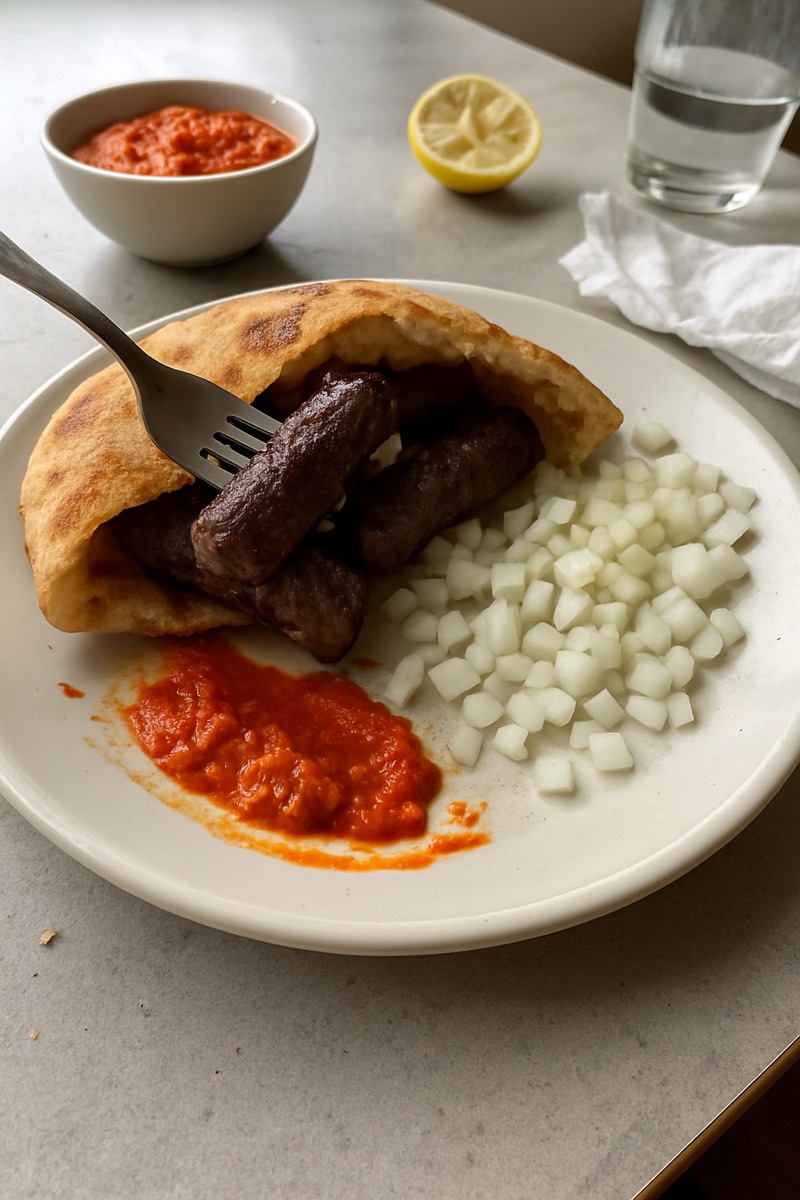
- Ćevapi — Small grilled fingers of minced meat, eaten in flatbread with raw onion, kajmak and ajvar. They are eaten all over Croatia and became a fixture of the Adriatic tourist trade from the 1970s, but they are shared across the former Yugoslavia and are most often called a national dish of Bosnia and Herzegovina and of Serbia.
Sweets and drinks
Coffee houses in the Viennese style are found across the country, and Croatians drink around 5 kg of coffee per person a year. Rakija is the family of spirits, from travarica (grape brandy with herbs) to šljivovica (plum). Prošek is the sweet Dalmatian dessert wine that also goes into pašticada, and wine is often mixed with water: gemišt (white wine and sparkling water) in Zagorje and Međimurje, bevanda (wine and still water) in Dalmatia.
- Fritule — Small fried dough balls flavoured with rum and citrus zest, studded with raisins and dusted with powdered sugar. They are made above all at Christmas.
- Samoborska kremšnita — The custard slice of Samobor, near Zagreb: a puff pastry base and top around a thick layer of mostly custard cream, finished with powdered sugar. The capital's own version, zagrebačka kremšnita, swaps the pastry lid for chocolate icing.
Cook Croatian food at home
Pašticada, crni rižot and ćevapi each have a full recipe with quantities and step-by-step methods in the Copper app. You will find all three on our page dedicated to Croatian recipes. Compare with the traditional food of Slovenia and the traditional food of Hungary, or explore the wider Balkan kitchen.
The recipes
- Cevapi🇭🇷 Croatia · 1 day and 1 hour
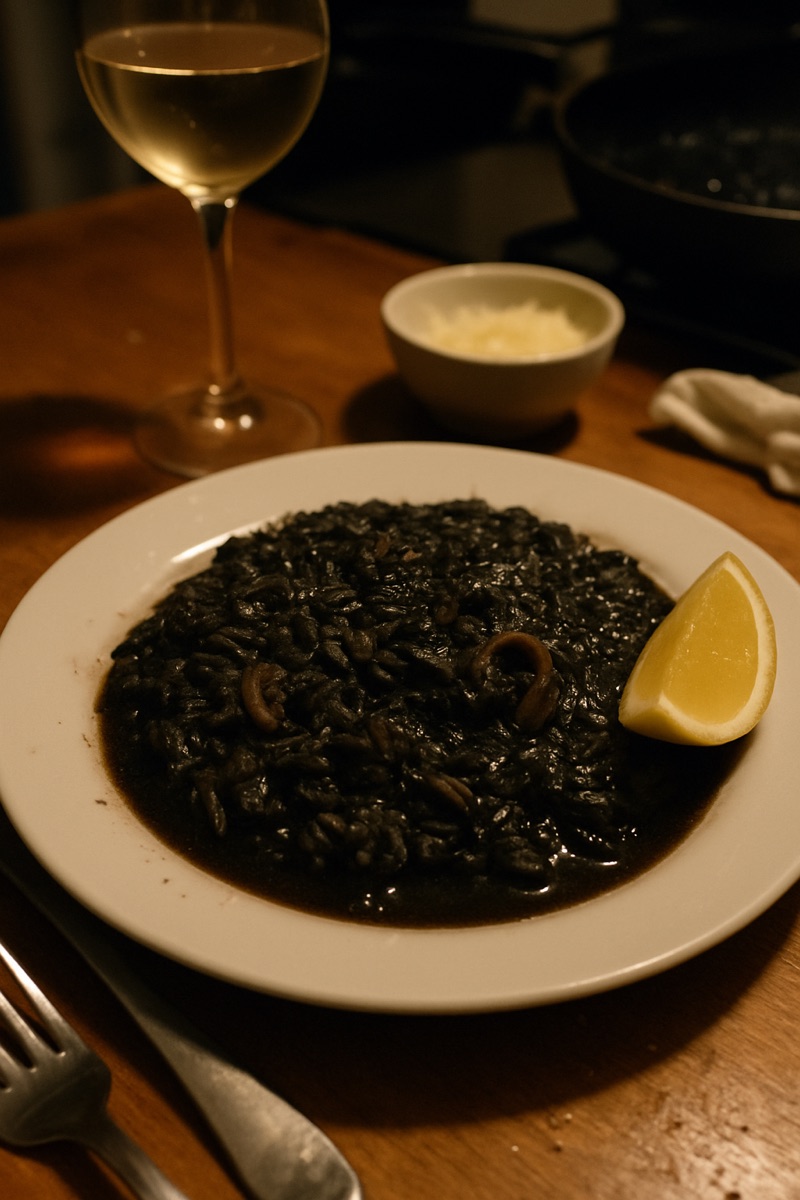 Crni rizot🇭🇷 Croatia · 1 hour and 5 minutes
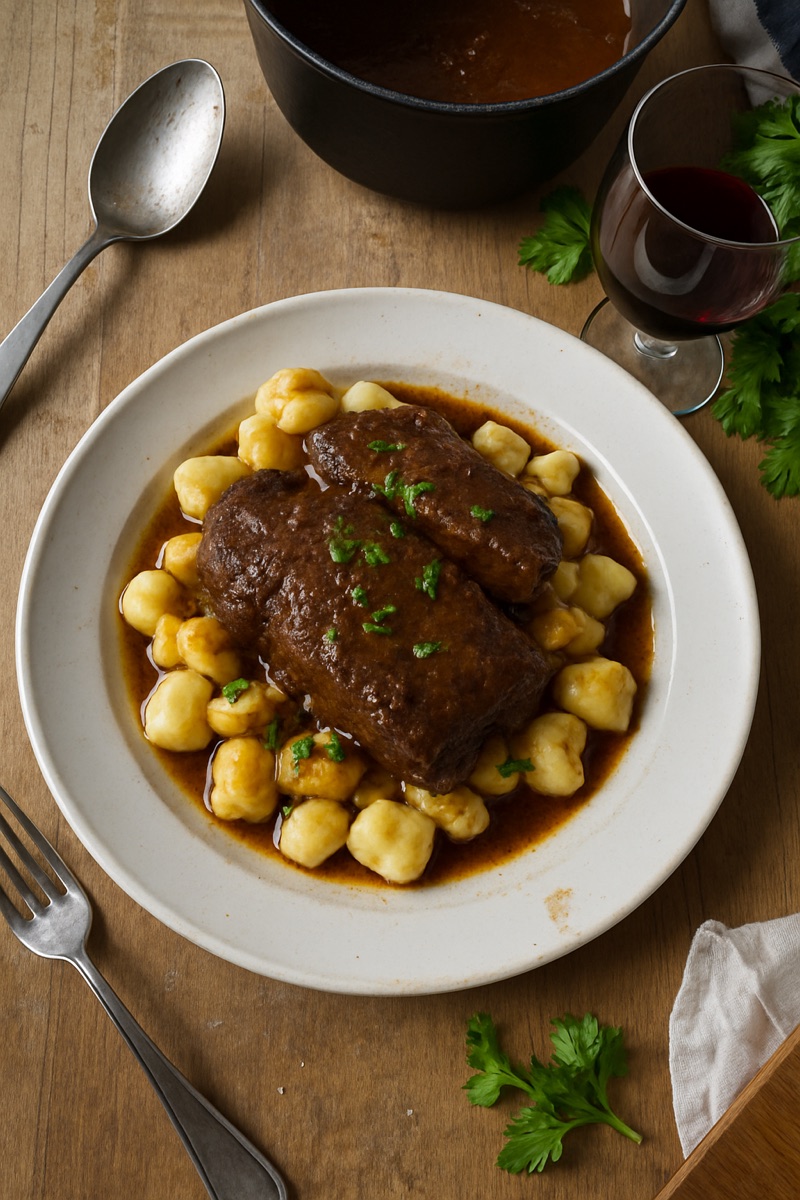 Pasticada🇭🇷 Croatia · 1 day and 4 hours
Questions people ask
What is the most popular food in Croatia?
There is no single answer, because Croatian food varies by region. Pašticada and zagorski štrukli are the two dishes most often named, followed by crni rižot, brudet, peka, kulen and ćevapi.
Is Croatian food spicy?
Not on the coast, where food is seasoned with olive oil, herbs and citrus peel. In the interior, paprika is common: Slavonian dishes such as čobanac, fish paprikaš and kulen can be hot.
What do Croatians eat at Christmas?
Salted cod (bakalar) is very popular on Christmas Eve, either na bijelo with olive oil and garlic or na crveno in a tomato stew. Fritule are the classic Christmas sweet.
Is Croatian food similar to Italian food?
On the coast, yes in part. Centuries of Venetian influence gave Dalmatia and Istria their pasta, risotto and fish stews such as brudet, close to Italian brodetto. Inland, the food is closer to Hungarian and Austrian cooking.
What does pod pekom mean?
It means cooked under the peka: meat, octopus or vegetables are covered with a metal bell lid that is heaped with hot coals, so the food cooks slowly in its own juices.
Keep reading
- What is the national dish of Croatia?
- Traditional food of Albania: 13 dishes to know
- Traditional food of Bosnia and Herzegovina: 13 dishes to know
- Traditional food of Bulgaria: 13 dishes to know
- Traditional food of Greece: 13 dishes to know
- Traditional food of Montenegro: 12 dishes to know