 COPPER
Traditional food of Bosnia and Herzegovina: 13 dishes to know
Bosnian food combines Ottoman, Austro-Hungarian and Balkan cooking. Beef and lamb, beans, cabbage, peppers and kajmak, a soft cream cheese, are the base, and stews cook slowly in very little water with mild spices. The most emblematic dishes are ćevapi in somun bread, burek, the layered stew Bosanski lonac and begova čorba, a festive chicken and okra soup.
What Bosnian food is built on
Bosnian cooking took much of its repertoire from the Ottoman era, then absorbed Central European habits during the Austro-Hungarian period. The everyday ingredients are tomatoes, potatoes, onions, garlic, peppers, cabbage, beans, mushrooms and spinach, with plums and apples from the orchards. Paprika, black pepper, parsley and bay leaf are the usual seasonings, used in small amounts.
The technique is gentle. Most cooked dishes simmer slowly over low heat in a little stock, so the sauce comes from the vegetables' own juices rather than from a roux. Dairy finishes many plates: kajmak, a soft cream cheese, pavlaka, a sour cream, and plenty of soured milk. Beef and lamb are the main meats because of the Muslim Bosniak tradition, while Bosnian Croats and Serbs also eat pork.
Traditional food has its own places to eat it: the ćevabdžinica for grilled meat, the buregdžinica for pies and the aščinica, a canteen serving home-style cooked dishes. Some dishes are still baked under a sač, a metal or earthenware lid covered with embers.
Grill, pies and bread
These are the foods visitors meet first, sold from morning to night in every town:
- Ćevapi — Small grilled rolls of minced beef, served five to ten at a time in somun or lepinja bread with chopped raw onion and often kajmak. Sarajevo, Banja Luka and Travnik each have their own style, and Sarajevski ćevapi received a protected geographical indication in 2024. Serbia also counts ćevapi among its national dishes.
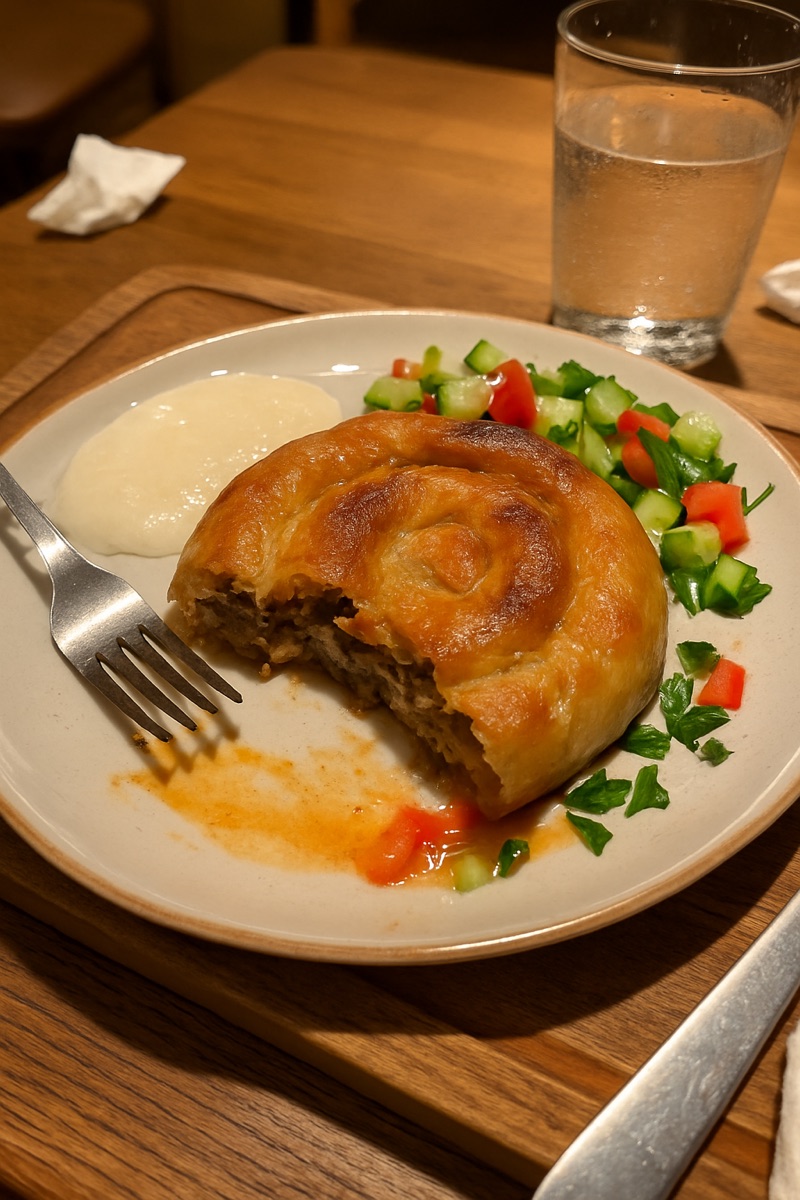
- Burek — Thin pastry rolled around minced meat and onion, coiled into a spiral and baked in a round pan. In Bosnia, burek always means meat; the same spiral with cheese is sirnica, with spinach and cheese zeljanica, with potatoes krompiruša, and the whole family is called pita. It is eaten with cold drinking yogurt.
- Somun — A round, yeast-leavened flatbread from the same family as pita, and the most common bread served with grilled meat such as ćevapi. During Ramadan there is a special version, Ramadan somun, sprinkled with nigella seeds called ćurokot.
Stews, soups and stuffed vegetables
The home kitchen is built on long-simmered pots and on vegetables stuffed with meat and rice:
- Bosanski lonac — Large pieces of beef and lamb layered in a deep pot with cabbage, potatoes, tomatoes, carrots, parsley, garlic and whole peppercorns, with only a splash of water. It was first cooked in ceramic pots in the fireplace, and it is one of the three dishes most often named as the national dish.
- Begova čorba — Bey's soup, made with chicken, root vegetables and dried okra, thickened at the end with egg yolks and sour cream and sharpened with lemon. It dates from the Ottoman period and is served to guests at weddings and at Eid and Ramadan meals.
- Grah — The everyday bean stew: white beans simmered with smoked beef, then thickened with a roux of garlic, flour and paprika that turns the broth red. It is served very hot with bread.
- Sogan-dolma — Whole onions boiled, opened into layers and filled with minced beef and rice, then simmered in a paprika sauce and served with sour cream. With stuffed peppers, courgettes and aubergines in the same pot, it becomes šarena dolma.
- Sarma — Minced meat and rice rolled in leaves of soured cabbage, sometimes in vine leaves, and simmered slowly. The soured leaves give the dish its sharp taste.
- Meso ispod sača — Lamb, veal or goat with potatoes cooked under a sač, a bell-shaped lid heaped with hot coals and ashes. The steam stays inside, so the meat stays juicy and picks up a light smoky flavour; bread and pies are baked the same way.
Sweets and Bosnian coffee
Bosnian sweets come mostly from the Ottoman kitchen, and they are rarely eaten without coffee:
- Baklava — Thin layers of pastry with chopped walnuts, baked and soaked in syrup. Ružica is a rolled cousin with raisins, baked in small spirals.
- Tufahija — A whole apple poached in sugar water, stuffed with a walnut filling, and served in a tall glass with its syrup and a cap of whipped cream. It usually comes with coffee.
- Hurmašice — Small date-shaped pastries with a ridged surface, soaked in syrup. Families bake them for the Eid holidays, known in Bosnia as Bajram.
- Bosnian coffee — Strong coffee in the Ottoman style, drunk from a fildžan, a small cup without a handle. It is always served with a piece of rahatlokum, Turkish delight, on the side.
Regional differences
Herzegovina, in the warmer south, is wine country: Žilavka and Blatina come from the area around Mostar, Čitluk, Ljubuški and Stolac. The region also ages cheese in a sheep's skin, sir iz mišine. In western Bosnia, Livno gives its name to a dry yellow cheese, and the villages of Mount Vlašić in central Bosnia make a salty white cheese. Bosanska Krajina, in the north-west, is known for kljukuša, grated potatoes mixed with flour and water and baked. Across the country, plums and apples become rakija, the local fruit brandy.
Cook Bosnian food at home
Ćevapi, Bosanski lonac and burek all compete for the title of national dish of Bosnia and Herzegovina; our article sets out each claim and the dispute with Serbia over ćevapi. Bosnian cooking shares much with the rest of the Balkans; compare it with the traditional food of Montenegro, its neighbour to the south.
Burek, grah and sogan-dolma each have a full recipe, with quantities and step-by-step methods, in the Copper app. You will find them on our page dedicated to Bosnian recipes.
The recipes
- Burek🇧🇦 Bosnia and Herzegovina · 1 hour and 20 minutes
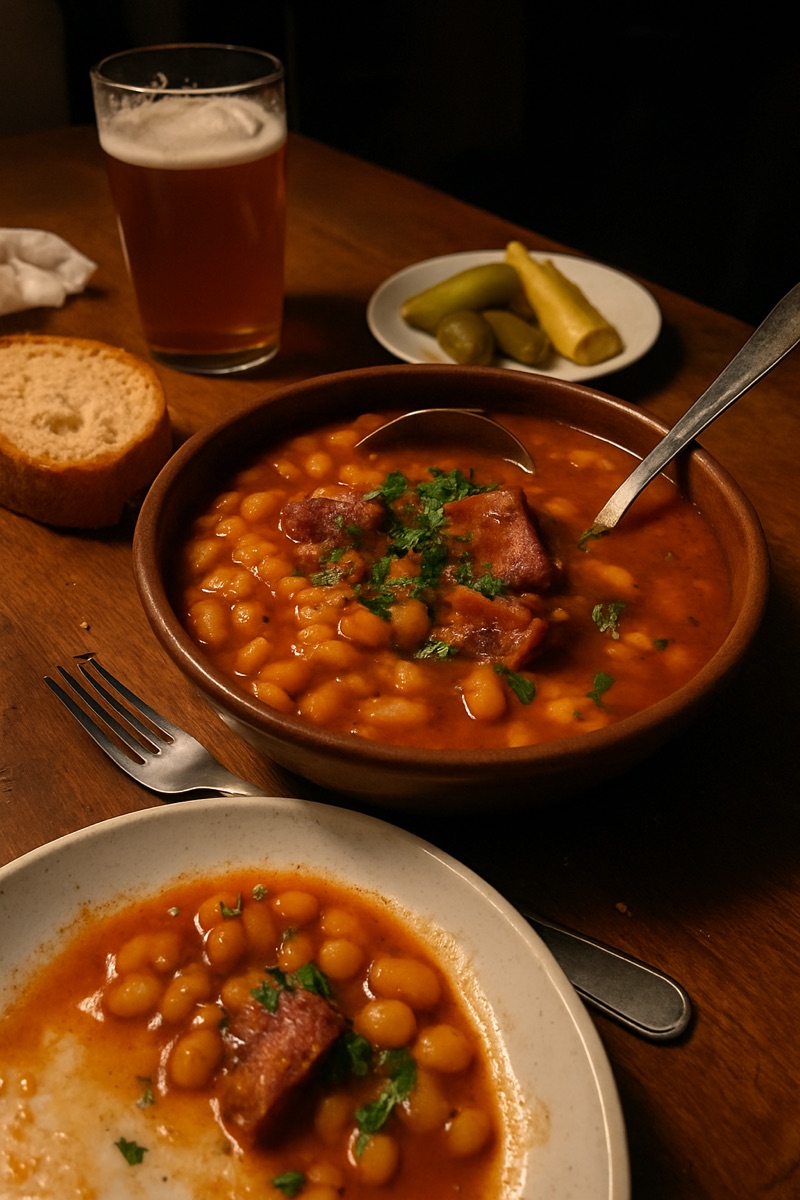 Grah🇧🇦 Bosnia and Herzegovina · 14 hours and 25 minutes
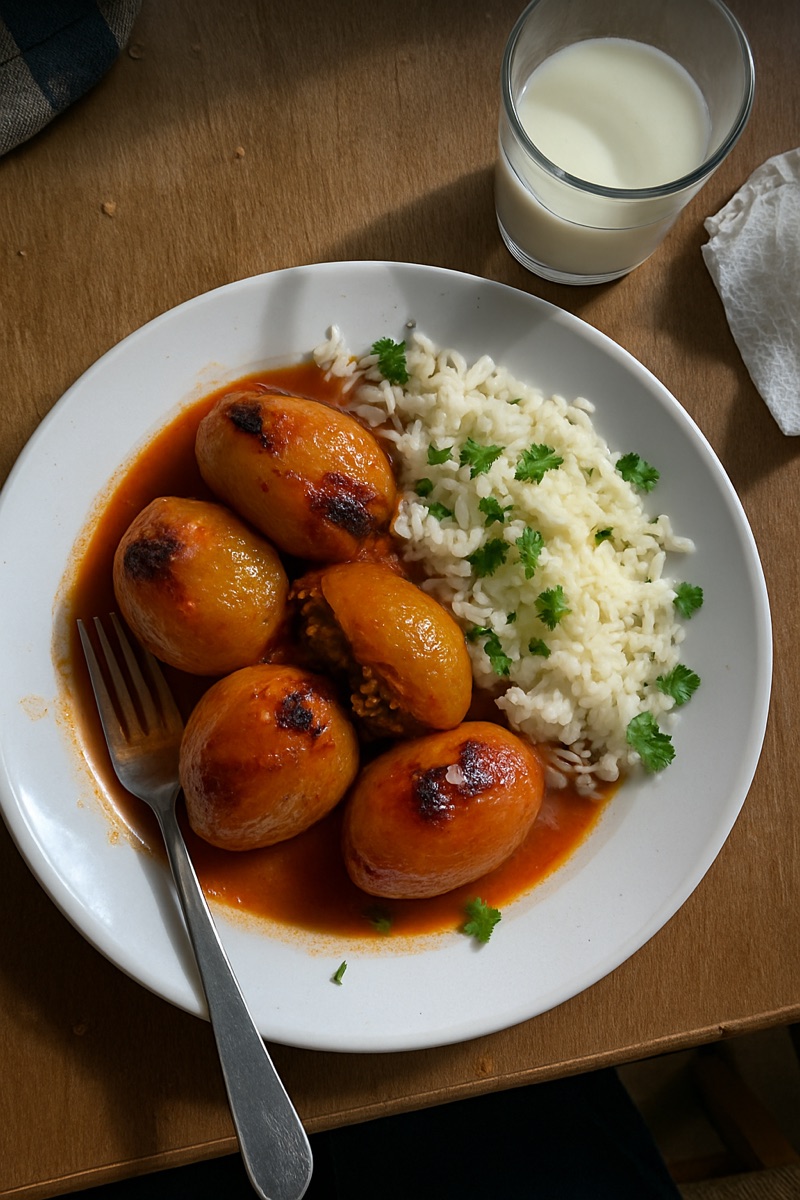 Sogan-dolma🇧🇦 Bosnia and Herzegovina · 2 hours and 15 minutes
Questions people ask
What is the most popular food in Bosnia and Herzegovina?
Ćevapi and burek are the most popular, eaten everywhere from street counters to family tables. Bosanski lonac, begova čorba and grah are the best-known home-cooked dishes.
Are ćevapi from Bosnia or Serbia?
Both countries claim them and both count them among their national dishes. Sarajevski ćevapi received a protected geographical indication in Bosnia and Herzegovina in 2024, while Serbia points to the Leskovac style.
Is Bosnian food spicy?
No. Bosnian cooks use several spices but in small amounts; paprika, black pepper, parsley and bay leaf are the most common. Most dishes are mild and slow-cooked.
Do people in Bosnia eat pork?
Bosniaks, who are mostly Muslim, traditionally cook with beef and lamb, which is why ćevapi and burek are made with beef. Bosnian Croats and Serbs also eat pork.
What do people drink in Bosnia and Herzegovina?
Bosnian coffee with rahatlokum is the everyday drink. Rakija is distilled from plums and apples, Herzegovina makes Žilavka and Blatina wines, and ayran, kefir and elderflower juice are common soft drinks.
Keep reading
- What is the national dish of Bosnia and Herzegovina?
- Traditional food of Albania: 13 dishes to know
- Traditional food of Bulgaria: 13 dishes to know
- Traditional food of Croatia: 13 dishes to know
- Traditional food of Greece: 13 dishes to know
- Traditional food of Montenegro: 12 dishes to know