 COPPER
What is the national dish of Bosnia and Herzegovina?
Bosnia and Herzegovina has no official national dish. Three are named most often: ćevapi, small grilled rolls of minced beef served in somun flatbread with chopped onion; Bosanski lonac, meat and vegetables layered in a deep pot and stewed; and burek, thin pastry rolled around minced meat and coiled into a spiral. Serbia also counts ćevapi among its national dishes.
Three candidates, no official title
No law or decree in Bosnia and Herzegovina names a national dish. Wikipedia's list of national dishes gives three for the country: Bosnian pot (Bosanski lonac), ćevapi and burek. Each has its own backing. Wikipedia's article on Bosnian pot, citing reference books, describes it as a national dish. The Wikipedia article on ćevapi says they are "considered a national dish of Bosnia and Herzegovina and Serbia". In 2012, Lonely Planet put the Bosnian burek in its book The World's Best Street Food.
Because two of the three are also eaten, and claimed, in neighbouring countries, we set out the claims below with their sources rather than pick a winner.
Ćevapi: what they are and who claims them
Bosnian ćevapi are made from two types of minced beef, mixed by hand and shaped through a funnel. They come five to ten at a time, in a somun or lepinja flatbread, with chopped onion and often kajmak, a soft cream cheese. Several local styles are recognised:
- Sarajevo: finger-shaped rolls in a dry somun.
- Banja Luka: four rolls joined into a flat block, in a lepinja dipped in meat-fat sauce.
- Travnik: a Sarajevo-like shape with the softened bread.
- Tuzla and Zenica: their own local variants.
The ćevapi origin dispute
In August 2024, "Sarajevski ćevapi", defined as fresh beef and salt made in Sarajevo Canton, became the eighth food product in Bosnia and Herzegovina to receive a protected geographical indication. In the same year an association in Banja Luka applied to protect the "Banjalučki ćevap".
Serbia has its own claim, centred on the Leskovac style, which mixes pork and beef. See our article on the national dish of Serbia. Historians who have studied the quarrel are cautious about all sides. Beštić-Bronza and Bronza argue that the "ancient" local traditions of Sarajevo, Banja Luka and Travnik rarely go back further than the 1960s. Wikipedia's history of the dish places it in the wider köfte and kebab family that spread through the Balkans under Ottoman rule, and the word ćevap itself comes from the Ottoman Turkish kebap.
The quarrel is not new. In the 1920s the Serbian writer Branislav Nušić presented ćevapi as a unifying Yugoslav emblem, comparable to Hungarian goulash or Italian pasta. From the 1970s, ćevapi became a fixture of tourism on the Yugoslav Adriatic coast, and migrant workers carried them into central Europe. Today they are eaten wherever there are large communities from the former Yugoslavia, which is one reason several countries see them as their own. On the Adriatic coast they came to rival the fish menu with visitors: see the national dish of Croatia.
Bosanski lonac and Bosnian burek
Bosanski lonac is a stew built in layers. Beef, lamb, cabbage, potatoes, tomatoes and carrots are cut into large pieces and stacked in a deep pot with parsley, garlic and whole peppercorns, with only 1 to 2 dl of water. It has been on the tables of rich and poor alike for centuries: the wealthy put in more meat, the poor used whatever they had. It was first cooked in ceramic pots in a fireplace or a pit in the ground. The Bosnian-language Wikipedia notes that food historians think it may go back to medieval Bosnia, as a working dish of miners.
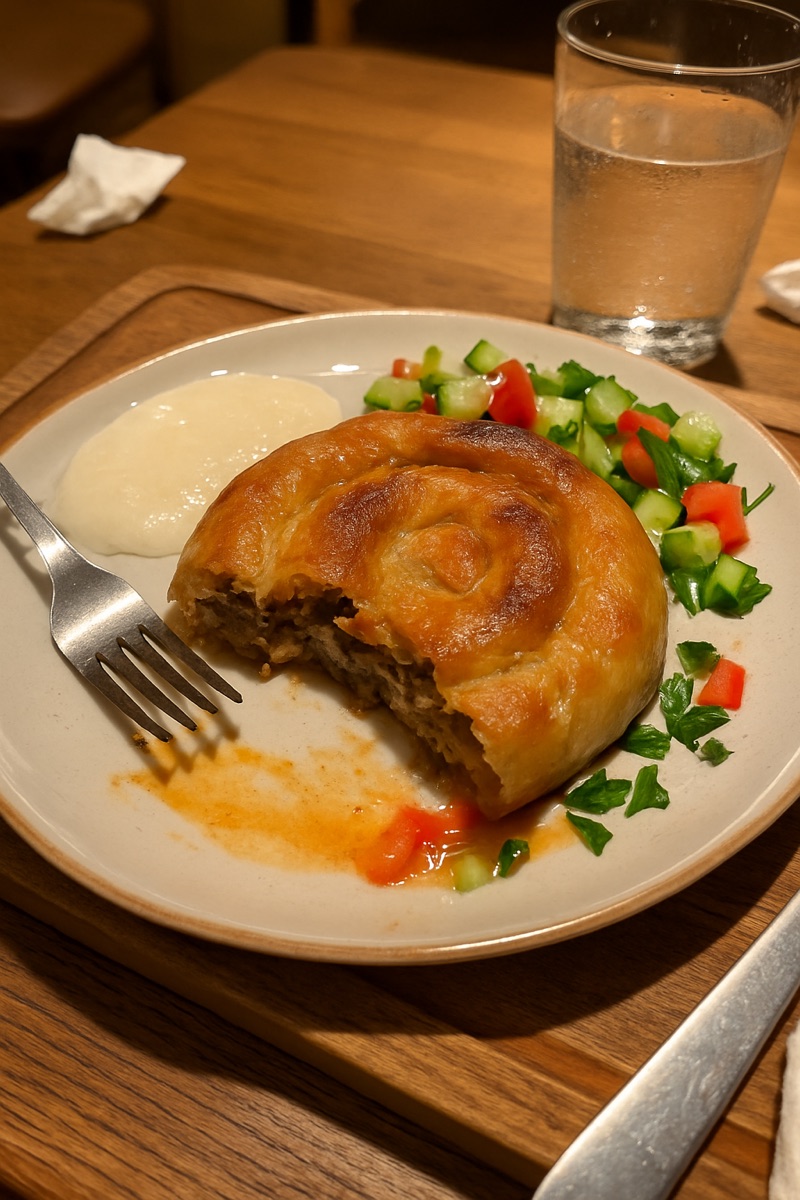
Burek, in Bosnia, means meat and nothing else. The same spiral filled with cheese is sirnica, with spinach and cheese zeljanica, with potato krompiruša, and the whole family is called pita. In our Bosnian burek recipe the minced beef goes in raw with onion, so its juices soak the pastry. The pie bakes at 200 °C for 35 to 40 minutes, gets a splash of hot water, and is eaten with cold drinking yogurt. The origin of börek as a whole is unclear, with many cultures claiming it.
Other dishes to know from Bosnia and Herzegovina
Grah is the everyday bean stew. White beans simmer with smoked beef for about 1 h 30, then a roux of garlic, flour and paprika called zaprška turns the broth red and thick. The salt goes in only at the end, because salting early keeps the beans hard. It is served very hot, with parsley and plenty of black pepper, and bread on the side.
Sogan-dolma are whole onions boiled for 5 to 7 minutes, opened into layers, filled with minced beef and rice, then simmered for 45 to 60 minutes in a paprika sauce and served with sour cream.
You will find all three dishes, with step-by-step methods, on our page about the food of Bosnia and Herzegovina. For the neighbouring kitchens, see our guide to Balkan food.
The recipes
- Burek🇧🇦 Bosnia and Herzegovina · 1 hour and 20 minutes
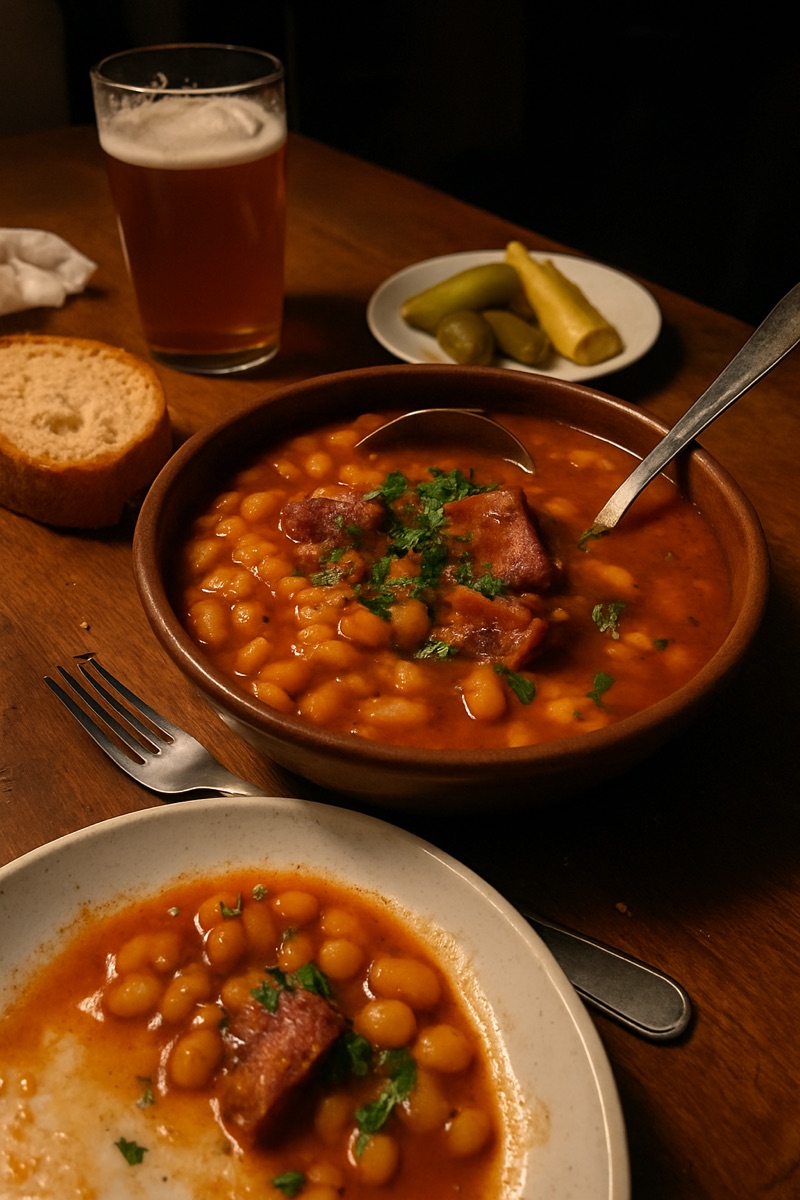 Grah🇧🇦 Bosnia and Herzegovina · 14 hours and 25 minutes
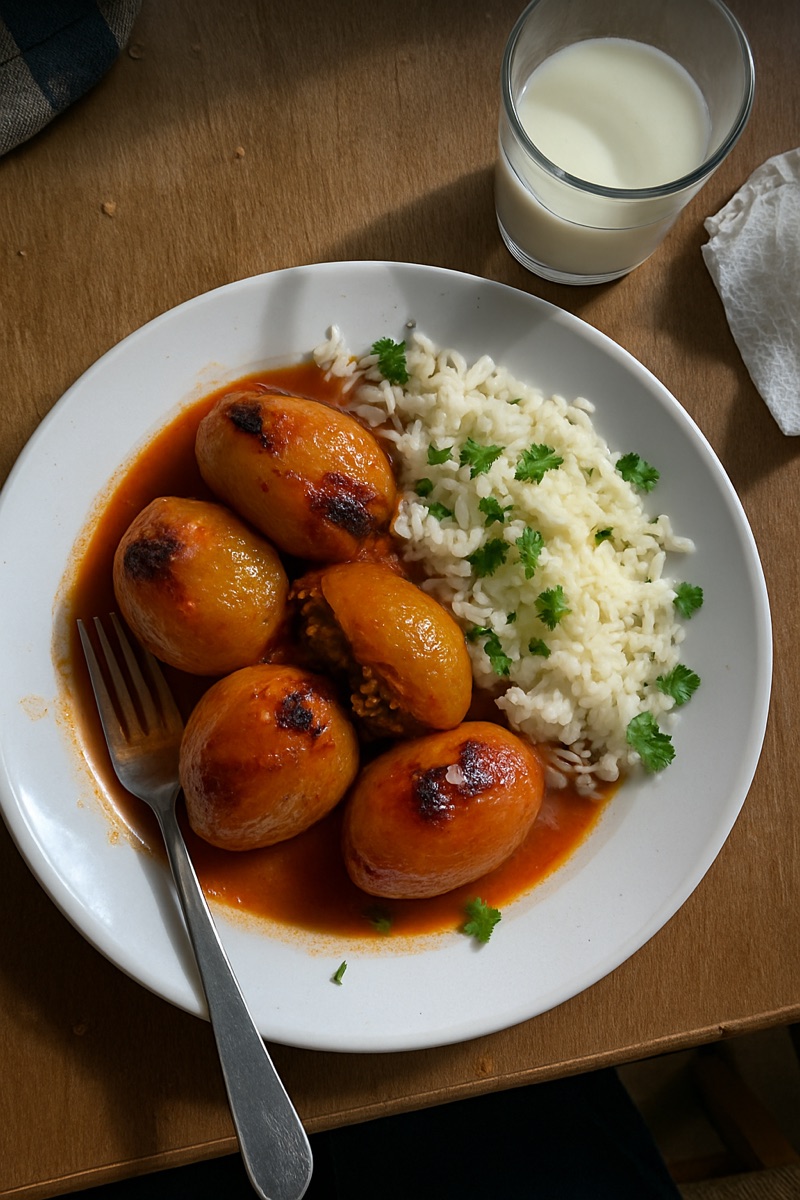 Sogan-dolma🇧🇦 Bosnia and Herzegovina · 2 hours and 15 minutes
Questions people ask
Are ćevapi from Bosnia or Serbia?
Both countries claim them and both count them among their national dishes. Sarajevo ćevapi received a protected geographical indication in Bosnia and Herzegovina in 2024, while Serbia points to the Leskovac style. Historians note the dish belongs to the wider Ottoman kebab family.
What is served with ćevapi?
Ćevapi are served five to ten at a time in somun or lepinja flatbread, with chopped onion and often kajmak. Ajvar is an optional extra.
What is the difference between burek and pita in Bosnia?
In Bosnia, burek always has a meat filling. The same spiral with cheese is sirnica, with spinach and cheese zeljanica, with potato krompiruša, and all of them together are called pita.
What is in Bosanski lonac?
Bosanski lonac layers large pieces of beef and lamb with cabbage, potatoes, tomatoes and carrots, plus parsley, garlic and whole peppercorns, with very little water.
Does Bosnia and Herzegovina have an official national dish?
No. Ćevapi, Bosanski lonac and burek are all named as national dishes, but none has official status.
Keep reading
- Traditional food of Bosnia and Herzegovina: 13 dishes to know
- What is the national dish of Albania?
- What is the national dish of Bulgaria?
- What is the national dish of Croatia?
- What is the national dish of Greece?
- What is the national dish of Montenegro?