 COPPER
Traditional food of Albania: 13 dishes to know
Albanian food is Mediterranean at its base: olive oil, garlic, onions, oregano, yogurt and fresh curd cheese, with Ottoman and Balkan dishes layered on top. Meat is baked slowly in earthenware, and pastry is rolled paper-thin for pies. The most emblematic dishes are tavë kosi, lamb baked under yogurt, fërgesë, peppers with curd cheese, byrek and flia.
What Albanian food is built on
Albanian cooking belongs to the Mediterranean diet. Olive oil is the oldest and most common cooking fat, produced since antiquity along the coast, and fresh vegetables, fruit, fish and dairy carry most meals. Garlic and onions go into almost every dish: Albania ranks fifth in the world for onion consumption per head. Oregano, mint and thyme are the everyday herbs, and the country is one of the world's main producers of oregano and sage.
History added a second layer. After the Ottoman conquest in the 15th century, byrek, baklava, kebabs and rice pilaf became staples, along with spices such as cinnamon and cloves. During the communist period (1945 to 1990), rationing and the promotion of a single, thrifty national cuisine blurred regional cooking; since then, Albanians have been reviving recipes the regime had discouraged.
Bread is present at every meal. The everyday phrase for going to eat a meal translates literally as going to eat bread, and hospitality is summed up as "bread, salt and heart" (bukë, kripë e zemër). Lunch is traditionally the biggest meal of the day, often a gjellë, meat cooked slowly with vegetables, served with a salad of tomatoes, cucumbers, peppers, onions and olives.
Main dishes
Albania has no official national dish, but the first two below are the ones Albanians name most often.
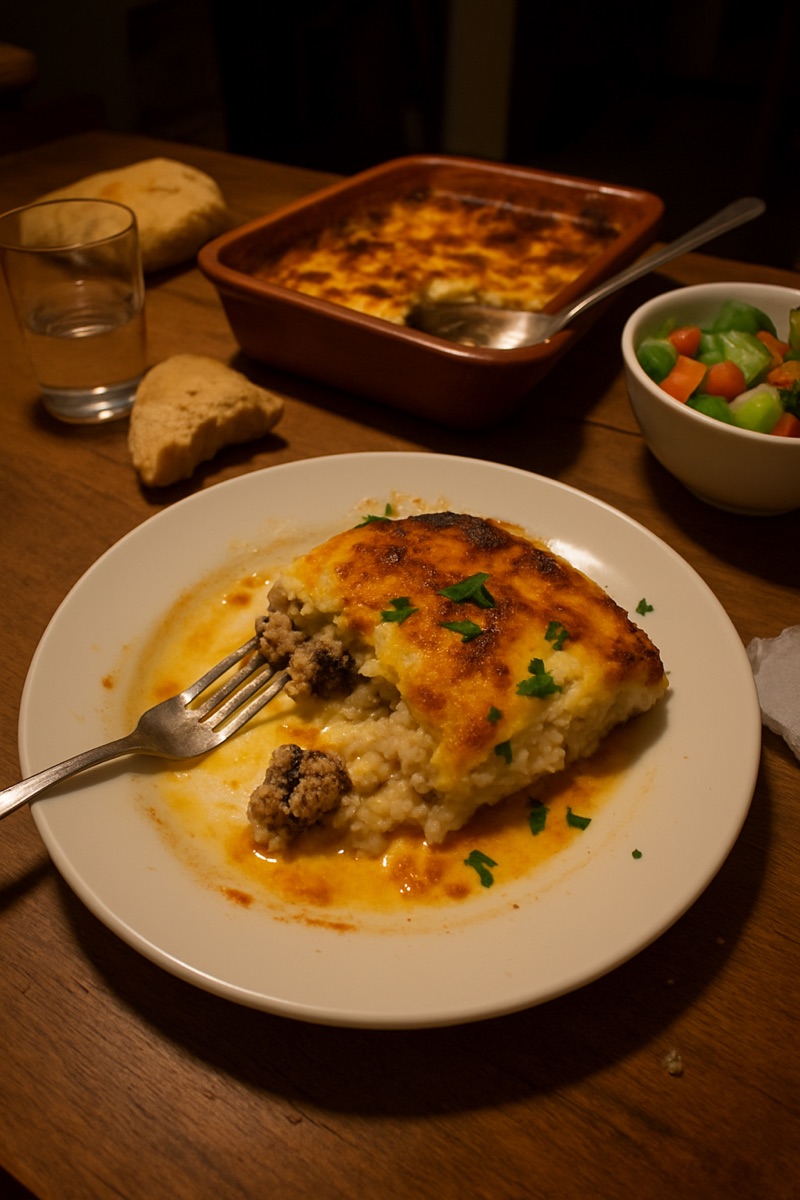
- Tavë kosi — Lamb or mutton and rice baked under a thick layer of yogurt beaten with eggs, butter and flour, which sets like a savoury custard and browns in the oven. It is thought to come from Elbasan, hence its other name, tavë Elbasani, and it is the dish most often cited as Albania's national dish.
- Fërgesë — Peppers, tomatoes and onion cooked down in olive oil, then bound with gjizë, a salted curd cheese, and finished in the oven in a clay dish. It is the best-known dish of Tirana and central Albania; the version with calf liver is called fërgesë Tirane, and a meatless summer version is served as a side to grilled meat.
- Qofte — Meatballs of minced meat with herbs and spices, fried, or cooked in tomato sauce with vegetables or beans. Small shops called qofteri serve them with beer across the country.
- Fasule — Large white beans (fasule plaqi) baked in an earthenware pot with tomatoes, onions, peppermint, oregano and bay leaves. It is served as a starter or a side dish, and it needs nothing more than the beans, the pot and a slow oven.
Pies: byrek, flia and lakror
Albanians bake pies at home and buy them on the street. The three below differ in dough, region and occasion:
- Byrek — Thin layers of hand-rolled dough around spinach and cheese, minced meat, leeks or tomato and onion. Byrektore, the street bakeries, sell it in small triangles, while byrek shtëpie, house byrek, is baked as one large round pie and cut into pieces; in Kosovo and some regions it is called pite.
- Flia — A dish of northern Albania and Kosovo made of many crêpe-like layers of batter, each brushed with cream and baked under a saç, a domed metal lid covered with embers. It can take up to four hours, and 17 March, during the spring festival of Verëza, is kept as Flia Day.
- Lakror — A pie with layers of dough even thinner than byrek, traditionally cooked on embers under a metal lid. Common fillings are leeks with gjizë, or tomato and onion; the name comes from lakër, cabbage or leafy greens. It is a speciality of the south, above all Korçë, which holds an annual Lakror Festival.
Soups, sweets and raki
Many Albanian sweets are tied to a date in the calendar, and the soups follow the seasons:
- Trahana — Wheat flour and yogurt worked into small chunks, dried and crushed, then cooked into a sour soup served with cubes of bread. It is a common breakfast in rural Albania, and the same dried base is known across the eastern Mediterranean.
- Tarator — A cold mix of yogurt, cucumber, garlic, olive oil and salt, eaten in the hot summer months. Depending on how much water goes in, it is a soup or a dip, and it is served with fried or grilled vegetables and seafood.
- Baklava — Thin pastry layered with walnuts or hazelnuts and soaked in syrup, baked on large trays and cut into many shapes. It is made for the religious holidays of Muslims, Catholics and Orthodox Christians alike.
- Ballokume — A cookie from Elbasan made with corn flour, butter, sugar and eggs, kneaded hard, traditionally in a copper bowl. It is baked for Dita e Verës, Summer Day, on 14 March.
- Trileçe — A sponge cake soaked in three milks and topped with caramel, adapted from the Latin American tres leches cake. One theory credits Latin American soap operas on Albanian television, and from Albania the cake spread to Turkey and the rest of the Balkans.
- Raki — The national spirit, distilled most often from grapes, but also from plums or blackberries. In the south, raki rigoni is flavoured with oregano; Albania is also a wine-drinking country with a wine history going back thousands of years.
Regional differences
Albanian cooking is usually divided into three regions. The north is mountainous and rural: meat, maize, beans, potatoes and cabbage, garlic in almost everything, and dishes such as flia shared with Kosovo. The centre, the flattest and most fertile part, gives Tirana its fërgesë and Elbasan its tavë kosi and ballokume. The south lives on dairy, olive oil and citrus fruit, with lakror in Korçë and dishes such as groshët and shqeto from the Lunxhëri area near Gjirokastër.
On the coast, Durrës, Vlorë and Sarandë cook calamari, octopus, red mullet and sea bass, usually grilled and dressed only with lemon and olive oil. Inland, the lakes of Shkodër, Ohrid and Prespa supply freshwater fish, including the Ohrid trout, a species found only in Lake Ohrid and its rivers.
Cook Albanian food at home
Tavë kosi, fërgesë and flia are all named as the national dish of Albania; our article explains why there is no single official answer. Albania shares its pies, grills and yogurt dishes with the rest of the Balkans: compare it with the traditional food of Greece to the south and the traditional food of North Macedonia to the east.
Tavë kosi, fërgesë and byrek each have a full recipe, with quantities and step-by-step methods, in the Copper app. You will find them on our page dedicated to Albanian recipes.
The recipes
- Tave kosi🇦🇱 Albania · 3 hours and 5 minutes
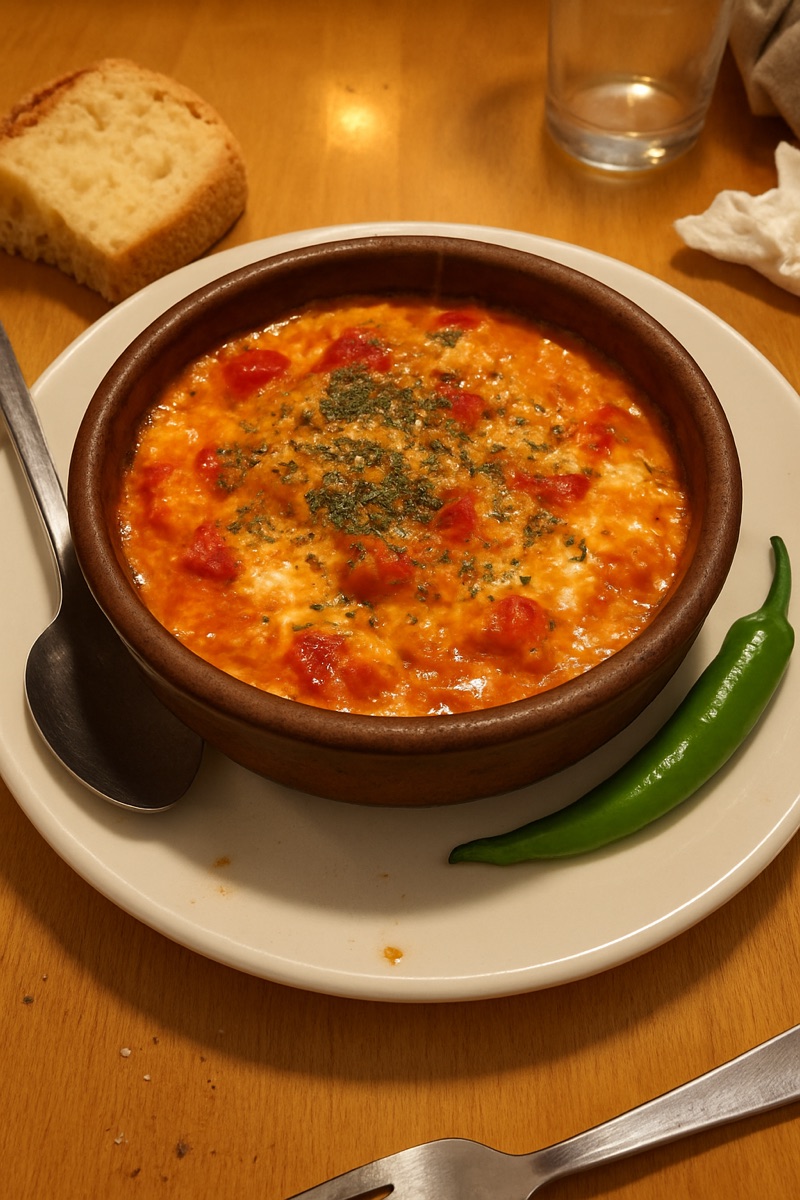 Fergese🇦🇱 Albania · 1 hour
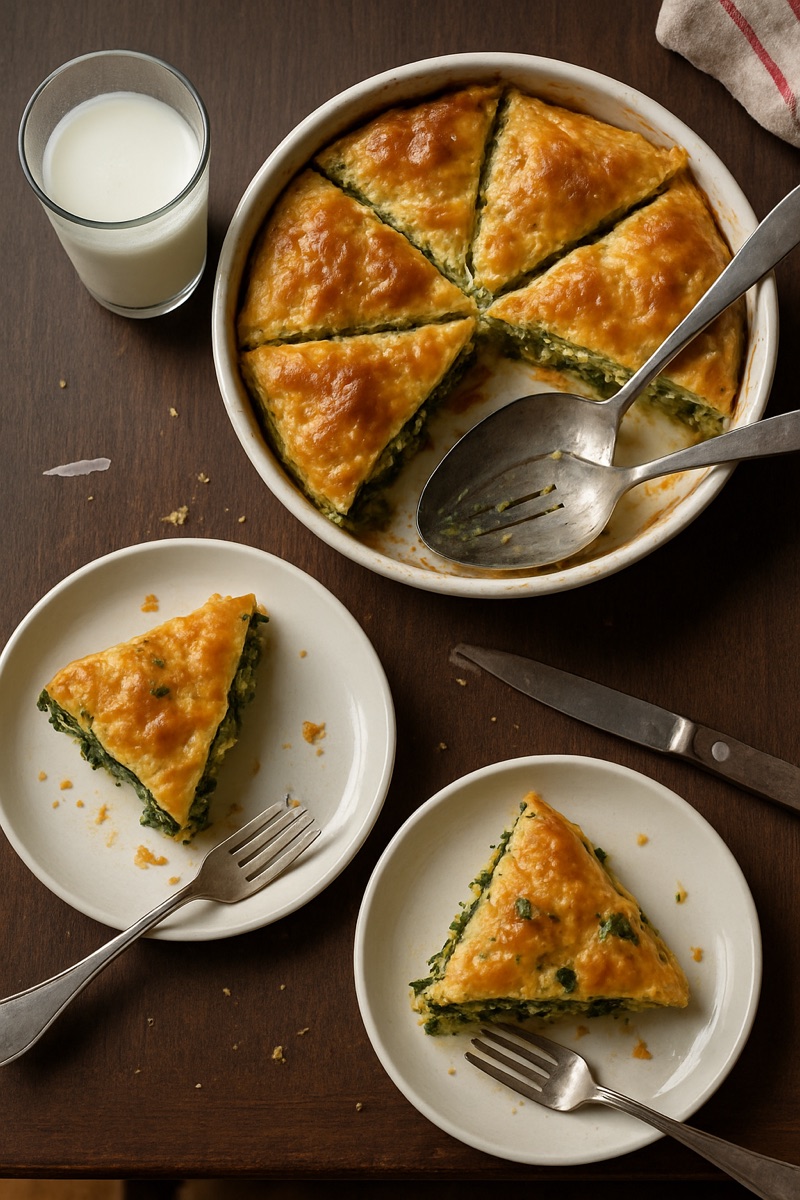 Byrek🇦🇱 Albania · 1 hour and 45 minutes
Questions people ask
What is the most popular food in Albania?
Tavë kosi, fërgesë and byrek are the dishes most associated with Albania, along with flia in the north. Byrek is the everyday one, sold in triangles by street bakeries across the country.
What do Albanians eat for breakfast?
Breakfast is usually light: bread with butter, cheese, jam or yogurt, olives, and coffee, tea or milk. In many rural areas, trahana soup made from wheat and fermented milk is also eaten in the morning.
Is Albanian food spicy?
Generally not. Chili is used, but most dishes take their flavour from garlic, onions, olive oil and herbs, especially oregano and mint, rather than from heat.
What do Albanians eat on New Year's Eve?
In many families the New Year dish is gjel deti me përshesh: a turkey boiled, then roasted, and served with përshesh, pieces of bread baked in the turkey broth with mint and spices.
What is the national drink of Albania?
Raki, a spirit usually distilled from grapes, is considered Albania's national drink. Plum and blackberry raki are also made, and in the south raki rigoni is flavoured with oregano.
Keep reading
- What is the national dish of Albania?
- Traditional food of Bosnia and Herzegovina: 13 dishes to know
- Traditional food of Bulgaria: 13 dishes to know
- Traditional food of Croatia: 13 dishes to know
- Traditional food of Greece: 13 dishes to know
- Traditional food of Montenegro: 12 dishes to know