 COPPER
Traditional food of North Macedonia: 12 dishes to know
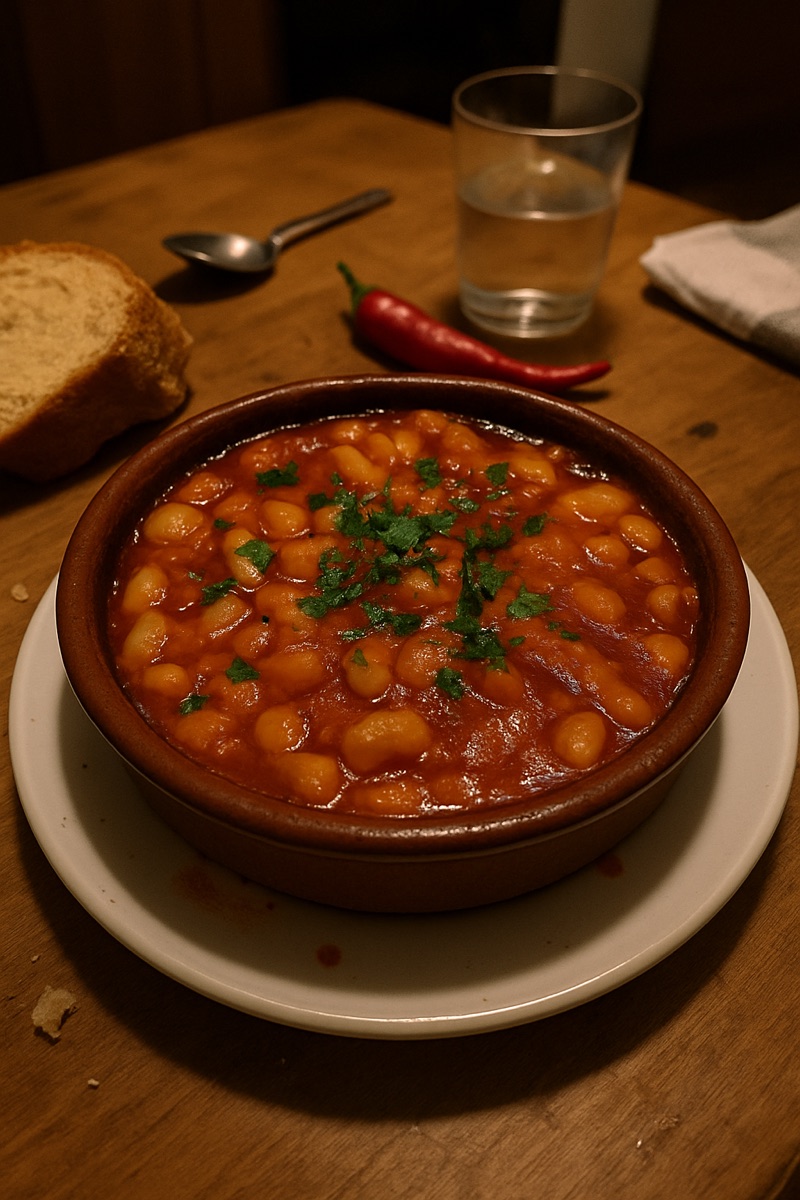
Macedonian food is Balkan cooking with a strong Ottoman base: peppers, beans, tomatoes, aubergines, sheep's cheese and yogurt, with meat and vegetables baked slowly in earthenware pans. The most emblematic dishes are tavče gravče, beans baked in a clay pan and the national dish, ajvar, a roasted red pepper relish, selsko meso and the cheese-topped šopska salata.
What Macedonian food is built on
North Macedonia's warm summers suit vegetables, herbs and fruit, and the kitchen shows it. Peppers are everywhere: roasted, stuffed, dried on strings, ground into spice or cooked down into relishes. Beans, potatoes, cabbage, aubergines, courgettes and tomatoes fill the rest of the plate, with grapes, plums, quinces, cherries and watermelons from the orchards and fields.
Ottoman and wider Balkan cooking gave the country its pies, grills, stuffed vegetables and syrup-soaked sweets. Dairy is a point of pride: kashkaval, a hard sheep's cheese from the Šar Mountains, bieno sirenje, a cheese from the Mariovo region compared to halloumi, and urda, a whey cheese.
Two habits run through the cooking. The first is the tava, a shallow unglazed earthenware pan in which beans, meat and vegetables are baked and served. The second is zimnica, the jars of peppers, relishes and pickles put up at the end of summer for the winter.
Baked in clay: the main dishes
Many Macedonian main courses come to the table bubbling in the pot they were baked in:
- Tavče gravče — White beans cooked with onion fried in oil and sweet paprika, then baked in a tava with dried red peppers until a crust forms. It is considered the national dish, and beans from Tetovo are the most prized; some cooks add smoked pork or bacon.
- Selsko meso — "Village meat": pork, beef or lamb roasted with mushrooms and white wine, usually in individual clay pots, and finished with a cap of yellow kashkaval cheese. It is also found in Bulgarian cooking.
- Turli tava — A casserole of mixed vegetables, often potatoes, aubergines, okra, peppers, courgettes and tomatoes, sometimes with beef, lamb, veal or pork. Its name comes from the Turkish word for variety, and the Macedonian version is baked in the same earthenware tava.
- Polneti piperki — Bell peppers stuffed with rice, or with rice and minced meat, and baked. Their cousins, vezeni piperki or "embroidered" peppers, are threaded on string and eaten fresh, dried or ground as a spice.
Pies, salads and spreads
A Macedonian table usually starts with bread, cheese, a salad and one or two pepper spreads:
- Pastrmajlija — An oval bread pie topped with cubes of meat, often with egg and cheese. Its name comes from pastrma, salted and dried mutton, while other versions use smoked or dried pork or chicken. It belongs to Štip, Veles and Sveti Nikole, and Štip holds an annual pastrmajlija festival, the Pastrmalijada.
- Zelnik — Thin layers of dough filled with white cheese, eggs, leeks, sorrel, rice or meat; in winter the traditional filling is pickled cabbage, which gives the pie its name. It is often wound into a spiral and served warm, sometimes with yogurt.
- Ajvar — Roasted red peppers, often with aubergine, peeled, ground and cooked slowly in oil until thick. It can be sweet, piquant or very hot. Ajvar is also made in Serbia and across the Balkans, and both "Macedonian Ajvar" and Serbia's "Homemade Leskovac Ajvar" are registered with the World Intellectual Property Organization.
- Malidžano — A spread of puréed roasted aubergine and peppers with oil, salt and sometimes mustard; its name comes from the Italian for aubergine, melanzane. It is served as a starter with bread and white cheese.
- Pindžur — A relish of roasted red peppers, tomatoes, garlic and oil, often with aubergine, made in summer and autumn. It is less smooth than ajvar and is one of the spicier relishes on the table.
- Šopska salata — Diced tomatoes, cucumbers, onion and peppers under a thick layer of grated white cheese. The salad was created in Bulgaria in the 1950s, and North Macedonia also claims it as a local product. It is often eaten as a starter with a shot of fruit brandy.
Lake fish and drinks
Two things set the country apart from its neighbours: a fish that lives in only one lake, and its national spirit.
- Ohrid trout — A trout found only in Lake Ohrid and the rivers around it, on the border with Albania, and used for soups and other dishes. Overfishing pushed it close to extinction, so fishing has been restricted in both countries; it even appears on the Macedonian 2-denar coin.
- Mastika — The spirit counted as North Macedonia's national drink, traditionally made around Strumica, home of the best-known brand, Strumička Mastika. Rakija and local wines such as Vranec and Stanušina are the other everyday drinks, and Turkish coffee with lokum is served in every kafeana.
Regional differences
Many Macedonian dishes carry a town's name. Tetovo, in the north-west, grows the best-known beans and gives its name to the classic tavče gravče. Štip and the towns of the east are the home of pastrmajlija. Around Ohrid and Struga, the lake supplies trout, and flia, the layered pancake pie of the Albanian north, is made under the name ǵomleze. Mariovo, in the south, makes bieno sirenje, and the Šar Mountains in the west are known for their sheep's cheese. Strumica, in the south-east, makes mastika.
Cook Macedonian food at home
Tavče gravče is consistently named the national dish of North Macedonia; our article explains how it is made and why the clay pan matters. Macedonian food shares much with the rest of the Balkans; compare it with the traditional food of Albania to the west and the traditional food of Greece to the south.
Tavče gravče, ajvar and selsko meso each have a full recipe, with quantities and step-by-step methods, in the Copper app. You will find them on our page dedicated to Macedonian recipes.
The recipes
- Tavce gravce🇲🇰 North Macedonia · 14 hours and 20 minutes
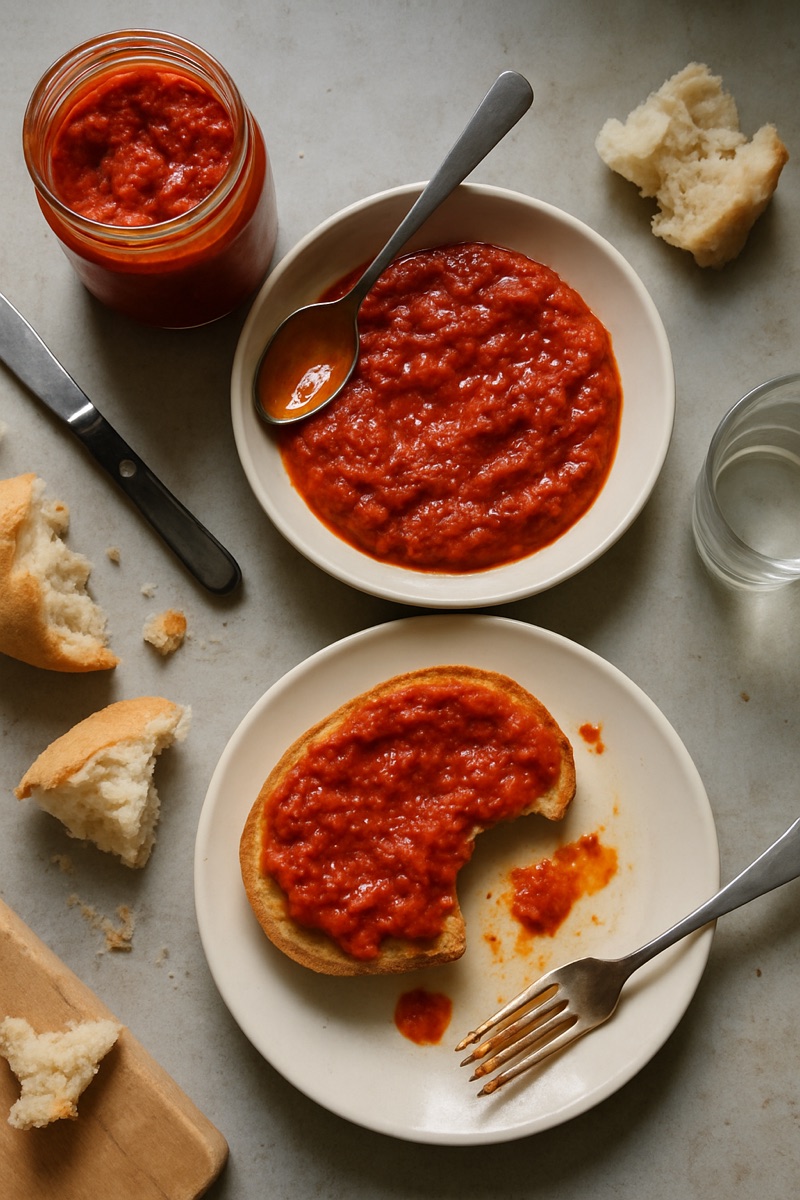 Ajvar🇲🇰 North Macedonia · 16 hours and 40 minutes
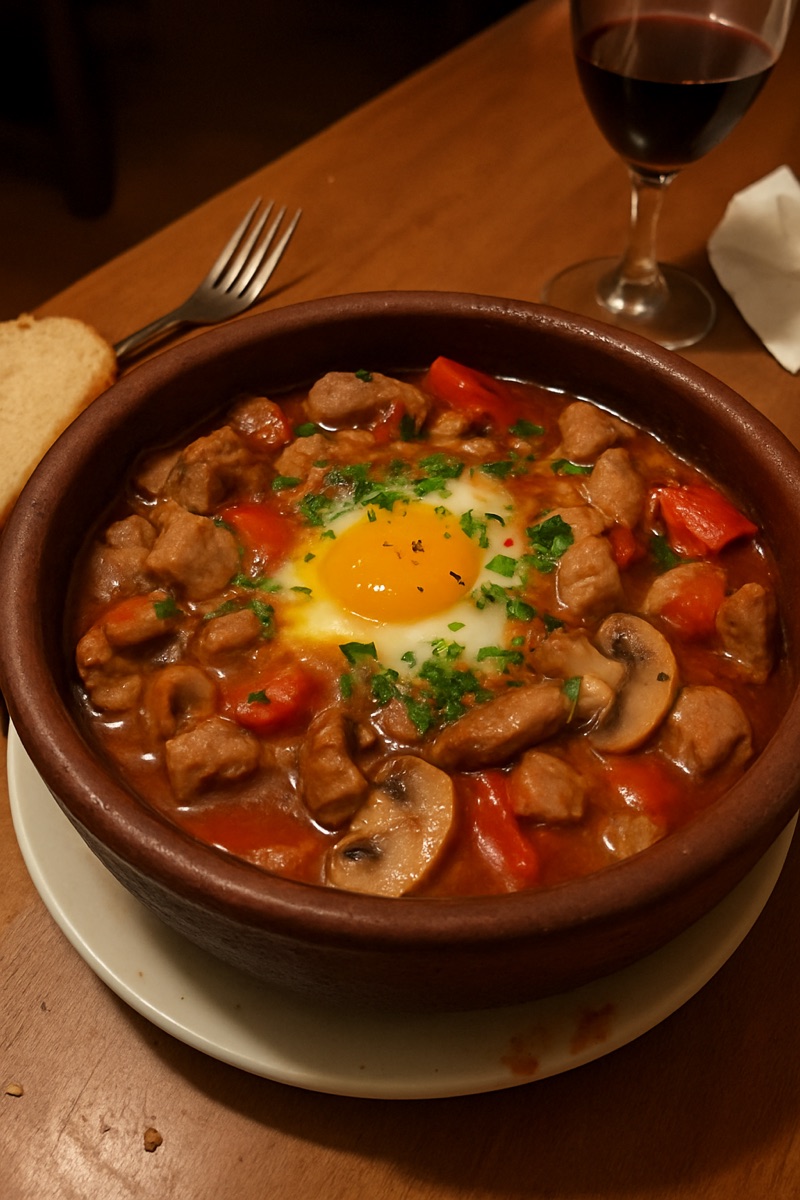 Selsko meso🇲🇰 North Macedonia · 1 hour and 35 minutes
Questions people ask
What is the national dish of North Macedonia?
Tavče gravče, white beans baked in an earthenware pan with onion, paprika and dried red peppers. It has no legal status, but it is consistently named as the national dish, with mastika as the national drink.
Is Macedonian food spicy?
Some of it. Pindžur and the hot versions of ajvar have real heat, and dried red peppers go into many dishes. Tavče gravče, by contrast, is seasoned with sweet paprika.
Is ajvar Macedonian or Serbian?
Both countries make it and protect it: "Macedonian Ajvar" and "Homemade Leskovac Ajvar" are each registered with WIPO. The name itself comes from the Turkish word for caviar.
Can you still eat Ohrid trout?
The Ohrid trout is endangered by overfishing, and its catch has been restricted by both North Macedonia and Albania. Its fishing has been banned or limited for years, so it is worth asking where the trout on a menu comes from.
What do people drink in North Macedonia?
Mastika is the national drink, alongside rakija and wines such as Vranec. Turkish coffee is the most popular coffee and is usually served with a piece of lokum.
Keep reading
- What is the national dish of North Macedonia?
- Traditional food of Albania: 13 dishes to know
- Traditional food of Bosnia and Herzegovina: 13 dishes to know
- Traditional food of Bulgaria: 13 dishes to know
- Traditional food of Croatia: 13 dishes to know
- Traditional food of Greece: 13 dishes to know