 COPPER
Traditional food of Montenegro: 12 dishes to know
Montenegrin food has two sides. The mountains live on dairy, cornmeal, potatoes and cured meat, while the Adriatic coast cooks seafood with a clear Italian influence. Turkish and Central European dishes came in through the neighbours. The most emblematic are Njeguški pršut, a smoked dry-cured ham, kačamak, potatoes and cornmeal beaten with cheese and kajmak, and sarma.
What Montenegrin food is built on
Montenegro is small, but its kitchen changes sharply between the coast and the highlands. The coast belongs to Mediterranean cooking, with fish, olive oil and a distinctly Italian touch. The mountainous north and centre built their food on what herders had: milk, cheese, kajmak (a salted, pressed fresh cream), cornmeal, potatoes and smoked or dried meat.
The first big outside influences came from the Levant and Turkey, largely by way of Serbia: sarma, pilav, pita, burek, ćevapi, đuveč and sweets such as baklava and tulumba. Hungarian cooking shaped stews such as sataraš, and Central Europe left crêpes, doughnuts, jams and cakes.
Homemade bread comes with every meal, made from barley, rye, wheat or maize. Montenegrin also separates its spoon dishes by name: a clear soup is supa, a thick soup or stew is čorba, and a porridge-style dish is kaša. Soup usually opens the midday meal, and a piece of seasonal fruit usually ends it.
Dairy carries the highland kitchen. Besides kajmak, there is Njeguški sir, a cheese kept in oil; Pljevaljski sir, a salted, aged cow's milk cheese from the north; skorup, a salted cottage cream; and several cheeses made from unboiled milk. Kisjelo mlijeko, a thick soured milk, is drunk with kačamak and boiled potatoes, and homemade sour cream, pavlaka, is the other daily staple.
Mountain dishes
The highland table is built on cornmeal, potatoes, dairy and pork, and most of Montenegro's best-known foods come from it:
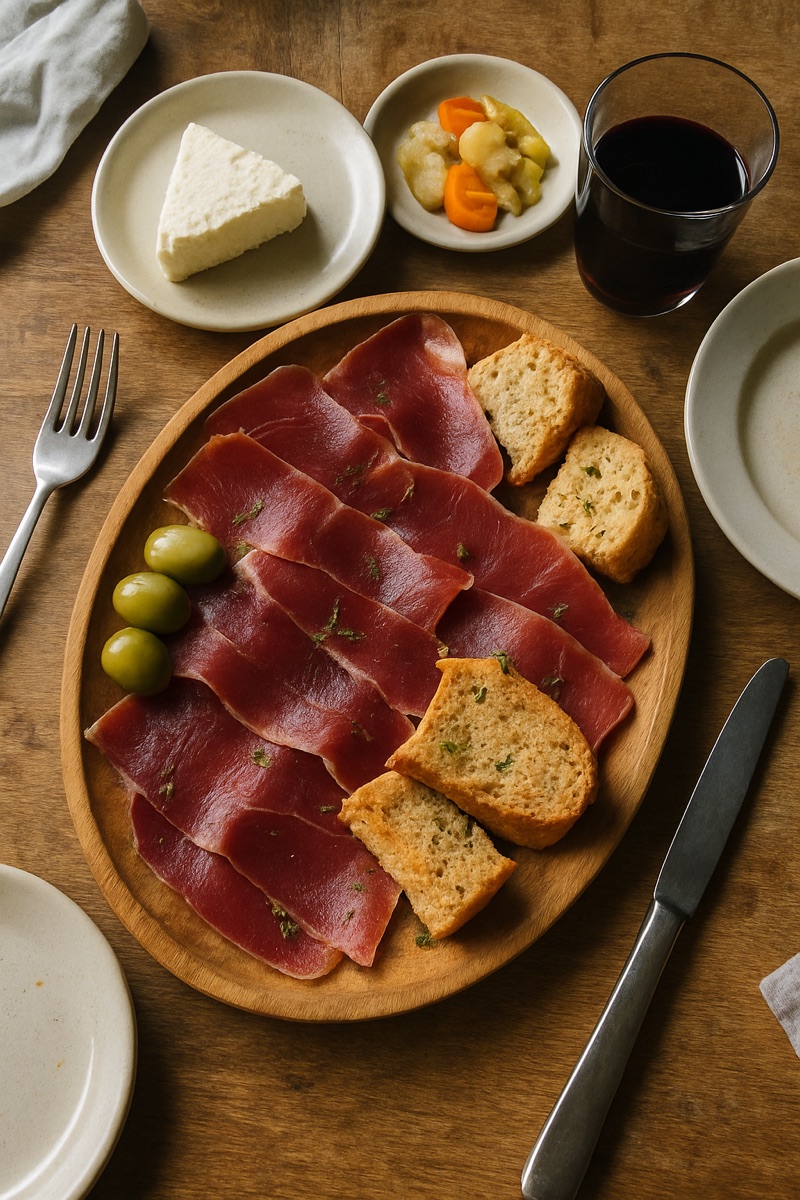
- Njeguški pršut — A pork leg from the village of Njeguši, salted with sea salt for about three weeks, pressed for three more, lightly smoked over beech wood and dried in mountain air for a cycle of about a year. It is served raw and sliced paper-thin as a starter, often with Njeguški sir, a local cheese kept in oil.
- Kačamak — Potatoes and cornmeal cooked together, then beaten in the pot until not one lump is left, with melted kajmak and cheese poured over the top. Montenegrins say it takes 365 strokes, and it is eaten with cold sour milk. Once a poor family's dish, it is now on the menu of national restaurants.
- Cicvara — Cornmeal cooked in water or milk with plenty of cheese and kajmak, stirred without stopping so no lumps form. It is an old herders' dish of the mountains, eaten at breakfast, and by custom the Christmas fast is broken on Christmas morning with three small bites of it. It is rarely made today.
- Raštan — A sturdy, slightly bitter dark-green leaf of the cabbage family, close to Italian cavolo nero. It is cooked into a stew with smoked pork ribs or ham hocks.
- Čorbast pasulj — A bean stew cooked with smoked ribs and several kinds of sausage and salami. Its style is close to French cassoulet or Spanish fabada.
- Sarma — Leaves of a whole cabbage soured in salt brine, rolled around minced pork, beef and rice and simmered for hours with smoked pork ribs. It is served with mashed potato.
The coast and Lake Skadar
On the Adriatic, menus turn to grilled or fried squid, octopus salad, tuna, prawns and mussels, and the Paštrovići coast near Budva makes its own pasta, Paštrovski makaruli, with olive oil and brined cheese. Two dishes stand out:
- Crni rižot — Black risotto, made with cuttlefish and coloured by its ink. It is one of the clearest signs of the Italian influence that sets the coastal kitchen apart from the cooking of the interior.
- Fish from Lake Skadar — The largest lake in the Balkans, about two-thirds of it in Montenegro and the rest in Albania, is rich in carp, bleak and eel. Carp, krap, is eaten fresh or smoked, and ukljeva, the small bleak, is smoked and dried.
Street food, sweets and drinks
Montenegrins eat on the go much like their neighbours, and sweets are usually served on their own with coffee rather than after a meal:
- Burek — Layered pastry with meat or cheese, the most popular fast food in the country. Montenegrins count it among their usual breakfasts.
- Roštilj — The grill: ćevapi, pljeskavica, a large spiced meat patty served like a burger in bread, and ražnjići, skewers. It is the most affordable restaurant food in Montenegro.
- Priganice — Small fritters or flat doughnuts of fried dough, served with honey, cheese or jam. Like most Montenegrin sweets, they are eaten on their own, at any time coffee is served.
- Sok od šipka — A homemade syrup of wild pomegranates, which grow almost everywhere in the southern half of the country. Diluted with water, it is the most common soft drink in Montenegrin homes; Turkish coffee is offered at almost every visit, and Vranac is the best-known red wine.
Cook Montenegrin food at home
Njeguški pršut is the answer most often given for the national dish of Montenegro, with kačamak as the cooked dish Montenegrins hold up as their own; our article explains both. Montenegro shares its pies, grills and cornmeal dishes with the rest of the Balkans: compare it with the traditional food of Albania and the traditional food of Bosnia and Herzegovina.
Njeguški pršut, kačamak and sarma each have a full page, with ingredients and step-by-step methods, in the Copper app. You will find them on our page dedicated to Montenegrin recipes.
The recipes
- Njeguški pršut🇲🇪 Montenegro · 365 days
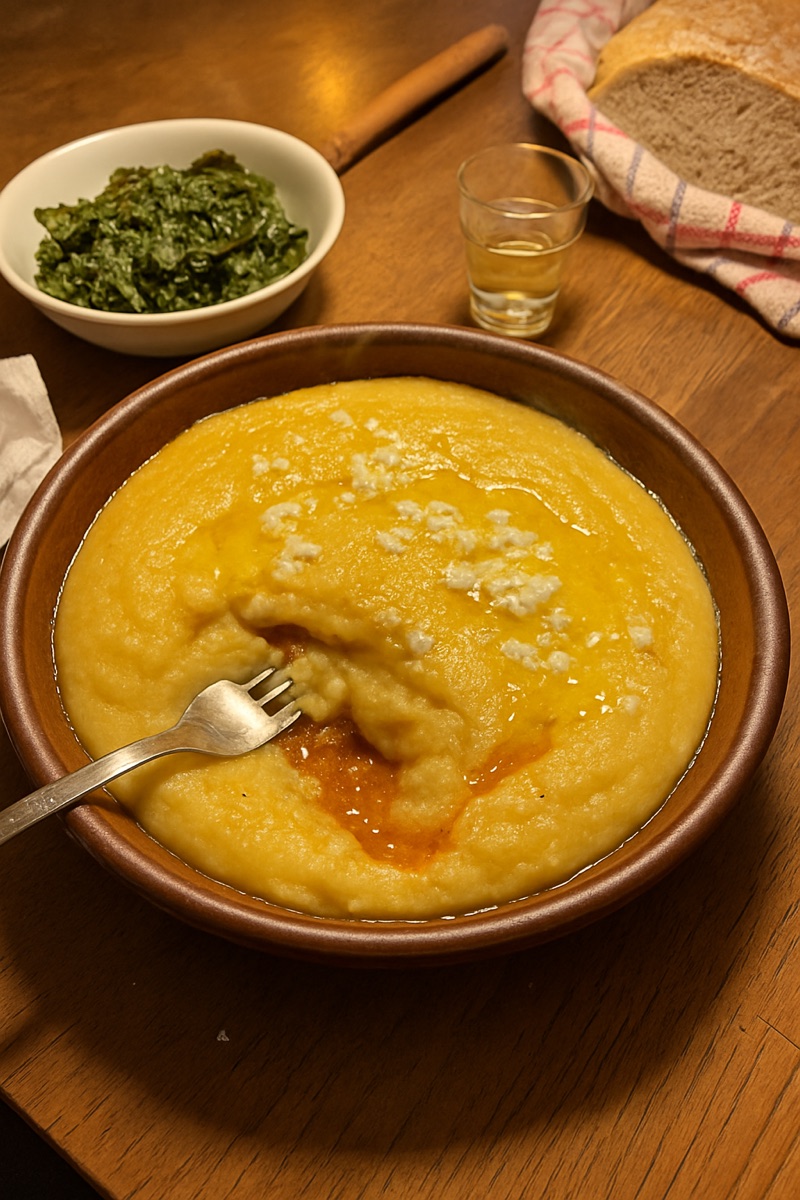 Kačamak🇲🇪 Montenegro · 1 hour and 20 minutes
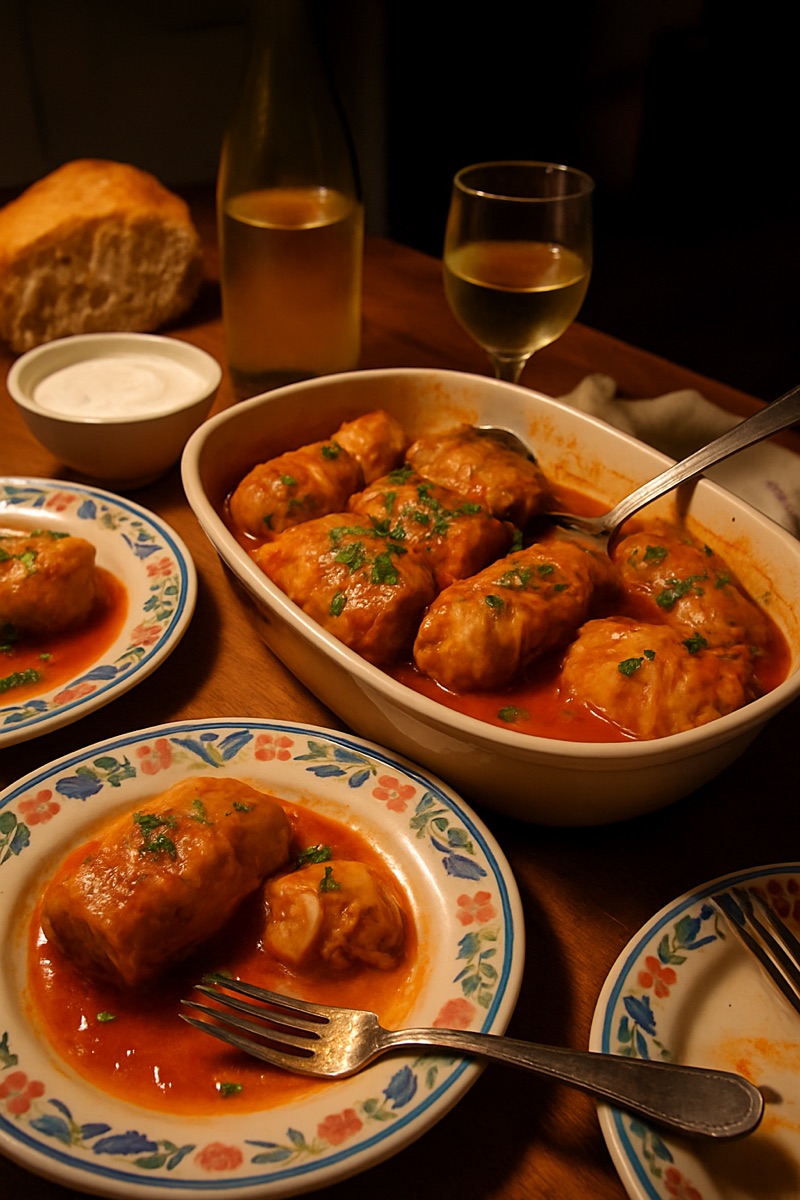 Sarma🇲🇪 Montenegro · 16 hours
Questions people ask
What is the most popular food in Montenegro?
Njeguški pršut and kačamak are the dishes most associated with Montenegro. In daily life, burek and grilled meat such as ćevapi and pljeskavica are the most common fast food.
What do Montenegrins eat for breakfast?
Traditional breakfasts include cicvara, cornmeal cooked with kajmak; gibanica, a cheese pie, with yogurt or buttermilk; popara, a bread porridge; bread with kajmak; pršut; and burek from the bakery.
What is kajmak?
Kajmak is a dairy product made from the cream that forms on milk, salted and pressed. It is spread on bread and melted over kačamak and cicvara.
Is Montenegrin food like Italian food?
On the coast, partly: the coastal kitchen has a distinct Italian influence, visible in black risotto, seafood and olive oil. Inland, the cooking is closer to Serbian and Bosnian food, built on dairy, cornmeal and meat.
What do people drink in Montenegro?
Homemade pomegranate syrup is the most common soft drink, and Turkish coffee is served at almost every visit. Vranac is the best-known red wine, and rakija is the traditional spirit.
Keep reading
- What is the national dish of Montenegro?
- Traditional food of Albania: 13 dishes to know
- Traditional food of Bosnia and Herzegovina: 13 dishes to know
- Traditional food of Bulgaria: 13 dishes to know
- Traditional food of Croatia: 13 dishes to know
- Traditional food of Greece: 13 dishes to know