 COPPER
Traditional food of Hungary: 13 dishes to know
Hungarian food is built on meat, seasonal vegetables, bread and dairy, cooked with onion and lard and coloured with paprika, the national spice, from sweet to very hot. Sour cream (tejföl) tops many dishes, and soup opens the main meal. The most emblematic dishes are goulash, chicken paprikash, halászlé fish soup and lángos, with Dobos torte among the cakes.
What Hungarian food is built on
Traditional Hungarian dishes are based on meat, seasonal vegetables, fruit, bread and dairy. The nomadic, cattle-raising past of the Hungarians shows in the place of meat and in dishes cooked over an open fire in a cauldron, the bogrács. Over the centuries the cuisine took in new spices and ingredients brought to the court of King Matthias and his Neapolitan queen in the 15th century, Ottoman influences, and dishes brought by Armenians, Jews, Saxons, Slovaks and others who settled in the Carpathian Basin.
Paprika is the defining spice. It arrived during the Ottoman invasions of the 16th century, was used in cooking by the 18th and grown for market by the early 19th. Sweet paprika is the most common, but hot varieties are popular and fresh or dried hot chillies often come on the side. Onion and garlic go into almost every savoury dish, with caraway, marjoram and dill; lard, smoked pork and tejföl, a thick sour cream, give the food its richness. Bread is eaten at every meal. The full story of the country's best-known dish is in our article on the national dish of Hungary.
Soups
Soup is central to Hungarian eating: lunch, the main meal of the day, traditionally starts with one, and many are thickened with a roux (rántás).
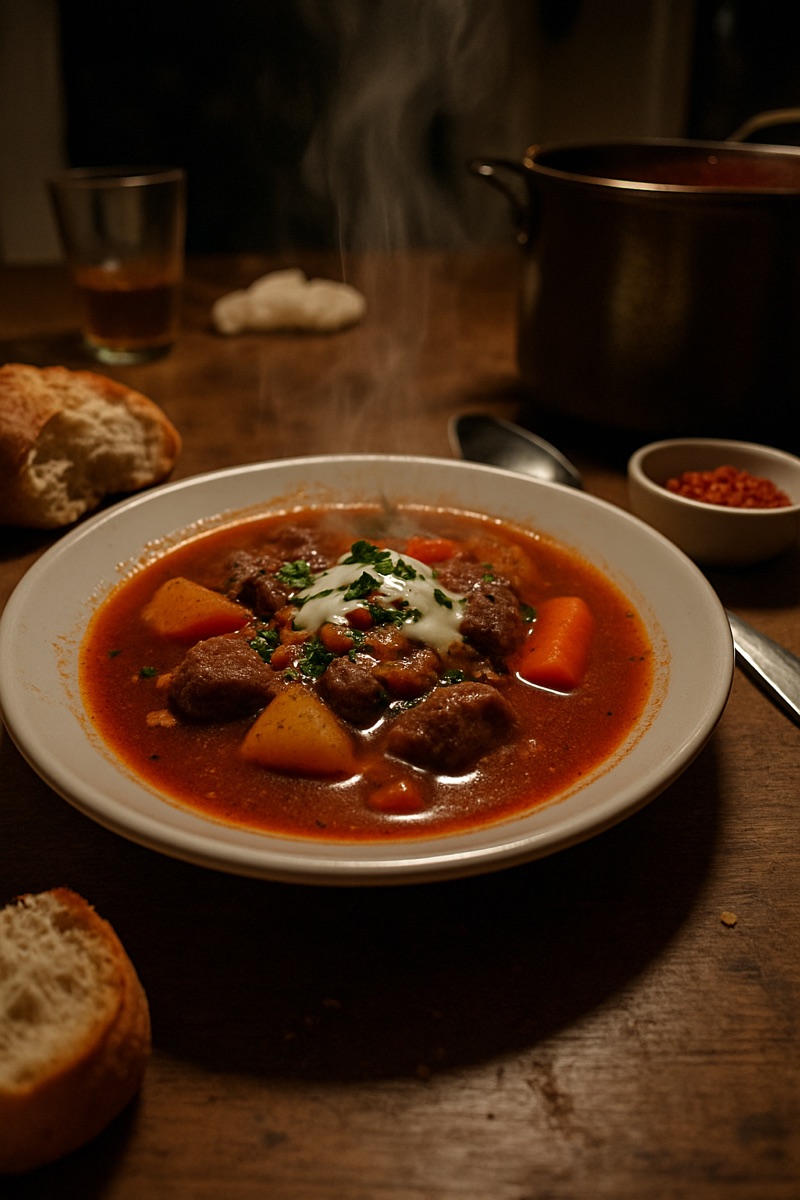
- Goulash — Gulyás is a beef soup coloured and flavoured with sweet paprika, cooked with onion, caraway, potatoes and carrots and finished with small pinched noodles called csipetke. It began as the food of cattle herders on the Hungarian plain, and Hungarian goulash soup was added to the official Hungarikum collection in 2017.
- Halászlé — Fisherman's soup: a bright red, hot soup of carp or mixed river fish with plenty of hot paprika, from the Danube and Tisza regions. Each river has its own way of making it, and the versions of Szeged and Baja are rivals. It is the traditional Christmas dish.
- Húsleves — A clear meat broth of poultry, pork or beef, ranked first among Hungarian soups. It is usually served with csigatészta, small noodles shaped like snail shells.
Stews and main dishes
- Pörkölt — A stew of boneless meat, usually beef or pork, cooked with onion and sweet paprika in very little liquid. Writers from the 1780s already described it as a herders' and peasants' dish of the Great Plain. It is served with nokedli dumplings or potatoes, and it is closer than gulyás to what many people outside Hungary call goulash.
- Chicken paprikash — Csirkepaprikás: chicken stewed in a paprika sauce finished with sour cream, which makes it creamier than pörkölt. It is almost always eaten with nokedli, small dumplings scraped into boiling water.
- Töltött káposzta — Cabbage leaves rolled around a filling of minced meat and rice and cooked with sauerkraut, a typical winter dish also served at Christmas. Sour cream and bread on the side are considered almost mandatory. In south-east Hungary it is called szárma.
- Lecsó — A thick stew of yellow pointed peppers, tomato and onion with sweet or hot paprika, the vegetables softened first in lard, bacon fat or sunflower oil. It is at its best from August to October, when peppers and field tomatoes are in season.
- Főzelék — A category of its own, thicker than a soup and thinner than a stew: vegetables or pulses such as lentils, simply simmered and usually cooked without meat, though bacon or sausage may be added. It is eaten as a lunch main course or as a side, and has made a comeback on restaurant menus.
- Hortobágyi palacsinta — Thin pancakes filled with a veal or beef stew seasoned with paprika, rolled, covered with the stew's sauce and topped with sour cream. Despite its name it has nothing to do with the Hortobágy plain: it was created for the 1958 Brussels World's Fair.
Street food and sweets
Light fruit soups such as cold sour cherry soup (hideg meggyleves) are another Hungarian habit, along with bejgli, a walnut or poppy seed roll baked for Christmas.
- Lángos — A flat disc of soft yeasted dough fried in fat and eaten at once, plain or with garlic, cheese, sour cream or sausage. It is sold mainly at markets, beaches, outdoor events and snack bars; around Békéscsaba it comes with sheep's cheese (juhtúró).
- Kürtőskalács — Chimney cake: a strip of sweet yeast dough wound around a cone-shaped spit, rolled in sugar and roasted over charcoal while basted with butter, until the sugar caramelises into a crisp crust. It comes from the Székelys of Transylvania, and its first written record dates from 1679.
- Dobos torte — Sponge cake layered with chocolate buttercream and topped with a sheet of hard caramel, its sides coated with ground nuts. The Budapest confectioner József C. Dobos created it in the late 19th century to keep longer than other cakes.
- Somlói galuska — Pieces of sponge cake with chocolate sauce and whipped cream. It was created at the Gundel restaurant in Budapest in the late 1950s and won a prize at the 1958 Brussels World's Fair.
Regional cooking in Hungary
The Great Hungarian Plain gave the country its herdsmen's dishes, gulyás and pörkölt, still cooked outdoors in a bogrács. The river towns argue over fish soup: Szeged on the Tisza and Baja on the Danube each defend their halászlé. Transylvania, now in Romania, has Hungarian communities whose kürtőskalács and stuffed cabbage are part of the national table, and many dishes, such as stuffed cabbage, stuffed peppers and cornmeal porridge, are shared with Romanian, Serbian and Croatian cooking.
Compare with the traditional food of Romania, or explore the wider Eastern European kitchen.
Cook Hungarian food at home
Goulash, chicken paprikash and lángos each have a full recipe with quantities and step-by-step methods in the Copper app. You will find all three on our page dedicated to Hungarian recipes.
The recipes
- Goulash🇭🇺 Hungary · 2 hours and 30 minutes
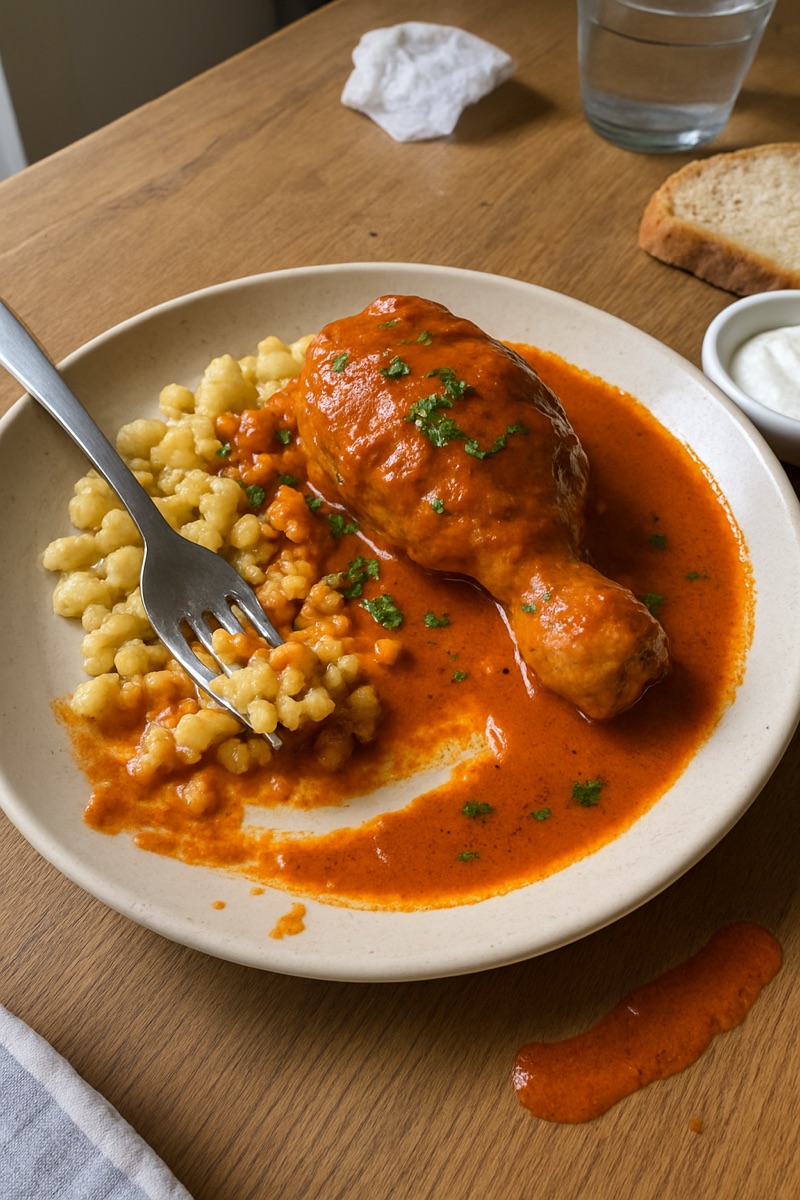 Chicken paprikash🇭🇺 Hungary · 1 hour and 20 minutes
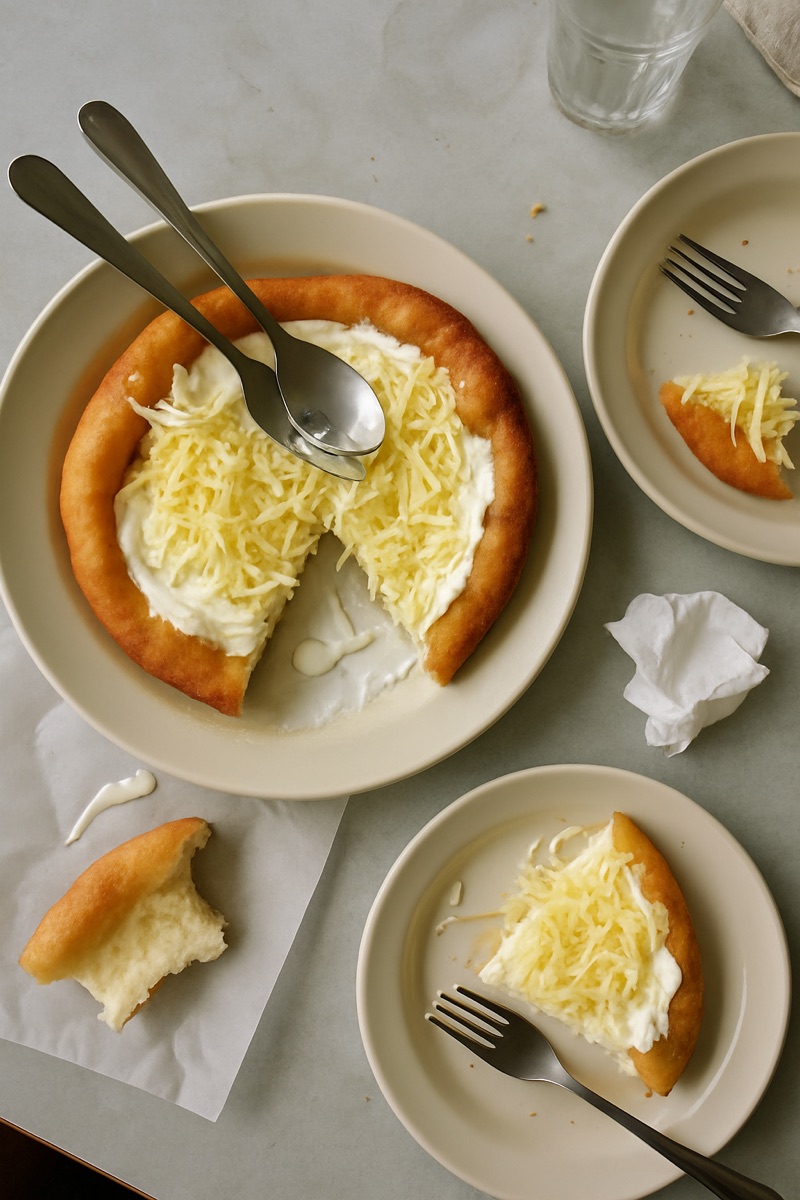 Lángos🇭🇺 Hungary · 2 hours and 15 minutes
Questions people ask
What is the most popular food in Hungary?
Goulash is the best-known dish, followed by pörkölt, chicken paprikash with nokedli, halászlé fish soup, stuffed cabbage and lángos, the fried dough sold at markets and beaches.
What do Hungarians eat for breakfast?
Traditionally open sandwiches: bread with butter, cheese, túró or körözött spread, ham, salami or sausage, with fresh tomatoes and green peppers in season. Many people now just have coffee or tea with a pastry or kifli roll.
Is Hungarian food spicy?
It can be. Hungarian cuisine has been described as the spiciest in Europe because of paprika, but sweet paprika is the most common and hot chillies or chilli paste are usually served on the side.
What is a typical Hungarian lunch?
Lunch is the main meal: a soup, then a main dish of meat with a side of potatoes, nokedli or rice and a salad or pickled vegetables, sometimes followed by a dessert.
What do Hungarians eat at Christmas?
Halászlé fish soup is the traditional Christmas dish, often with stuffed cabbage, roast goose, turkey or duck, and bejgli, a walnut or poppy seed roll.
Keep reading
- What is the national dish of Hungary?
- Traditional food of Belarus: 12 dishes to know
- Traditional food of the Czech Republic: 13 dishes to know
- Traditional food of Estonia: 13 dishes to know
- Traditional food of Latvia: 12 dishes to know
- Traditional food of Lithuania: 13 dishes to know