 COPPER
What is the national dish of Hungary?
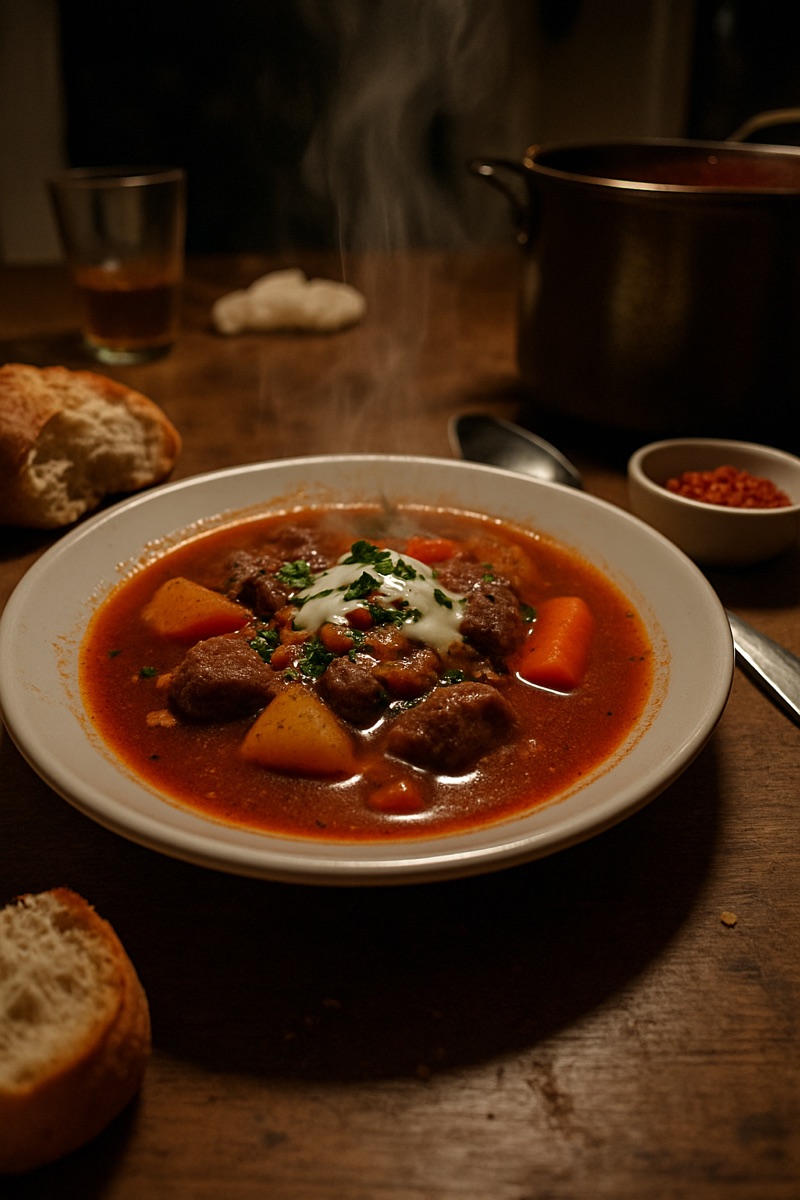
The national dish of Hungary is goulash (gulyás): a beef soup coloured and flavoured with sweet paprika, cooked with onion, caraway, potatoes and carrots and finished with small pinched noodles called csipetke. It began as the food of cattle herders on the Hungarian plain. No law names a national dish, but Hungarian goulash soup was added to the official Hungarikum collection in 2017.
Is goulash officially Hungary's national dish?
Goulash is the dish named everywhere as Hungary's national dish, and it has the nearest thing to official status the country gives food. In December 2017 the Hungarian government added "magyar gulyásleves", Hungarian goulash soup, to the Hungarikum collection, the state collection of outstanding Hungarian values.
Its role as a national symbol is much older. Hungarian historians tie it to the late 18th century, when the nobility, resisting Emperor Joseph II's plans to merge Hungary into a single imperial administration, adopted a plain herdsman's dish as a sign of Hungarian identity. In 1794 a Saxon traveller, Count Hoffmannsegg, already described paprika meat as a Hungarian national dish. The word gulyás entered dictionaries in the 1800s, the recipe reached cookbooks in the 1810s and restaurant menus in the 1820s.
What is in Hungarian goulash?
In Hungary, gulyás is a soup, not a thick stew. The base is beef, usually shin, shank or shoulder, with onions, sweet paprika and caraway seeds, then potatoes, carrots and a little pepper and tomato. It is not thickened with flour, and the deep red colour comes from the paprika, not from tomato.
Hungarian cooks keep three related dishes apart, and the difference matters when you order:
Named variants follow the same base: babgulyás adds beans, birkagulyás uses mutton, hamisgulyás (fake goulash) replaces the meat with beef bones, and székelygulyás, named after the writer József Székely (1825–1895), is a thicker version with sauerkraut and sour cream. Restaurants often shorten the long cooking with stock and swap the csipetke for nokedli.
- Gulyás: the loose beef soup with potatoes and csipetke.
- Pörkölt: a thick stew of boneless meat, onion and sweet paprika, with little liquid. What most of the world calls goulash is closer to this.
- Paprikás: a pörkölt finished with sour cream, often made with chicken.
How goulash is made
The onions decide the result: 400 g, finely chopped, sweated in lard over low heat for 15 minutes until soft and pale gold, never browned. The beef is cubed and seared in that fat for 5 minutes.
Then comes the step Hungarian cooks insist on: the pot comes off the heat before the paprika, garlic and crushed caraway go in, because paprika scorches over direct heat and turns bitter. A little water is added and the meat stews gently for about 1 hour 30.
Vegetables and 1.5 litres of water follow for 25 minutes. In the last 5 minutes the csipetke, bits of stiff egg dough pinched off with the fingers, are dropped into the soup; they are done when they float. Follow every quantity in our goulash recipe. Outdoors it is cooked in a cauldron called a bogrács, as the herdsmen did.
Where goulash comes from
The name explains the dish. Gulya means herd of cattle in Hungarian, and gulyás means cattle herder. From the Middle Ages until well into the 19th century the Puszta, the great Hungarian plain, raised huge herds that were driven to the cattle markets of Moravia, Vienna, Nuremberg and Venice. The herdsmen cooked for themselves along the way, with beef from the herd.
Paprika came later. Peppers reached Hungary during the Ottoman invasions of the 16th century, first used as a medicine; their use in cooking is documented by the 18th century. The earliest herdsmen's stews had none.
Hungary has since become a major paprika producer, and peppers were being grown for market there by the early 19th century. Paprika is now the spice most closely associated with the country.
Hungarian cooking shares a lot with its neighbours: stuffed cabbage (töltött káposzta) is close to the sarmale of Romania, and pörkölt-style stews are cooked from northeast Italy to the Carpathians.
Other dishes to know from Hungary
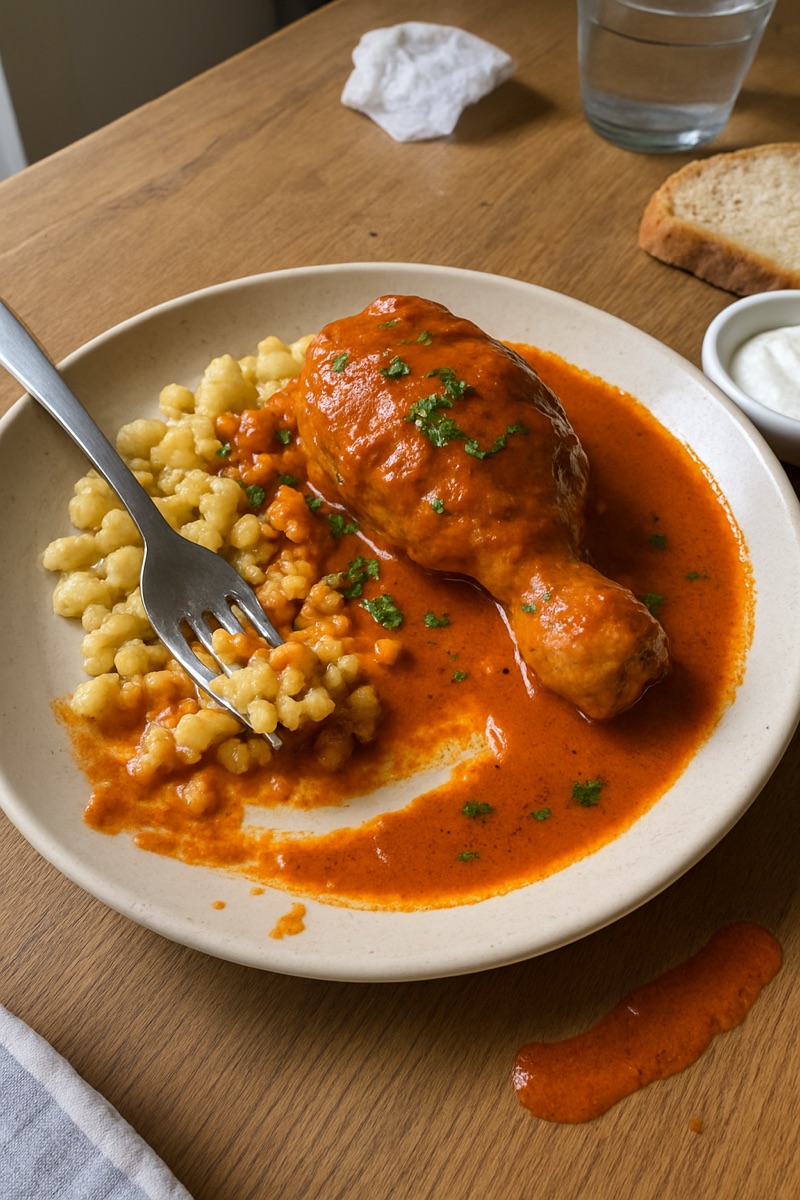
Chicken paprikash (csirkepaprikás) uses the same paprika-off-the-heat rule, then finishes the sauce with sour cream tempered with flour so it does not split. In Hungary it is almost always eaten with nokedli, small dumplings scraped into boiling water.
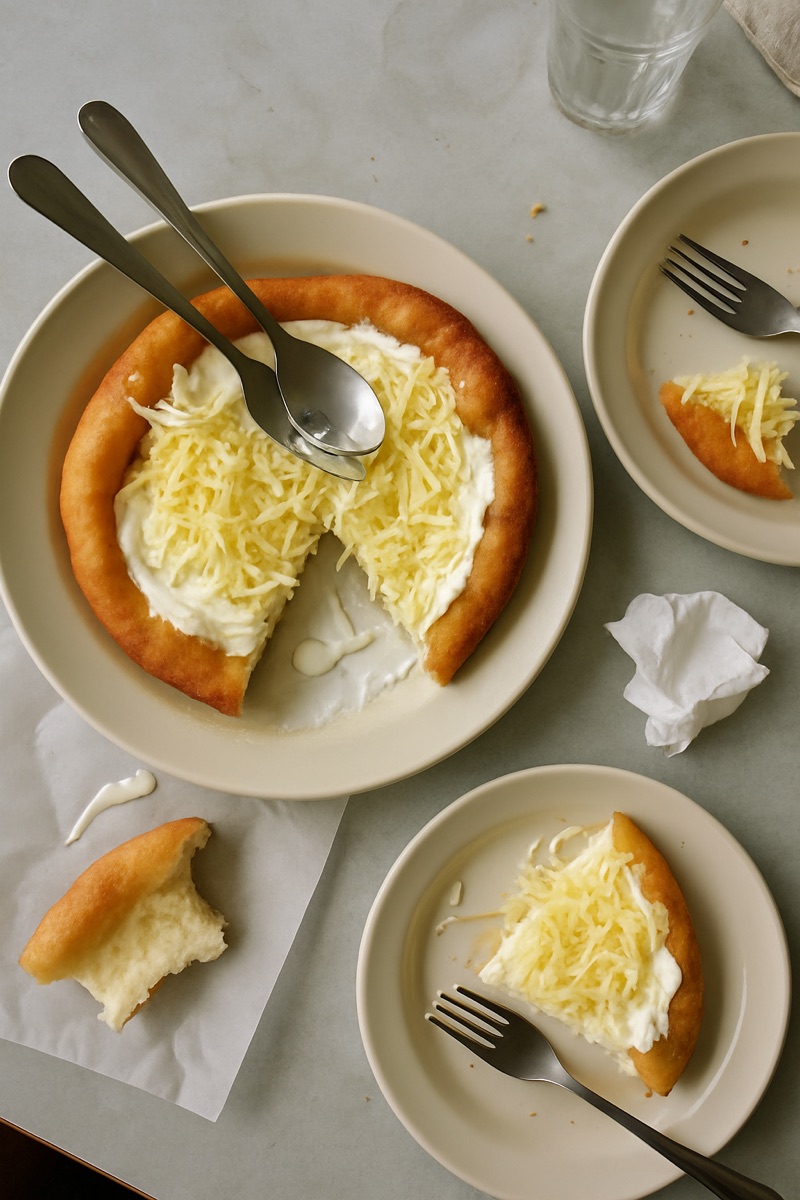
Lángos is the country's best-known street food: a yeasted potato dough fried into a puffed disc, rubbed with garlic while still scalding, then covered with sour cream and grated trappista cheese.
Halászlé, the fisherman's soup, is the other dish Hungarians cook over an open fire in a bogrács: freshwater fish in a broth hot with paprika. The versions from Szeged and Baja are the best known, and each town defends its own.
For the wider picture, see our guide to Eastern European cuisine. All three dishes, with ingredients and step-by-step methods, are on our page about the food of Hungary.
The recipes
- Goulash🇭🇺 Hungary · 2 hours and 30 minutes
 Chicken paprikash🇭🇺 Hungary · 1 hour and 20 minutes
 Lángos🇭🇺 Hungary · 2 hours and 15 minutes
Questions people ask
Is goulash a soup or a stew?
In Hungary, gulyás is a soup. The thick paprika stew most people outside Hungary call goulash is closer to Hungarian pörkölt.
What is the difference between goulash and pörkölt?
Gulyás is a loose beef soup with potatoes and pinched noodles; pörkölt is a thick stew of meat, onion and paprika with very little liquid, served with nokedli or potatoes.
How do you pronounce gulyás?
Roughly GOO-yahsh, with the stress on the first syllable (IPA: [ˈɡujaːʃ]).
Is goulash an official Hungarian symbol?
Hungary has no law naming a national dish, but Hungarian goulash soup was added to the official Hungarikum collection of national values in 2017.
When did paprika enter goulash?
Paprika reached Hungary in the 16th century during the Ottoman invasions and was documented in Hungarian cooking by the 18th century, so the oldest herdsmen's stews had none.
Keep reading
- Traditional food of Hungary: 13 dishes to know
- What is the national dish of Belarus?
- What is the national dish of the Czech Republic?
- What is the national dish of Estonia?
- What is the national dish of Latvia?
- What is the national dish of Lithuania?