 COPPER
What is the national dish of the Czech Republic?
The dish most often called the national dish of the Czech Republic is vepřo knedlo zelo: sliced roast pork, bread or potato dumplings and stewed sour cabbage, served side by side under the roasting juices. It has no official status, and svíčková, braised beef under a cream sauce of blended root vegetables, is its main rival for the title.
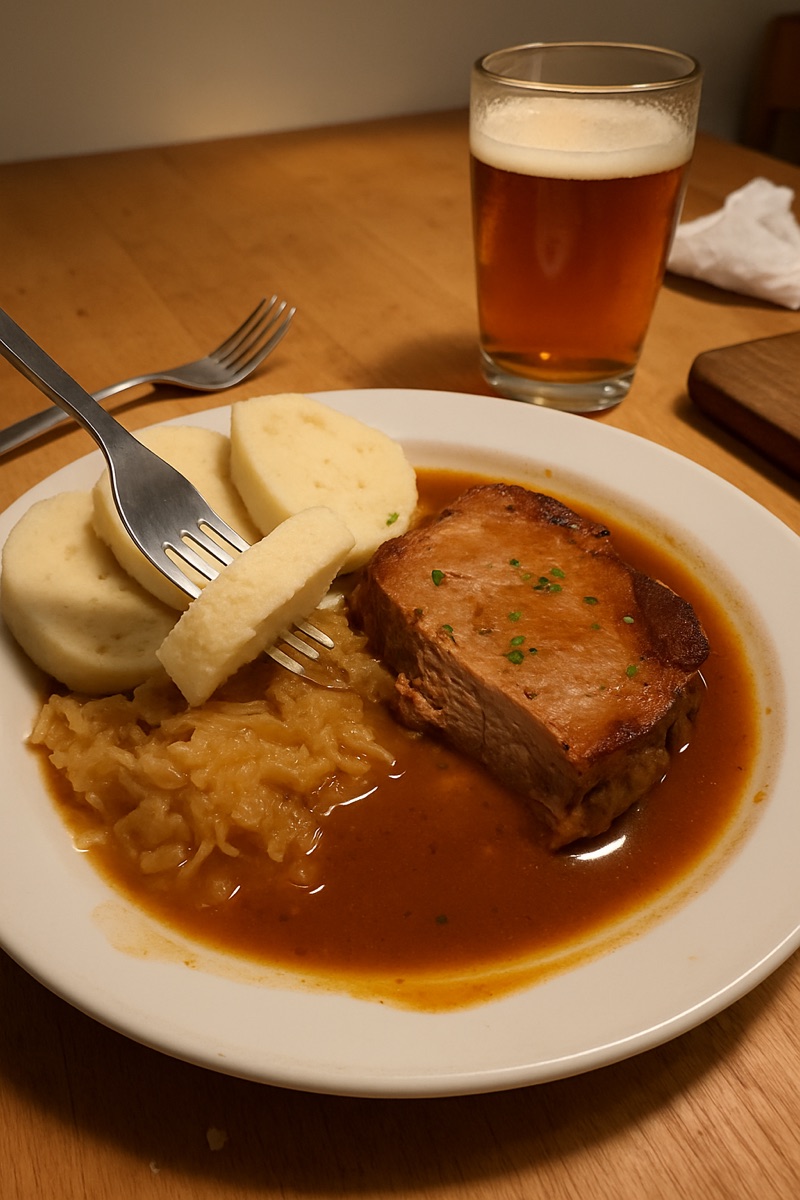
What is vepřo knedlo zelo?
The name is simply a list of the three parts, in clipped colloquial Czech: vepřo (roast pork), knedlo (dumpling) and zelo (cabbage). The full menu name is *pečené vepřové s knedlíky a se zelím*, roast pork with dumplings and cabbage.
On the plate the three items sit separately: slices of usually lean roast pork, slices of bread or potato dumpling, and white (less often red) sauerkraut. The pork and dumplings are then covered with the juices from the roasting tin.
There is no law or decree behind its status. Czech Wikipedia calls it the Czech national dish, and English-language references describe roast pork with dumplings and cabbage as the dish most often considered the most typical Czech meal.
How vepřo knedlo zelo is made
In our vepřo knedlo zelo recipe, 1.2 kg of pork shoulder is rubbed with salt, black pepper and caraway seeds, set fat side up on sliced onions and garlic with 300 ml of water, and roasted covered for 2.5 hours at 160 °C, basted every 30 minutes. The lid comes off for the last 30 minutes at 200 °C so the fat crisps.
The cabbage is cooked at the same time:
- Onion fried in lard, then 700 g of sauerkraut with its brine, caraway, a spoon of sugar and water, simmered 40 minutes.
- A spoon of flour whisked into cold water to thicken it. Fresh cabbage is not a substitute: the sourness is the point.
- The roasting juices strained, skimmed and thickened into the gravy.
- Bread dumplings steamed 10 minutes, then cut into 1.5 cm slices with a thread rather than a knife.
Svíčková, the other contender
Lists of Czech national dishes, including Wikipedia's, name svíčková na smetaně alongside it. *Svíčková* is the Czech word for tenderloin, but the dish is traditionally made with beef topside, nicknamed *falešná svíčková* (false tenderloin). It is sometimes mistranslated as "candle sauce", because *svíčka* means candle.
The beef is cooked with carrots, parsley root, celeriac and onion, spiced with black pepper, allspice and bay leaf. The vegetables are then blended with cream into a thick sauce. In our svíčková recipe the lean beef is larded with smoked bacon, left 24 hours under the root vegetables, braised 2 hours 30 at 160 °C, and the blended roots are the only thickener: no flour goes in.
The name has three proposed explanations: the slender muscle looks like a candle, the cut sits in fat once used for tallow candles, or master butchers once had to host an autumn feast for their journeymen by candlelight. It is served with bread dumplings, a slice of lemon, a spoon of whipped cream and cranberry sauce. Diners stir the cream and fruit into the sauce to adjust its sweetness and acidity themselves.
Variations and related dishes
Restaurant and canteen kitchens rarely follow the home method for svíčková: most boil the beef and vegetables together in one pot instead of roasting them. Bohemian immigrants who settled in the United States after the First World War kept an older version, and svíčková made around Chicago rarely shows the vegetables on the plate; they go into a vinegar marinade with crushed allspice and bay leaves instead. Czech vegetarian restaurants serve the sauce with a soy-based "sirloin".
Vepřo knedlo zelo has close relatives too:
- Vepřové výpečky: fattier pork cut into larger cubes and roasted with caraway and onion.
- Pečený bůček: pork belly roasted whole on caraway and onion, sliced only at the table.
- Moravský vrabec: the Moravian version, seasoned with garlic as well as onion and caraway.
- Any of these served with stewed spinach instead of cabbage is no longer vepřo knedlo zelo: the garlicky spinach replaces the sweet-sour taste of the cabbage.
Where these dishes come from
Neither dish is purely Czech in origin. Roast pork with dumplings and cabbage is believed to have German roots, and the same plate is common in Slovakia, Austria and Bavaria, where it is usually served with red cabbage. Compare it with the dishes in our article on the national dish of Germany.
Svíčková is also one of the most common meals in Slovakia, a reminder of the two countries' shared kitchen; see the national dish of Slovakia. Its recipe has changed over time: the version published by the Czech cookbook author Magdalena Dobromila Rettigová in 1826 had no root vegetables at all.
Other dishes to know from the Czech Republic
For something sweet, trdelník is a yeast dough enriched with egg yolks and butter, wound in a ribbon around a wooden roller, turned over coals for 10 to 12 minutes until the sugar caramelises, then rolled hot in crushed walnuts, sugar and cinnamon. The ice-cream-filled cones sold in Prague are a recent tourist invention, not the traditional form.
Other everyday Czech classics include fried cheese (*smažený sýr*), roast duck and fruit dumplings. You will find all three Copper dishes, with ingredients and step-by-step methods, on our page about the food of the Czech Republic.
For the wider picture, see our guide to Eastern European food.
The recipes
- Vepřo-knedlo-zelo🇨🇿 Czech Republic · 4 hours and 15 minutes
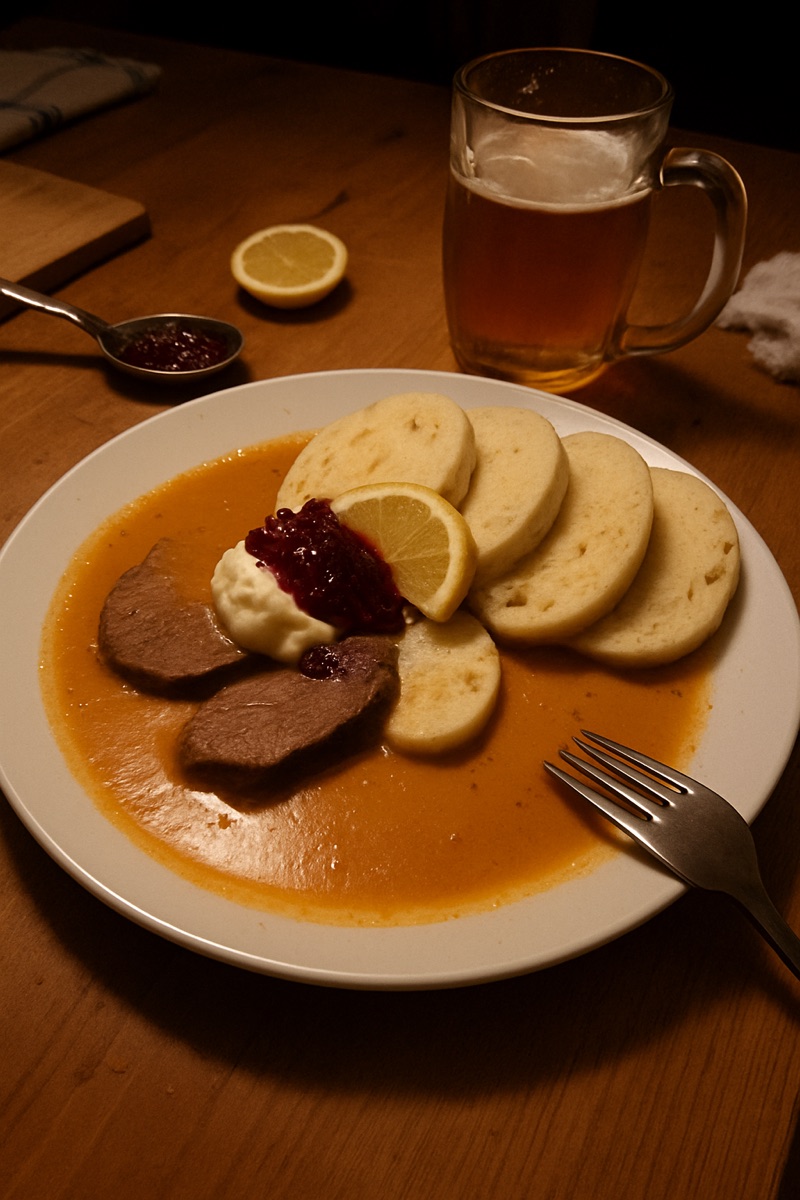 Svíčková🇨🇿 Czech Republic · 1 day and 4 hours
 Trdelník🇨🇿 Czech Republic · 2 hours and 15 minutes
Questions people ask
Is vepřo knedlo zelo the official national dish of the Czech Republic?
No. No law names a Czech national dish. Vepřo knedlo zelo is the one most often cited, with svíčková as its main rival.
What is the difference between vepřo knedlo zelo and svíčková?
Vepřo knedlo zelo is roast pork with dumplings and sauerkraut under its own juices. Svíčková is braised beef under a cream sauce made from blended root vegetables, served with bread dumplings, whipped cream, cranberries and lemon.
What does vepřo knedlo zelo mean?
It means pork, dumpling, cabbage: a shortened, colloquial name that lists the three parts of the dish.
What is served with svíčková?
Bread dumplings (houskové knedlíky), a slice of lemon topped with whipped cream, and cranberry or lingonberry sauce.
Are Czech dumplings made from bread or potato?
Both exist. With roast pork you will find either bread or potato dumplings; svíčková is generally served with bread dumplings.
Keep reading
- Traditional food of the Czech Republic: 13 dishes to know
- What is the national dish of Belarus?
- What is the national dish of Estonia?
- What is the national dish of Hungary?
- What is the national dish of Latvia?
- What is the national dish of Lithuania?