 COPPER
What is the national dish of Belarus?
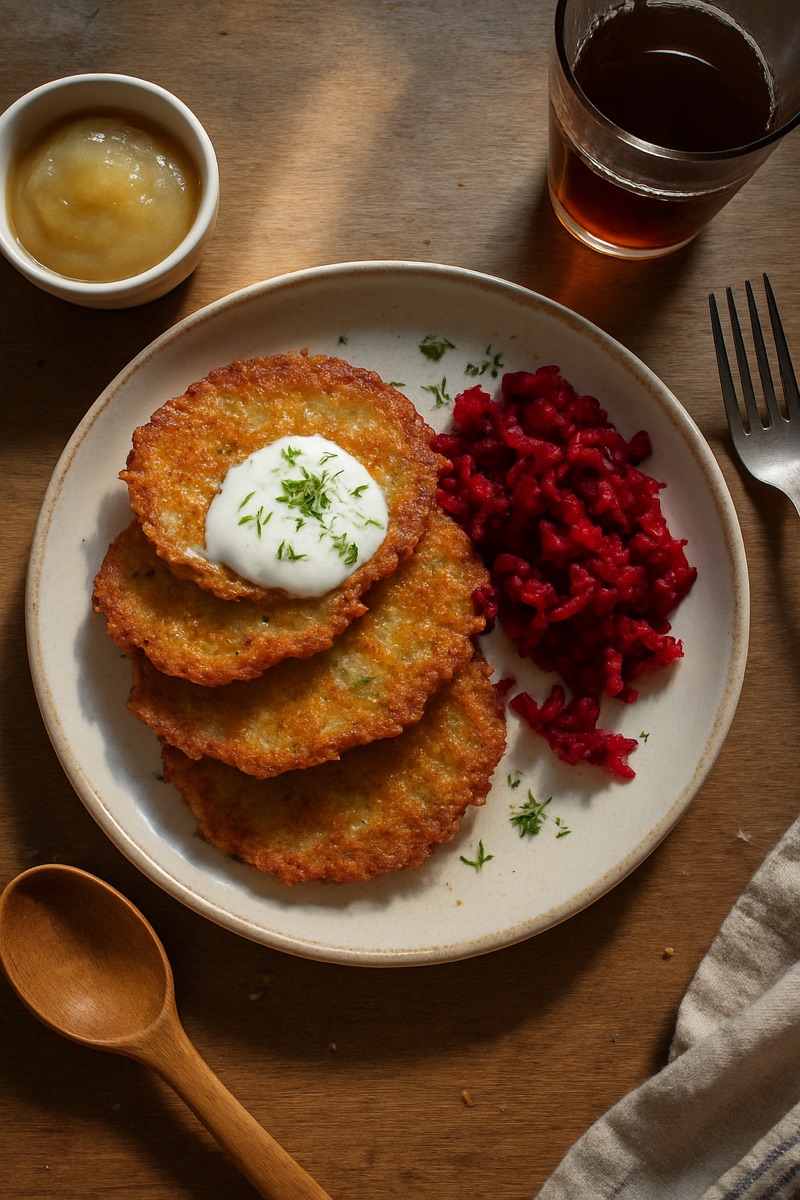
Belarus has no officially designated national dish, but draniki are the one most often named: pancakes of grated raw potato, bound with egg and a little flour, fried until crisp and served hot with sour cream. Potato is the core of Belarusian cooking, with more than 300 potato dishes recorded, and draniki are often called its "signature" national dish.
What are draniki?
Draniki (дранікі) are pancakes of grated raw potato, mixed with onion, egg and a little flour, and shallow-fried. They are traditionally eaten with sour cream, and in Belarusian homes and restaurants meat dishes are often served with draniki stacked in round clay pots.
The same pancake exists across the region, as deruny in Ukraine and placki ziemniaczane in Poland, and the potato pancake is described as a national dish of Belarus, Ukraine, Russia and Slovakia. Draniki are especially popular in Belarus, where they are eaten plain or stuffed.
How draniki are made
Our draniki recipe grates 1 onion into the bowl first and 800 g of raw potato on top; the onion juice keeps the potato from turning grey. The mixture is squeezed dry in a cloth.
The key step: let the squeezed liquid stand 2 minutes, pour off the water and scrape the white starch from the bottom back into the potatoes. That starch, with 1 egg and 30 g of flour, is what binds the pancakes.
Spoonfuls are flattened to 8 cm discs in shimmering sunflower oil and fried 3 to 4 minutes per side until deep golden at the edges. Cold oil makes them soggy. They go to the table hot, with cold sour cream.
Why the potato became Belarus's national ingredient
The potato became so common in the 19th century that more than 300 potato dishes are recorded in Belarus, and it came to be seen as the core ingredient of the national cuisine. Belarus is regularly ranked first for potato consumption per person, at around 160 kg a year.
The link runs deep enough to have become a nickname: in the Russian Empire and the Soviet Union, Belarusians were sometimes called bulbashi, a pejorative form of bulba, the Belarusian word for potato. Belarusian cuisine also traded with Jewish cooking, and the latkes of Eastern European Jews may have been borrowed from draniki.
Beyond draniki: potato, pancakes and cold soup
Draniki are only one of the grated-potato dishes. Babka, a baked pie of grated potato, is another; it came into Belarusian cooking in the 19th century, part of the potato dishes of German origin that Jewish cooks helped bring in.
Like other Slavic peoples, Belarusians also make a wide range of bliny, thin and thick, plain and filled, mostly from wheat or buckwheat flour, and sometimes from oatmeal, called tsadaviki. Thick pancakes are what you dip into machanka.
The classic cold soup is khaladnik, a cold borscht of beets, beet leaves or sorrel, served with sour cream, hard-boiled eggs and boiled potatoes. It has been popular in Polish and Lithuanian cooking too since the late 18th century.
Other dishes to know from Belarus
Belarusian cooking has mostly Slavic roots, mixed with Lithuanian and Polish influence from centuries in the Grand Duchy of Lithuania and the Polish-Lithuanian Commonwealth. Many restaurants still lean on Russian and Soviet dishes, but draniki, plain and stuffed, borscht, the cold beet soup khaladnik, machanka, zrazy and halubtsy are found everywhere.
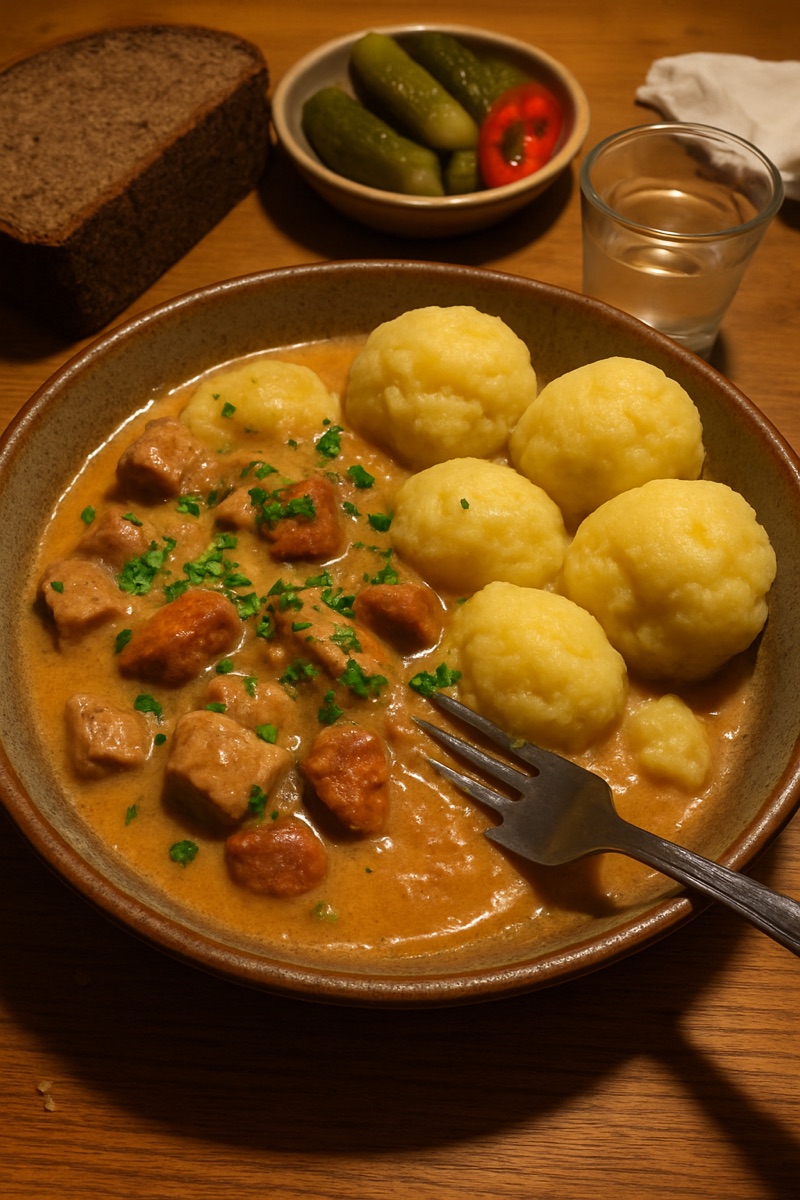
The official Belarus.by guide names machanka, draniki and kalduny among the most popular traditional dishes. Machanka began as verashchaka, an 18th-century meat gravy used as a dip for thick pancakes. Our version simmers pork belly, smoked ribs and sausage for 1 hour 30, then thickens the broth with toasted flour and sour cream, kept loose enough to dip yeast pancakes into. The name comes from the act of dipping, and the pancakes are torn by hand from a shared bowl.
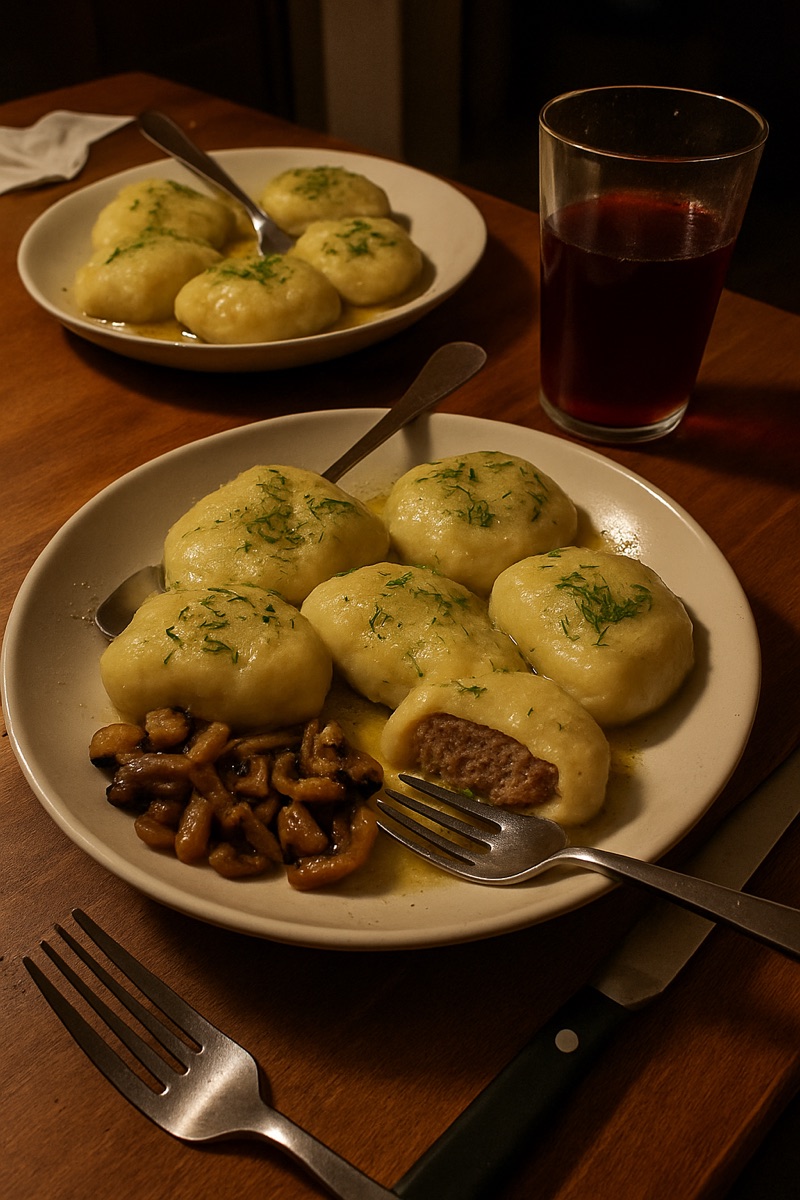
Kalduny are dumplings of thin unleavened dough around raw minced meat, known as koldūnai in Lithuania and kołduny in Poland. The word means "sorcerers" in Slavic languages, and nobody is sure why. Kalduny Count Tyshkevich, filled with smoked ham and mushrooms, were long considered Belarus's "visiting card". In the late 19th century kalduny began to be made with a grated potato dough, and today they compete with Russian pelmeni on menus. Our recipe keeps the original flour dough, rolled 1 to 2 mm thin and boiled 5 to 7 minutes after the dumplings float. Belarus's Tatar community, present since the end of the 14th century, makes large mutton kalduny for Muslim feasts.
All three recipes are on our page about the food of Belarus. For the potato pancake's Ukrainian cousin see Ukraine's national dish, for koldūnai see Lithuania's national dish, and for the wider region read our guide to Eastern European food.
The recipes
- Draniki🇧🇾 Belarus · 35 minutes
 Machanka🇧🇾 Belarus · 2 hours and 15 minutes
 Kalduny🇧🇾 Belarus · 1 hour and 40 minutes
Questions people ask
Are draniki the national dish of Belarus?
There is no official decree, but draniki are the dish most often named Belarus's national dish and are described as its "signature" dish in accounts of Belarusian cuisine.
What is the difference between draniki and latkes?
Both are fried pancakes of grated potato. Latkes are the Ashkenazi Jewish version eaten at Hanukkah, and accounts of Belarusian cuisine suggest they may have been borrowed from draniki.
What are draniki served with?
Traditionally with sour cream. They are also served with meat dishes, stacked in clay pots, or with machanka, a pork and sour cream gravy.
Why do draniki turn grey?
Grated raw potato darkens quickly in contact with air. Grating the onion first and the potato on top of it, then cooking straight away, keeps the batter pale.
Are draniki the same as Ukrainian deruny?
They are the same kind of grated potato pancake; deruny is the Ukrainian name and draniki the Belarusian one.
Keep reading
- Traditional food of Belarus: 12 dishes to know
- What is the national dish of the Czech Republic?
- What is the national dish of Estonia?
- What is the national dish of Hungary?
- What is the national dish of Latvia?
- What is the national dish of Lithuania?