 COPPER
Traditional food of Belarus: 12 dishes to know
Belarusian food is built on potatoes, sour rye bread, pork, mushrooms, buckwheat and sour cream, with long, slow cooking in the oven. More than 300 potato dishes are recorded in the country. The most emblematic dishes are draniki, grated potato pancakes, kalduny, meat-filled dumplings, machanka, a pork gravy for dipping pancakes, and potato babka.
What Belarusian food is built on
Belarusian cooking has mostly Slavic roots, mixed with Lithuanian and Polish influence from centuries spent in the Grand Duchy of Lithuania and the Polish-Lithuanian Commonwealth. Wheat grows poorly in the cold, wet climate, so sour rye bread, barley, oats and buckwheat came first; Belarus was probably the centre of Europe's buckwheat culture. Cabbage, often as sauerkraut, and beetroot were the main vegetables, with mushrooms and forest berries from the woods.
Then came the potato. It became so common in the 19th century that more than 300 potato dishes are recorded, and Belarus is regularly ranked first in the world for potato consumption, at around 160 kg per person a year. Pork is the favourite meat, sour cream is both ingredient and garnish, and the official Belarus.by guide notes that many dishes are cooked for a long time in the oven over low heat. A traditional peasant dinner had just two courses: a soup and a main dish.
Potato dishes
Grated raw potato is the base of the dishes Belarusians consider most their own.
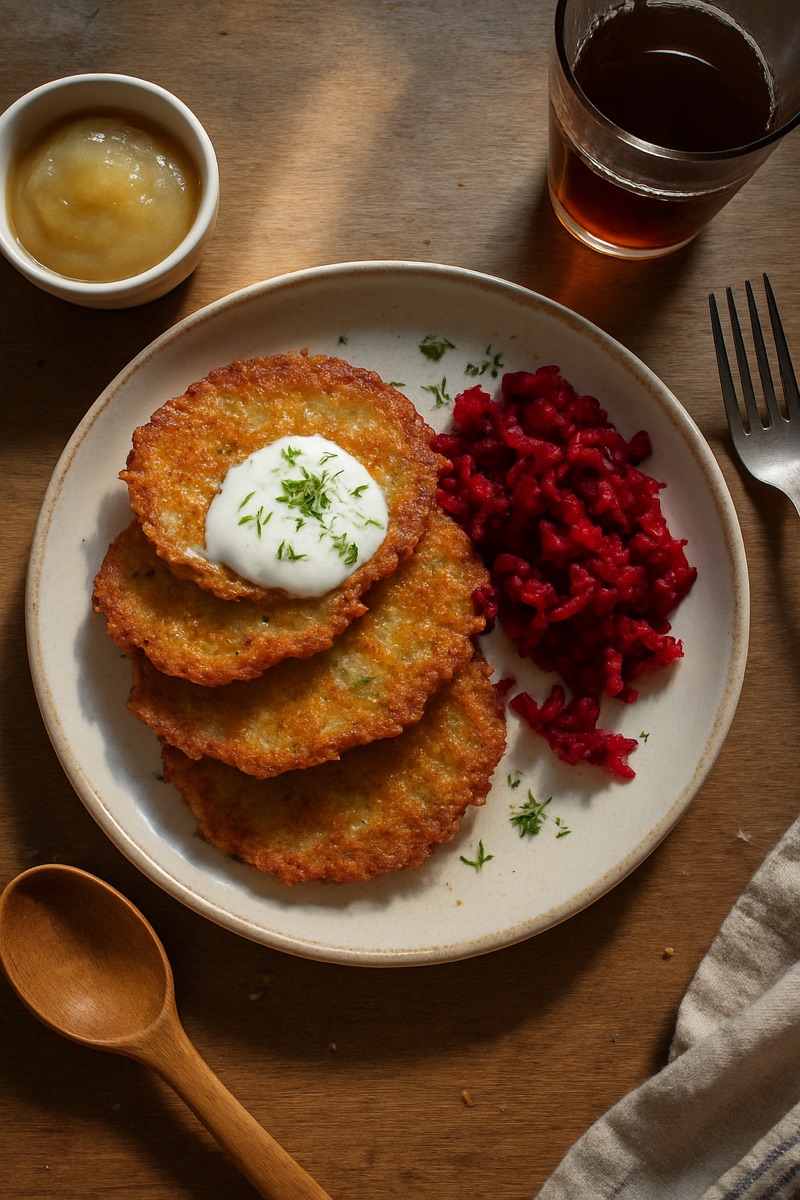
- Draniki — Pancakes of grated raw potato with onion, egg and a little flour, shallow-fried until crisp and served hot with sour cream. They are eaten plain or stuffed, and are often called the signature national dish. Restaurants serve them stacked in round clay pots alongside meat dishes.
- Potato babka — Grated potato mixed with eggs, onion and pieces of smoked or fried bacon, then baked in a crock. Depending on the recipe it comes out as a flaky potato pie or a heavy potato pudding, and it is often served with a sauce of sour cream and pork. It is a close relative of Lithuanian kugelis.
Dumplings, pancakes and meat
Meat was long a festive food, so it often comes wrapped in dough, rolled, or turned into a sauce for pancakes.
- Kalduny — Dumplings of thin unleavened dough filled with meat, mushrooms or other stuffings, known as koldūnai in Lithuania and kołduny in Poland. Kalduny Count Tyshkevich, filled with smoked ham and fried mushrooms, were long considered Belarus's visiting card. They are boiled and served with melted butter or sour cream, or in a broth.
- Machanka — A thick gravy of pork and sausage pieces, historically called verashchaka, used as a dip for thick pancakes. It dates back to the 18th century and is still one of the most popular dishes in Belarusian restaurants. The name comes from the verb for dipping, and the pancakes are torn and dipped by hand.
- Bliny — Pancakes of every thickness, thin or thick, plain or filled, made mostly from wheat or buckwheat flour. A version made with oatmeal is called tsadaviki. Thick pancakes are the ones that go with machanka.
- Zrazy — Thin slices of beef rolled around a stuffing of vegetables, mushrooms, eggs or potato, then cooked. The dish dates back to the Polish-Lithuanian Commonwealth and is popular in western Belarus, Poland and Lithuania.
- Palcoŭka — A raw pork sausage of minced or chopped meat seasoned with salt, pepper and garlic and stuffed into pig's intestine. Its name, "finger-stuffed sausage", describes how it was traditionally filled. It sits beside kryvianka, a blood sausage made with buckwheat.
Soups
Soup is the first half of a traditional Belarusian meal, and the two most common ones are both made with beetroot.
- Borscht — Like Ukrainians, Russians and Poles, Belarusians are fond of borscht, which in Belarus is a thick, rich soup of beetroot and cabbage with grains, potato and meat. It is one of the dishes found everywhere in the country, at home and in restaurants.
- Khaladnik — A cold borscht of beetroot, beet leaves or sorrel, served with sour cream, hard-boiled eggs and boiled potatoes. It is the classic summer soup, and it has also been popular in Polish and Lithuanian cooking since the late 18th century.
Bread and drinks
Rye is the grain behind both the daily bread and the traditional drinks.
- Sour rye bread — Belarusian bread is dark, heavier than wheat bread and slightly sour, because rye grows where wheat does not. Old recipes added caraway seeds, linseed or sunflower seeds, and wheat flour only became widespread in the 20th century.
- Kvass — A lightly fermented drink brewed from rye malt or bread, traditionally the main non-alcoholic drink of Belarus. Factory versions are now often made with sugar and flavourings rather than genuine rye malt.
- Krambambula — Vodka diluted with water and mixed with honey and spices such as nutmeg, cinnamon, cloves and red and black pepper. In the 18th century it competed with French champagne among the wealthy, and it is enjoying a revival today.
Influences and regional flavours
Belarus's food also carries the mark of its minorities. Jewish cooks helped bring in potato dishes of German origin such as babka in the 19th century, and the exchange went both ways: the potato latkes of Eastern European Jews may have been borrowed from draniki. The Lipka Tatars added filled pastries and mutton dishes. With no coastline, Belarus favours lake fish, especially zander and carp, while the lake country of the north-west, next to Latvia and Lithuania, is known for smoked and stuffed eel.
Cook Belarusian food at home
Draniki are the dish most often named as the national dish of Belarus, and that article explains why. Belarusian cooking belongs to the wider family of Eastern European food; compare its potato dishes with the traditional food of Lithuania and its dumplings and beet soups with the traditional food of Ukraine.
Draniki, kalduny and machanka each have a full recipe, with quantities and step-by-step methods, in the Copper app. You will find them on our page dedicated to Belarusian recipes.
The recipes
- Draniki🇧🇾 Belarus · 35 minutes
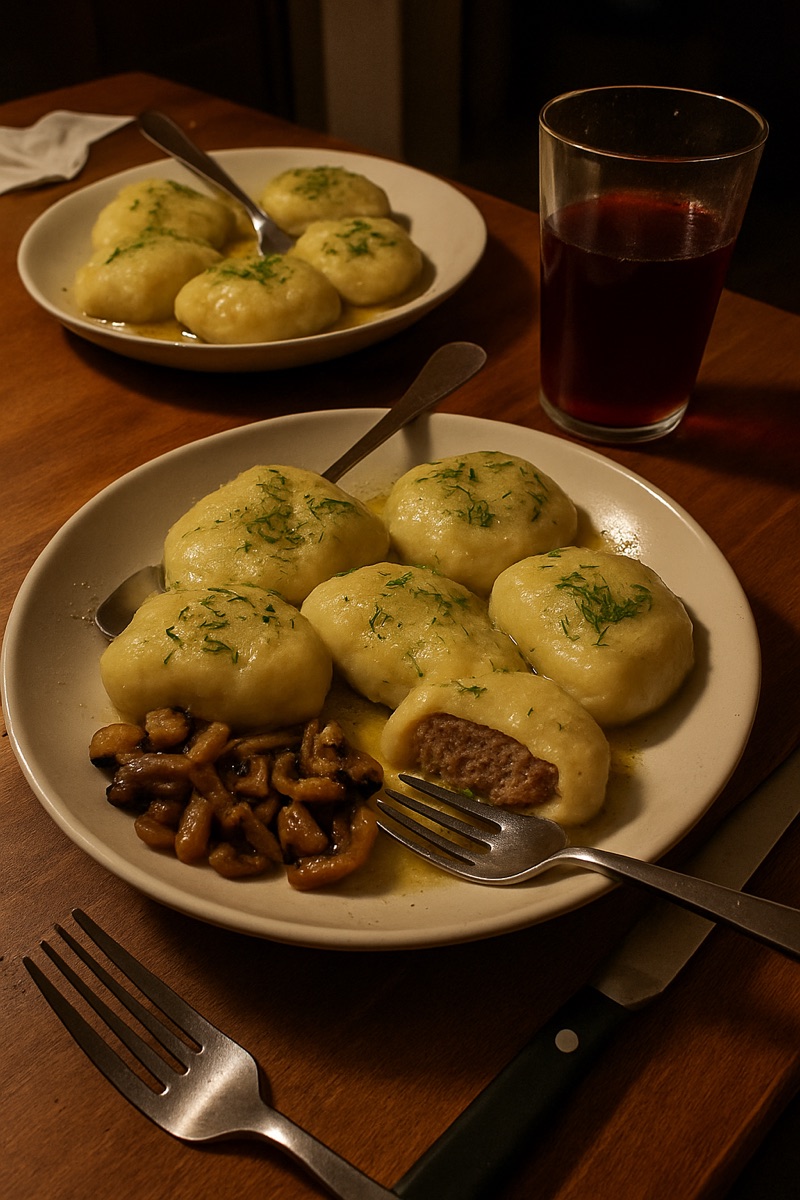 Kalduny🇧🇾 Belarus · 1 hour and 40 minutes
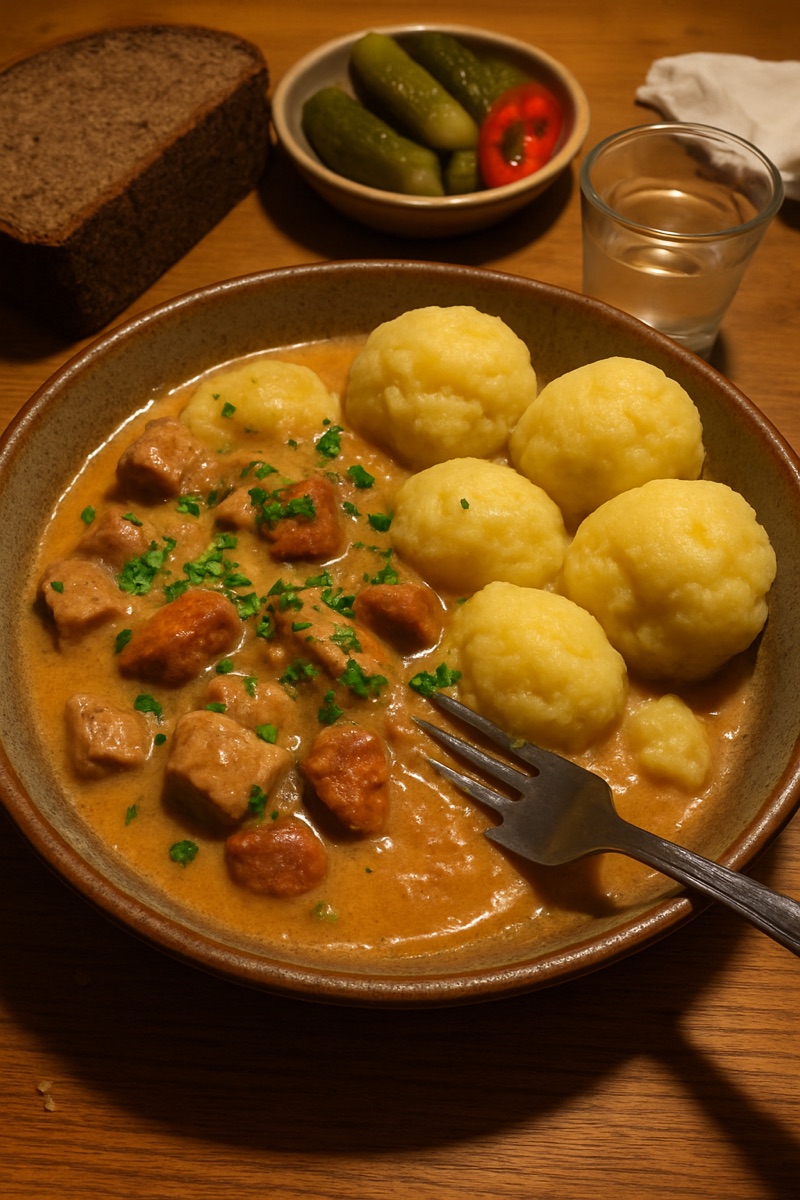 Machanka🇧🇾 Belarus · 2 hours and 15 minutes
Questions people ask
What is the most popular food in Belarus?
Draniki, potato pancakes with sour cream, are the dish most associated with Belarus. The official Belarus.by guide also names machanka, kalduny, potato babka, homemade sausages and cold sorrel soup among the most popular traditional dishes.
Why do Belarusians eat so many potatoes?
The potato became so common in the 19th century that it is considered the core ingredient of the national cuisine. More than 300 potato dishes are recorded, and Belarus is regularly ranked first for potato consumption per person, at around 160 kg a year.
What is machanka?
Machanka is a thick gravy of pork and sausage pieces, eaten by dipping thick pancakes into it. It descends from verashchaka, an 18th-century meat sauce, and is one of the most popular dishes in Belarusian restaurants.
Is Belarusian food spicy?
No. Its seasoning relies on caraway, coriander, horseradish, mustard and juniper rather than chili, with sour cream and sourness from rye bread and sauerkraut.
What do people drink in Belarus?
Kvass, a fermented rye drink, is the traditional non-alcoholic drink, along with kompot and kissel made from fruit and berries. The traditional spirit is harelka, a vodka distilled mainly from rye.
Keep reading
- What is the national dish of Belarus?
- Traditional food of the Czech Republic: 13 dishes to know
- Traditional food of Estonia: 13 dishes to know
- Traditional food of Hungary: 13 dishes to know
- Traditional food of Latvia: 12 dishes to know
- Traditional food of Lithuania: 13 dishes to know