 COPPER
Traditional food of Ukraine: 13 dishes to know
Ukrainian food is built on grain, above all wheat and rye, with beetroot, cabbage, potatoes, mushrooms, pork, salo and sour cream. Many dishes are cooked twice, fried or boiled first and then stewed or baked. The most emblematic dishes are borscht, the red beet soup and national dish, varenyky, boiled dumplings, holubtsi, cabbage rolls, and chicken Kyiv.
What Ukrainian food is built on
Ukraine is often called the breadbasket of Europe, and its cooking reflects it. Most traditional dishes descend from peasant food based on wheat and rye, with potatoes, cabbage, mushrooms and beetroot as the staple vegetables. Bread matters so much that Honoré de Balzac claimed to have counted 77 local varieties during his visit in 1848. Salo, cured pork fat, has long been valued because it keeps, and smetana, sour cream, is the standard garnish.
The technique is distinctive too: many dishes are first fried or boiled, then stewed or baked, a double cooking often described as the most distinctive feature of the cuisine. Fermenting, pickling and smoking are still everyday methods in many families, and farmers' markets sell pickles, smoked meats, dried fruit and home-made cottage cheese.
Borscht and its bread
Soup opens a Ukrainian meal, and one soup stands above the rest:
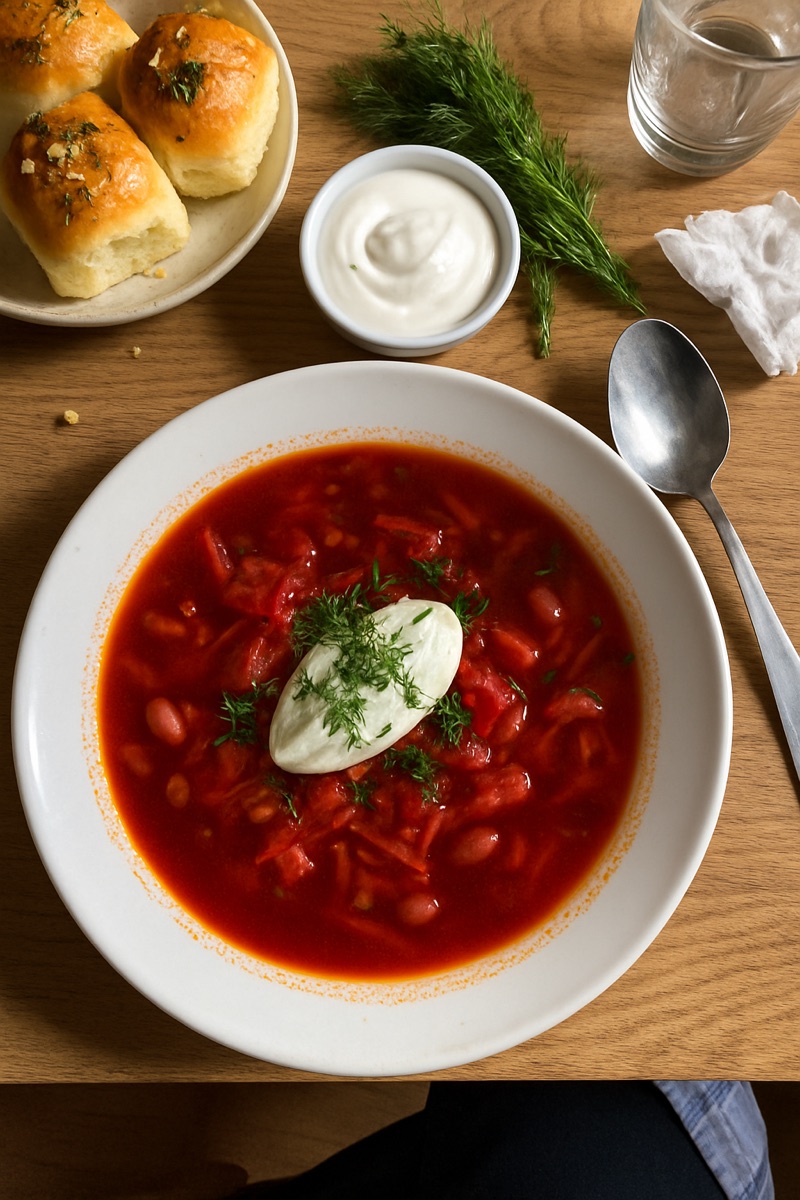
- Borscht — Red borscht is a sour soup of meat broth with beetroot, cabbage, potatoes, carrots, onions, tomatoes, garlic and dill, served hot with sour cream. Ukraine counts about 30 varieties, with or without meat, and the sourness traditionally came from beet kvas before tomato took over. It is also claimed by Russians, Poles, Lithuanians and Ashkenazi Jews; the beet version most probably originated in what is now Ukraine, and UNESCO listed Ukrainian borscht cooking in 2022 while stating that this implies no exclusive ownership.
- Pampushky — Small yeast buns of wheat, rye or buckwheat flour, traditionally baked rather than fried. The savoury kind has no filling and is brushed with a garlic sauce, and it is the usual partner of red borscht. Borscht with garlic pampushky is the signature dish of the Cherkasy region; sweet pampushky are filled with jam, fruit or poppy seeds instead.
Dumplings, pancakes and cabbage rolls
Dough and potatoes turn up in every Ukrainian kitchen, boiled, fried or rolled in cabbage leaves.
- Varenyky — Half-moon dumplings of unleavened dough, named after the verb varyty, "to boil". Their dough is thinner and softer than Polish pierogi, and the classic filling is mashed potato, with cabbage, quark, cherries or mushrooms as alternatives. They are served with sour cream, butter and fried onions, or with sugar when the filling is fruit.
- Halushky — Soft pieces of dough boiled in water or broth, eaten as a dish of their own or added to soup. They are the stereotypical dish of the Poltava region, where large halushky were historically made with buckwheat flour, and a Poltava version is served with chicken and sour cream.
- Deruny — Pancakes of grated raw potato with egg and sometimes onion and a little flour, shallow-fried in oil and served with sour cream. They are the signature dish of Polissia in the north, and the town of Korosten has held an international deruny festival every year since 2008.
- Holubtsi — Cabbage leaves rolled around rice or millet, often with minced meat, then baked or stewed in a sauce of tomato, cream or sour cream. The Carpathians fill them with corn grits and Poltava with buckwheat, and a meatless version is one of the twelve dishes of the Christmas Eve supper. Holubtsi cooking was added to Ukraine's national inventory of intangible cultural heritage in 2023.
Meat, salo and the Carpathian table
Pork dominates, from the cured fat on a slice of bread to the butter-filled cutlet that made Kyiv famous abroad.
- Chicken Kyiv — A pounded chicken fillet rolled around cold herb butter, breaded and fried, so the butter runs out when it is cut. Its origin is poorly documented and disputed, but it spread in the Soviet era and became a symbol of Ukrainian cuisine, served today in restaurants from London to New York.
- Salo — Slabs of pork fat cured with salt, with or without skin and streaks of meat. Unlike lard it is not rendered, and unlike bacon it is mostly fat. It is served thinly sliced on bread with onion, horseradish or mustard, and fried into crisp shkvarky to finish other dishes.
- Banosh — Cornmeal cooked with sour cream and topped with crisp pork rind, mushrooms and bryndza, a sheep's cheese. It belongs to the Hutsul cooking of the Carpathians, where it is traditionally cooked over a fire, and it is served in restaurants all across the region.
Sweets, Christmas Eve and drinks
Ukrainian sweets lean on curd cheese, honey, poppy seeds and nuts, and the most important ones belong to Christmas Eve.
- Syrnyky — Small pancakes of curd cheese mixed with flour, eggs and sugar, fried in oil or butter until lightly browned outside and still creamy inside. They are traditionally sweet and eaten for breakfast or dessert, with sour cream, jam, honey or apple sauce.
- Kutia — Boiled wheat mixed with poppy seeds, nuts and honey. It is the first of the twelve dishes of Sviata Vechera, the Christmas Eve supper: the head of the family takes the first spoonful and calls on departed relatives to join the meal.
- Kyiv cake — Two layers of hazelnut meringue filled with a buttercream-like cream and covered with chocolate glaze. It has been produced in Kyiv since 6 December 1956 by the confectionery factory that now belongs to Roshen, and its box shows the horse chestnut leaf from Kyiv's Soviet-era coat of arms.
- Uzvar — A drink made by simmering dried fruit, usually apples, pears and prunes, sometimes with apricots, raisins or honey. It is traditionally served at Christmas, alongside kvas, mead and kompot among Ukraine's classic drinks.
Regional flavours
Ukraine's regions eat differently. Galicia, in the west, shows Austrian, Hungarian and Italian influence, with strudel, cheesecake and Lviv's coffeehouse culture. The Hutsul and Boyko highlands of the Carpathians cook with maize, beans, mushrooms and bryndza, and Transcarpathia makes bogrács, a paprika stew borrowed from Hungary. Forested Polissia in the north lives on mushrooms, berries, rye and deruny, while Poltava in central Ukraine is the home of halushky. The south is known for seafood: Odesa has fried gobies and forshmak, a chopped herring dish from Jewish cooking. Crimean Tatar çiberek, fried turnovers with minced meat, are on Ukraine's national register of cultural heritage.
Cook Ukrainian food at home
Borscht is the national dish of Ukraine, and that article covers its history and the debate around it in detail. Ukrainian cooking belongs to the wider family of Eastern European food; compare its dumplings and soups with the traditional food of Poland and the potato dishes in the traditional food of Belarus.
Borscht, varenyky and chicken Kyiv each have a full recipe, with quantities and step-by-step methods, in the Copper app. You will find them on our page dedicated to Ukrainian recipes.
The recipes
- Ukrainian borscht🇺🇦 Ukraine · 3 hours and 20 minutes
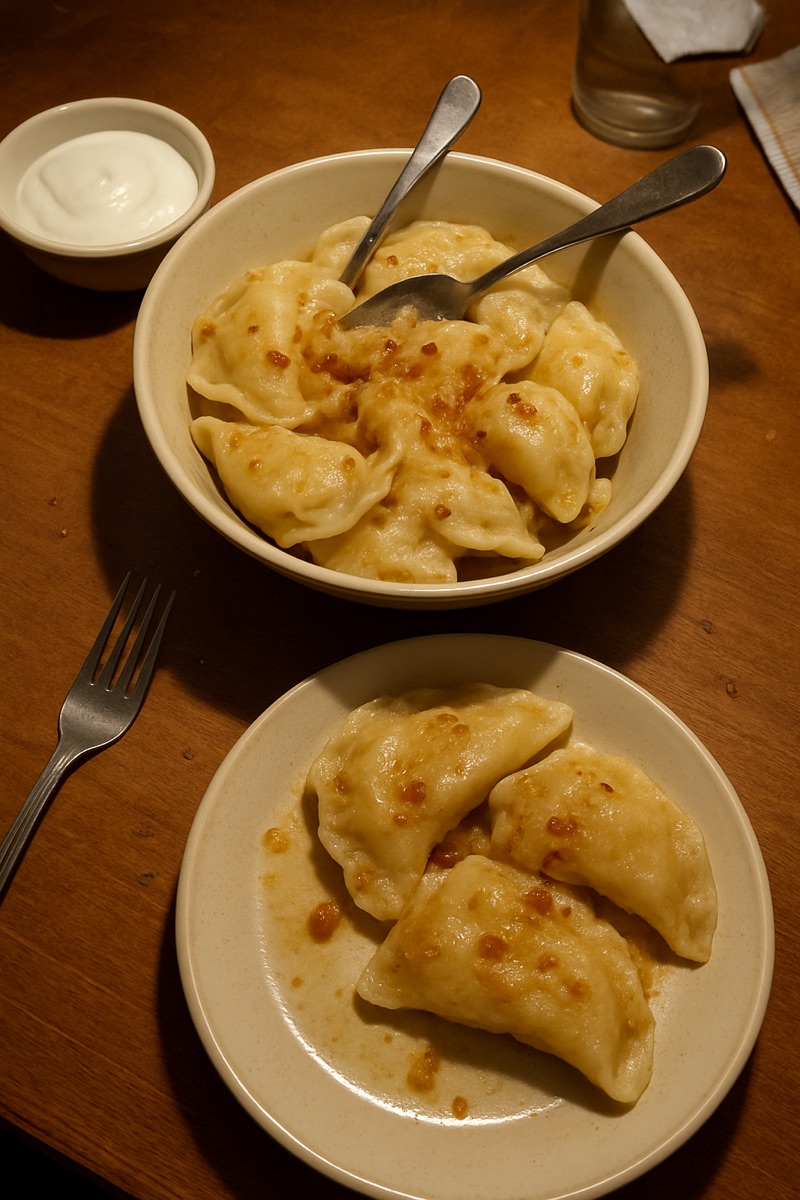 Varenyky🇺🇦 Ukraine · 1 hour and 30 minutes
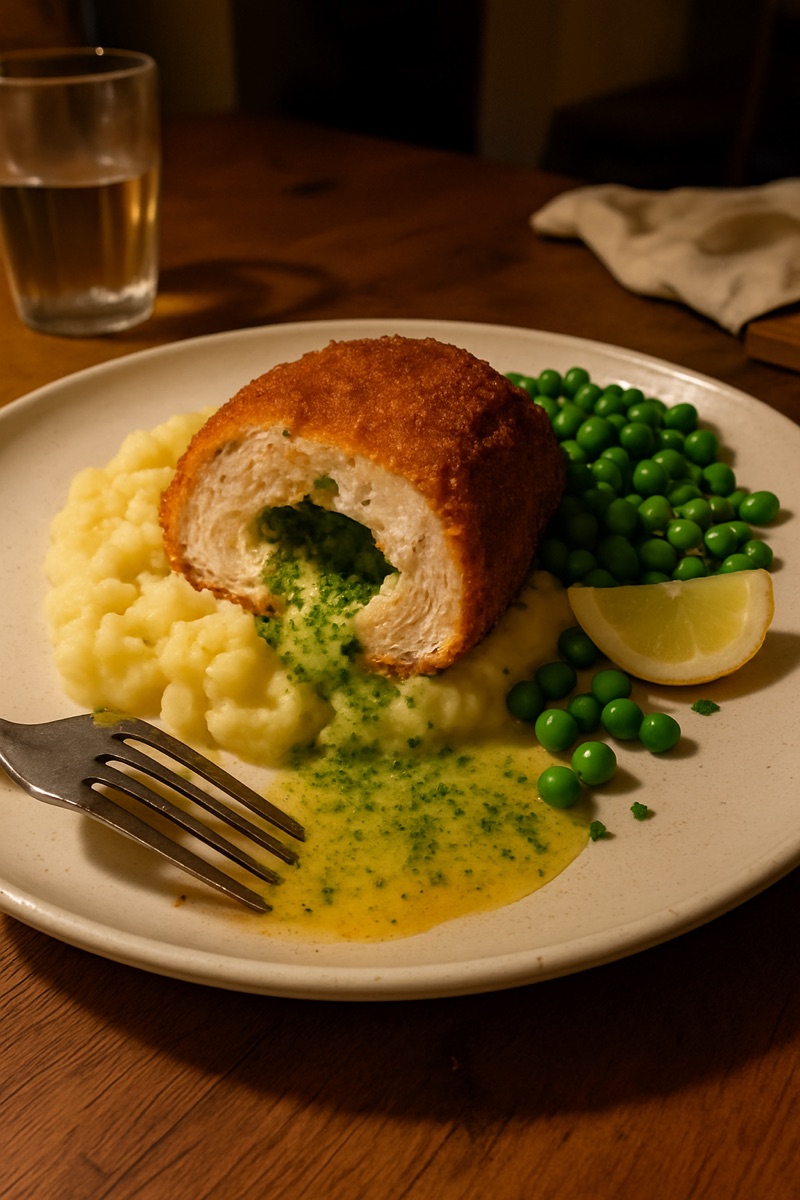 Chicken kyiv🇺🇦 Ukraine · 2 hours and 50 minutes
Questions people ask
What is the most popular food in Ukraine?
Borscht is the national dish, and varenyky and holubtsi are the other national favourites, found in every traditional Ukrainian restaurant. Chicken Kyiv, deruny, salo and syrnyky are also everyday classics.
Is borscht Ukrainian or Russian?
Borscht is eaten and claimed across Eastern Europe, including in Russia, Poland and Lithuania. The beet version most probably originated in what is now Ukraine, and UNESCO listed Ukrainian borscht cooking in 2022, while stating that the listing does not imply exclusive ownership.
What do Ukrainians eat on Christmas Eve?
Sviata Vechera, the Christmas Eve supper, has twelve meatless dishes. It opens with kutia, wheat with poppy seeds, nuts and honey, and usually includes meatless varenyky, Lenten holubtsi and uzvar, a dried-fruit drink.
What do Ukrainians eat for breakfast?
Syrnyky, curd cheese pancakes with sour cream or jam, are a classic breakfast. In Lviv the traditional breakfast is milk coffee, bread and butter, and cottage cheese with sour cream.
What is salo?
Salo is pork fat cured with salt, eaten thinly sliced on bread with onion, horseradish or mustard. It is not rendered like lard, and it can also be fried into crisp shkvarky.
Keep reading
- What is the national dish of Ukraine?
- Traditional food of Belarus: 12 dishes to know
- Traditional food of the Czech Republic: 13 dishes to know
- Traditional food of Estonia: 13 dishes to know
- Traditional food of Hungary: 13 dishes to know
- Traditional food of Latvia: 12 dishes to know