 COPPER
Traditional food of the Czech Republic: 13 dishes to know
Czech food is built on pork, bread and potato dumplings, cabbage and sauerkraut, rich gravies and cream sauces, caraway-flavoured rye bread and foraged mushrooms, all washed down with beer. A meal usually starts with soup. The most emblematic dishes are vepřo knedlo zelo, roast pork with dumplings and sauerkraut, svíčková, beef in a root-vegetable cream sauce, guláš and smažený sýr, fried cheese.
What Czech food is built on
Czech cooking is typical of the wider Central European region, shaped by recipes exchanged with neighbours, border towns and minorities. A typical meal has at least two courses, a soup first and then a main dish, and on festive days a third of cake or stewed fruit. Thick soups come before meats stewed in gravies and cream sauces, and the main course usually comes with knedlíky, dumplings, or potatoes.
Pork makes up more than half of all the meat eaten in the country, and many parts of the pig are used, from crackling to sausages. Bread is a sourdough of rye and wheat, often with caraway seeds, which also season potatoes, cabbage and roasts. Mushroom foraging, above all for boletes, is an autumn tradition, and beer is the national drink: Czechs drink more beer per person than any other country, and the pilsner style was born there.
Soups
Soup, polévka, opens a Czech meal. Two of the best known:
- Česnečka — Garlic soup made with garlic and potatoes and served with fried bread croutons. Many versions add minced sausage, a raw egg or cheese, and it is served in restaurants across the country.
- Kulajda — A thick, white South Bohemian soup of water and cream with mushrooms, potatoes, dill and an egg, often a quail's egg. Mushrooms give it its main flavour and dill its signature aroma.
Meat, sauces and dumplings
The heart of the Czech table is meat with a sauce and something to soak it up.
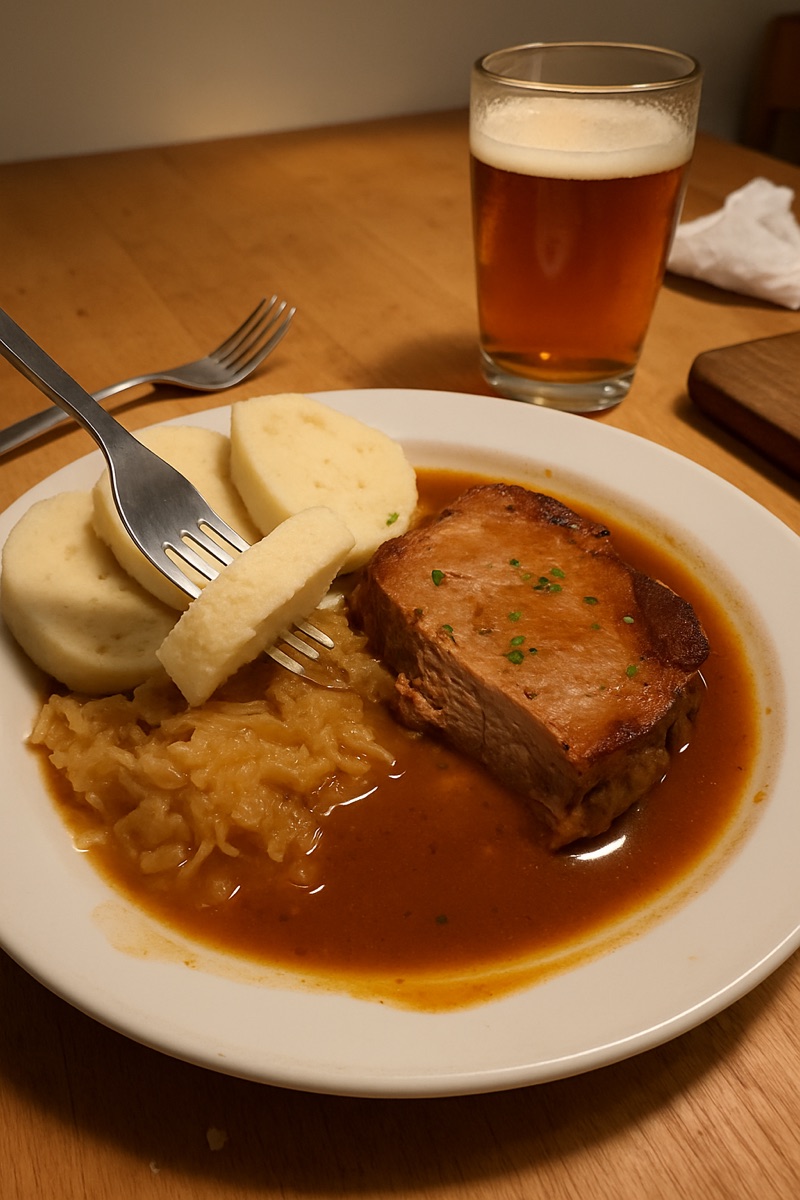
- Vepřo knedlo zelo — Roast pork with dumplings and cabbage, whose colloquial name simply lists the three parts. Slices of roast pork, bread or potato dumplings and stewed sauerkraut sit side by side under the roasting juices. It is often considered the most typical Czech dish.
- Svíčková — Beef, usually larded, cooked with carrot, parsley root, celeriac and onion, which are then blended with cream into a thick sauce. It is served with bread dumplings, whipped cream, cranberry sauce and a slice of lemon. It is also one of the most common meals in Slovakia.
- Guláš — A stew of beef, pork or game with onions and spices, usually eaten with dumplings or bread. Czech guláš should not be confused with Hungarian gulyás, which is a soup; its Hungarian equivalent is pörkölt.
- Pečená kachna — Roast duck, served with bread or potato dumplings and braised red cabbage. Goose, turkey and other poultry are also popular, but duck with red cabbage is the classic.
- Houskové knedlíky — Bread dumplings made from wheat flour, sometimes with diced stale bread or rolls, steamed and sliced like bread. They are the standard side for sauced dishes, and leftover slices are pan-fried with eggs.
Pub food and street snacks
Czech beer culture has created its own set of snacks:
- Smažený sýr — A slice of cheese about 1.5 cm thick, usually Edam, breaded in flour, egg and breadcrumbs and fried. It comes with tartar sauce and fries or boiled potatoes, and it is a common street food and a cheap canteen staple in both the Czech Republic and Slovakia.
- Bramboráky — Pancakes of grated raw potato with egg and flour or breadcrumbs, seasoned above all with garlic and marjoram, sometimes with caraway. They go by other names regionally, such as cmunda or vošouch around Plzeň.
- Utopenci — "Drowned men": špekáčky sausages pickled in a sweet-sour vinegar marinade with black pepper, bay leaf, onion and chili. They are a standard snack in Czech pubs.
Sweets and pastries
Sweets are often eaten as a separate occasion, with afternoon coffee, rather than as dessert. Fruit, poppy seeds and tvaroh, a fresh curd cheese, fill most of them.
- Ovocné knedlíky — Fruit dumplings filled with plums, apricots or strawberries, boiled and topped with butter, poppy seeds or grated cheese and sugar. The dough may include potato, and the traditional sweetener was dried, powdered pear before sugar replaced it.
- Koláče — Small round cakes of puffy yeast dough holding tvaroh, jam, poppy seeds or plum butter, sprinkled with crumbs or sugar. They are baked for village feasts and weddings, where they were handed out in place of wedding invitations, and Czech immigrants took them to Texas and the Midwest.
- Trdelník — Yeast dough wound around a wooden roller, the trdlo, baked until caramelised and rolled in sugar and walnuts. It came to Moravia from the former Kingdom of Hungary and was long known as a Slovak or Moravian pastry; trdelník stands have multiplied in Prague only since the early 2000s, and the ice-cream-filled cones sold there are a recent invention.
Regional flavours
Bohemia and Moravia eat a little differently. South Bohemia is the home of kulajda, while kyselo, a sour soup of rye sourdough, mushrooms, caraway and fried onion, is a regional speciality. Moravia makes most of the country's wine, and the Moravian town of Loštice produces Olomoucké tvarůžky, a strong-smelling aged cheese with a tradition said to go back to the 15th century. Wallachia, in eastern Moravia, has kyselica, a sour cream soup with bacon, potatoes, eggs and sausage, and the Pardubice region has a gingerbread tradition, perník, dating from the 16th century.
Cook Czech food at home
Vepřo knedlo zelo and svíčková are the two candidates for the national dish of the Czech Republic, and that article compares them. Czech cooking sits within the wider family of Eastern European food; compare its roasts and dumplings with the traditional food of Germany and its soups and cakes with the traditional food of Poland.
Vepřo knedlo zelo, svíčková and trdelník each have a full recipe, with quantities and step-by-step methods, in the Copper app. You will find them on our page dedicated to Czech recipes.
The recipes
- Vepřo-knedlo-zelo🇨🇿 Czech Republic · 4 hours and 15 minutes
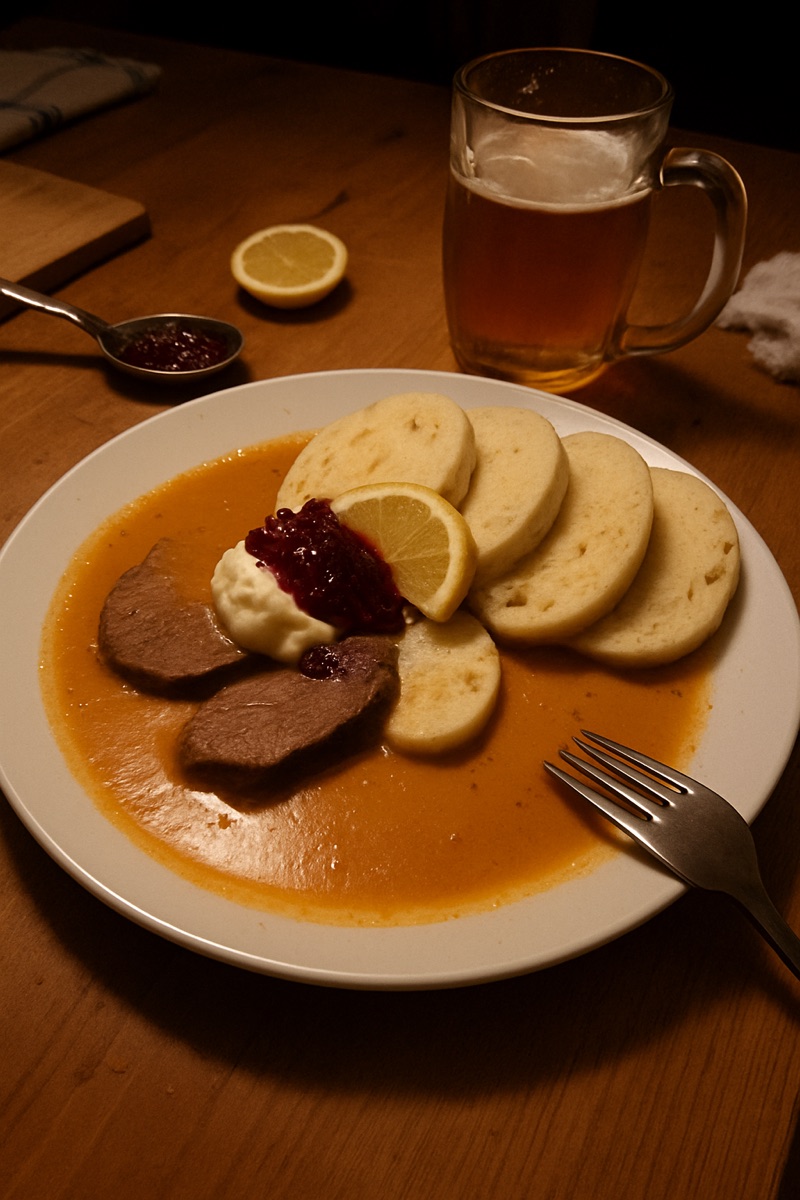 Svíčková🇨🇿 Czech Republic · 1 day and 4 hours
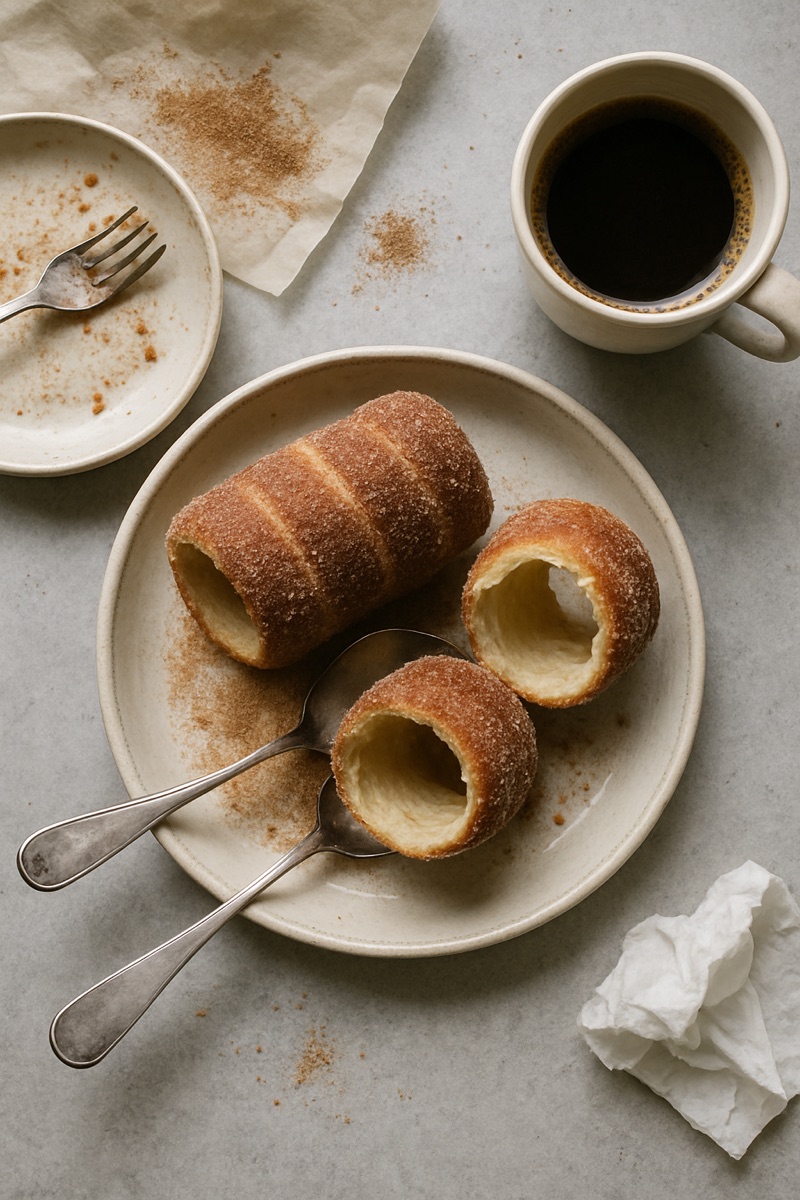 Trdelník🇨🇿 Czech Republic · 2 hours and 15 minutes
Questions people ask
What is the most popular food in the Czech Republic?
Vepřo knedlo zelo, roast pork with dumplings and sauerkraut, is often considered the most typical Czech dish, with svíčková as its main rival. Guláš, roast duck, smažený sýr and garlic soup are everyday classics.
Is trdelník a traditional Czech pastry?
Not originally. Trdelník comes from the former Kingdom of Hungary and was known as a Slovak or Moravian pastry. Stands selling it have multiplied in Prague since the early 2000s, and the ice-cream-filled versions sold there are recent.
What do Czechs eat for breakfast?
Rolls called rohlík, buns and braided houska, often topped with poppy seeds or salt, are the most common breakfast breads. Bublanina, a sponge cake with seasonal fruit such as cherries, is also eaten at breakfast.
What are knedlíky?
Knedlíky are Czech dumplings. Bread dumplings are steamed and sliced like bread; potato dumplings are smaller. They are served with sauced dishes such as svíčková, guláš and roast pork.
What do Czechs drink?
Beer: the Czech Republic has the highest beer consumption per person in the world, and the pilsner style originated there. Moravia produces wine, slivovice is the classic fruit brandy, and Kofola is a popular Czech soft drink.
Keep reading
- What is the national dish of the Czech Republic?
- Traditional food of Belarus: 12 dishes to know
- Traditional food of Estonia: 13 dishes to know
- Traditional food of Hungary: 13 dishes to know
- Traditional food of Latvia: 12 dishes to know
- Traditional food of Lithuania: 13 dishes to know