 COPPER
Traditional food of Germany: 13 dishes to know
Traditional German food is built on pork, beef, potatoes, cabbage, bread and sausage, with mustard, horseradish, caraway and juniper rather than chili heat. Braising and long marinating are the core techniques, and cooking is strongly regional. The most emblematic dishes are sauerbraten, bratwurst with sauerkraut, roast pork knuckle (Schweinshaxe) and the pretzel.
What German food is built on
German cuisine is a collection of regional cuisines, a legacy of the country's federal history. The north eats more fish and shares dishes with Denmark and the Netherlands; the south shares many with Austria and Switzerland; the east has much in common with Poland and the Czech Republic.
Across all of them, pork, poultry and beef are the main meats, usually braised rather than fried. Potatoes became near universal in the 19th century and are boiled, mashed, pan-fried or turned into dumplings. Germany makes more than 1,500 kinds of sausage and a huge range of breads. Mustard, horseradish and hot paprika aside, the seasoning is mild: bay leaf, caraway, juniper, marjoram, dill and parsley.
The structure of the day matters as much as the dishes. Breakfast is bread or rolls with butter, cold cuts, cheese, jam and boiled eggs. Lunch (Mittagessen) was traditionally the hot main meal, and dinner, Abendbrot, literally "evening bread", was a cold spread of bread, sausage and cheese. On Sunday afternoons many families still sit down to Kaffee und Kuchen, coffee and cake.
Bread holds a special place: around 3,000 types of bread and 1,200 kinds of rolls and pastries are made in some 13,000 bakeries, with dark rye loaves such as Schwarzbrot and Vollkornbrot the most typical. Bread rolls (Brötchen, Semmel in the south, Schrippe in Berlin) are split, buttered and filled for breakfast or used to hold a grilled bratwurst.
Meat dishes
- Sauerbraten — A pot roast, usually beef, marinated for 5 to 15 days in wine or vinegar with herbs and spices, then braised and served with a rich gravy and potato dumplings, potato pancakes or Spätzle. It is the dish most often named as the national dish of Germany, with regional versions from the Rhineland to Swabia.
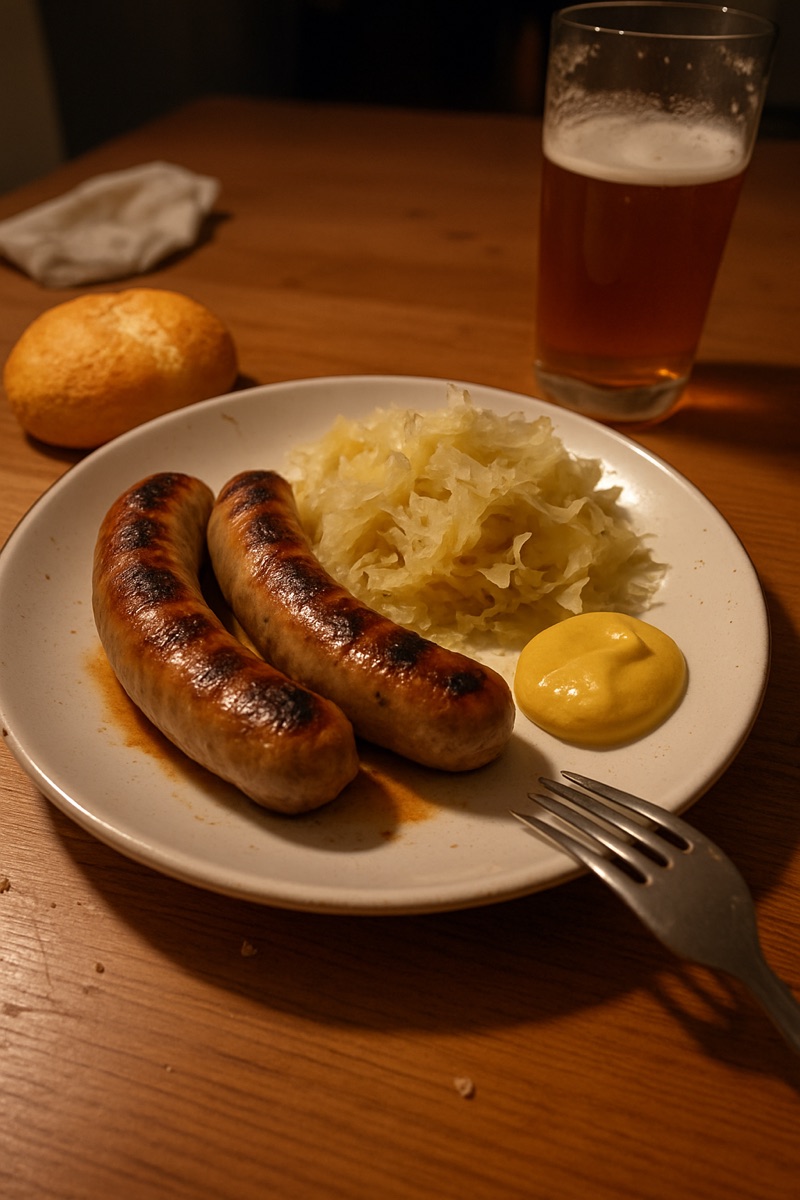
- Bratwurst with sauerkraut — Bratwurst is a fried or grilled sausage, usually of ground pork and spices, and sauerkraut is finely cut fermented cabbage. Together, with mustard and bread or potatoes, they are a standard pub and home meal; see our bratwurst with sauerkraut.
- Schweinshaxe — A pork knuckle roasted at low temperature for two to three hours, usually after marinating, and served with potatoes and cabbage. It is a Bavarian specialty; in Berlin and the north the same cut is pickled and boiled as Eisbein, served with sauerkraut.
- Königsberger Klopse — Meatballs in a creamy white sauce sharpened with capers, also called Soßklopse. The name refers to Königsberg, the former East Prussian capital, and the dish is a classic of Berlin home cooking.
- Schnitzel — A thin cutlet, breaded and fried. The veal version, the Wiener schnitzel, is Austrian in origin and the name is legally reserved for veal there, but schnitzel is eaten everywhere in Germany. Our Wiener schnitzel recipe explains how to make the crumb coat puff.
Street food and snacks
- Currywurst — A fried sausage cut into pieces, covered in curry-spiced ketchup and dusted with curry powder, served with fries or a roll. It was invented in Berlin by Herta Heuwer in 1949; try our currywurst recipe.
- Brezel (pretzel) — A knot of wheat dough dipped in a lye solution before baking, which gives it a shiny brown skin, then scattered with coarse salt. Soft pretzels should be eaten the day they are baked; the hard-baked kind keeps for months.
- Reibekuchen (Kartoffelpuffer) — Grated potato pancakes fried in oil and served with apple sauce or on dark pumpernickel bread. They are sold at street fairs and Christmas markets; Reibekuchen is the Rhineland name.
Noodles, dumplings and seasonal dishes
- Spätzle — Soft, irregular egg noodles made by pressing or scraping a sticky dough straight into boiling water. Associated with Swabia, they are served as a side with meat and gravy, or as a main dish with cheese and onion.
- Maultaschen — Large square pasta pockets filled with minced meat, smoked meat, spinach, breadcrumbs and onion, served in broth or pan-fried. They are a Swabian dish protected by an EU geographical indication.
- Spargel (white asparagus) — White asparagus is so popular that restaurants run whole menus around it during Spargelzeit, which runs from mid-April to St. John's Day on 24 June. It is eaten as a side or as a main dish in its own right.
Cakes and baking
- Black Forest gateau (Schwarzwälder Kirschtorte) — Layers of chocolate sponge soaked in kirsch, filled with cherries and whipped cream, and decorated with chocolate. It is the best-known German torte, and a 1927 recipe is kept in an archive in Radolfzell.
- Lebkuchen — Soft honey-sweetened spice cakes, close to gingerbread, that are a fixed part of German Christmas. They are also known as Honigkuchen or Pfefferkuchen.
German food region by region
Bavaria is the land of Weißwurst, pretzels, roast pork and beer, and of the Brotzeit, a savory snack originally eaten between breakfast and lunch. Swabia has Spätzle and Maultaschen, Franconia its Schäufele (roast pork shoulder) with dumplings, and Hesse its Frankfurt green sauce of seven herbs and apple wine. Hamburg and the north eat herring, often in a Fischbrötchen, while the Palatinate is known for Saumagen, a stuffed pork stomach, and Saxony for its own sauerbraten.
To the east, the dumplings, sauerkraut and smoked sausages continue into the Eastern European kitchen; to the south and west they meet Austrian and French cooking; compare with the traditional food of Austria and the traditional food of France.
Cook German food at home
Bratwurst with sauerkraut, currywurst and schnitzel all have full step-by-step recipes in Copper, with ingredients, timings and the technique that matters most for each. Find them on our page about the food of Germany.
For the neighbouring kitchens, see our guide to Western European food.
The recipes
- Bratwurst with sauerkraut🇩🇪 Germany · 45 minutes
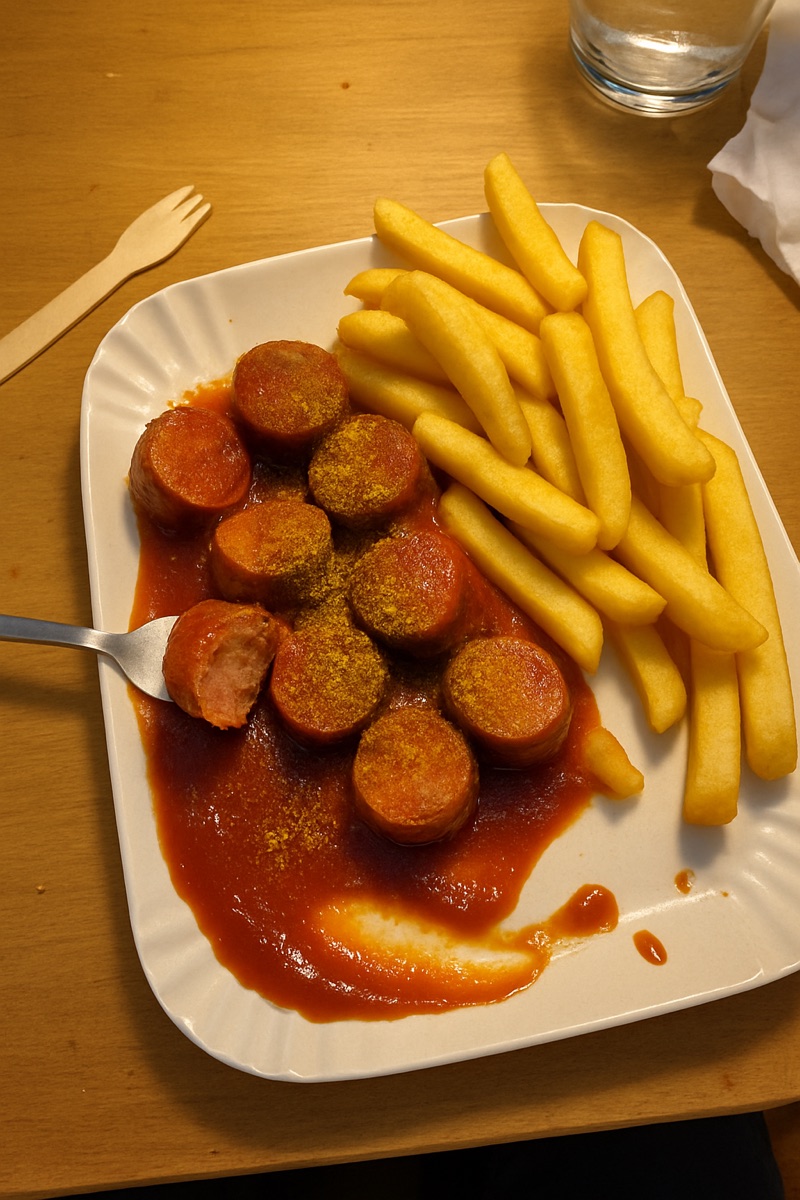 Currywurst🇩🇪 Germany · 1 hour
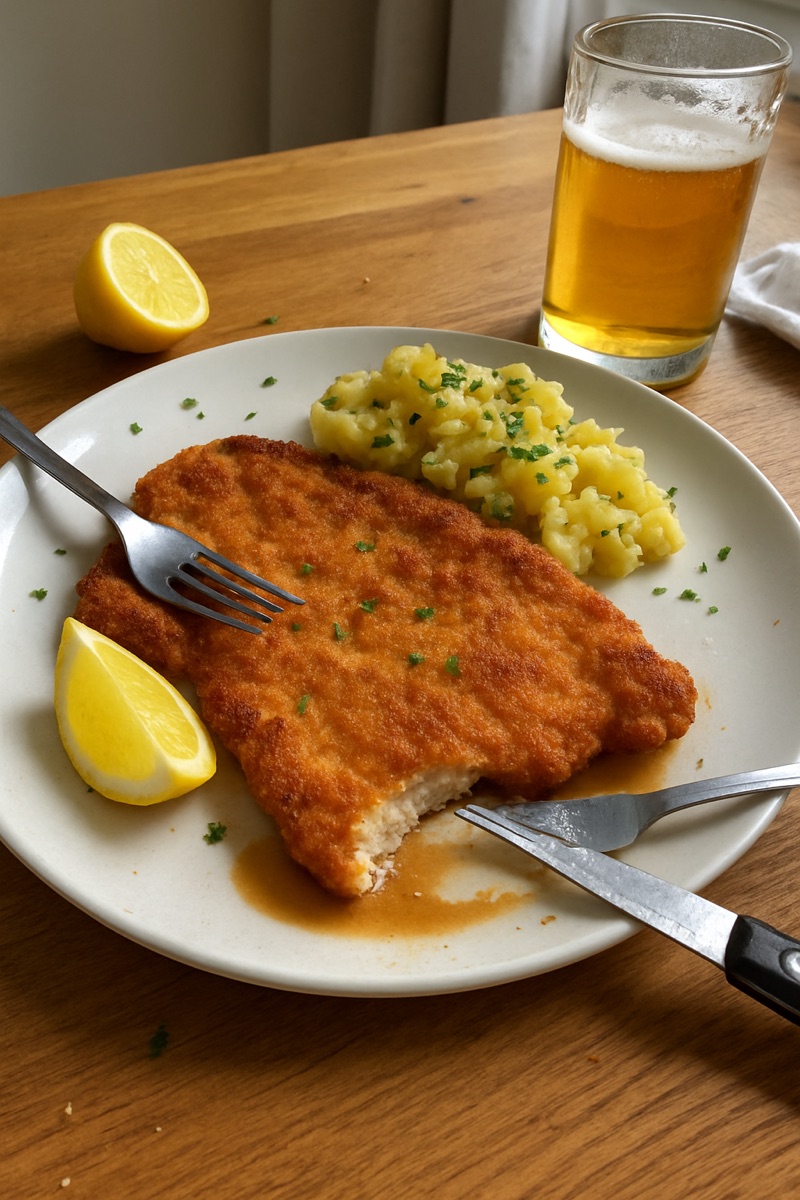 Wiener schnitzel🇩🇪 Germany · 40 minutes
Questions people ask
What is the most popular food in Germany?
Sausages, above all bratwurst and currywurst, and schnitzel are eaten everywhere in Germany. Sauerbraten is the dish most often named as the national dish.
What do Germans eat for breakfast?
A German breakfast is usually bread or bread rolls with butter, cold cuts, cheese, jam or honey and boiled eggs, with coffee or tea. Weekend breakfasts are often long and elaborate.
Is German food spicy?
No. Apart from mustard, horseradish and hot paprika, German dishes are rarely hot. The typical seasonings are caraway, bay leaf, juniper, marjoram, dill and parsley.
What is a typical German dinner?
Traditionally lunch was the main hot meal and dinner (Abendbrot) was a lighter spread of bread, sausage, cheese and vegetables. Today many families eat a hot dinner in the evening instead.
Is schnitzel German or Austrian?
The Wiener schnitzel, made from veal, is Austrian; in Austria the name is legally reserved for veal. Schnitzel in many forms, often pork, is eaten all over Germany.
Keep reading
- What is the national dish of Germany?
- Traditional food of Andorra: 13 dishes to know
- Traditional food of Austria: 13 dishes to know
- Traditional food of Belgium: 13 dishes to know
- Traditional food of Cyprus: 12 dishes to know
- Traditional food of France: 13 dishes to know