 COPPER
Traditional food of Cyprus: 12 dishes to know
Traditional Cypriot food sits between Greek, Turkish and Levantine cooking: charcoal-grilled pork and lamb, halloumi, bulgur, yogurt, pulses, olive oil and lemon, seasoned with coriander seed, cumin and mint, and eaten as a long meze. The most emblematic dishes are halloumi, souvla, kleftiko and sheftalia.
What Cypriot food is built on
Cypriot cooking is heavily influenced by Greece and Turkey, with Levantine touches from across the eastern Mediterranean. Vegetables such as courgettes, okra, green beans, artichokes and tomatoes, and pulses such as broad beans, chickpeas, black-eyed beans and lentils, are everyday food. Cumin and coriander seed are the island's traditional cooking aromas, and mint goes into almost anything made with minced meat.
Bulgur is the traditional carbohydrate other than bread, and yogurt is a staple. Pork is preserved in many forms, often with red wine, which gives Cypriot charcuterie its flavour. Many Greek Cypriots still keep the Orthodox fasting days, when pulses dressed with olive oil and lemon replace meat and dairy. Long, waxy Cyprus potatoes, exported abroad, are roasted at home with cumin, oregano and onion, ideally in the outdoor beehive oven called the fourni.
The honest caveat: most Cypriot dishes have a twin in Greece or Turkey, and many are known on the island under a Greek and a Turkish name. Cyprus has no single official national dish either, as our article on the national dish of Cyprus explains.
Grilled and slow-cooked meat
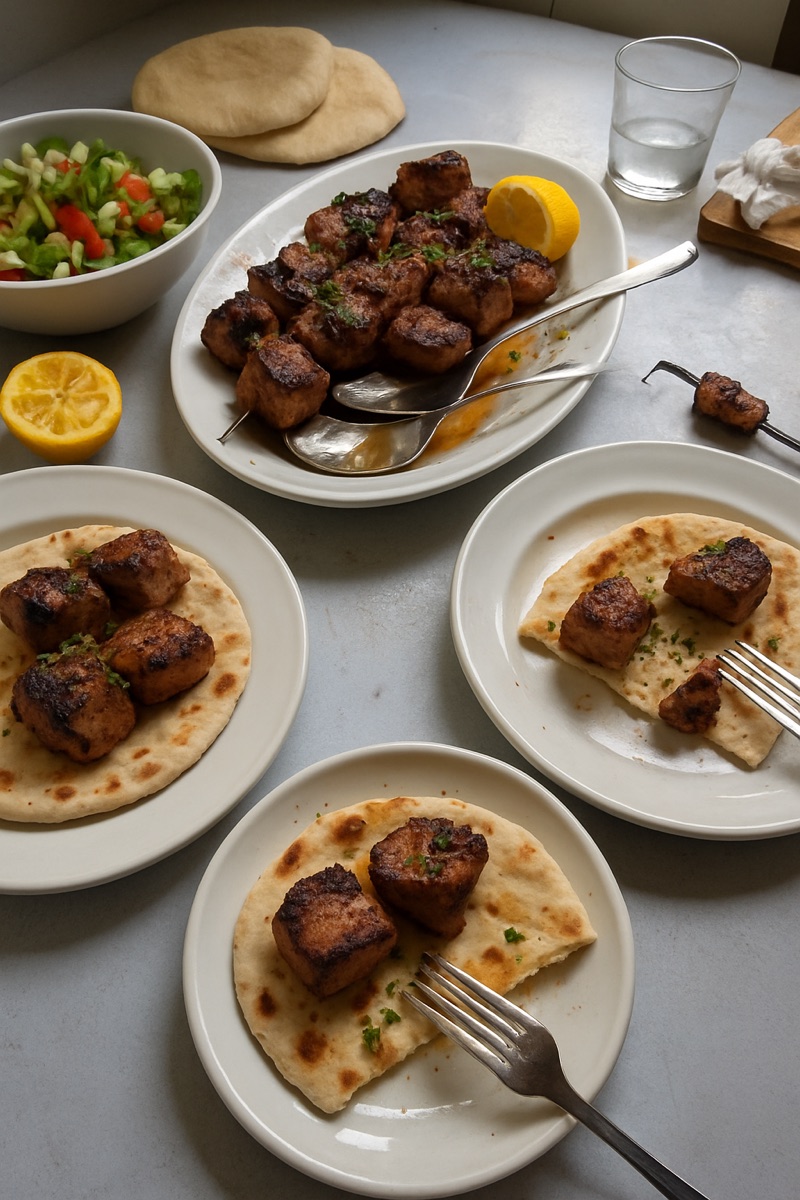
- Souvla — Large, fist-sized chunks of pork or lamb turned for hours on a long skewer over a charcoal brazier, far from the coals. It is not souvlaki, which uses small pieces cooked fast. Cypriots make it above all for celebrations such as Easter. Make it with our souvla recipe.
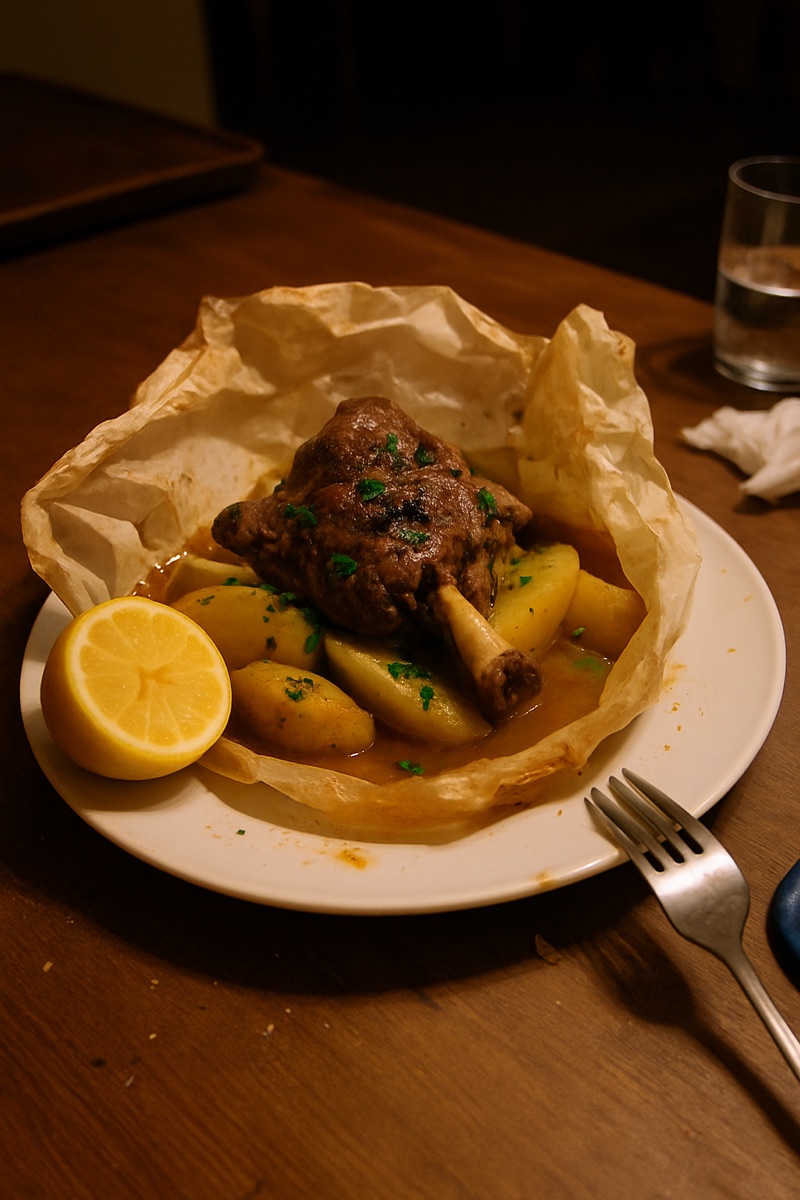
- Kleftiko — Lamb sealed with potatoes and herbs and baked for hours, traditionally in a wood-fired clay oven, so that it steams in its own juices. The name comes from the klephts, outlaws who cooked in hidden pits. It entered the register of Intangible Cultural Heritage of Cyprus in 2019, and it is also a Greek mainland dish. Follow our kleftiko recipe.
- Sheftalia — Minced lamb or pork mixed with parsley and onion and wrapped in caul fat instead of a casing, then grilled. It is one of the staples of Cypriot grills, called şeftali kebabı in Turkish.
- Afelia — Pork marinated and cooked in red wine with coarsely crushed coriander seed. It is usually served with potatoes, bulgur and yogurt.
Halloumi, pasta and grains
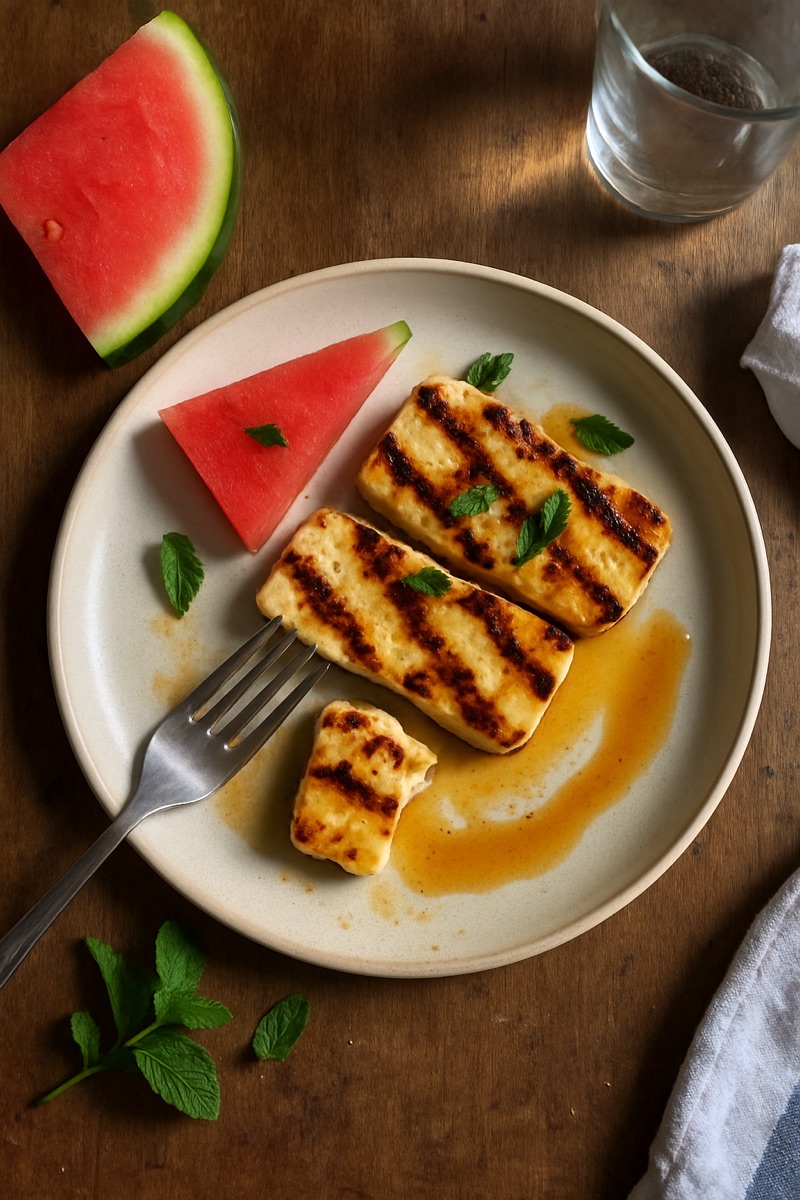
- Halloumi — A semi-hard brined cheese, traditionally of goat and sheep milk, whose curds are poached in hot whey, which is why it browns on a grill instead of melting. It is eaten fresh, grilled or fried, and aged halloumi is grated over pasta. It is the national cheese of Cyprus and, in the EU, only cheese made in Cyprus may carry the name. See our halloumi recipe.
- Makaronia tou fournou — Oven macaroni: bucatini with a meat sauce of pork, beef or lamb, flavoured with mint, parsley or cinnamon and only sometimes tomato, under a white sauce and grated halloumi or anari cheese. It is the Cypriot pastitsio, called fırında makarna in Turkish.
- Magarina bulli — Bucatini cooked in the stock of a boiled chicken and served with the chicken, then topped with lemon juice, grated halloumi and dried mint. It is often named among the national dishes of Cyprus.
- Trahanas — Cracked wheat steamed, mixed with sour milk, dried and stored, a peasant way of preserving milk. It is reheated as a soup in water or broth, often with cubes of halloumi.
- Koupes — The Cypriot form of kibbeh: a dough of bulgur, flour and water shaped into a cigar, filled with minced meat, onion, parsley and cinnamon, deep-fried and served with lemon. In Turkish it is içli köfte.
Vegetables, Easter pastries and sweets
- Kolokasi — Taro, grown in Cyprus since Roman times and now a protected product. It is usually cooked with celery and onion and pork, chicken or lamb in a tomato sauce; the small cormlets, called poulles, are fried, then finished with dry red wine and coriander seeds and served with lemon.
- Flaounes — Easter pastries filled with cheese, eggs, herbs and spices, often with raisins, wrapped in a yeast dough, brushed with egg and covered with sesame seeds. Families bake them together on Holy Friday to break the Lenten fast on Easter Sunday, when they replace bread. Turkish Cypriots make them too, as pilavuna.
- Loukoumia — Cyprus delight, a gel of starch and sugar flavoured with lemon, rose water or mastic, sometimes with nuts. It holds an EU protected geographical indication, and its main centres are Yeroskipou near Paphos and Pano Lefkara near Larnaca.
How Cypriots eat: the meze
The classic way to eat all of this is the meze, a long progression of small plates. It starts with olives, tahini, skordalia, hummus, taramosalata and tzatziki, called ttalattouri in Cypriot, with bread and salad. Then come fish, grilled halloumi, lountza (smoked pork loin), keftedes meatballs, sheftalia and loukaniko sausages, and grilled meats at the end. Unusual meze plates include octopus in red wine, snails in tomato sauce, pickled capers and moungra, pickled cauliflower. Fresh fruit or glyka, fruit preserved in syrup, closes the meal; loukoumades, fried dough balls in syrup, are another common sweet.
To drink, Cypriots favour brandy, the base of the brandy sour created on the island in the late 1930s, and zivania, a grape spirit. Commandaria, a sweet amber wine from sun-dried grapes made in the foothills of the Troodos, carries a name that dates back to the Crusades and was inscribed on UNESCO's intangible heritage list in December 2025.
Cook Cypriot food at home
Halloumi, souvla and kleftiko have full step-by-step recipes in Copper, from poaching the curds to keeping the skewer far from the coals. Find them on our page about the food of Cyprus.
To see where Cypriot food meets its neighbours, read our guides to the traditional food of Greece and the traditional food of Turkey, or browse our guide to Western European food.
The recipes
- Halloumi🇨🇾 Cyprus · 1 day and 3 hours
 Souvla🇨🇾 Cyprus · 3 hours and 30 minutes
 Kleftiko🇨🇾 Cyprus · 17 hours
Questions people ask
What is the most popular food in Cyprus?
Halloumi, souvla, kleftiko and sheftalia are the dishes most associated with the island, usually eaten as part of a meze.
Is Cypriot food Greek or Turkish?
Both, with Levantine touches. Most dishes have Greek and Turkish relatives and are known on the island under names in both languages.
What do Cypriots eat at Easter?
Flaounes, cheese and egg pastries baked on Holy Friday, replace bread on Easter Sunday, and souvla is turned over charcoal for the celebration.
Is Cypriot food spicy?
No. It is seasoned with cumin, coriander seed, mint, oregano and lemon rather than chilli.
What is the national cheese of Cyprus?
Halloumi. It holds an EU protected designation of origin, so only halloumi made in Cyprus can use the name in the EU.
Keep reading
- What is the national dish of Cyprus?
- Traditional food of Andorra: 13 dishes to know
- Traditional food of Austria: 13 dishes to know
- Traditional food of Belgium: 13 dishes to know
- Traditional food of France: 13 dishes to know
- Traditional food of Germany: 13 dishes to know