 COPPER
Traditional food of France: 13 dishes to know
Traditional French food is a set of regional cuisines built on bread, wine, cheese and slow cooking: braises in wine, long-simmered stocks, pastry and sauces. Butter and cream dominate the north, olive oil and garlic the south. The dishes to know first are pot-au-feu, boeuf bourguignon, cassoulet from the south-west and bouillabaisse from Marseille.
What French food is built on
French cooking is less one cuisine than a map of regional ones. Normandy and Brittany cook with butter, cream, apples and buckwheat; Provence with olive oil, garlic, tomatoes and herbs; Alsace with sauerkraut, pork and Riesling; the south-west with duck and goose fat, beans and foie gras. Each region also has its own cheeses and its own wine, and both are part of the meal rather than extras.
What ties the regions together is technique. French cooks braise tough cuts slowly in wine or stock, build sauces from a roux or a reduction, and bake bread and pastry daily. The baguette is defined by French law, and in 2022 the artisanal know-how of baguette bread was inscribed on UNESCO's intangible heritage lists. In 2010 UNESCO had already listed the gastronomic meal of the French, the structured meal of starter, main course, cheese and dessert shared at the table.
That structure still shapes daily eating. A French meal often opens with an apéritif and something small to nibble, then moves through an entrée (the starter, sometimes a soup), the plat principal, and cheese or dessert, sometimes with a green salad before the cheese. Bread is on the table throughout, along with water and usually wine. A long meal can end with coffee and a digestif, a brandy or liqueur meant to help digestion. Breakfast, by contrast, stays light and quick.
Slow-cooked classics
These are the dishes of Sunday lunch and of the bistro menu, all cooked low and slow for hours.
- Pot-au-feu — Cheap cuts of beef simmered for three to five hours with carrots, leeks, turnips and an onion studded with cloves. The broth is served first, then the meat and vegetables with coarse salt, mustard and gherkins. It is the dish most often named as the national dish of France.
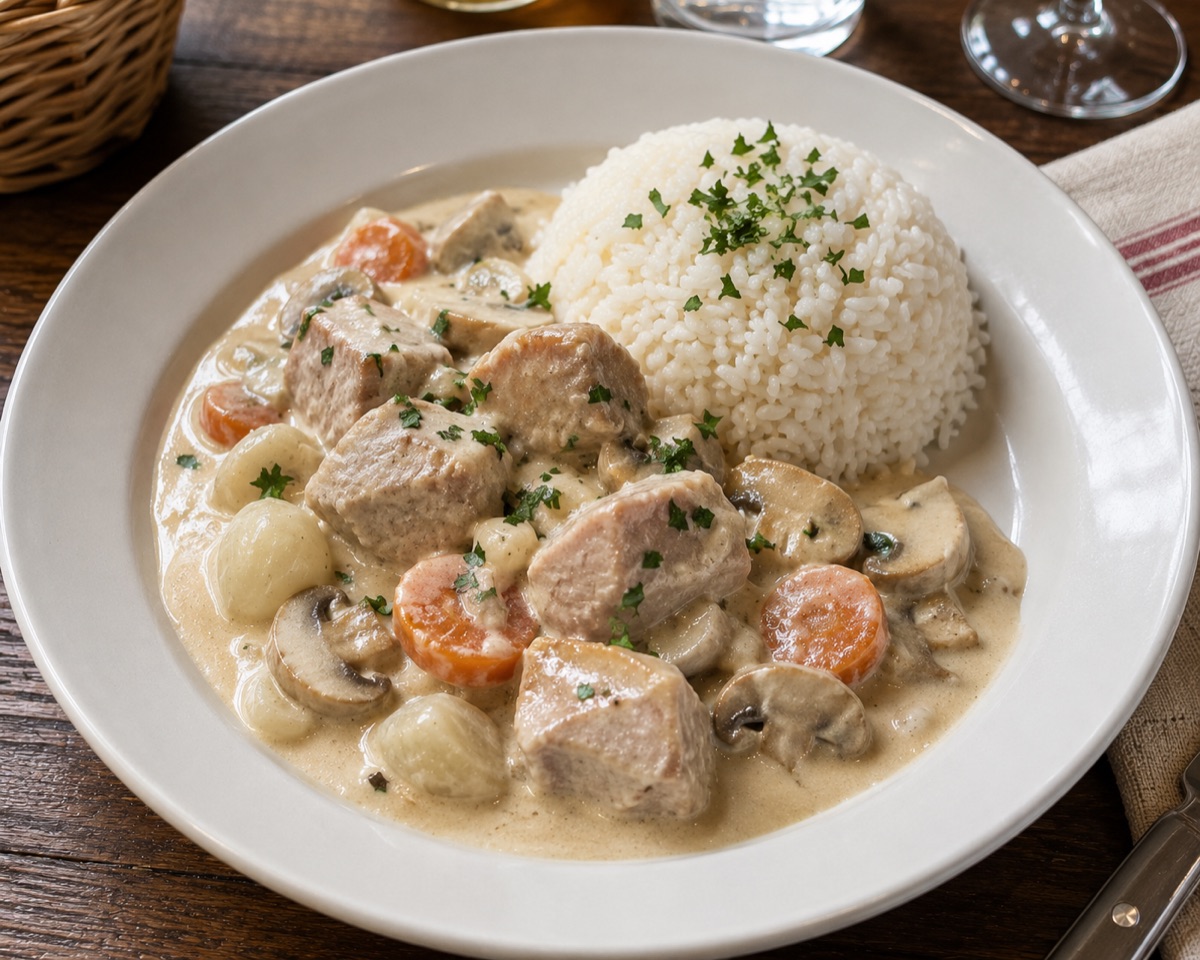
- Blanquette de veau — Veal poached without browning, then bound in a pale roux sauce finished with cream and egg yolk, with mushrooms and pearl onions. It is served with rice, and the rule is that the sauce must stay white.
- Boeuf bourguignon — Beef from Burgundy braised for hours in red wine with lardons, mushrooms and small onions. It is served with boiled potatoes or fresh pasta, and like most braises it is better reheated the next day.
- Coq au vin — Chicken, traditionally a rooster, marinated and braised in wine with lardons, mushrooms and onions, and the sauce thickened at the end. Burgundy uses red wine, while the Jura version, coq au vin jaune, uses its yellow wine.
- Cassoulet — A slow-baked stew of white haricot beans, sausage, pork and duck or goose confit, from Castelnaudary in the Aude, with rival versions in Toulouse and Carcassonne. It takes its name from the cassole, the earthenware dish it bakes in.
Regional dishes
- Bouillabaisse — Marseille's fish soup, first made by fishermen with the bony rockfish they could not sell. A traditional one uses at least three fish, such as scorpionfish, sea robin and conger, simmered with tomatoes, leeks, onions and saffron. The broth is served with rouille, a garlic, saffron and chilli mayonnaise, on grilled bread.
- Salade niçoise — Nice's salad of raw tomatoes, green peppers, onion, anchovies or tuna, olives and hard-boiled eggs, dressed only with olive oil. Cooks in Nice insist that nothing but the eggs is cooked.
- Ratatouille — Tomatoes, aubergine, courgette, peppers and onions stewed slowly in olive oil with garlic and herbs, also from Nice. It is eaten hot or cold, as a side or a main.
- Tartiflette — A Savoy gratin of potatoes, onions and lardons baked under a whole reblochon cheese cut in half. It is the dish of Alpine ski resorts, along with fondue and raclette.
- Choucroute garnie — Alsace's sauerkraut cooked slowly with white wine and juniper, then piled with smoked pork, sausages and boiled potatoes. It reflects the region's German-speaking history.
- Quiche lorraine — A shortcrust case filled with eggs, cream and lardons, baked until just set. The classic Lorraine version contains no cheese, which most modern recipes add.
Crêpes and desserts
- Crêpes and galettes — Thin pancakes cooked on a griddle. Sweet crêpes use wheat flour; galettes, from Brittany, use buckwheat and are filled with ham, egg and cheese. A Breton meal in a crêperie usually means a galette followed by a crêpe, with cider.
- Tarte Tatin — An upside-down apple tart: apples are caramelised in butter and sugar, covered with pastry, baked and turned out so the fruit is on top. It is named after the Tatin sisters, whose hotel in the Sologne made it known. It is served warm, often with a spoonful of crème fraîche.
Where French food goes next
France shares dishes across its borders: Alsace with Germany, Nice with Liguria, the Basque Country and Roussillon with Spain. To compare, see the traditional food of Spain and the traditional food of Italy.
Copper has blanquette de veau, salade niçoise and tartiflette with ingredient lists and step-by-step methods. The point that matters in each: keep the veal at a bare simmer so the sauce stays pale, salt the tomatoes before you assemble the niçoise, and halve the reblochon through its thickness so it melts into the potatoes. You will find them, with every other French recipe we have, on our page about the food of France.
For the neighbouring kitchens, see our guide to Western European food.
The recipes
- Blanquette de veau🇫🇷 France · 2 hours
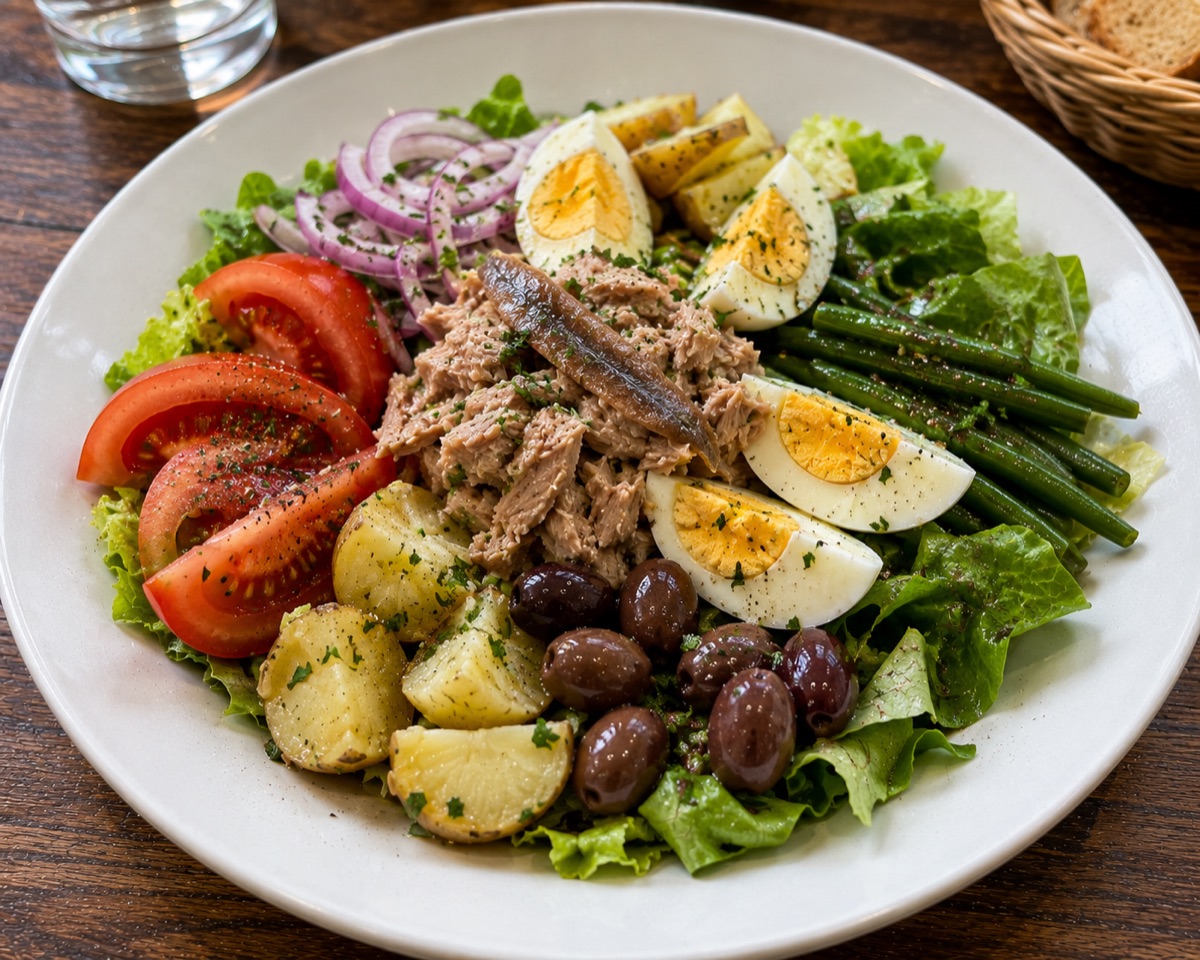 Salade niçoise🇫🇷 France · 30 minutes
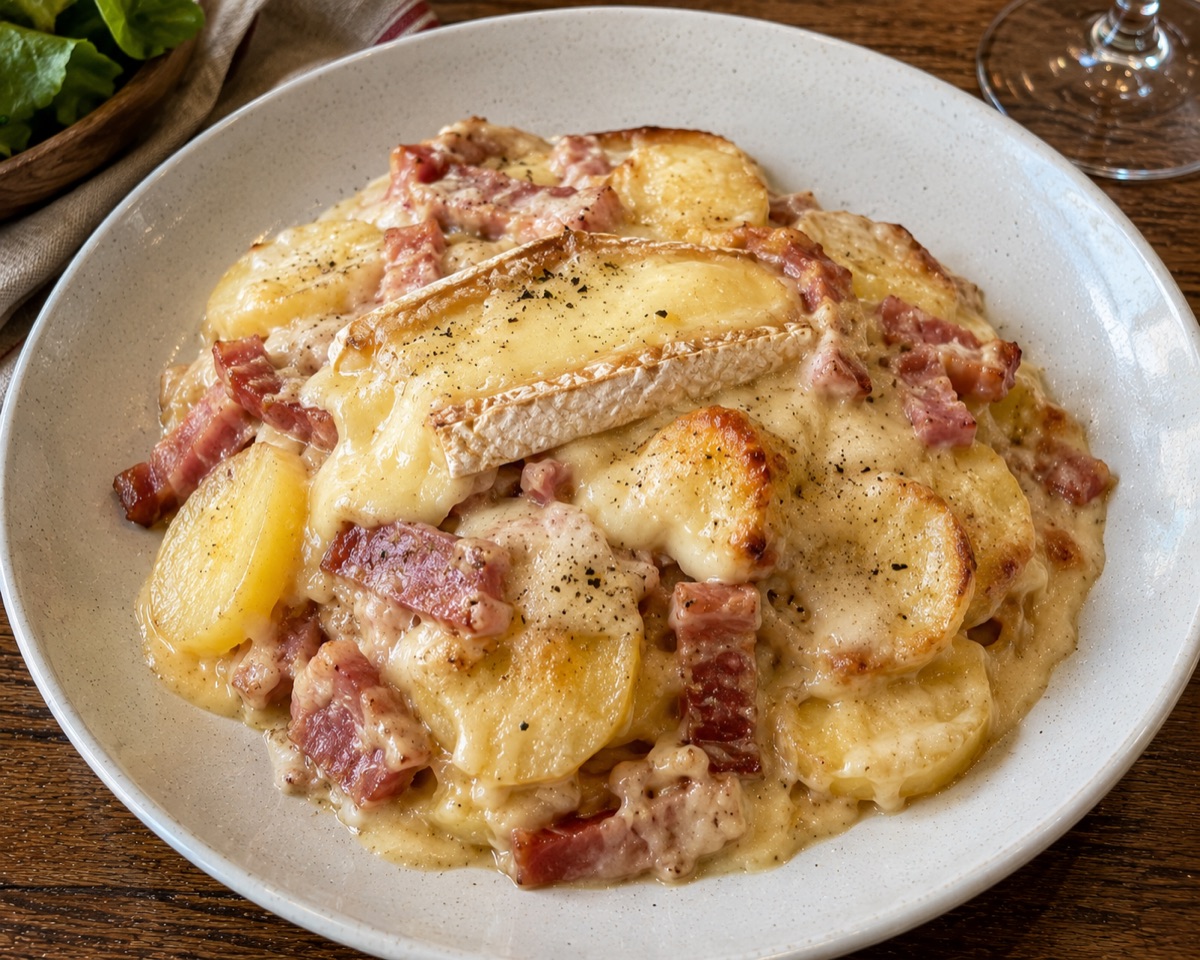 Tartiflette🇫🇷 France · 1 hour and 10 minutes
Questions people ask
What is the most popular food in France?
There is no single answer. Pot-au-feu, boeuf bourguignon, blanquette de veau and steak frites are the dishes most often named, and bread and cheese are eaten at nearly every meal.
What do people in France eat for breakfast?
Breakfast is light: bread with butter and jam or honey, sometimes brioche or a croissant, with coffee, café au lait, tea or, for children, hot chocolate.
Is French food spicy?
No. French cooking relies on herbs, wine, butter, shallots and garlic rather than chilli. Piment d'Espelette from the Basque Country is the main exception, and it is mild.
What is the traditional French meal structure?
A starter, a main course, then cheese and dessert, with bread and wine. UNESCO listed this gastronomic meal of the French as intangible cultural heritage in 2010.
What is the difference between a crêpe and a galette?
A crêpe is made with wheat flour and usually eaten sweet. A galette is a Breton pancake made with buckwheat flour and filled with savoury ingredients such as ham, egg and cheese.
Keep reading
- What is the national dish of France?
- Traditional food of Andorra: 13 dishes to know
- Traditional food of Austria: 13 dishes to know
- Traditional food of Belgium: 13 dishes to know
- Traditional food of Cyprus: 12 dishes to know
- Traditional food of Germany: 13 dishes to know