 COPPER
Traditional food of Italy: 13 dishes to know
Traditional Italian food is regional before it is national. It is built on wheat pasta and bread, rice and polenta in the north, olive oil in the south and butter in the north, cheeses such as pecorino and Parmesan, cured pork and vegetables, with few ingredients per dish. The dishes to know first are Neapolitan pizza, ragù alla bolognese, carbonara and risotto alla milanese.
What Italian food is built on
Italy was unified only in 1861, and its cooking still follows the old regional borders. The north, with its dairy farms, rice fields and Alpine valleys, cooks with butter, rice, polenta and fresh egg pasta. The centre and south rely on olive oil, dried durum-wheat pasta, tomatoes, pecorino and vegetables. Everywhere, a dish rarely has more than a handful of ingredients, and their quality does the work.
That is why Italy has no official national dish of Italy: pizza and pasta are named most often, but each comes in dozens of local forms. The 13 dishes below cover the main regions and every part of the meal.
A full Italian meal is served in courses: antipasto, a first course (primo) of pasta, risotto or soup, a second course (secondo) of meat or fish with a vegetable side (contorno), then cheese and fruit, dessert and espresso. Many of the dishes below are primi, which is where Italian cooking shows most of its regional variety.
Pizza and pasta
Pizza belongs to Naples and the south; pasta is everywhere. Rome alone has a family of pastas built on pecorino, black pepper and cured pork, while Emilia-Romagna is the home of fresh egg pasta.
- Neapolitan pizza — A soft, thin round of dough with a raised rim, topped with tomato and mozzarella and baked for 60 to 90 seconds in a wood-fired oven at around 485 °C. The margherita and the marinara are the two classics. The craft of the Neapolitan pizzaiuolo was added to UNESCO's intangible heritage list in 2017.
- Carbonara — A Roman pasta of eggs, guanciale (cured pork jowl), pecorino romano and black pepper, with no cream in most Italian recipes. It took its modern form in the mid-20th century, after the Second World War.
- Cacio e pepe — Another Roman pasta, made with only pecorino, black pepper and starchy cooking water emulsified into a glossy sauce. It is usually made with tonnarelli or spaghetti.
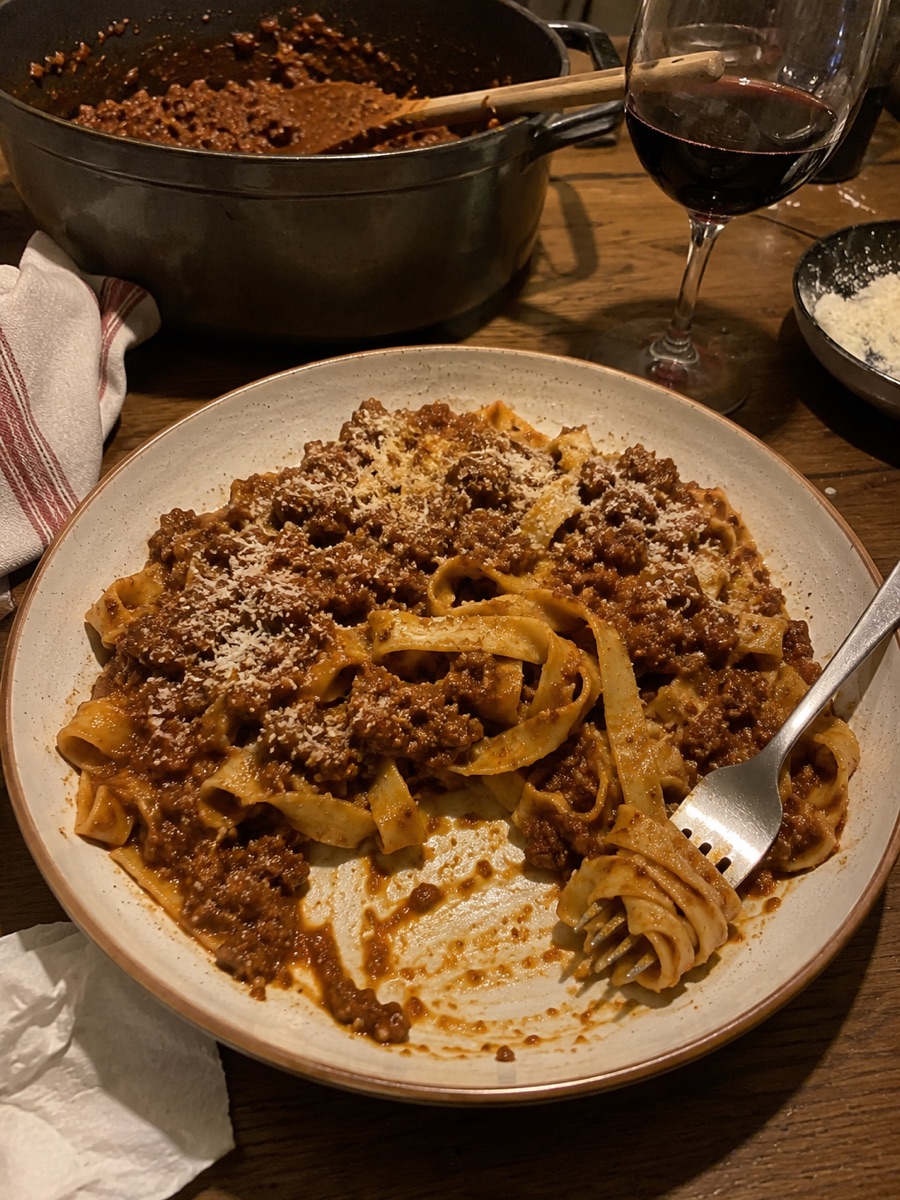
- Ragù alla bolognese — Bologna's meat sauce of beef, pancetta, soffritto, white wine, a little tomato and milk, simmered for about two hours. In Bologna it is served with fresh egg tagliatelle, not spaghetti.
- Lasagne — Wide sheets of pasta layered with sauce and cheese and baked. In Bologna the layers are ragù, béchamel and Parmesan; in Naples they include sausage, meatballs, eggs, ricotta and mozzarella.
- Pesto alla genovese — A Ligurian sauce of basil, pine nuts, garlic, Parmesan or pecorino and olive oil, traditionally pounded in a marble mortar. Its name comes from the Genoese verb for "to pound", and it dresses pasta raw.
Rice, polenta and the northern table
In Lombardy, Piedmont and the Alpine valleys, rice and cornmeal often replace pasta, and butter replaces olive oil. Milan's two great dishes are designed to be eaten together.
- Risotto alla milanese — Rice cooked slowly in broth with saffron, finished with butter and grated Parmesan, which turns it deep yellow. Some versions add beef marrow and white wine. In Milan it is often served with ossobuco as a single course.
- Ossobuco — Cross-cut veal shank, about 3 cm thick, browned in butter and braised in white wine and broth until tender. The name means "bone with a hole", for the marrow in the centre. It is finished with gremolata and served with risotto alla milanese or polenta.
- Polenta — Cornmeal boiled and stirred for about 45 minutes into a thick porridge, a staple of northern Italy. It is served soft on a wooden board with sausages, stews or cheese, or left to set and then grilled or fried.
Tuscany and Sicily
Tuscan cooking is famous for wasting nothing, especially bread, while Sicily's food carries the mark of two and a half centuries of Arab rule in its candied fruit, pistachios and sweets.
- Panzanella — A Tuscan summer salad of stale bread soaked, squeezed and tossed with ripe tomatoes, red onion, basil, vinegar and olive oil. It was a way to use up yesterday's bread, and it rests for half an hour so the bread absorbs the tomato juice.
- Arancini — Sicilian rice balls filled with ragù, peas and mozzarella or caciocavallo, coated in breadcrumbs and deep-fried. The name means "little oranges", for their colour; in Catania and Messina they are cone-shaped, like Mount Etna.
Desserts
Italian desserts follow the same regional logic as the rest of the meal: northern sweets are built on dairy and coffee, Sicilian ones on ricotta, citrus and nuts. Gelato is sold everywhere.
- Tiramisu — Ladyfingers soaked in coffee, layered with a cream of mascarpone, egg yolks and sugar, and dusted with cocoa. It comes from Veneto and Friuli-Venezia Giulia, probably in the late 1960s, and its name means "pick me up".
- Cannoli — Fried tubes of pastry filled with sweetened ricotta, a Sicilian specialty. Palermo finishes them with candied orange peel, Catania with chopped pistachios. They were once a Carnival treat and are now eaten all year.
Cook Italian food at home
Three of these dishes have full recipes in Copper: ragù alla bolognese, cacio e pepe and panzanella. Cacio e pepe is the quickest way to learn how Italian cooks use pasta water to make a sauce; the ragù teaches patience, and panzanella shows how far stale bread, ripe tomatoes and good olive oil can go. All three, with quantities and step-by-step methods, are on our page about the food of Italy.
Northern Italian cooking shares butter, cheese and polenta with the Alps. Compare it with our guides to the traditional food of France and the traditional food of Switzerland, or explore the rest of Western European food.
The recipes
- Ragù alla bolognese🇮🇹 Italy · 2 hours and 50 minutes
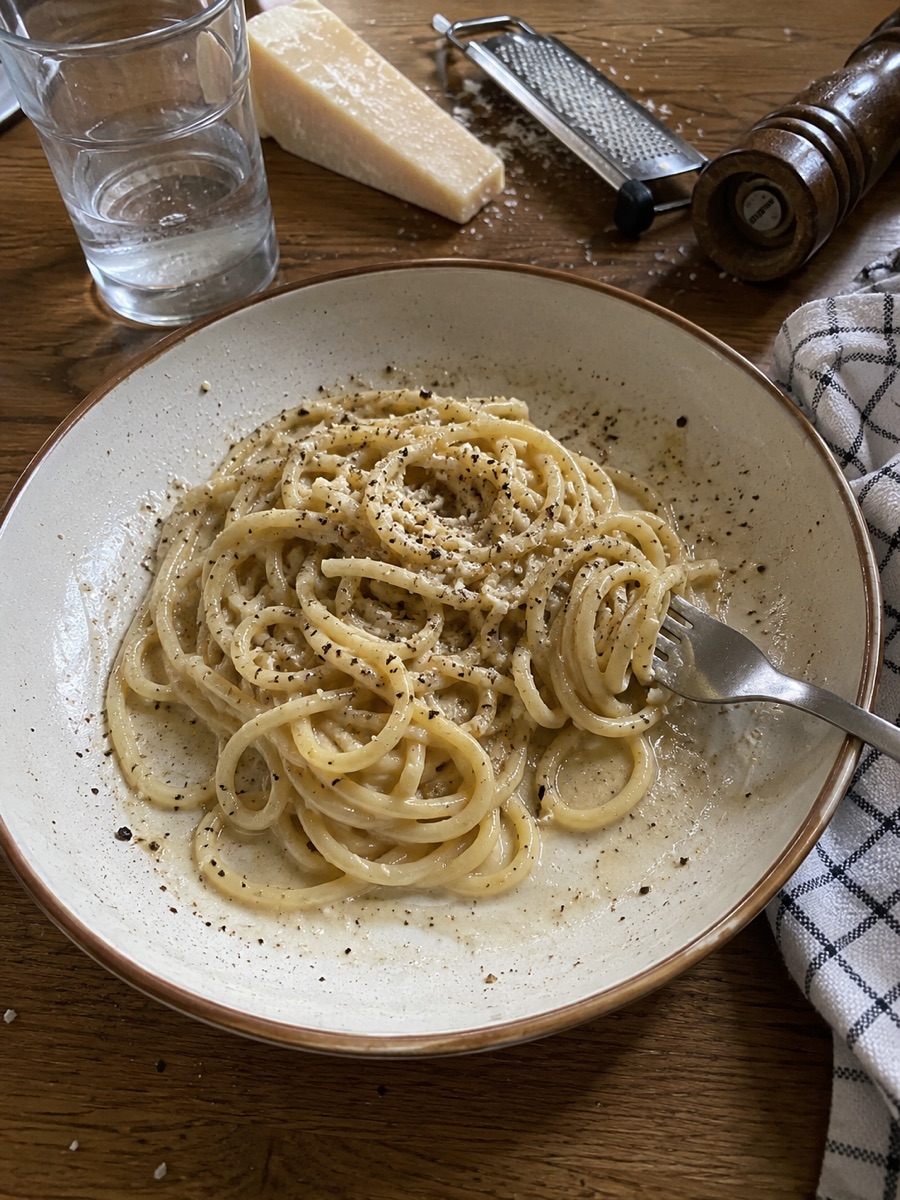 Cacio e pepe🇮🇹 Italy · 20 minutes
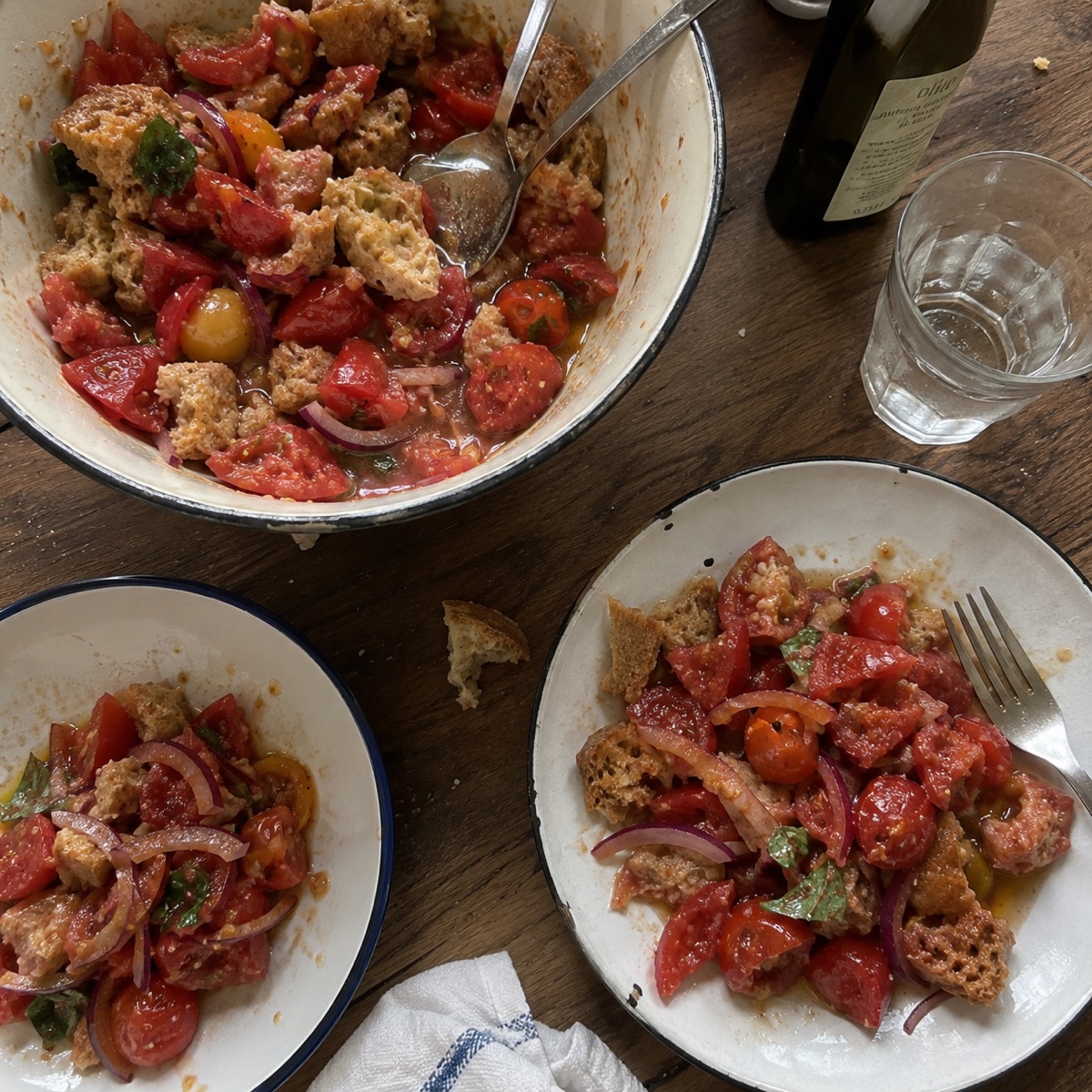 Panzanella🇮🇹 Italy · 50 minutes
Questions people ask
What is the most popular food in Italy?
Pasta and pizza. Pasta is eaten across the whole country in hundreds of regional shapes and sauces, and Neapolitan pizza is the best-known Italian dish abroad.
Does Italy have a national dish?
No. Pizza and pasta are the dishes most often named, with ragù alla bolognese and Neapolitan pizza as common examples, but Italian food is organised by region rather than around one plate.
Is Italian food spicy?
Mostly not. Italian food relies on herbs, garlic, cheese and olive oil. Chilli appears mainly in the south, in Calabria and Abruzzo, where small hot peppers are a regional signature.
Does real carbonara have cream?
No. Most Italian recipes use only eggs, guanciale, pecorino and black pepper; the creamy texture comes from the eggs and cheese mixed with a little pasta water.
What do Italians eat for breakfast?
Breakfast is light and sweet: coffee with a cornetto (a croissant-like pastry) at the bar, or biscuits and bread with butter and jam at home. Many Italians have only a coffee.
What is the difference between northern and southern Italian food?
The north cooks more with butter, rice, polenta and fresh egg pasta; the south with olive oil, dried durum-wheat pasta, tomatoes and vegetables.
Keep reading
- What is the national dish of Italy?
- Traditional food of Andorra: 13 dishes to know
- Traditional food of Austria: 13 dishes to know
- Traditional food of Belgium: 13 dishes to know
- Traditional food of Cyprus: 12 dishes to know
- Traditional food of France: 13 dishes to know