 COPPER
What is the national dish of Italy?
Italy has no official national dish. The two foods most often named are pizza, above all Neapolitan pizza, whose making is on UNESCO's heritage list since 2017, and pasta, eaten in hundreds of regional forms such as Bologna's ragù with fresh egg tagliatelle or Rome's cacio e pepe. Italian cooking is regional first, which is why no single plate speaks for the whole country.
Is there an official national dish of Italy?
No. No Italian law or decree names a national dish. Lists of national dishes put pasta, pizza and risotto forward for Italy, and pizza in particular is usually described as one of the country's national dishes rather than the only one.
The reason is structural: Italian cuisine mixes countrywide habits with very different regional dishes. In 2025, UNESCO listed Italian cuisine as a whole as intangible cultural heritage, which fits that picture better than any single recipe would.
So the honest answer depends on the question. If you mean the food Italy is best known for abroad, it is pizza. If you mean what Italians eat most days, it is pasta, in a shape and sauce that changes from one city to the next. Risotto is the third dish usually added to the list.
Why pizza is the dish most often named
When people say pizza is Italy's national dish, they usually mean Neapolitan pizza. It has formal protection at European level and is tied to a UNESCO listing:
None of this makes pizza the official national dish. It explains why pizza is the dish named first: it is protected in EU law and its craft has its own UNESCO entry.
- 2010: the EU registered *pizza napoletana* as a Traditional Speciality Guaranteed (TSG) on 5 February 2010, which fixes its ingredients and method.
- 2017: UNESCO inscribed the art of the Neapolitan *pizzaiuolo*, the pizza maker's craft, as intangible cultural heritage.
- The Margherita: one of the two traditional Neapolitan styles, built on San Marzano tomatoes, buffalo mozzarella from Campania and basil.
Pasta: the other answer, region by region
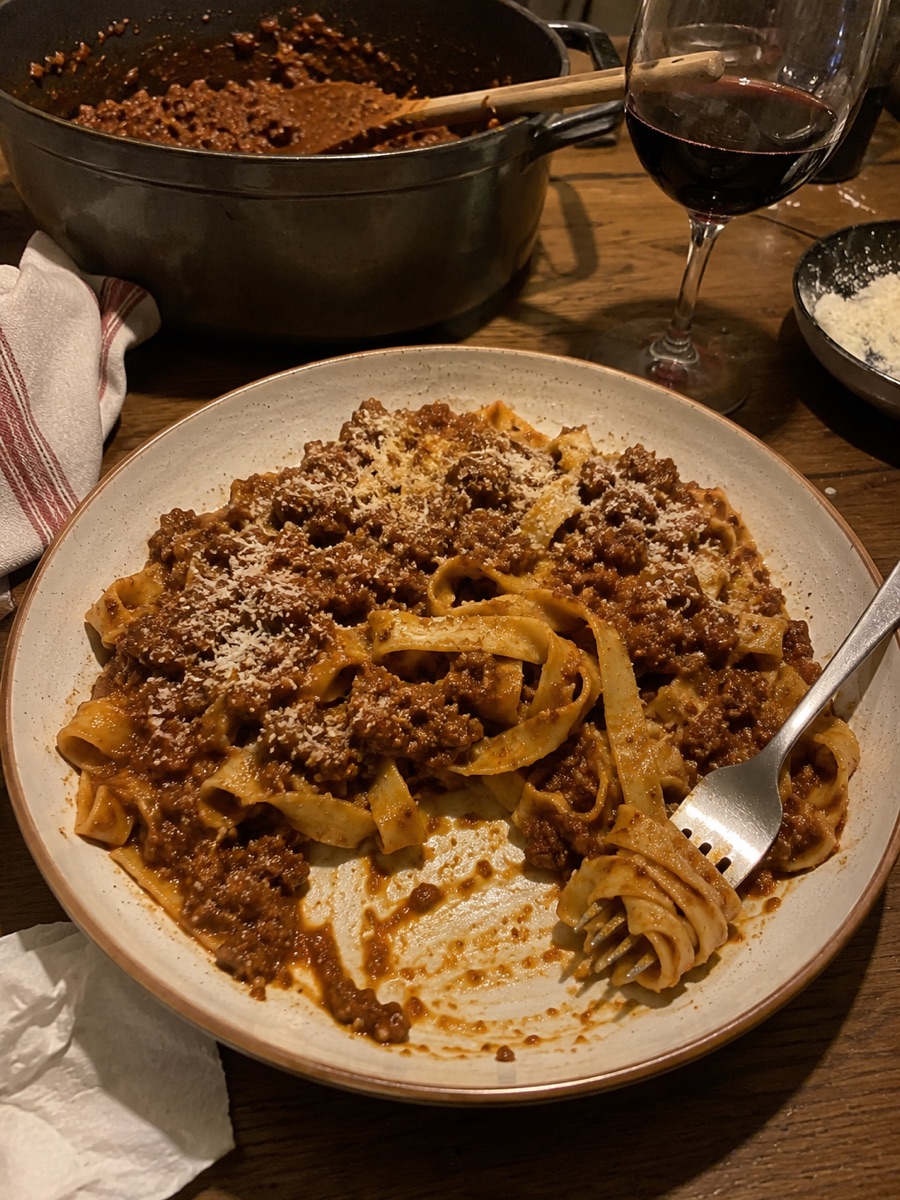
Pasta has no single protected recipe; it is the shape and the sauce of each city that count. Bologna's version is the best documented. In 1982 the Accademia Italiana della Cucina deposited a recipe for classic ragù alla bolognese with the Bologna Chamber of Commerce, and refreshed it in 2023. The oldest known ragù served with pasta goes back to the late 1700s in Imola, near Bologna, and Pellegrino Artusi printed a Bolognese ragù in 1891.
The method is slow and has little tomato. Pancetta is melted, then onion, carrot and celery soften in butter for about 15 minutes without colour. Coarse beef mince goes in until it sizzles, white wine is cooked off, and passata is added before two hours at a bare simmer, with broth when it dries. Milk goes in only near the end to round off the tomato. It is served with fresh egg tagliatelle, not spaghetti. Our ragù alla bolognese recipe gives every quantity.
For a 20 cm pan, our quantities are 150 g pancetta, 50 g butter, 50 g each of carrot, celery and onion, 300 g coarse beef mince, 100 ml white wine, 300 ml passata and 200 ml whole milk. That is very little tomato for that much meat, which is the point: ragù alla bolognese is a meat sauce coloured by tomato, not a tomato sauce with meat in it.
Cacio e pepe, Rome's three-ingredient pasta
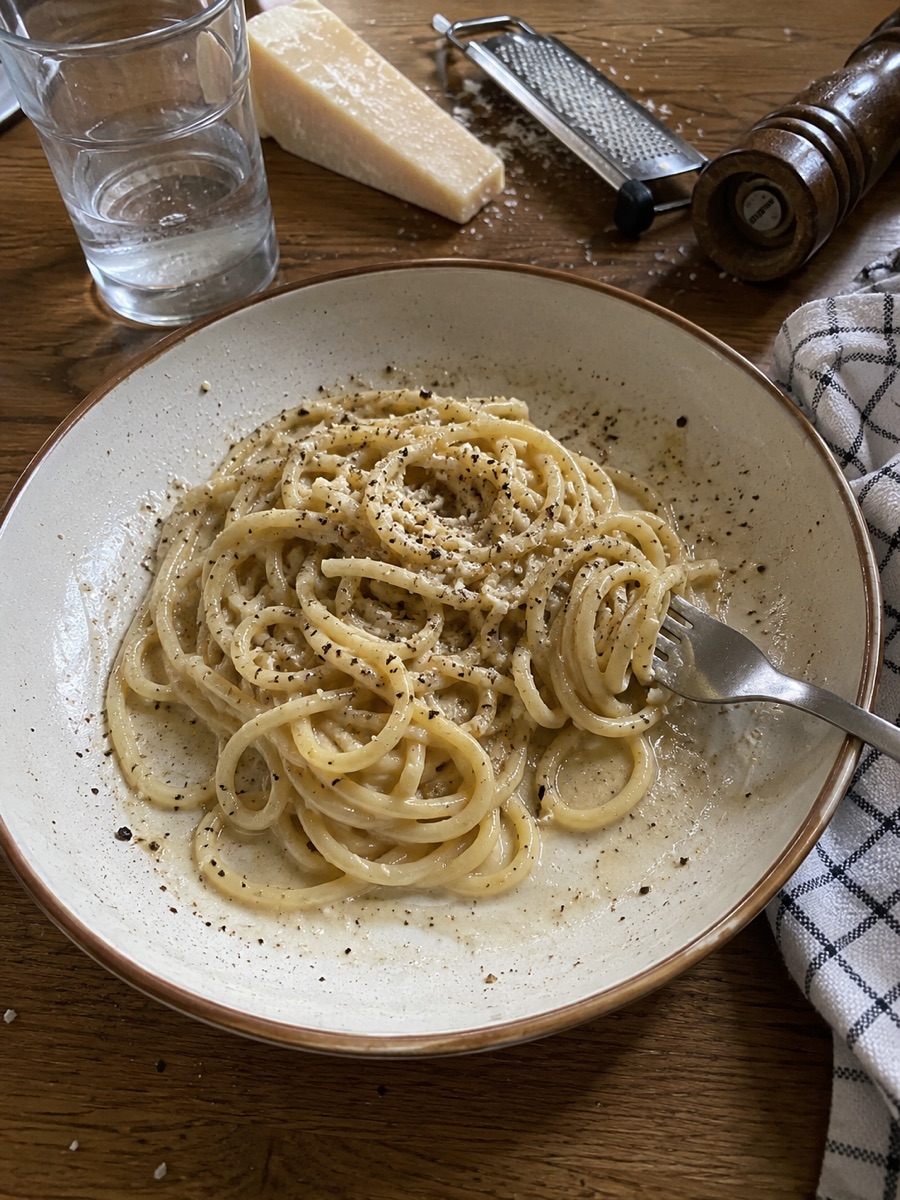
Rome answers Bologna with a pasta that has no butter, no cream and only three ingredients: tonnarelli or spaghetti, pecorino romano and black pepper. The sauce is an emulsion of grated cheese and the starchy cooking water.
Pepper is crushed and toasted in a dry pan, then loosened with pasta water. The pasta is drained two minutes early and finished in that pan. The pecorino is whisked with a little water into a paste and tossed in off the heat: too much heat and the cheese clumps instead of turning glossy. Follow the steps in our cacio e pepe recipe.
The quantities are small and exact: 200 g pasta, 120 g finely grated pecorino and 2 teaspoons of peppercorns. The pasta is boiled in about half the usual amount of water, lightly salted because the cheese is already salty, so that the water left behind is starchy enough to bind the sauce.
Other dishes to know from Italy
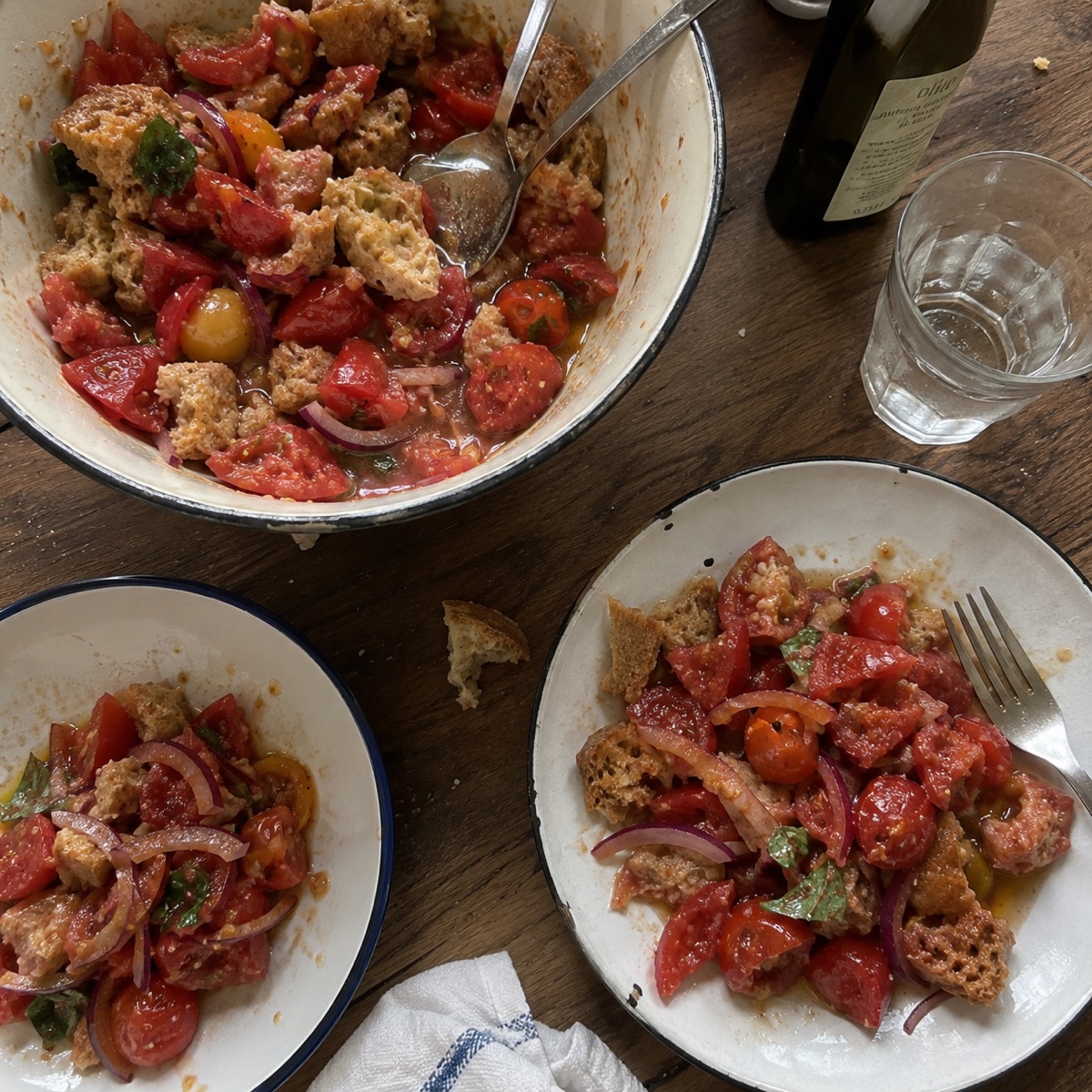
In Tuscany, summer cooking turns stale bread into a meal. Panzanella starts with bread soaked in water and squeezed hard, then tomatoes salted to release their juice, red onion softened in vinegar, olive oil and plenty of basil. It rests half an hour so the bread drinks the tomato water.
Spain is another Mediterranean country where the food most often named abroad is a regional dish; see the national dish of Spain. All three Italian recipes, with ingredients and step-by-step methods, are on our page about the food of Italy.
For the neighbouring kitchens, see our guide to Western European food.
The recipes
- Ragù alla bolognese🇮🇹 Italy · 2 hours and 50 minutes
 Cacio e pepe🇮🇹 Italy · 20 minutes
 Panzanella🇮🇹 Italy · 50 minutes
Questions people ask
Does Italy have an official national dish?
No. No law or decree names one. Pizza and pasta are the dishes most often cited, with risotto sometimes added.
Is pizza Italy's national dish?
Pizza is commonly called one of Italy's national dishes. Neapolitan pizza has EU Traditional Speciality Guaranteed status since 2010, and UNESCO listed the art of the Neapolitan pizza maker in 2017.
Is spaghetti bolognese Italian?
Not as such. In Bologna, ragù is served with fresh egg tagliatelle, and the recipe deposited by the Accademia Italiana della Cucina in 1982 is for the ragù, not for spaghetti.
What is in cacio e pepe?
Only pasta, pecorino romano and black pepper. The creamy sauce comes from cheese emulsified with starchy cooking water, with no butter or cream.
Is Italian cuisine a UNESCO heritage?
Yes. UNESCO listed Italian cuisine as intangible cultural heritage in 2025, after inscribing the art of the Neapolitan pizza maker in 2017.
Keep reading
- Traditional food of Italy: 13 dishes to know
- What is the national dish of Andorra?
- What is the national dish of Austria?
- What is the national dish of Belgium?
- What is the national dish of Cyprus?
- What is the national dish of France?