 COPPER
What is the national dish of Austria?
Austria has no officially declared national dish, but Wiener schnitzel is the one most often cited: a thin, butterflied veal cutlet coated in flour, egg and breadcrumbs, then fried in lard or clarified butter until the crust puffs away from the meat. Austrian law reserves the name for veal. It is traditionally served with potato salad or parsley potatoes.
Is Wiener schnitzel officially Austria's national dish?
No law declares it the national dish. Wiener schnitzel holds the title by reputation: reference lists of national dishes give it for Austria, and it is described as one of the best-known specialities of Viennese cooking. In Austria it works almost as a national symbol, and is even drawn on postcards in the shape of the country's outline.
What the law does regulate is the name. In Austria, a Wiener schnitzel must be made of veal. A pork version has to be sold as *Wiener Schnitzel vom Schwein* or *Schnitzel Wiener Art* (Viennese-style schnitzel).
What is in a Wiener schnitzel?
Very little: veal, flour, eggs, breadcrumbs, salt and the frying fat. The meat is a butterfly-cut slice about 4 mm thick, lightly pounded and salted, then turned in flour, beaten egg and breadcrumbs.
The crumbs are not pressed into the meat. Left loose, they stay dry and puff up in the fat, so the coating rises away from the veal in waves. That puffed, slightly separate crust is the sign of a properly made schnitzel.
In the early 20th century the garnish was capers and anchovies. Today the plate is simpler, and the schnitzel should be served the moment it leaves the pan, while the crust is still puffed.
On Austrian menus you will also meet close relatives of the Wiener schnitzel:
- Wiener Schnitzel vom Schwein or Schnitzel Wiener Art: the same method with pork.
- Surschnitzel: made from cured pork.
- Cordon bleu: a schnitzel filled with ham and cheese.
- Backhendl: breaded fried chicken, recorded as early as 1719.
How Wiener schnitzel is fried
It is fried in lard or clarified butter at 160 to 170 °C, and the cutlet has to swim in the fat. In too little fat the temperature drops, the fat soaks into the crumbs and the crust turns heavy. The cook keeps the pan moving and spoons hot fat over the top until the schnitzel is golden yellow.
The classic Austrian sides are:
- Potato salad, dressed rather than creamy.
- Butterhead lettuce with a sweetened vinaigrette, sometimes with chives or onion.
- Cucumber salad.
- Parsley potatoes. French fries have become common more recently.
Where Wiener schnitzel comes from
The name *Wiener Schnitzel* first appears in a cookbook from 1831. Breaded and fried dishes were already known in Austria before that: Backhendl, breaded fried chicken, is recorded in a cookbook from 1719, and the schnitzel was named on the same pattern.
A popular story says Field Marshal Radetzky brought the recipe from Milan to Vienna in 1857, copying the Italian cotoletta alla milanese. The linguist Heinz-Dieter Pohl showed the story was invented: its earliest trace is an Italian food guide from 1869. The idea of a breaded, pounded cutlet is older still: the earliest known recipe of the kind comes from a 1691 Nuremberg cookbook. For Germany's side, see our article on the national dish of Germany.
Other dishes to know from Austria
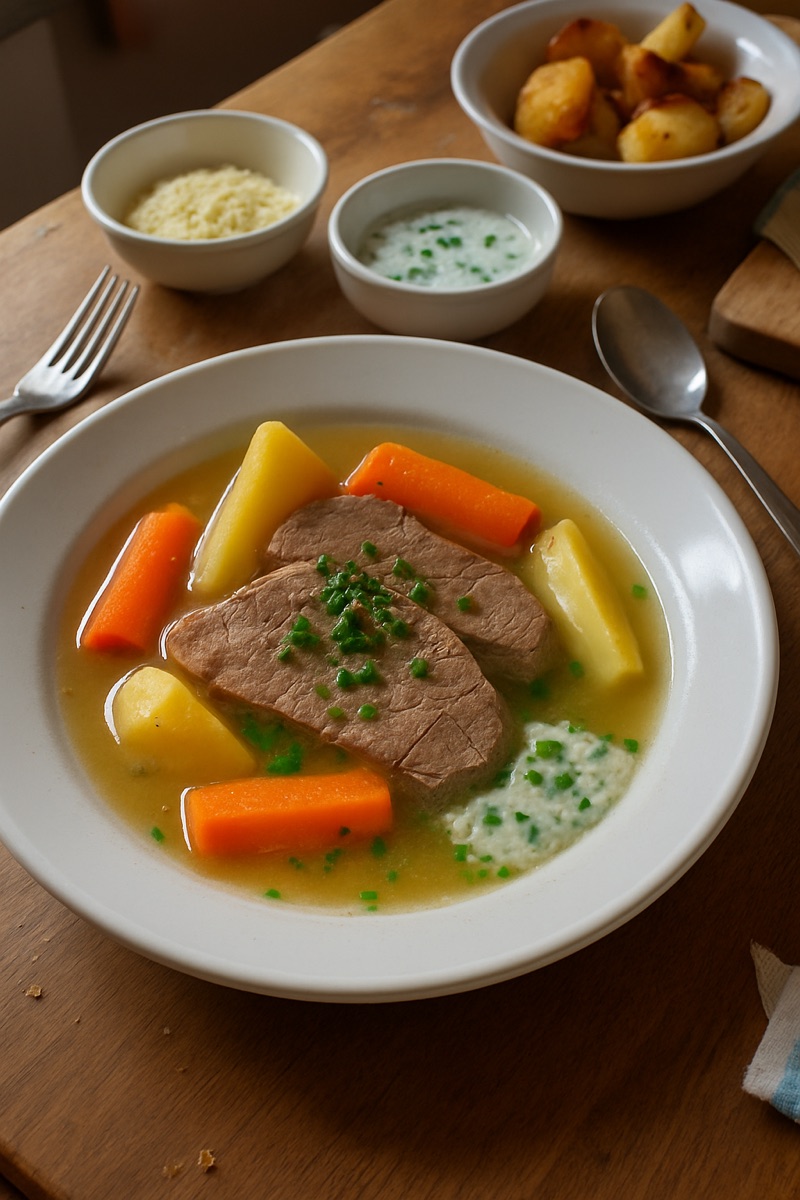
Wiener schnitzel is not yet in our recipe collection, but three other Austrian classics are. Tafelspitz is beef rump held at about 90 °C for 2.5 to 3 hours so the surface only trembles, then served in its clear broth with apple horseradish and chive cream. A 1912 official cookery textbook noted that Emperor Franz Joseph I's private table was never without boiled beef.
Tafelspitz is also the name of the cut, the top of the rump near the tail, roughly the topside in Britain and the top round or standing rump in the United States. The beef is served after its broth, which comes first as a clear soup.
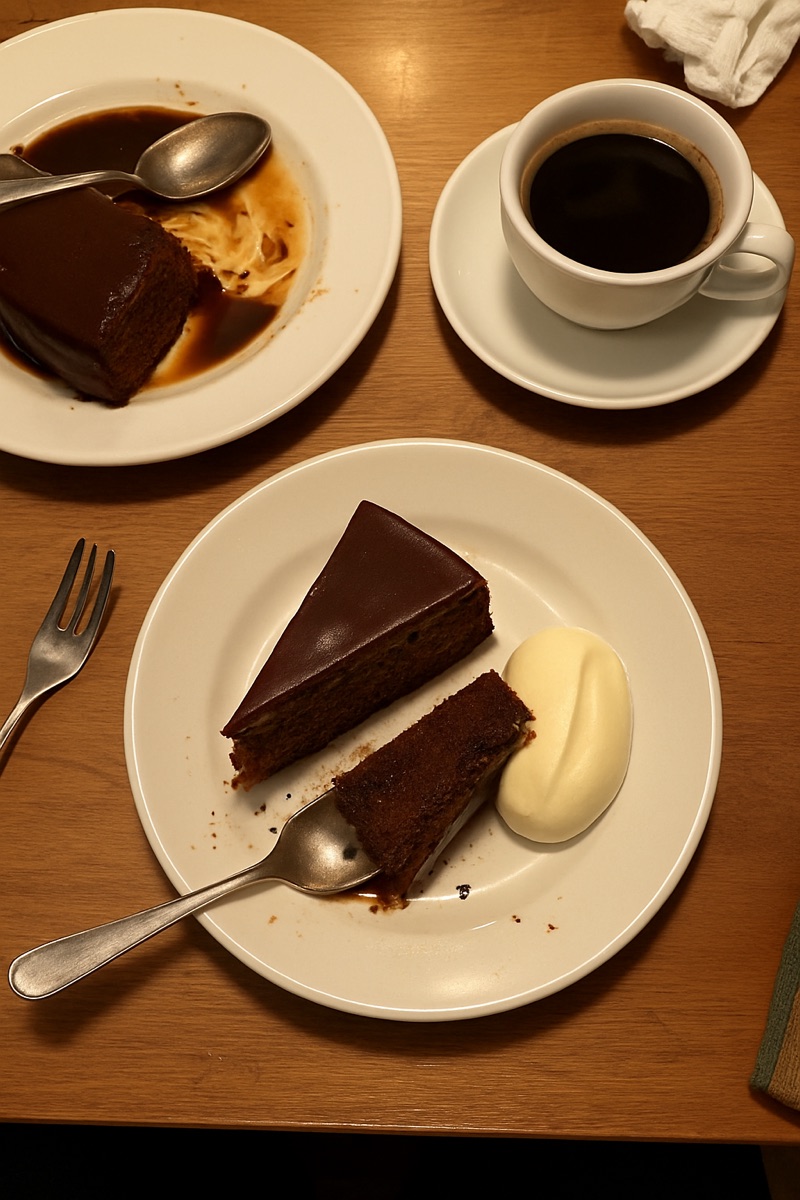
Sachertorte is Vienna's chocolate cake: chocolate sponge sealed with sieved apricot jam and covered in a poured chocolate icing that sets firm. Its name is regulated by the Austrian food codex.
Franz Sacher created the cake in the mid-19th century. In the 20th century the Hotel Sacher and the Demel pastry shop fought over the name and over whether the original had one layer of apricot jam or two.
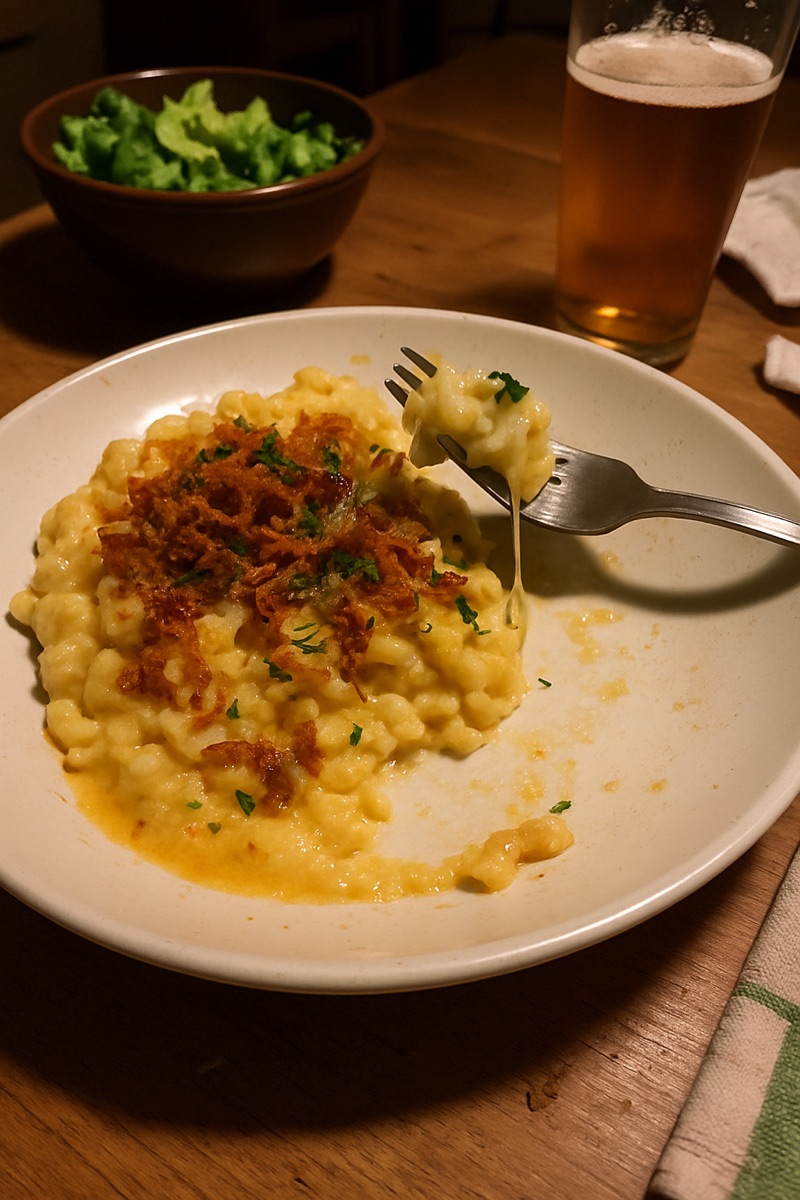
Käsespätzle, in its Vorarlberg version from the far west of Austria, is egg noodles layered hot with mountain cheese and sharp Räßkäse, topped with fried onions. The same dish is eaten across the border in Switzerland and Liechtenstein.
All three are on our page about the food of Austria, and the neighbouring kitchens are in our guide to Western European food.
The recipes
- Tafelspitz🇦🇹 Austria · 3 hours and 20 minutes
 Sachertorte🇦🇹 Austria · 16 hours and 40 minutes
 Käsespätzle🇦🇹 Austria · 55 minutes
Questions people ask
Is Wiener schnitzel from Austria or Germany?
It is Austrian: the name means "Viennese cutlet" and first appears in an 1831 cookbook. Breaded cutlets are much older, though, and the earliest schnitzel-like recipe comes from a 1691 Nuremberg cookbook.
Is Wiener schnitzel made from pork or veal?
Veal. Austrian law reserves the name Wiener schnitzel for veal; a pork version must be called Wiener Schnitzel vom Schwein or Schnitzel Wiener Art.
How do you pronounce Wiener schnitzel?
"VEE-ner SHNIT-sel". The name means "Viennese cutlet".
What is served with Wiener schnitzel?
Traditionally potato salad, parsley potatoes, cucumber salad or butterhead lettuce with a sweetened vinaigrette. French fries are a more recent habit.
Did Wiener schnitzel come from Milan?
Probably not. The story that Field Marshal Radetzky brought it from Milan in 1857 was shown by the linguist Heinz-Dieter Pohl to be invented; its first trace is an 1869 Italian food guide.
Keep reading
- Traditional food of Austria: 13 dishes to know
- What is the national dish of Andorra?
- What is the national dish of Belgium?
- What is the national dish of Cyprus?
- What is the national dish of France?
- What is the national dish of Germany?