 COPPER
What is the national dish of Belgium?
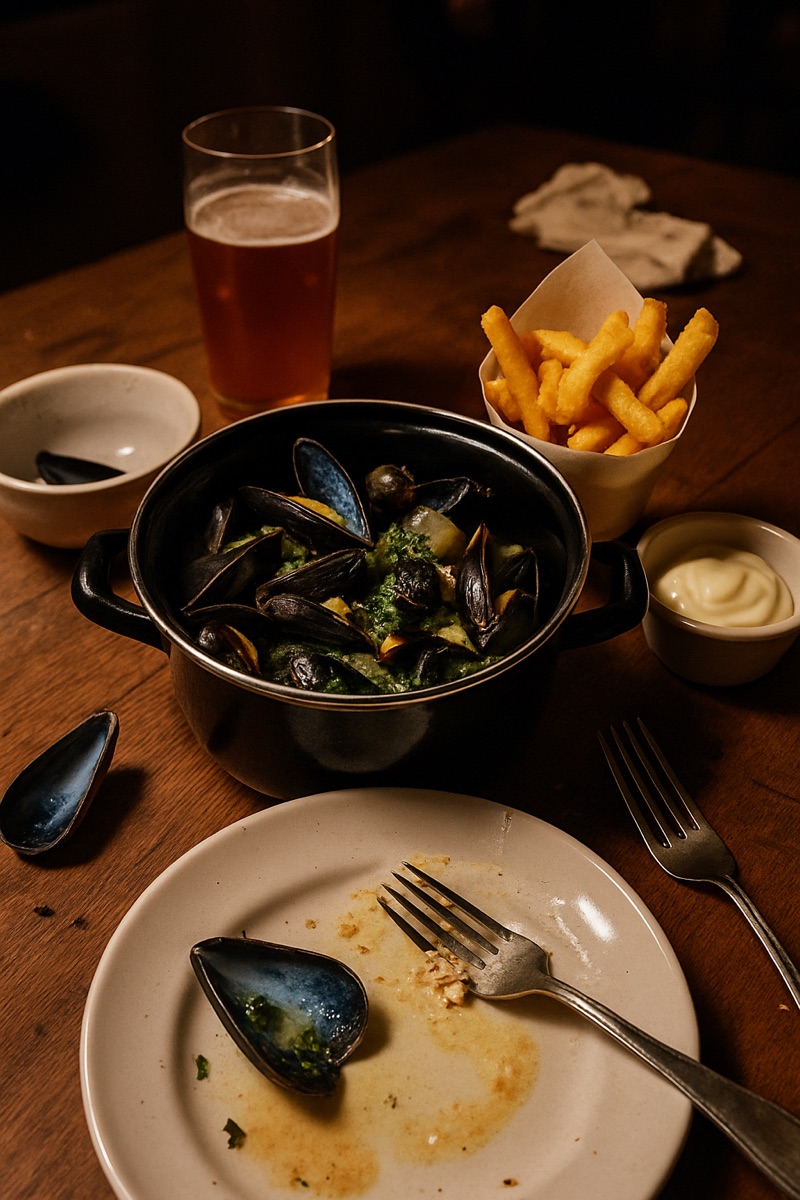
Belgium has no official national dish, but moules-frites is the one most often named: mussels steamed in a pot with onion, celery and butter, served beside a separate dish of fries fried twice. Carbonnade flamande, beef braised in brown Belgian beer, is also widely called a national dish, and fries on their own are a strong third claim.
Does Belgium have one national dish?
Not officially. No law names a Belgian national dish, and the usual reference lists give several: fries (especially with mussels or steak), carbonnade flamande, waterzooi, chocolate mousse and the Belgian waffle.
Among them, moules-frites is the one most often called *the* national dish, and carbonnade flamande is regularly named alongside it. Both are national rather than regional dishes, and moules-frites in particular is served everywhere from the Belgian coast to the Ardennes.
What is in moules-frites?
Two things, served apart: a pot of mussels in their cooking broth, and a dish of fries. In our moules-frites recipe, 1.5 kg of mussels go onto onion and celery softened in butter with thyme and bay, with 250 ml of dry white wine, then cook covered over high heat for 5 minutes until they open.
Before cooking, the mussels are scrubbed and debearded, and any that stay open when tapped are thrown away; after cooking, any that stay shut are discarded too. The pot goes to the table as it is, with chopped parsley scattered over the broth.
The mussels can be cooked many ways. The common ones:
- Marinière: white wine, shallots, parsley and butter, the best-known version.
- Nature: steamed with celery, leeks and butter, no wine.
- À la crème: the broth thickened with flour and cream.
- À la bière: beer instead of white wine.
- À l'ail: with sliced or minced garlic.
Why Belgian fries are fried twice
Belgians generally use Bintje potatoes, which are high in starch. The fries are cooked twice: first at about 140 °C until soft and pale, then left to cool for at least 30 minutes, then fried again at 180 °C for 2 to 3 minutes. The first frying cooks the inside, the second makes the crust. Beef fat is the prized frying medium.
The fries are kept in their own dish so they never soak up the broth, and a second bowl takes the empty shells. Fries are such a fixture that when the European Commission recommended blanching instead of double frying in 2017, Belgian politicians protested it as an attack on the country's food culture.
Outside restaurants, fries are sold at friteries (frietkot or frituur in Flemish), served in a paper cone with the sauce on top. Mayonnaise is the traditional sauce, and most Belgian households have their own deep fryer. Americans call them French fries; one explanation is that American soldiers in the First World War met them through French-speaking Belgian troops.
Where moules-frites comes from
The dish is thought to come from Belgium, combining mussels, a cheap food along the Flemish coast, with fried potatoes. A 1781 book describes people around the Meuse at Namur, Dinant and Andenne frying potatoes since about 1680. Many of the mussels eaten in Belgium today are farmed in Zeeland, in the Netherlands.
The dish is just as rooted across the border in northern France, where it is the signature meal of the Lille braderie. For the French side of the story, see our article on the national dish of France.
Belgian moules-frites travels well across the border: in 2009, around 500 tonnes of mussels and 30 tonnes of fries were eaten during the weekend of the Lille braderie, where restaurants pile the empty shells outside their doors.
Other dishes to know from Belgium
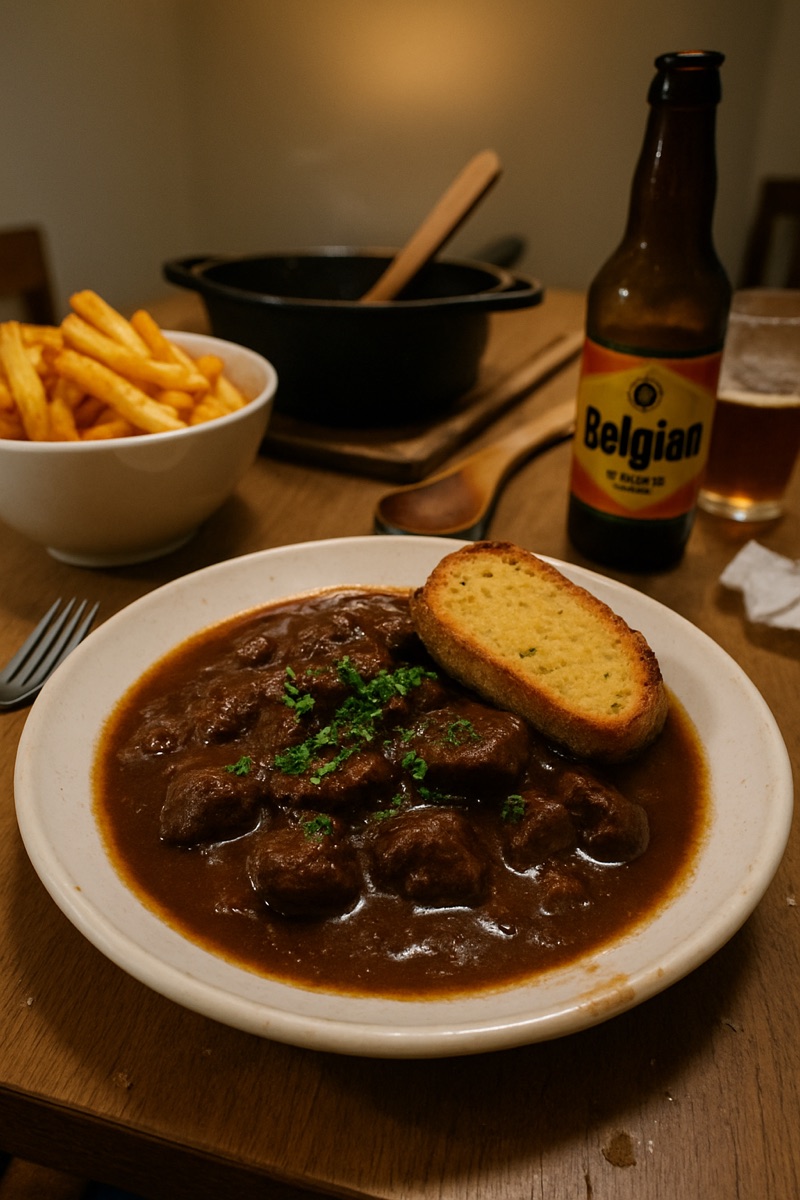
Carbonnade flamande is the other dish Belgians call national: 1 kg of beef browned in butter, then simmered for 2 hours 30 in 750 ml of brown ale with onions, under slices of gingerbread spread with mustard that dissolve and thicken the sauce. The beer depends on the region, lambic in Brussels, De Koninck in Antwerp.
The word carbonnade goes back to the Italian *carbonata*, from *carbone*, charcoal, because the stew was once braised slowly over embers. In Flemish it is simply *stoofvlees*. It is usually served with fries or bread and mustard, and a beer from the same region as the one in the pot.
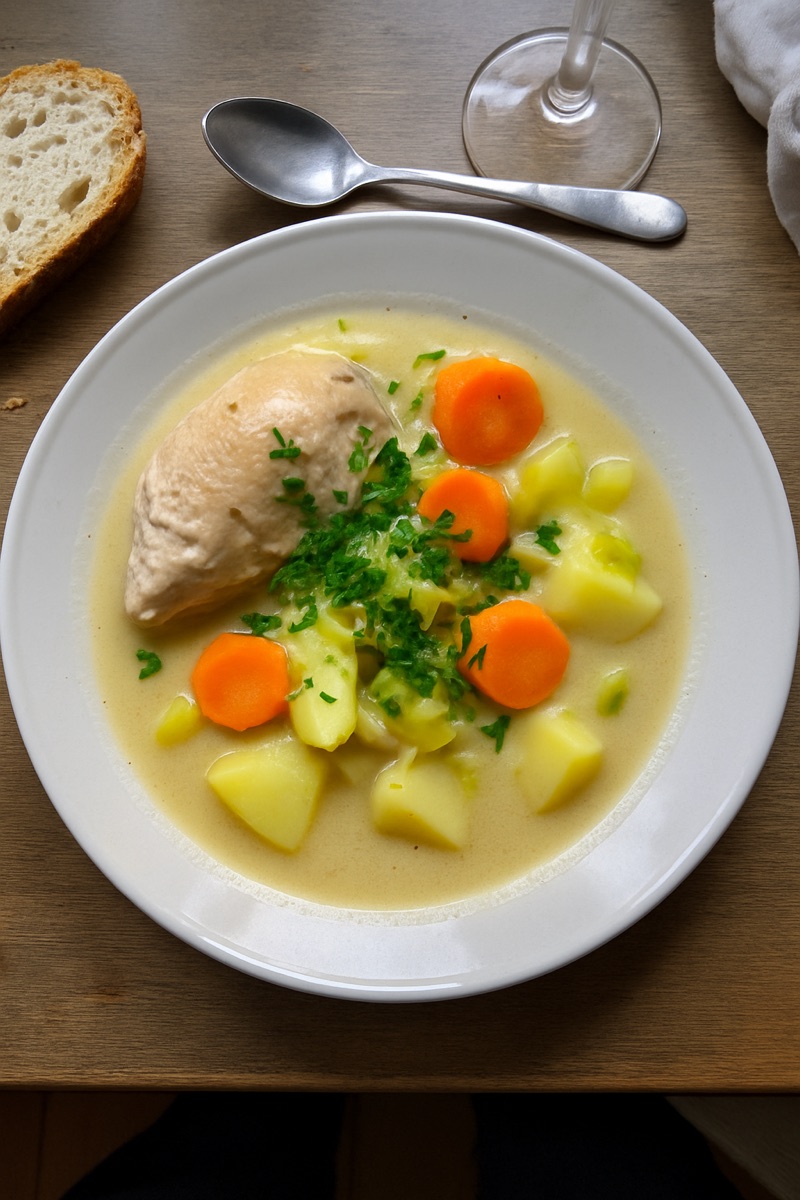
Waterzooi comes from Ghent: chicken poached at a bare simmer over julienned carrot, leek and celeriac, then bound off the heat with egg yolks and cream. It must not boil again or the yolks scramble.
Waterzooi was originally a fish dish, made with freshwater fish such as burbot. The most accepted explanation for the switch to chicken is that the rivers around Ghent became too polluted and the fish disappeared.
All three recipes are on our page about the food of Belgium. For the wider picture, see our guide to Western European food, or compare with the Dutch potato mash in the national dish of the Netherlands.
The recipes
- Moules-frites🇧🇪 Belgium · 1 hour and 20 minutes
 Carbonnade flamande🇧🇪 Belgium · 3 hours and 10 minutes
 Waterzooi🇧🇪 Belgium · 1 hour and 20 minutes
Questions people ask
Is moules-frites Belgian or French?
It is thought to have originated in Belgium, and it is most often called Belgium's national dish. It is also a classic of northern France, especially in Lille.
How do you pronounce moules-frites?
"Mool-freet". It means "mussels-fries"; the Dutch name, mosselen-friet, means the same.
What drink goes with moules-frites?
A dry white wine or a Belgian abbey beer. Red wine is usually avoided because its tannins clash with the mussels.
Why are the fries served separately from the mussels?
So they stay crisp. If they sit in the mussel broth they go soggy, so Belgians always serve them in their own dish.
What sauce goes with Belgian fries?
Mayonnaise is the traditional sauce. Fry shops usually offer a dozen or more, most of them mayonnaise-based, and some serve hot carbonnade sauce over the fries.
Keep reading
- Traditional food of Belgium: 13 dishes to know
- What is the national dish of Andorra?
- What is the national dish of Austria?
- What is the national dish of Cyprus?
- What is the national dish of France?
- What is the national dish of Germany?