 COPPER
What is the national dish of the Netherlands?
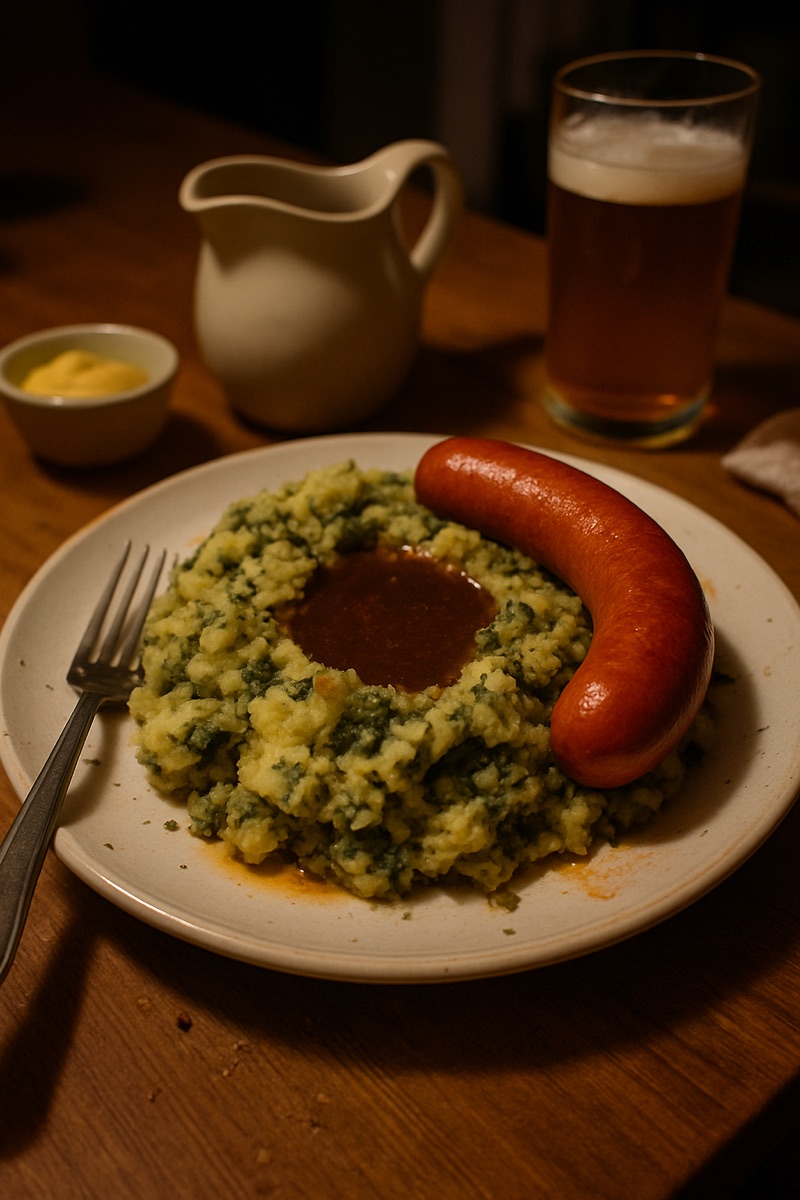
The Netherlands has no official national dish, but stamppot is the one most often cited: boiled potatoes mashed together with a vegetable, classically curly kale (boerenkool), and served with smoked sausage (rookworst), bacon and gravy. It is a cold-weather dish eaten all winter. Soused herring, eaten raw with chopped onion and pickles, is the other dish usually named.
Is stamppot officially the Dutch national dish?
No. No law or government body has named a Dutch national dish. Stamppot gets the title by usage: it is the dish lists of national dishes give first for the Netherlands, and in Dutch homes it is the standard winter meal.
Lists usually add a second candidate: soused herring (maatjesharing), raw herring eaten with chopped onion and pickles. One is the everyday family dinner, the other a seasonal street food, so this article focuses on stamppot and covers herring further down.
What is in stamppot?
The name means "mash pot". Potatoes are boiled with one or more vegetables, drained and mashed together, then served with meat on the side. When the Dutch say just "stamppot", they mean the curly kale version, boerenkoolstamppot, served with bacon, gravy, mustard and rookworst, a sausage smoked over oak and beech chips.
The other classic versions change only the vegetable:
- Hutspot: potatoes, carrots and onions, often with slow-cooked meat. Legend ties it to the 1574 Siege of Leiden, and it is still eaten at Leiden's 3 October festival.
- Zuurkool: sauerkraut mashed with potatoes, served with bacon or sausage.
- Andijviestamppot: raw endive stirred into hot mashed potato, with fried bacon.
- Hete bliksem ("hot lightning"): potatoes mashed with sweet apples.
- Stamppot raapstelen: raw turnip greens mashed into potatoes, a spring stamppot eaten in February and March.
- Stamppot spinazie: spinach, usually with bacon and pine nuts.
How stamppot is made
Our kale stamppot recipe follows the one-pot method. 1 kg of potatoes is cut into equal chunks so they cook evenly and boiled in salted water; after 10 minutes, 300 g of chopped kale goes into the same pot until both are tender.
Drain everything well, then mash with 50 g of butter and loosen with about 100 ml of milk. The smoked sausage is heated separately for 10 to 15 minutes, sliced and laid on top. At the table, many Dutch cooks press a small hollow into the mash and fill it with gravy, a habit called a *kuiltje jus*.
The sausage matters as much as the mash. Gelderse rookworst, the best-known version, is smoked over oak and beech chips and then boiled, and the Dutch eat around 60 million rookworst a year. Bacon lardons, gherkins, pickled onions and a spoon of mustard are the usual extras on the plate.
Where stamppot comes from
The exact origin of stamppot is unknown. Kale dishes appear in Dutch cookbooks as early as 1661, but without potatoes: potatoes only became a common replacement starch later. Before they arrived, hutspot was made with parsnips, carrots and onions.
It also fits the old Dutch dinner pattern known as AVG, for *aardappelen, vlees, groente*: potatoes, meat and vegetables, with a large share of vegetables and a small piece of meat with gravy. Stamppot simply puts the potatoes and vegetables in the same pot.
Stamppot belongs to a family of heavy meals that fed labourers who worked long days in unheated farms and factories between the 17th and 19th centuries. It is still eaten mostly in winter. Belgium makes a near-identical mash called stoemp, served more often with fried than smoked sausage; see our article on the national dish of Belgium.
Soused herring, the other Dutch candidate
Herring has shaped the Dutch economy since the 14th century, when a curing method called gibbing made long fishing trips possible. Herring caught between 1 May and 31 August can be sold as Hollandse nieuwe, a name protected in the EU as a Traditional Speciality Guaranteed. The fleet's departure for the new catch is still celebrated each spring on Flag Day (Vlaggetjesdag).
Outside Amsterdam, people eat it by holding the fish up by the tail and biting into it from below. In Amsterdam, it is cut into pieces and served with pickled cucumber.
Hollandse nieuwe may only be caught between 1 May and 31 August and sold under that name until 30 September. It is also sometimes sold in a soft white bun.
Other dishes to know from the Netherlands
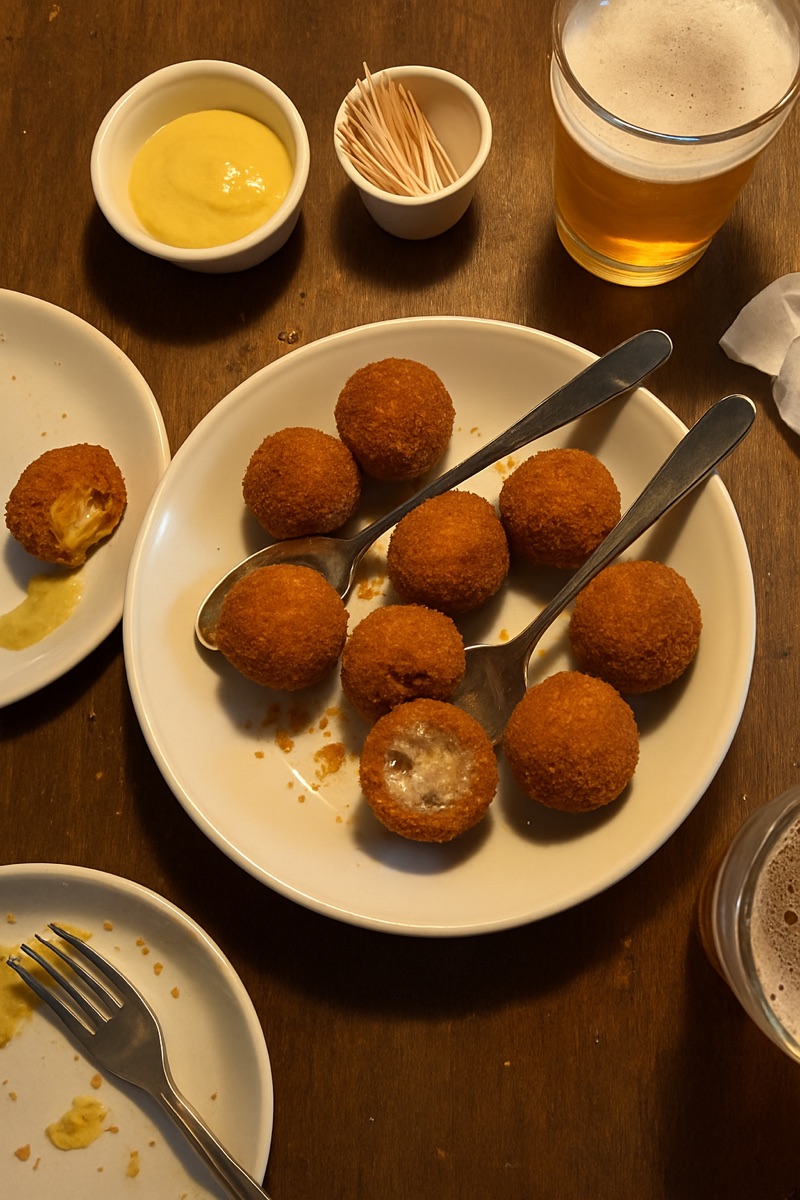
Bitterballen are the snack of the *borrel*, the after-work drink: a beef ragout chilled until firm, rolled into 3 to 4 cm balls, breaded twice and fried at 180 °C for 3 to 4 minutes, then dipped in mustard.
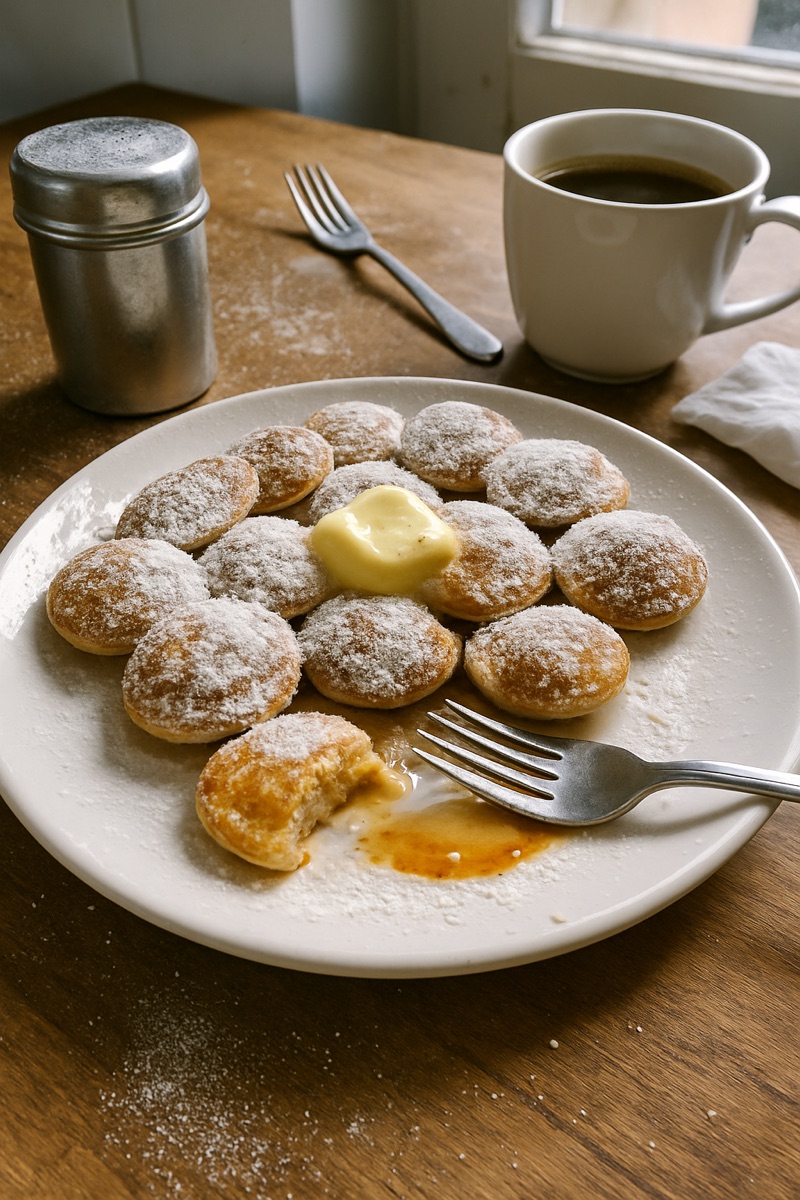
Poffertjes are tiny yeast pancakes made with half buckwheat flour, cooked in a dimpled pan and flipped with a fork while the top is still runny so they puff up round. They come 10 to 12 to a plate with butter and powdered sugar.
In winter, the other heavy classic is snert, or erwtensoep: a pea soup so thick it is said a spoon should stand upright in it, cooked with pork and rookworst and eaten with buttered rye bread and smoked bacon (katenspek).
You will find all three recipes on our page about the food of the Netherlands, and the neighbouring kitchens in our guide to Western European food.
The recipes
- Stamppot🇳🇱 Netherlands · 40 minutes
 Bitterballen🇳🇱 Netherlands · 7 hours and 30 minutes
 Poffertjes🇳🇱 Netherlands · 1 hour and 30 minutes
Questions people ask
Does the Netherlands have an official national dish?
No. No law or official body has named one. Stamppot, especially the curly kale version with smoked sausage, is the dish most often cited, with soused herring as the usual second candidate.
How do you pronounce stamppot?
Roughly "STAHM-pot". The name means "mash pot" in Dutch.
What is served with stamppot?
Smoked sausage (rookworst) is the classic, along with bacon, gravy and mustard. Gherkins and pickled onions are also common on the side.
What is the difference between stamppot and hutspot?
Hutspot is one type of stamppot, made with potatoes, carrots and onions. Plain "stamppot" usually means the curly kale version, boerenkoolstamppot.
Is stamppot Dutch or Belgian?
It is a Dutch dish, but Flanders makes a close equivalent called stoemp, where the sausage is more often fried than smoked.
Keep reading
- Traditional food of the Netherlands: 13 dishes to know
- What is the national dish of Andorra?
- What is the national dish of Austria?
- What is the national dish of Belgium?
- What is the national dish of Cyprus?
- What is the national dish of France?