 COPPER
Traditional food of the Netherlands: 13 dishes to know
Traditional Dutch food is built on potatoes, vegetables, dairy, bread and North Sea fish, cooked simply and seasoned sparingly with nutmeg, cloves and mustard. Butter and cheese come from the flat grasslands, spices from the old colonial trade. The most emblematic dishes are stamppot, raw Hollandse nieuwe herring, bitterballen and stroopwafels.
What Dutch food is built on
The Netherlands sits on the Rhine–Meuse–Scheldt delta, and its food follows the landscape. Flat grassland and plentiful water made it a dairy country, famous for butter and for cheeses such as Gouda and Edam; the North Sea supplied herring, eel, mussels and cod; and in the 17th century the Dutch East India Company brought nutmeg, cloves, cinnamon and sugar into everyday baking.
Ordinary cooking stayed plain. The old Dutch dinner went by the acronym AVG, for *aardappelen, vlees, groente*: potatoes, meat and vegetables, with a large share of vegetables and a small piece of meat with gravy. Dinner is eaten early, often before 6 p.m.
Breakfast and lunch are mostly bread: buttered slices topped with cheese, peanut butter or sweet toppings such as hagelslag, chocolate sprinkles of which more than 14 million kilograms are eaten a year. Between 5 and 9 p.m. comes the *borrel*, drinks with hot fried snacks, and a whole category of Dutch food exists for that moment.
Winter dinners: mash and pea soup
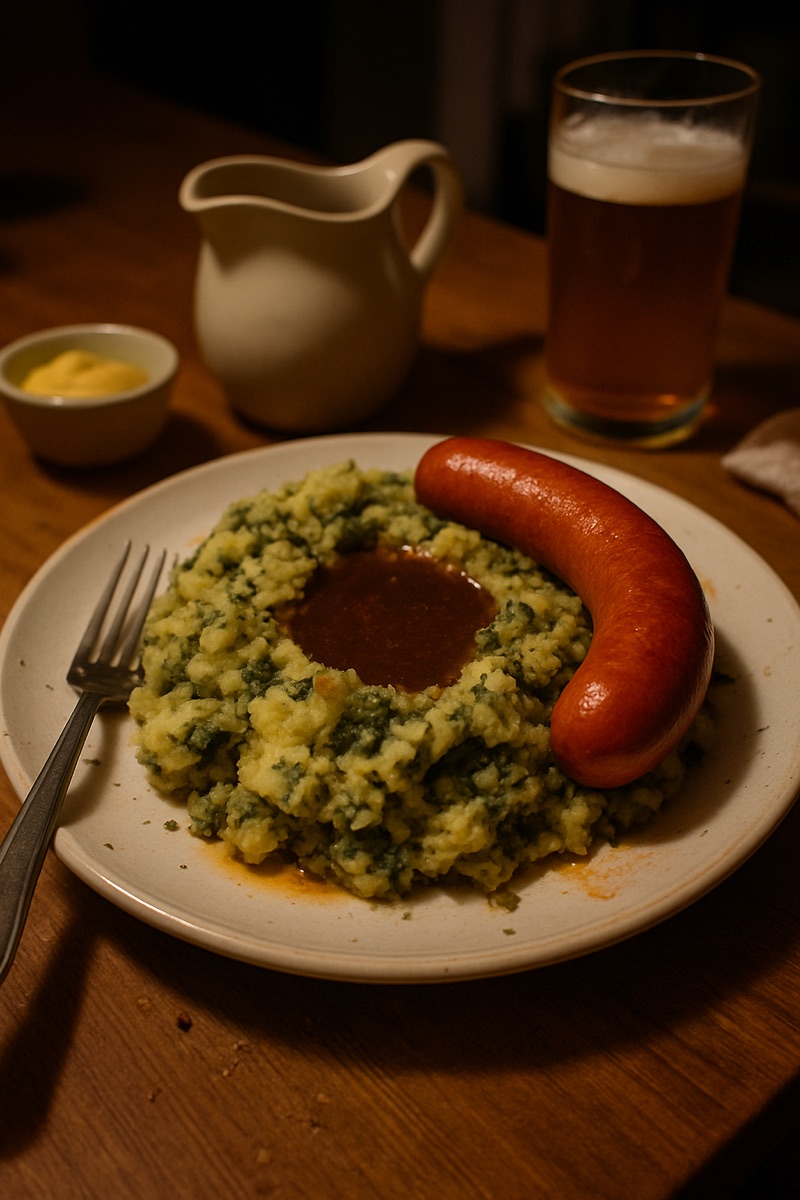
- Stamppot — Boiled potatoes mashed together with a vegetable and served with meat and gravy. Plain "stamppot" means the curly kale version, boerenkoolstamppot, with bacon, mustard and rookworst, a sausage smoked over oak and beech chips. It is the dish usually named as the national dish of the Netherlands; see our kale stamppot recipe.
- Hutspot — The carrot and onion stamppot, served with slow-cooked meat whose gravy goes into a hollow pressed into the mash. Before potatoes reached Europe it was made with parsnips, and it still plays a central role in Leiden's 3 October festival.
- Snert (erwtensoep) — A thick soup of green split peas with pork, celeriac, leeks, onions and carrots, finished with slices of rookworst. It is said a spoon should stand upright in it. It is served in winter with rye bread and katenspek, a bacon that is cooked and then smoked, and it is sold at stalls along frozen canals to skaters.
From the sea
- Hollandse nieuwe (soused herring) — Herring caught between 1 May and 31 August, cured and eaten raw with chopped onion and pickles. The name is protected in the EU as a Traditional Speciality Guaranteed, and the season opens each spring with Flag Day. Outside Amsterdam people hold it by the tail and bite upwards; in Amsterdam it is cut into pieces, and it is also sold in a soft white bun as broodje haring.
- Kibbeling — Bite-sized chunks of battered and fried white fish, traditionally cod, seasoned with a herb and spice mix and served with remoulade or garlic sauce. Once a local snack of the western coast, it has become a national fast food sold at fish stalls across the country.
Snack-bar and borrel food
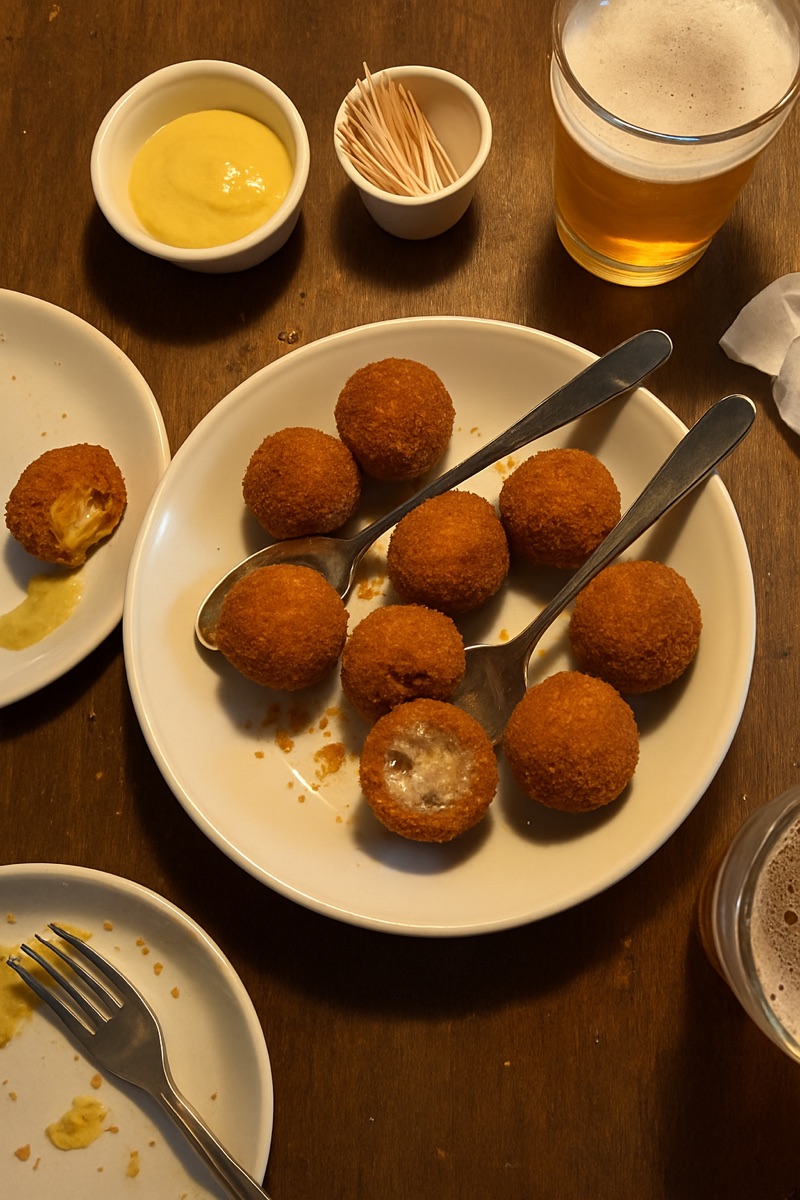
- Bitterballen — Small balls of beef ragout, chilled until firm, breaded and deep-fried, served with mustard at the *borrel*. The filling turns back to a hot gravy inside the crust; our bitterballen recipe explains why the ragout has to set for hours first.
- Kroket — The larger, roll-shaped cousin of the bitterbal, with a beef or veal ragout filling and a thick crust, eaten with mustard or in a bread roll as broodje kroket. An estimated 75% of Dutch people eat them, averaging 29 krokets per person a year.
- Frikandel and patat — The frikandel, a skinless minced-meat sausage fried in oil, is the most commonly ordered snack-bar item in the country. It comes with patat (fries), served with mayonnaise, or as *patatje oorlog* with peanut sauce, mayonnaise and raw onion.
Pancakes, cookies and sweets
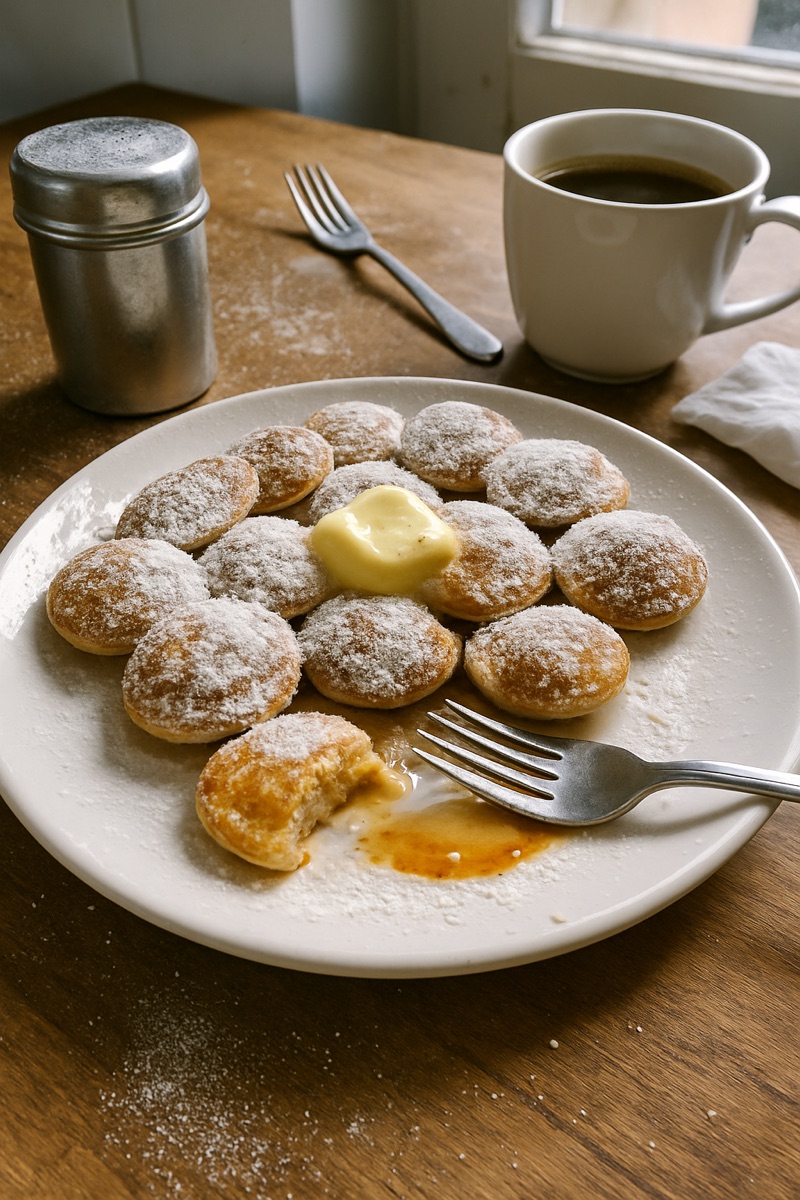
- Poffertjes — Tiny puffed yeast pancakes made with buckwheat and wheat flour, cooked in a dimpled pan and served by the dozen with butter and powdered sugar. Try our poffertjes recipe.
- Pannenkoeken — Large, thin pancakes, thicker than crêpes, with apple, cheese, bacon or raisins cooked into the batter and topped with powdered sugar or stroop, a thick syrup. They are a weekend breakfast and a dinner in their own right at a pannenkoekenhuis.
- Stroopwafel — Two thin waffle wafers pressed in a hot iron, split while warm and glued together with a filling of syrup, brown sugar, butter and cinnamon. It was first made in Gouda, where the oldest known recipe dates from 1840.
- Appeltaart — Dutch apple pie, either with a lattice or a crumble top, filled with tart apples flavoured with cinnamon and lemon and often raisins. It is served warm or cold with whipped cream at coffee time.
- Oliebollen — Deep-fried yeast dough balls, plain or studded with raisins, currants or apple, dusted with powdered sugar. They are the food of New Year's Eve, sold from street stalls and fried at home, and judged every year in a national oliebollen contest.
Dutch food region by region
Dutch cooking traditionally divides into three regions. The west, Holland and Zeeland, is dairy and fish country: Gouda and Edam cheese, herring, kibbeling, mussels from Zeeland and the jenever distilleries of Schiedam and Amsterdam. The northeast is meat and rye country, with metworst, Gelderse rookworst and Frisian rye bread baked for up to 20 hours.
The south, North Brabant and Limburg, shares its rich, "Burgundian" table with Flanders: long-cooked stews such as hachee, Limburgse vlaai fruit tarts, Brabant sausage rolls (worstenbroodjes) and beer. Cross the border and the same mash becomes stoemp in the traditional food of Belgium; to the east, the sausages and rye continue in the traditional food of Germany.
Cook Dutch food at home
Stamppot, bitterballen and poffertjes all have full step-by-step recipes in Copper, with ingredients, timings and the one technique that matters most for each. Find them on our page about the food of the Netherlands.
For the neighbouring kitchens, see our guide to Western European food.
The recipes
- Stamppot🇳🇱 Netherlands · 40 minutes
 Bitterballen🇳🇱 Netherlands · 7 hours and 30 minutes
 Poffertjes🇳🇱 Netherlands · 1 hour and 30 minutes
Questions people ask
What is the most popular food in the Netherlands?
Stamppot is the classic home dinner, while snacks such as the frikandel, the kroket and fries with mayonnaise are the most widely eaten. Soused herring and stroopwafels are the best-known Dutch foods abroad.
What do Dutch people eat for breakfast?
Mostly bread: buttered slices with cheese, peanut butter, jam or sweet toppings such as hagelslag (chocolate sprinkles), along with yoghurt or muesli. Pancakes are a popular weekend breakfast.
What is a typical Dutch dinner?
Potatoes, vegetables and a small piece of meat with gravy, known as AVG. In winter that often means stamppot with smoked sausage or a thick pea soup. Dinner is eaten early, around 6 p.m.
What snacks are typical in the Netherlands?
Bitterballen with mustard at drinks time, krokets, frikandellen and fries from the snack bar, kibbeling and herring from fish stalls, and stroopwafels with coffee.
Keep reading
- What is the national dish of the Netherlands?
- Traditional food of Andorra: 13 dishes to know
- Traditional food of Austria: 13 dishes to know
- Traditional food of Belgium: 13 dishes to know
- Traditional food of Cyprus: 12 dishes to know
- Traditional food of France: 13 dishes to know