 COPPER
Traditional food of Austria: 13 dishes to know
Traditional Austrian food grew out of Viennese court cooking and the Alpine farm kitchen: beef, pork, dumplings, noodles and cheese, plus a pastry tradition shaped by the Habsburg Empire. Breading and frying, long simmering and dumpling-making are the core techniques. The most emblematic dishes are Wiener schnitzel, Tafelspitz, apple strudel and Sachertorte.
What Austrian food is built on
Austrian cuisine is a set of regional cuisines held together by Vienna. Viennese cooking grew out of the Habsburg Empire and borrowed from Hungary, Bohemia, Bavaria and northern Italy, which is why goulash, dumplings and strudel feel at home there. Each of the nine federal states keeps its own dishes alongside it.
Beef, pork, chicken, turkey and goose are the main meats, and pork is used nose to tail. Austrian butchers have their own cuts, Tafelspitz among them, and sausages from Frankfurters to Käsekrainer are sold at the Würstelstand, the street sausage stand. Dumplings are a staple, as in neighbouring Bavaria and Bohemia.
Breakfast is a bread roll with jam, cold meats or cheese. Mid-morning or mid-afternoon comes the Jause, a snack of bread with cheese or ham, or in its bigger version the Brettljause, served on a wooden board. Sweet dishes are a meal category of their own, and coffee and cake in a Viennese coffee house is an important social ritual. Coffee comes with a glass of water, and the menu runs from the Mokka, close to an espresso, to the Melange, half coffee and half hot milk.
Meat dishes
- Wiener schnitzel — A thin, butterflied veal cutlet coated in flour, egg and breadcrumbs and fried in lard or clarified butter until the crust puffs away from the meat. It is Austrian: the name first appears in an 1831 cookbook, Austrian law reserves it for veal, and it is the dish most often named as the national dish of Austria. Copper's recipe for it is filed in our German collection for now, but the dish belongs to Vienna. It is served with potato salad, parsley potatoes or a green salad.
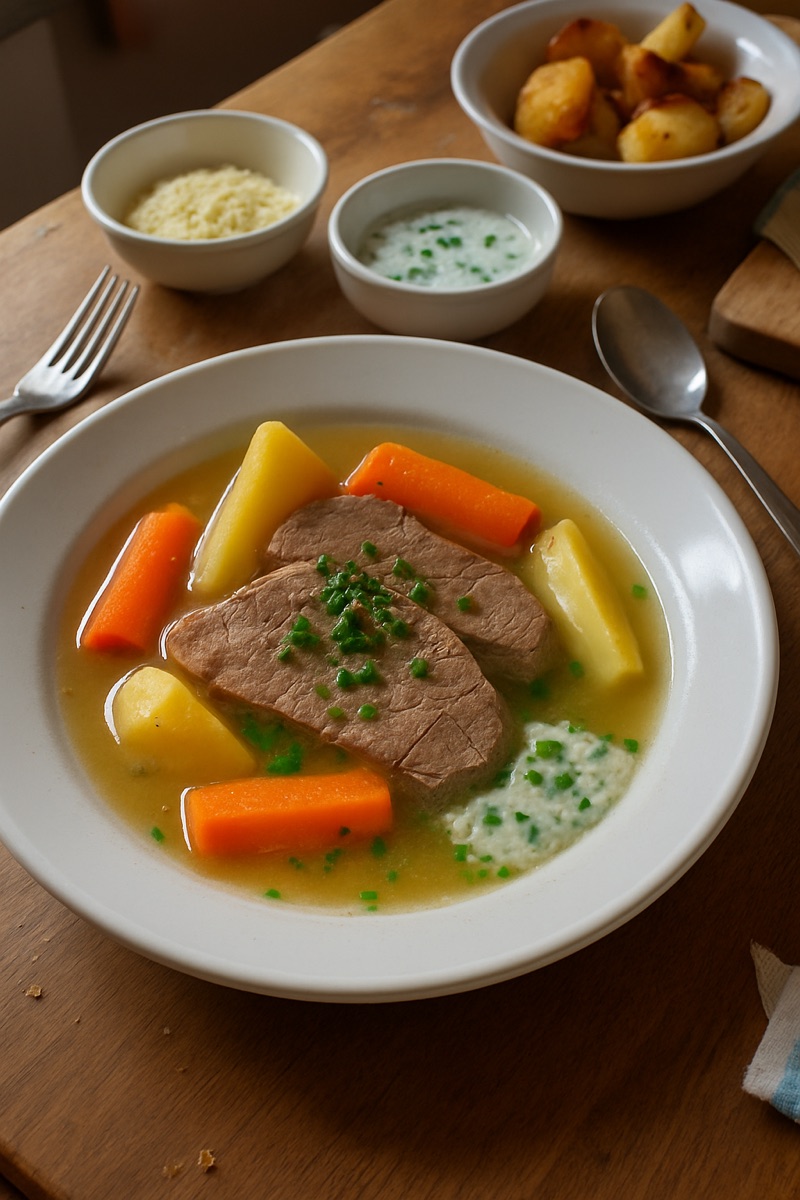
- Tafelspitz — Beef rump simmered for hours with root vegetables, served first as a clear broth, then sliced with apple horseradish, chive sauce and roast potatoes. Emperor Franz Joseph I was said never to be without it; see our Tafelspitz recipe.
- Gulasch (Saftgulasch) — Viennese goulash, a cousin of Hungarian pörkölt, made with lean beef and at least two-thirds its weight in onions, with no other vegetables. It slow-cooks for three hours or more into a thick, dark sauce and is eaten with bread rolls or bread dumplings.
- Käsekrainer — A lightly smoked pork sausage studded with 10 to 20% cubes of cheese, invented in Upper Austria in the late 1960s. It is the classic order at a Vienna sausage stand, served with mustard, freshly grated horseradish and bread.
Dumplings, noodles and cheese
- Käsespätzle — Soft egg noodles layered hot with grated mountain cheese and topped with fried onions, the signature dish of Vorarlberg, where the cooking follows the Alemannic kitchens of Switzerland and Swabia. Our Käsespätzle recipe uses Vorarlberg Bergkäse and sharp Räßkäse.
- Knödel — Boiled dumplings made from bread, flour or potatoes, served as a side with roasts and goulash or as a dish on their own. Tyrol is known for Speckknödel with pieces of bacon and Spinatknödel made with spinach.
- Kärntner Kasnudeln — Large pasta pockets from Carinthia filled with quark (Topfen) and mint, a well-known local speciality. Their smaller meat-filled relatives are called Schlickkrapfen.
Cakes and sweet dishes
- Sachertorte — A chocolate sponge sealed with apricot jam under a poured chocolate glaze, created by Franz Sacher in the mid-19th century and eaten with unsweetened whipped cream. Its name is regulated by the Austrian food codex; try our Sachertorte recipe.
- Apfelstrudel — Paper-thin pastry rolled around apples, usually with cinnamon and raisins. The oldest known strudel recipe is a handwritten one from 1697 kept in Vienna's city library, and apple strudel is often named alongside schnitzel and Tafelspitz as a national dish. Vienna also makes strudel with sweetened curd cheese (Topfenstrudel) and with milk and cream (Millirahmstrudel).
- Kaiserschmarrn — A thick, fluffy sweet pancake torn into pieces in the pan with two forks, dusted with powdered sugar and served with plum compote. Named after Emperor Franz Joseph I, it is eaten as a dessert or as a filling lunch in Alpine huts.
- Marillenknödel — Apricot dumplings: a whole apricot wrapped in potato or Topfen dough, boiled, then rolled in butter-fried breadcrumbs and powdered sugar. They are the culinary icon of the Wachau valley, famous for its apricots.
- Germknödel — A large steamed yeast dumpling filled with Powidl, a spiced plum jam, served with melted butter and a topping of ground poppy seeds and sugar, sometimes with vanilla sauce instead.
- Linzer torte — A crumbly nut pastry of ground hazelnuts or almonds, filled with redcurrant jam and covered with a lattice. Named after the city of Linz, it has been cited as the oldest cake named after a place, and a recipe from 1696 was long thought to be the oldest written one.
Austrian food region by region
Vienna has its own cuisine, the only one named after a city according to the Vienna Tourist Board: boiled beef, schnitzel, goulash, offal dishes and coffee-house pastry. Lower Austria grows Wachau apricots and Marchfeld asparagus; Burgenland, once part of Hungary, cooks spicier dishes and roasts a St. Martin's goose on 11 November; Styria is known for pumpkin seed oil, the Brettljause and Buschenschank wine taverns.
In the west, Tyrol and Salzburg eat dumplings, Tyrolean bacon and Kasnocken, and Vorarlberg cooks cheese noodles in the Swiss style; compare with the traditional food of Switzerland. The Bavarian side of the same dishes is in the traditional food of Germany.
Cook Austrian food at home
Tafelspitz, Käsespätzle and Sachertorte all have full step-by-step recipes in Copper, with ingredients, timings and the technique that matters most for each. Find them on our page about the food of Austria.
For the neighbouring kitchens, see our guide to Western European food.
The recipes
- Tafelspitz🇦🇹 Austria · 3 hours and 20 minutes
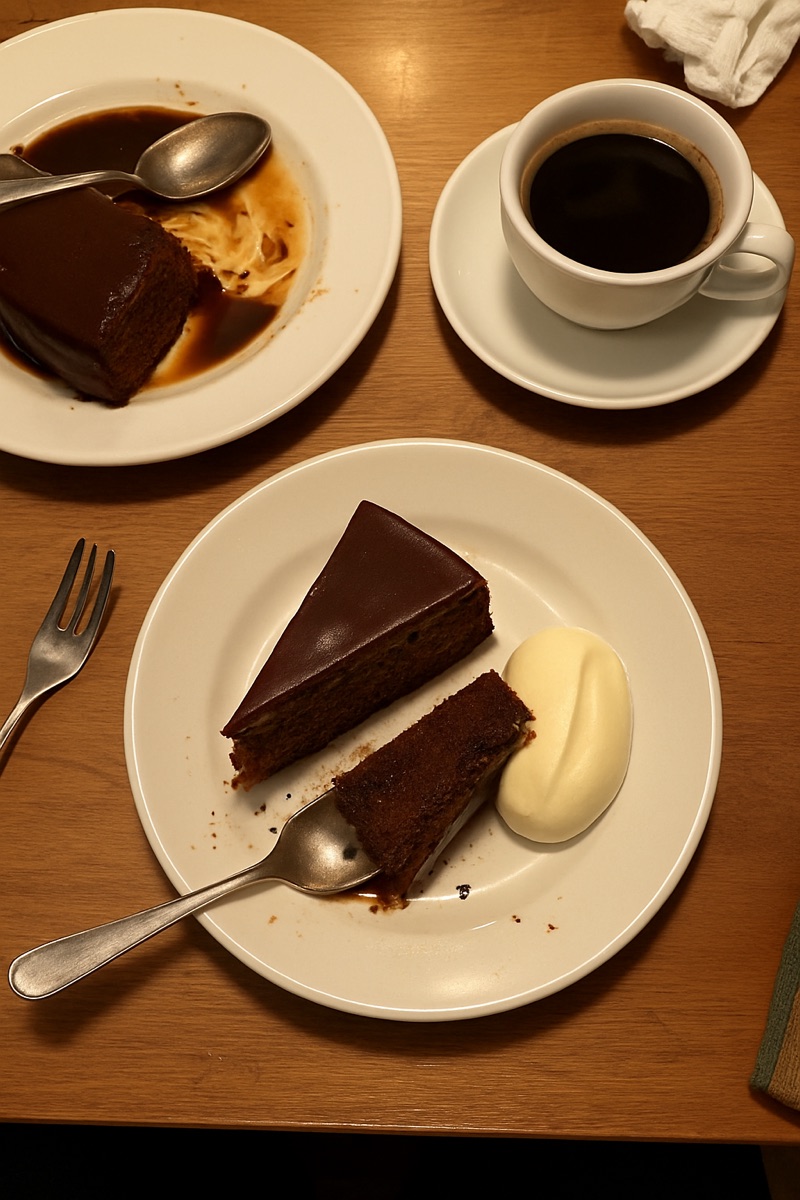 Sachertorte🇦🇹 Austria · 16 hours and 40 minutes
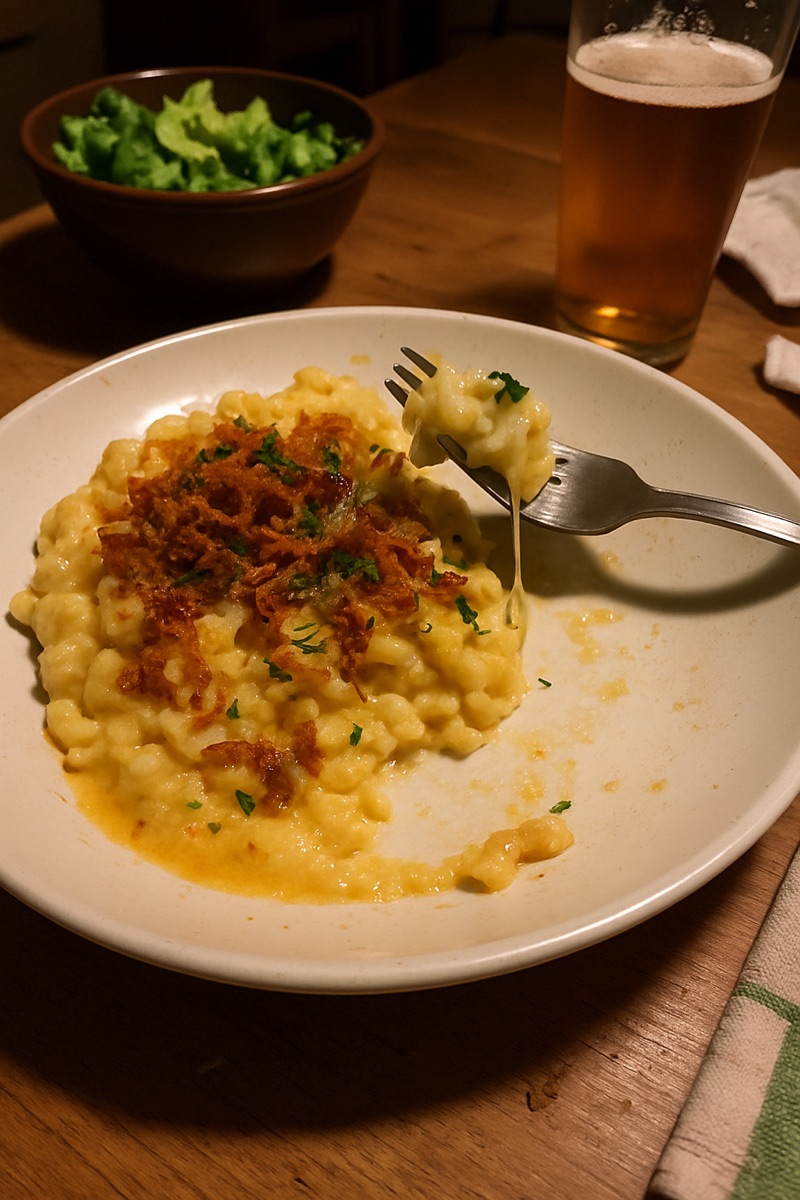 Käsespätzle🇦🇹 Austria · 55 minutes
Questions people ask
What is the most popular food in Austria?
Wiener schnitzel is the dish most often named, followed by Tafelspitz, goulash and, among sweet dishes, apple strudel, Kaiserschmarrn and Sachertorte.
What do Austrians eat for breakfast?
A continental breakfast of bread rolls with jam, or with cold meats and cheese, with coffee, tea or juice. A mid-morning snack of bread with cheese or ham is called a Jause.
Is Wiener schnitzel Austrian or German?
It is Austrian. The name means Viennese cutlet, it first appears in an 1831 cookbook, and in Austria it must be made of veal. Schnitzel in many forms is also eaten across Germany.
What is the national dessert of Austria?
There is no official one, but apple strudel, Sachertorte and Kaiserschmarrn are the desserts most identified with Austria.
Keep reading
- What is the national dish of Austria?
- Traditional food of Andorra: 13 dishes to know
- Traditional food of Belgium: 13 dishes to know
- Traditional food of Cyprus: 12 dishes to know
- Traditional food of France: 13 dishes to know
- Traditional food of Germany: 13 dishes to know